Banana for Baby
Last updated October 2026
Fully ripe banana can be one of the softer foods offered when a baby starts solids, usually around six months. A ripe piece should mash easily; firm green banana and dried banana chips are more difficult to chew.
Quick answer
Banana can be offered from the start of complementary feeding when a baby has good head control and can manage food. It is not a major listed allergen, but an individual food reaction remains possible.

Ways to prepare ripe banana
Peel a fully ripe banana and remove unexpectedly fibrous strings or firm parts. Check that the flesh crushes easily with a fork, then mash onto a spoon or preloaded spoon, alone or in unsweetened porridge. If adding yogurt or thinned smooth peanut butter, introduce unfamiliar allergens in appropriate forms and follow an existing allergy plan.
If your baby self-feeds, offer a soft manageable piece with enough surface to grasp, without depending on a fixed 4–5 cm length. Banana can break into slippery lumps, so watch chewing and adapt further when needed.
As finer grasp develops, softer smaller pieces may become easier to pick up. This change depends on actual skill, not a universal nine-month deadline. Avoid thick round firm slices, unripe hard chunks and dried banana chips.
Soft banana can be mashed onto manageable toast or stirred into baby pancakes without added honey; check wheat, egg and other new allergens in a mixed recipe.
The right shape and size depend on your baby's eating skills, not on age alone. Step-by-step preparation: How to cut banana for BLW
Also check how to cut food for baby-led weaning for general BLW cutting tips.
When can babies have banana?
A fully ripe banana is usually soft enough to mash raw. Choose yellow fruit with a tender interior; the exact peel color is less important than whether the flesh mashes readily.
Continue breast milk or formula alongside solids during the first year. Rotate banana with other fruits, vegetables and iron-rich foods so early meals are varied.
Offer soft peeled banana as a fork mash or a piece that matches the baby's actual grasp and chewing ability. Slippery chunks can still be difficult to manage even though banana is soft.
No fixed spear length, pea-size cube or birthday guarantees safe swallowing. Choose the preparation based on the individual baby and supervise upright eating.
See our first foods for baby guide for more ideas.
Texture and allergy precautions
Choose ripe banana that mashes easily; firm green fruit can need further softening or a different preparation.
Remove tough peel and avoid slippery large chunks or dense dried banana chips.
No universal spear length or pea-sized rule makes banana choke-proof for every baby.
Do not treat banana as a proven constipation or diarrhea remedy; seek advice for persistent painful stools or dehydration.
Pair nut butter only in a thin, thinned smooth form and monitor introduction of any new allergens.
Keep the baby seated upright and supervise throughout every meal.
Banana recipes for babies
View all recipes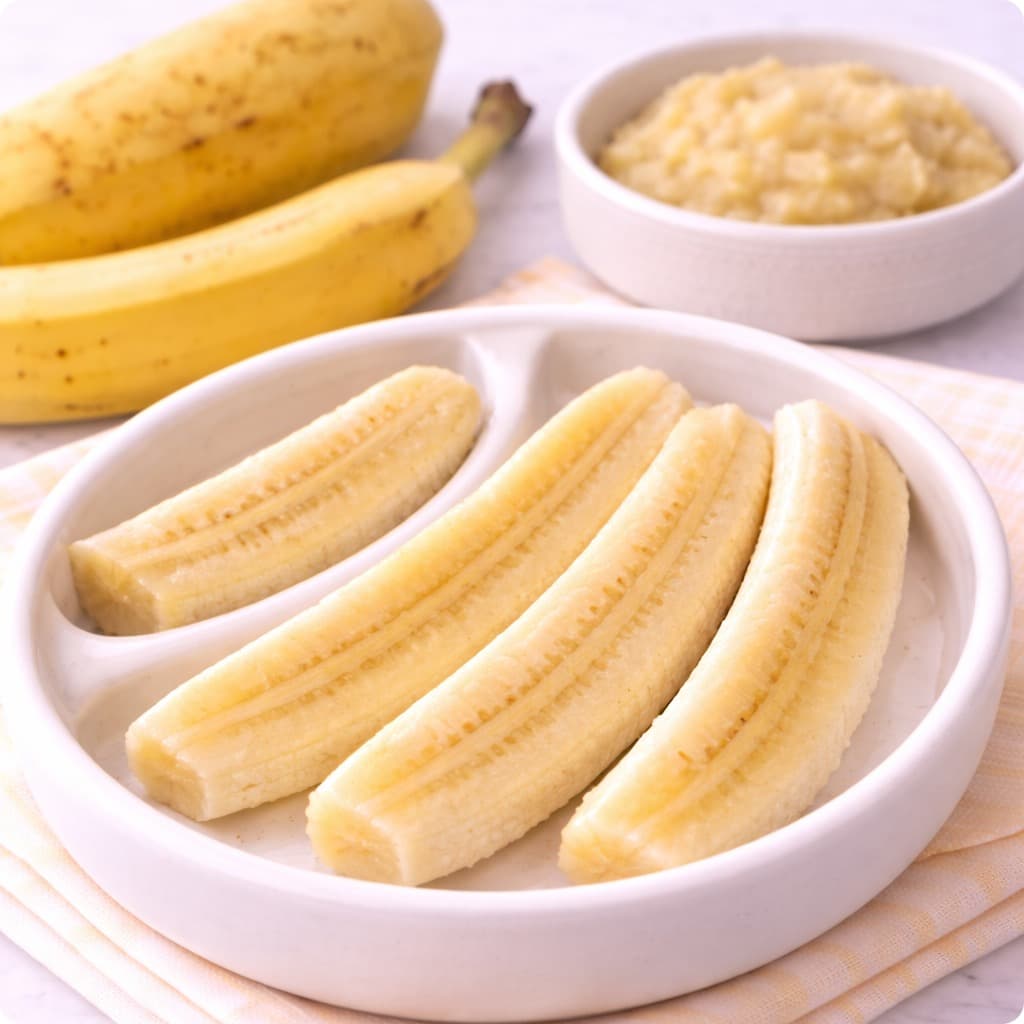
Banana Spears
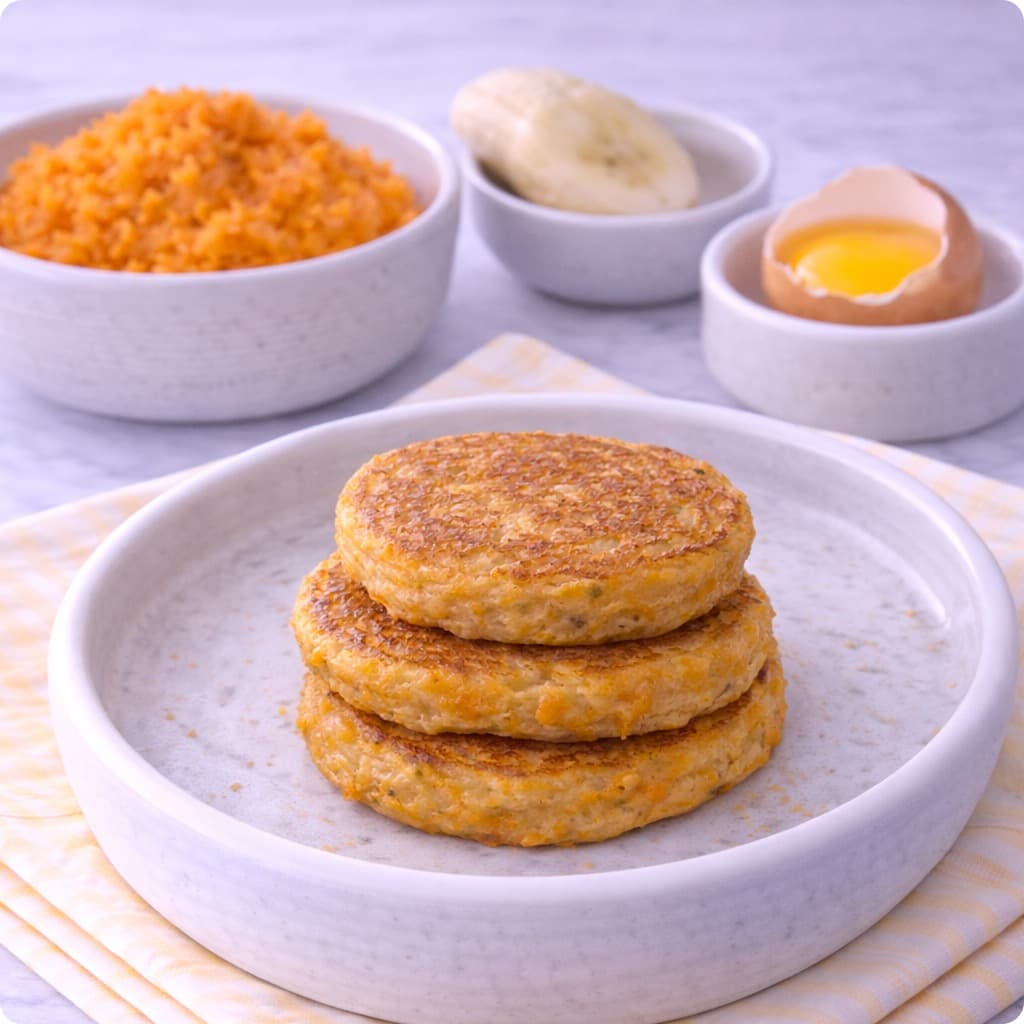
Sweet Potato Banana Pancakes

Banana Mash
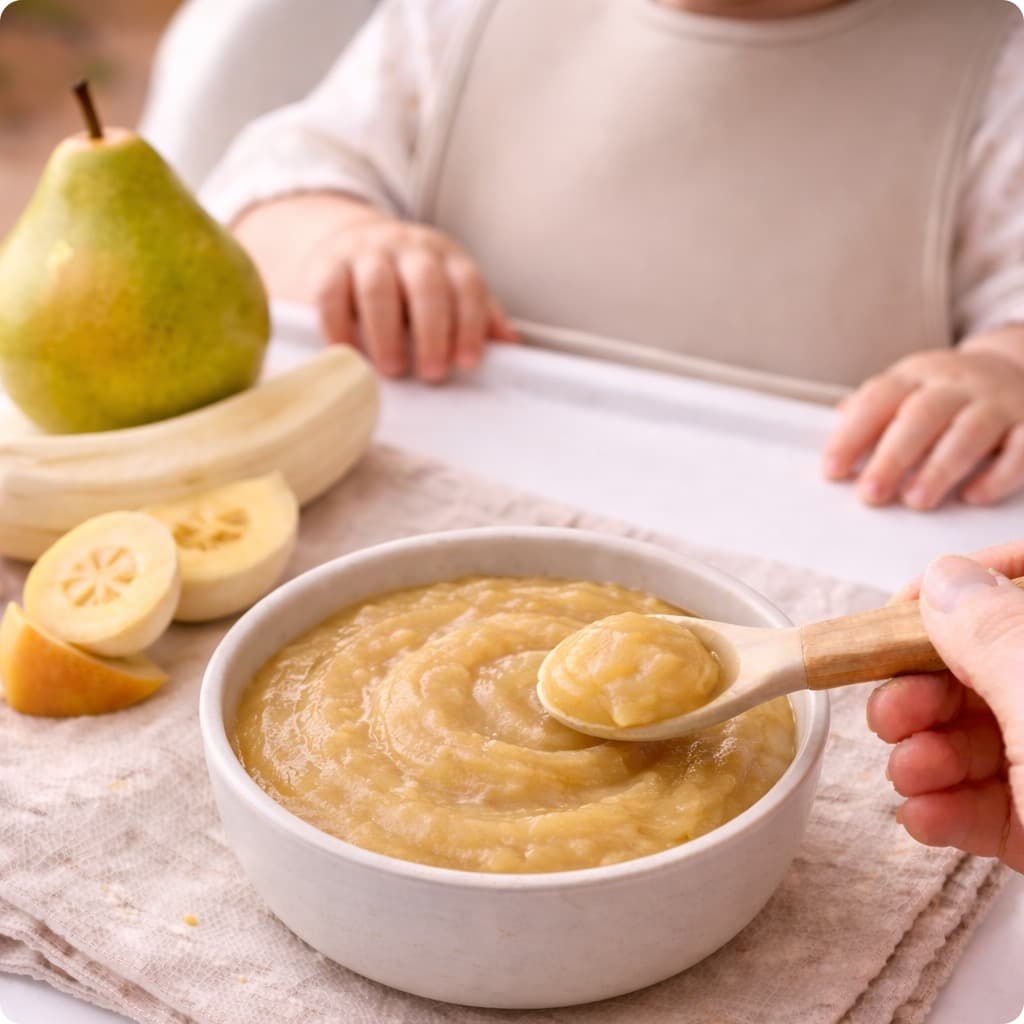
Pear & Banana Mash
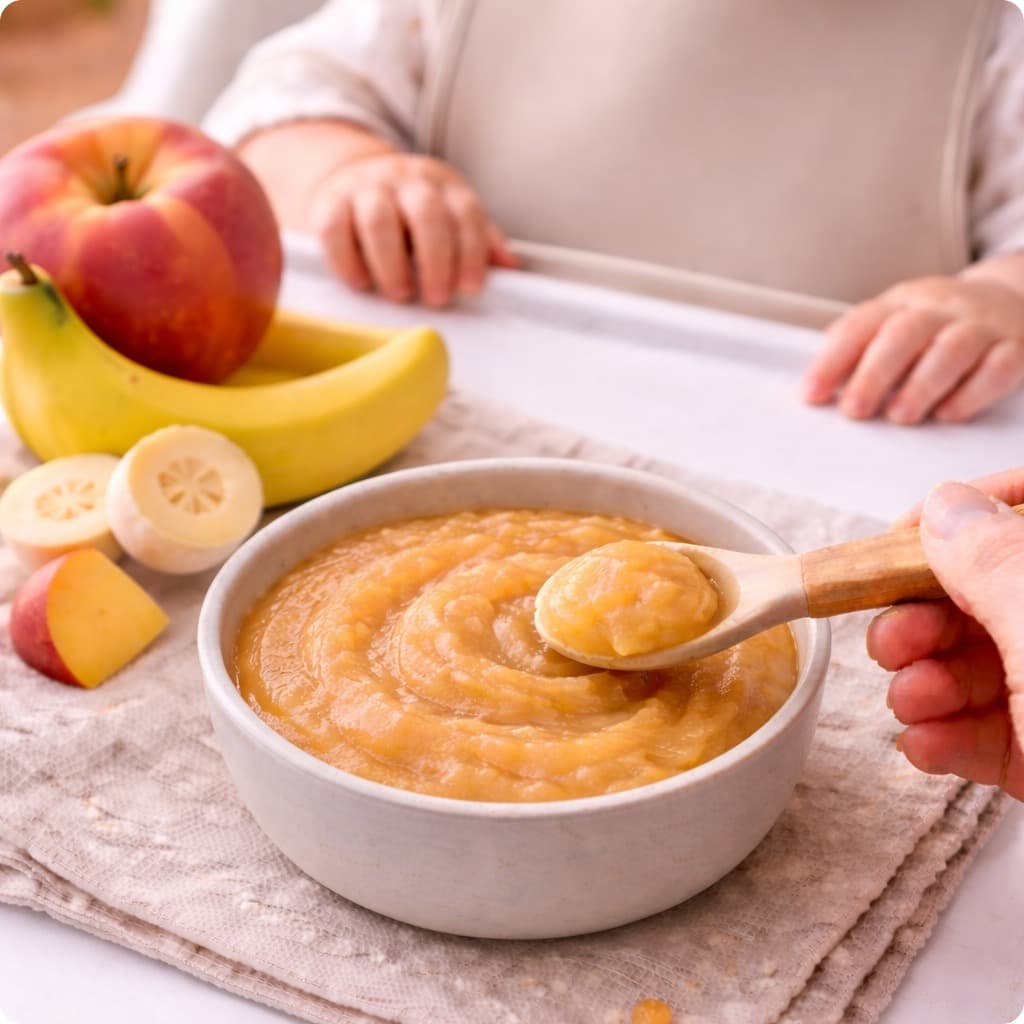
Banana & Peach Mash

Banana Oatmeal
See all banana recipes for babies. Explore baby breakfast recipes, baby-led weaning recipes and first foods for baby for more ideas.
Related Guides
Frequently Asked Questions
Are dried banana chips a suitable alternative to ripe banana?
No. Hard dried banana chips can be difficult to chew and pose a choking risk. Choose ripe soft banana that mashes readily and prepare it to match the child's observed chewing skills.
Sources & References
This guide is informed by current guidelines from leading health organizations:
- ●CDC - When, What, and How to Introduce Solid Foods CDC
- ●NHS - Your Baby's First Solid Foods NHS
- ●WHO - Complementary Feeding WHO
- ●NHS - Preparing Food Safely for Babies NHS
- ●CDC — Choking Hazards (reviewed March 2026) CDC
