When can babies eat carrot?
Most babies are ready for first foods at around 6 months, when they can sit up with little support, hold their head steady, and show interest in food. Carrot is a great early food because it is naturally sweet, easy to cook until very soft, and simple to shape for little hands. There is no need to wait beyond this window to introduce it.
Carrot is not one of the common food allergens, so there is no reason to delay it. As with any new food, it is a good idea to offer carrot on its own for the first try and watch how your baby responds before mixing it into combination meals. Always check with your pediatrician if your baby was born prematurely or has specific health concerns about starting solids.
How to serve carrot safely
From 6 to 9 months, serve carrot cooked until it is very soft, soft enough to squish easily between your finger and thumb. Offer it as a thick finger-length stick that your baby can grasp and gnaw, or as a smooth, lump-free puree on a preloaded spoon. Avoid raw carrot and any hard, crunchy pieces, since these are a serious choking risk at this age.
From 9 to 12 months and beyond, as your baby's pincer grasp develops, you can move to small, soft, bite-sized pieces of cooked carrot or thin coins quartered into smaller pieces. Continue to cook carrot until fully tender and never serve it raw, in whole rounds, or in coin shapes that can block the airway. Mashed and grated cooked carrot also work well as your baby learns to manage more textures.
Nutritional benefits for babies
- 💚Rich in beta-carotene, which the body converts to vitamin A for healthy vision, skin, and immune function
- 💚Provides dietary fiber that supports healthy digestion
- 💚Contains vitamin K1, which plays a role in blood clotting and bone health
- 💚Offers potassium, an important mineral for fluid balance and muscle function
- 💚Naturally sweet flavor that helps babies accept vegetables
- 💚Soft cooked texture makes it easy for new eaters to manage
Safety considerations
- ✓Carrot is not a common allergen, but introduce it on its own at first and watch for any unusual reaction
- ✓Always cook carrot until very soft and cut it into age-appropriate shapes, since raw or hard carrot is a choking hazard
- ✓Avoid serving carrot in whole rounds or coins, which are a high-risk choking shape for babies
- ✓Always supervise your baby closely during meals and keep them seated upright while eating
- ✓Introduce one new food at a time so you can spot any reaction and link it to the right food
Recipes with carrot for babies
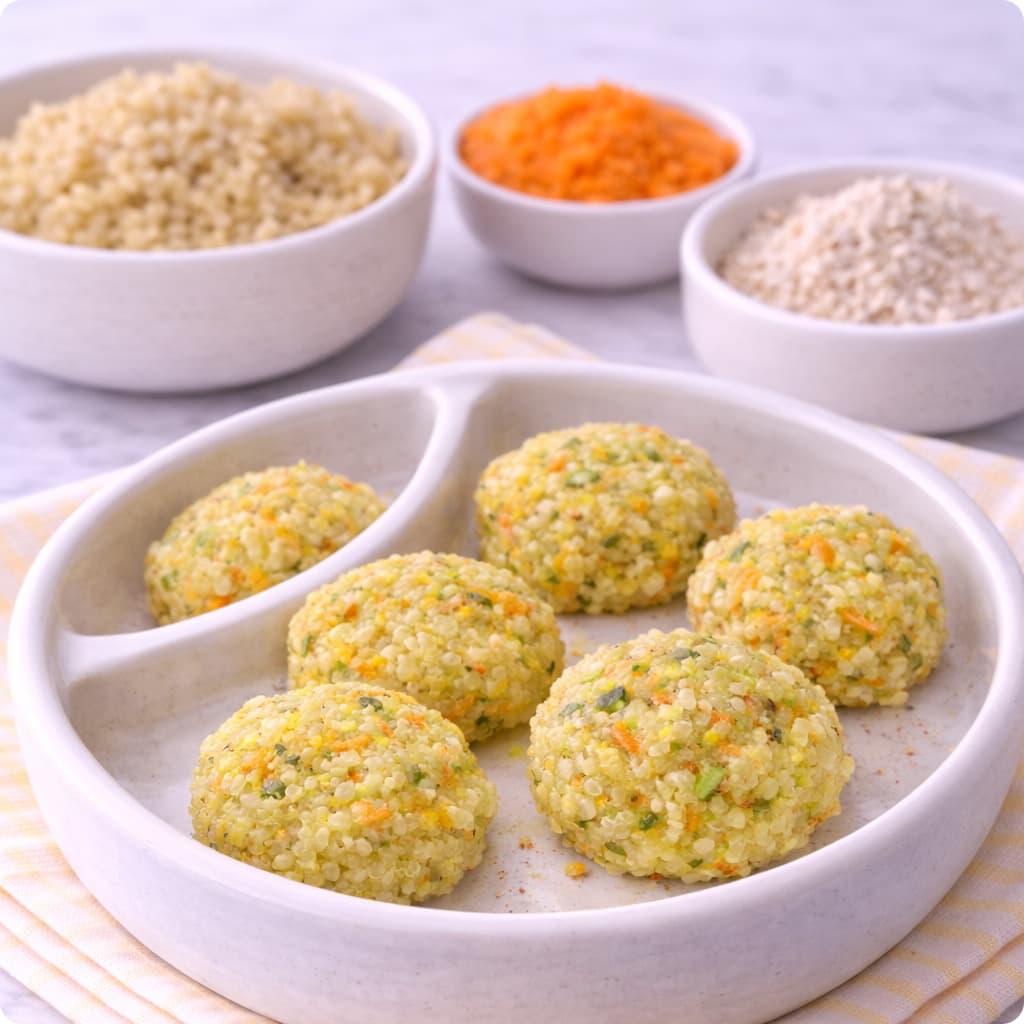
Quinoa Veggie Patties

Lentil Veggie Nuggets
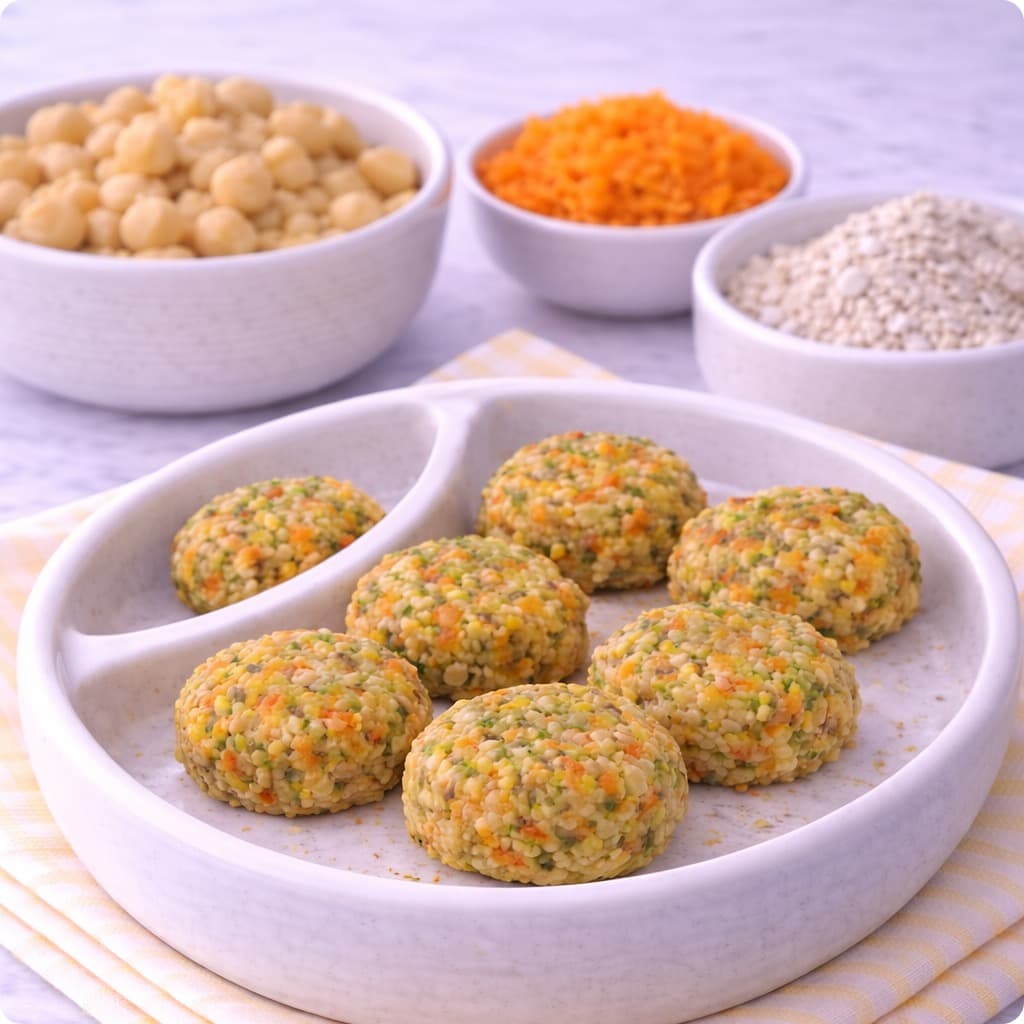
Baby Falafel Patties
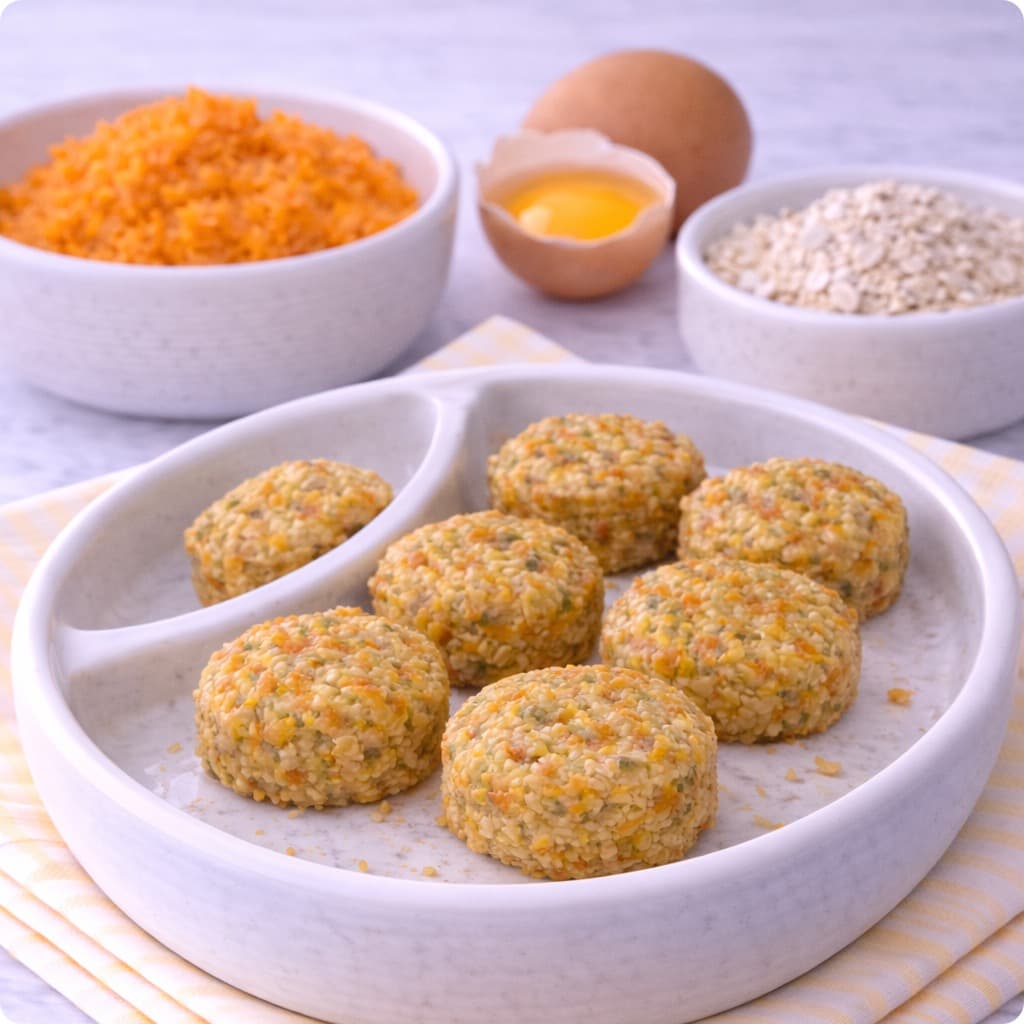
Carrot Oat BLW Muffins
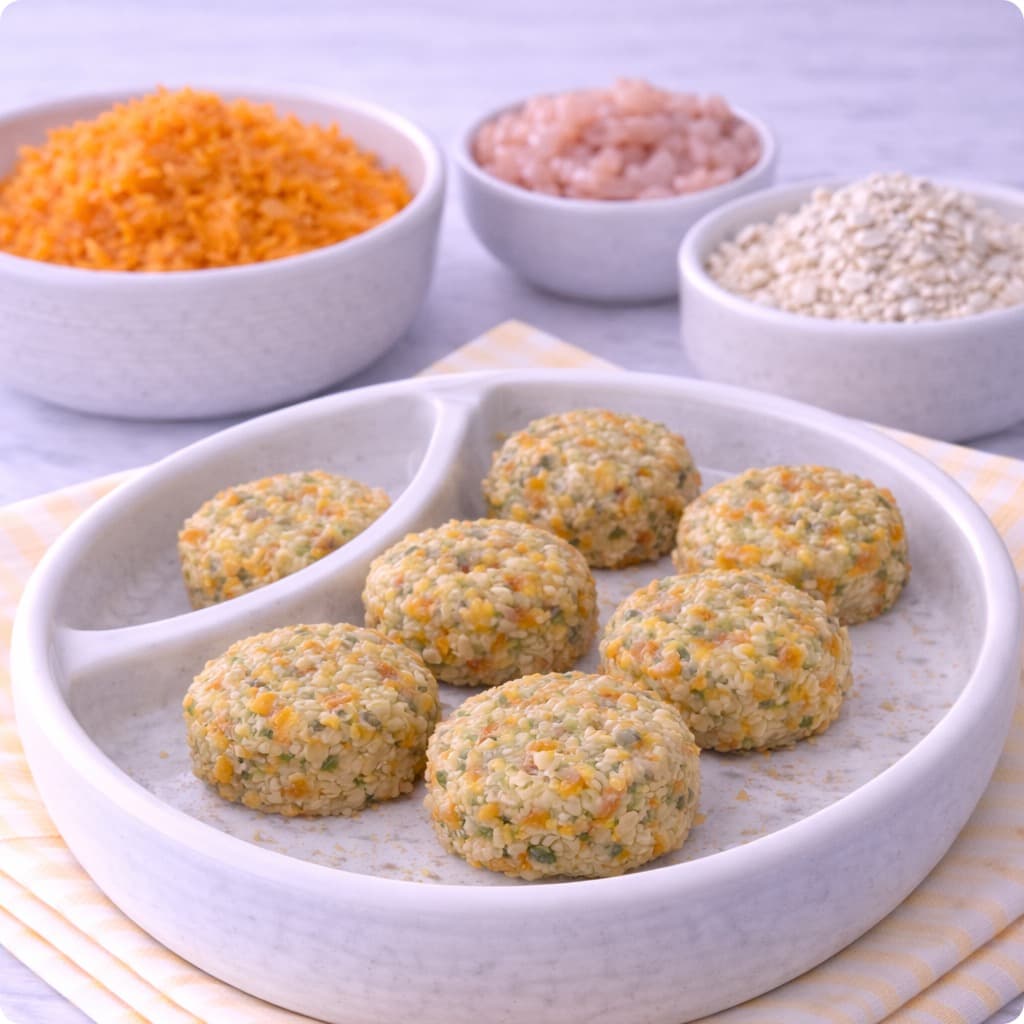
Chicken Veggie Nuggets
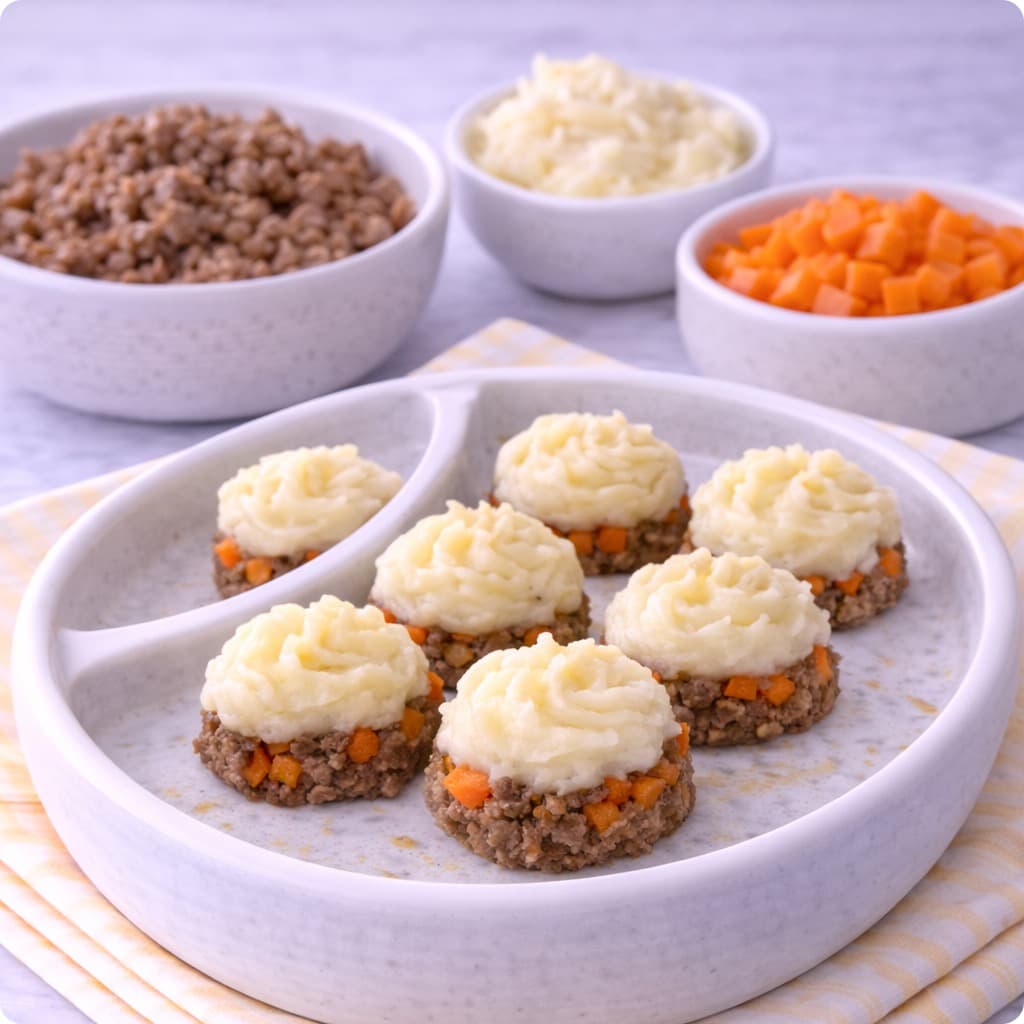
Mini Shepherd's Pie Bites
Frequently asked questions
Can babies eat raw carrot?
No, raw carrot is too hard and is a serious choking hazard for babies and toddlers. Always cook carrot until it is soft enough to squish easily before serving. Most experts suggest waiting until well into the toddler years, around age 4 or older, before offering raw, crunchy carrot.
Is carrot a common allergen for babies?
Carrot is not one of the common food allergens, and allergic reactions to it are uncommon. As with any new food, offer it on its own the first time and watch for signs of a reaction. If you notice symptoms such as a rash, swelling, or vomiting, contact your pediatrician.
How do I cook carrot for my baby?
Steaming or boiling are simple ways to cook carrot until it is very soft and easy to mash or gum. Roasting also works and brings out natural sweetness, just be sure the pieces are fully tender and not crisp. Cook without added salt or sugar.
Can carrot turn my baby's skin orange?
Eating a lot of carrot and other orange foods can sometimes give the skin a harmless yellow-orange tint, often most visible on the nose, palms, or soles. This is not dangerous and fades once you vary the diet. If you are unsure or notice the whites of the eyes turning yellow, check with your pediatrician.
Is carrot puree good for starting solids?
Yes, smooth carrot puree is a popular and gentle first food because it is naturally sweet and easy to swallow. Make sure it is completely smooth and lump-free for younger babies. You can also offer soft cooked carrot sticks if you are following a baby-led approach.
How much carrot can a baby eat?
There is no fixed amount, since babies eat to their own appetite when first learning. Offer a small portion alongside other foods and let your baby decide how much to eat. Variety across different vegetables and food groups matters more than the quantity of any single food.
Can I give my baby carrot every day?
Carrot can be part of your baby's regular diet, but it is best to offer a range of vegetables and colors rather than the same one daily. Rotating foods helps your baby get a wider mix of nutrients and gets them used to different flavors. A varied plate also helps prevent the harmless orange skin tint that very high carrot intake can cause.
Get recipes + a feeding plan for your baby
Save this food to your baby's list, get age-appropriate recipes and follow a personalized feeding schedule - 350+ baby-safe meals in the app.
verifiedSources & References
This guide is informed by current guidelines from leading health organizations: