When can babies eat peach?
Most babies are ready for solid foods, including peach, at around 6 months of age. Readiness is about development rather than a date on the calendar, so watch for signs that your baby can sit up with little support, holds their head steady, brings objects to their mouth, and shows interest in what you are eating. Peach is a gentle, naturally sweet first food that fits well into early menus alongside other soft fruits and vegetables.
Peach is not one of the common food allergens, so there is no need to delay it. In fact, current pediatric guidance encourages offering a wide variety of foods early, including common allergens, rather than holding them back. As with any new food, you can introduce peach on its own and watch how your baby responds before mixing it into combinations with other ingredients.
How to serve peach safely
From 6 to 9 months, offer peach that is very ripe and soft. You can serve it as a smooth puree, or, for baby-led weaning, as a large wedge that your baby can hold and gnaw on, with the skin removed since it can be slippery and tricky to manage. Always remove the hard central pit completely, as it is a serious choking hazard. A ripe peach should yield easily when pressed, and if yours is firm, you can steam or gently cook the slices to soften them.
From 9 to 12 months and beyond, as your baby develops a pincer grasp, you can move to smaller, bite-sized pieces of soft, ripe peach. Keep pieces about the size of your fingertip and make sure they squish easily between two fingers. Continue to remove the pit, and peel firm or waxy skin. Round, slippery pieces can be coated in a little baby cereal or crushed oats to make them easier to grip.
Nutritional benefits for babies
- 💚Vitamin C, which supports the immune system and helps the body absorb iron from other foods
- 💚Vitamin A in the form of beta carotene, which supports healthy vision and growth
- 💚Dietary fiber to support healthy digestion and regular bowel movements
- 💚Potassium, an important mineral for fluid balance and muscle function
- 💚Naturally high water content that helps with hydration
- 💚A naturally sweet, gentle flavor that helps babies explore new tastes
Safety considerations
- ✓Peach is not a common allergen, but introduce it on its own at first and watch for any reaction such as a rash, swelling, or digestive upset.
- ✓Always remove the hard pit completely, since it is a choking hazard, and peel slippery or firm skin for younger babies.
- ✓Serve peach soft and ripe; if it is firm, steam or gently cook it until it squishes easily between your fingers.
- ✓Cut pieces to match your baby's stage, large graspable wedges for younger babies and small fingertip-sized pieces once they can pick up smaller foods.
- ✓Always stay within arm's reach and keep your baby seated upright while eating, never leaving them alone with food.
Recipes with peach for babies
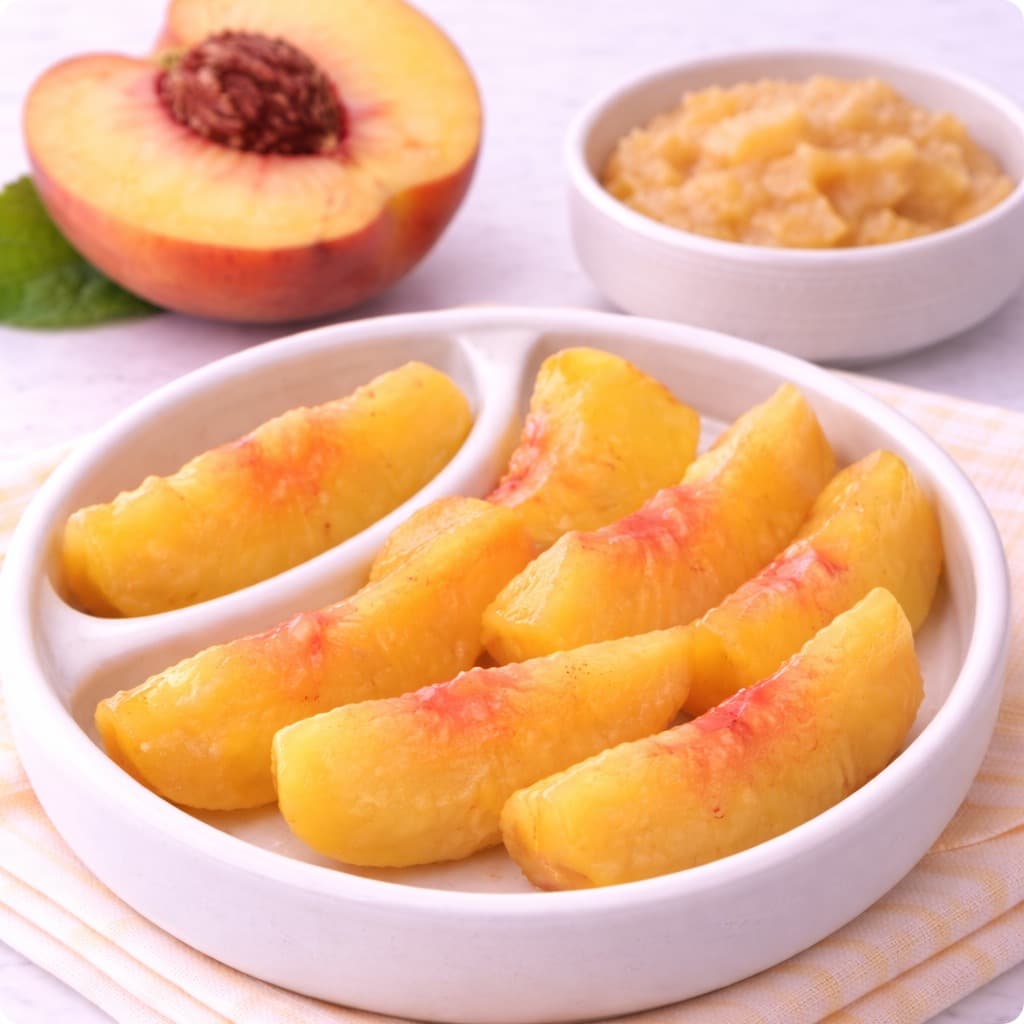
Soft Peach Slices
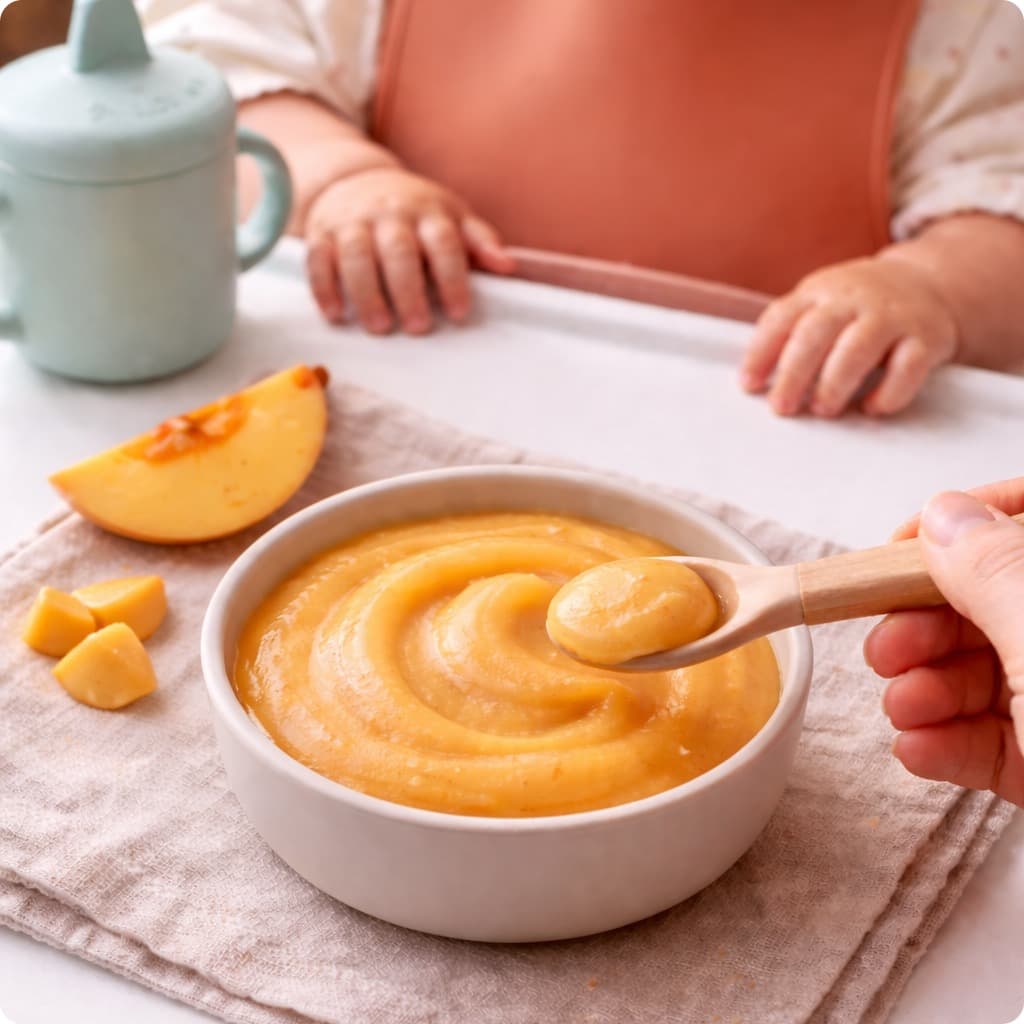
Peach Purée
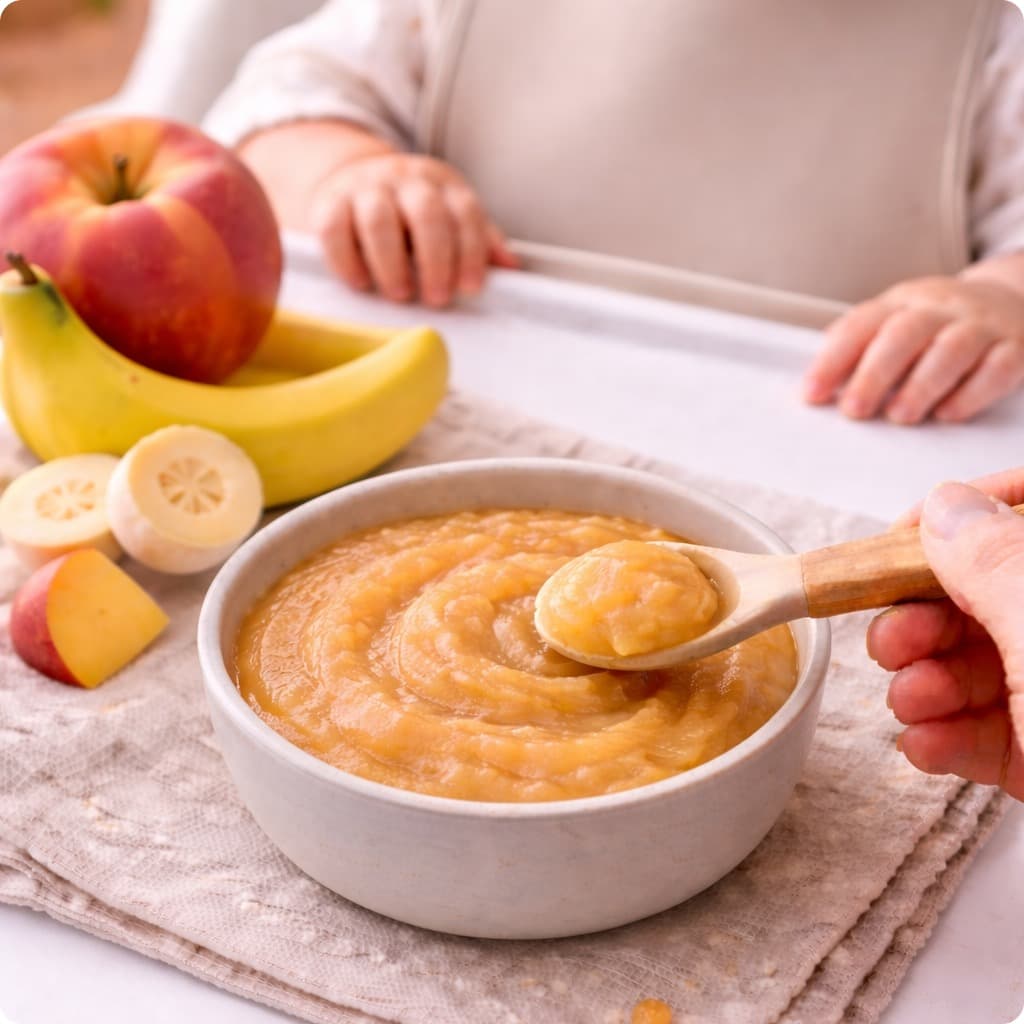
Banana & Peach Mash
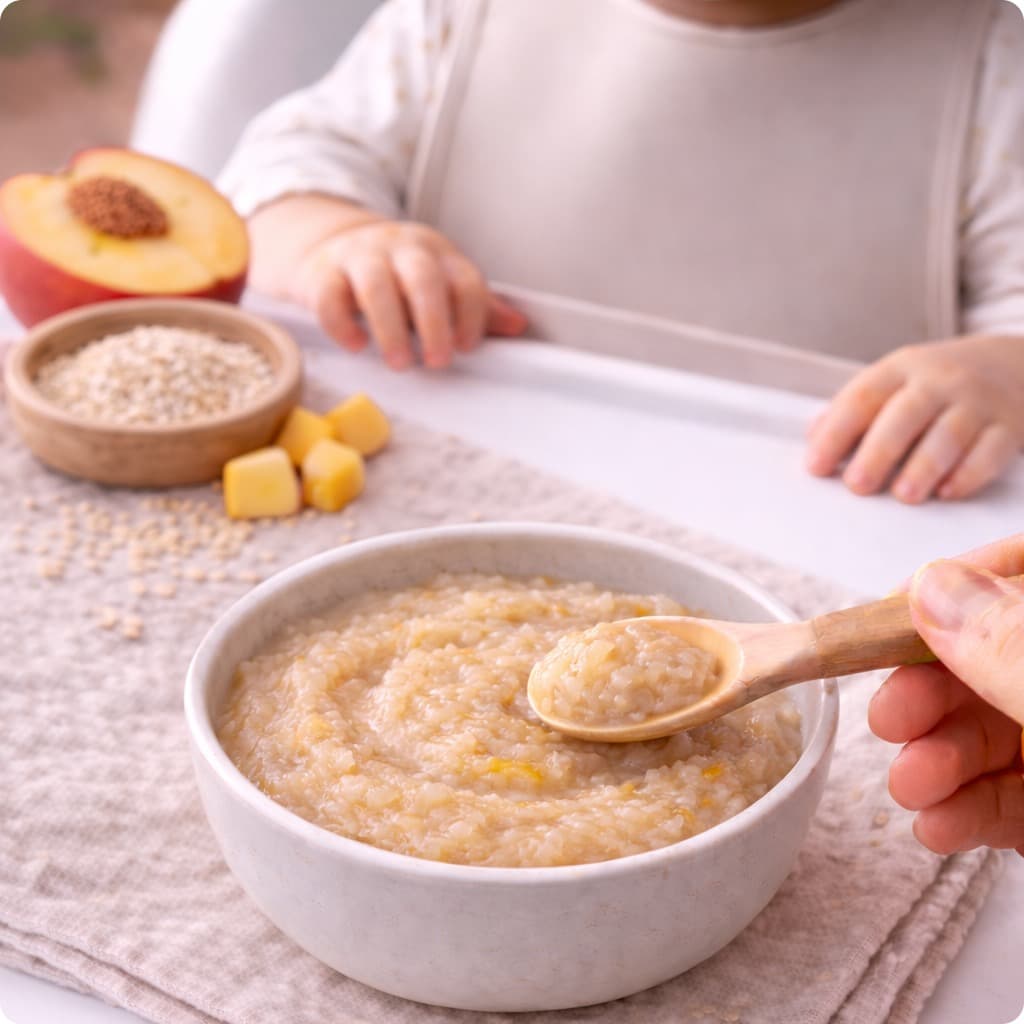
Peach Wheat Cereal

Cottage Cheese & Peach
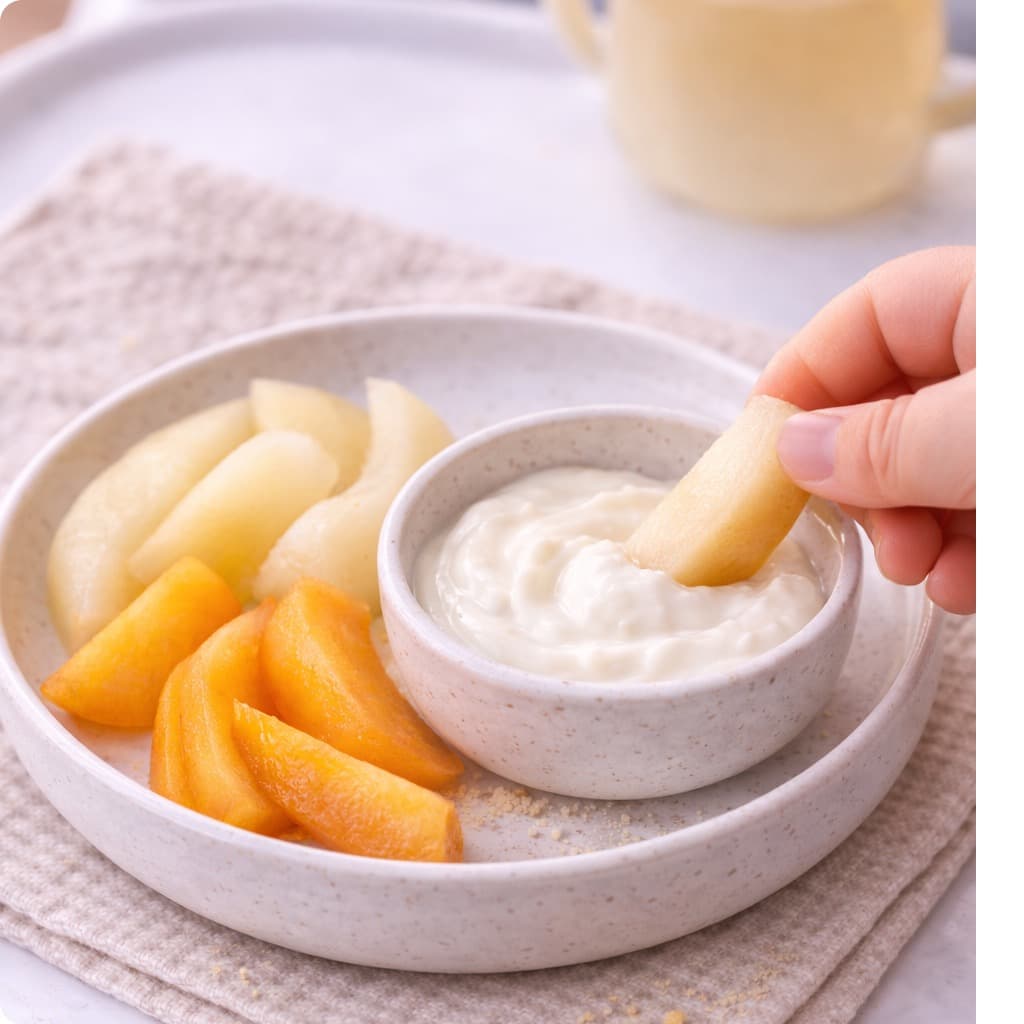
Fruit Wedges & Yogurt Dip
Frequently asked questions
Can I give my baby peach with the skin on?
It is best to remove the skin for babies under 9 months, since it can be slippery and harder to chew. Once your baby is comfortable with soft finger foods, you can leave thin skin on very ripe, soft peaches, but always peel firm or waxy skins.
Can babies eat canned peaches?
Canned peaches packed in water or natural juice can be a convenient option, and they are often very soft. Choose varieties with no added sugar or syrup, drain and rinse them, and cut or mash them to suit your baby's stage.
Will peach cause an allergic reaction in my baby?
Peach is not among the common food allergens, so reactions are uncommon. Still, it is wise to offer it on its own the first time and watch for any signs such as a rash, swelling, or stomach upset, especially if there is a family history of food allergies.
Can peach help with my baby's constipation?
Peach contains fiber and a high water content, which can support healthy digestion and softer stools for some babies. It can be a gentle choice when offered as part of a varied diet, though every baby is different, so talk to your pediatrician if constipation persists.
How do I prepare peach for baby-led weaning?
Choose a very ripe, soft peach, remove the pit, and offer a large wedge that your baby can hold in their fist and gnaw on. Peel the skin for younger babies, and as your baby grows you can move to small, soft, bite-sized pieces.
Can I mix peach with other baby foods?
Yes, once your baby has tried peach on its own without any reaction, it blends nicely with other purees and mashes. Peach pairs well with banana, oatmeal, yogurt, and other soft fruits and vegetables for added variety and texture.
Should I cook peach before giving it to my baby?
If the peach is very ripe and soft, you can serve it raw after removing the pit and peeling as needed. If it is firm, steaming or gently cooking the slices softens them so they squish easily, making them safer and easier for your baby to manage.
Get recipes + a feeding plan for your baby
Save this food to your baby's list, get age-appropriate recipes and follow a personalized feeding schedule - 350+ baby-safe meals in the app.
verifiedSources & References
This guide is informed by current guidelines from leading health organizations: