Peach for Baby
Last updated October 2026
Soft ripe peach can be offered when a baby starts solids, usually around six months. Remove the entire hard stone and any fragments before preparing a spoon-fed mash or suitably soft piece.
Quick answer
A baby ready for complementary feeding may try washed ripe peach flesh with the hard pit removed. Start with a little mash or soft piece that can be managed while seated upright.

How to prepare a ripe or firm peach
Wash the peach under running water before slicing. Cut around the stone; if it does not release easily, cut the soft flesh away rather than levering out a clingstone pit. Remove the entire hard stone and check each portion for fragments before mashing or serving.
For spoon-feeding, mash fully ripe soft flesh or cook firm peach until fork-tender. Remove any tough skin and serve plain or mixed into an already tolerated soft meal.
For self-feeding, a soft graspable portion may work when the baby can chew and manage it. Check for slipperiness and any attached tough peel; a long wedge is not inherently safe.
Peaches cooked into plain oatmeal may work after ingredients have been introduced; avoid large hard chunks, sugar-packed canned peaches and pit fragments.
The right shape and size depend on your baby's eating skills, not on age alone. Step-by-step preparation: How to cut peach for BLW
Also check how to cut food for baby-led weaning for general BLW cutting tips.
When can babies try peach?
The peel can be left only if soft and manageable; remove tough detached skin or long chewy strips. Do not use age alone to decide a firm peach can be offered uncooked.
Peach is not among the major listed allergens, but an individual reaction is possible. Follow medical advice for a suspected allergy.
A ripe peach may mash easily without cooking. If the flesh is firm, steam or simmer until fork-tender; check whether the skin is tough or separates into slippery strips.
The best serving depends on the child's chewing and grasping skills, not a universal wedge size or birthday. Peach provides fruit variety but is not a complete iron-rich baby meal.
See our first foods for baby guide for more ideas.
Pit, peel and texture checks
Remove the entire hard stone and inspect for pit splinters before serving.
Cook firm flesh until tender; do not rely on a fixed age for firm raw fruit.
Peel or trim tough, slippery or detached skin that is difficult to manage.
No particular wedge length or birthday makes a food choke-proof.
For canned peach, prefer fruit packed in water or its own juice without added sugar, check the label, and cut or mash any firm or slippery segments; canned fruit is not automatically an appropriate texture.
Keep the baby upright and closely supervised during feeding.
Peach recipes for babies
View all recipes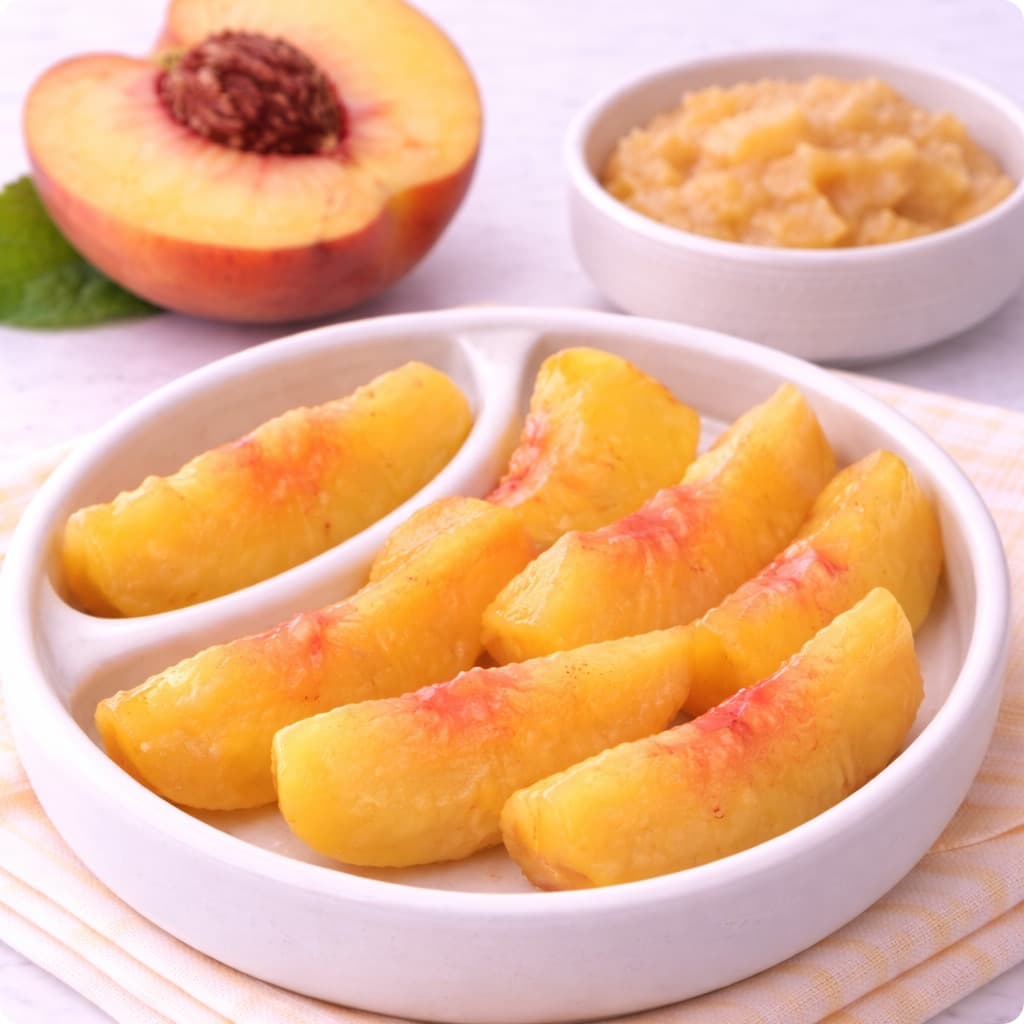
Soft Peach Slices
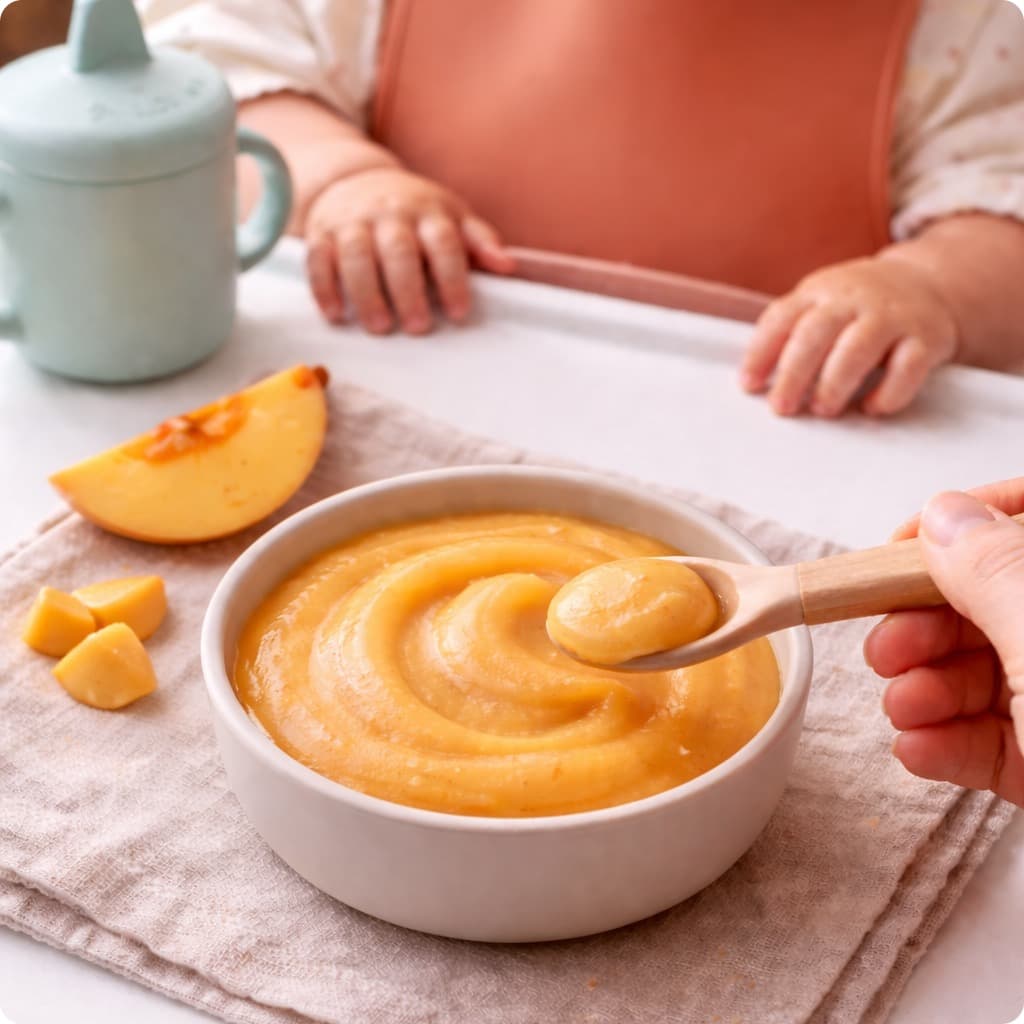
Peach Purée
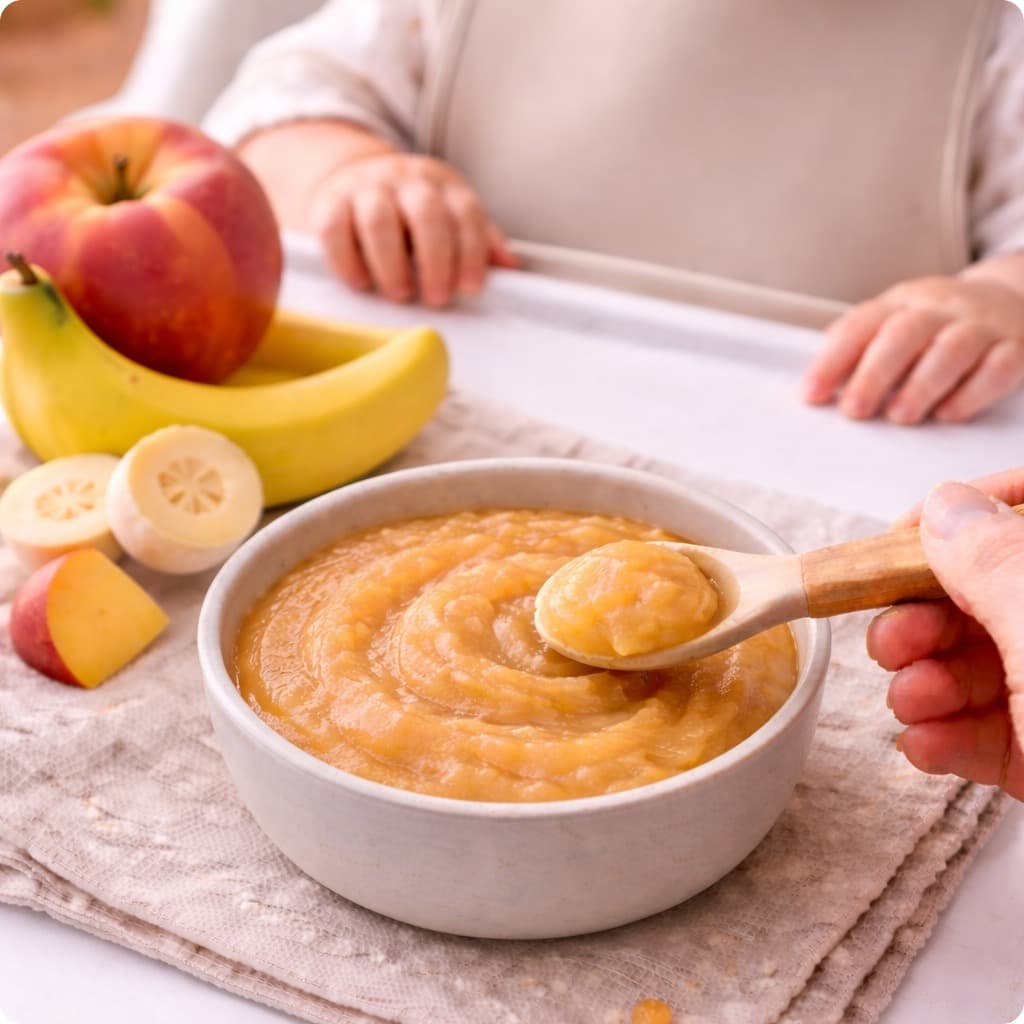
Banana & Peach Mash
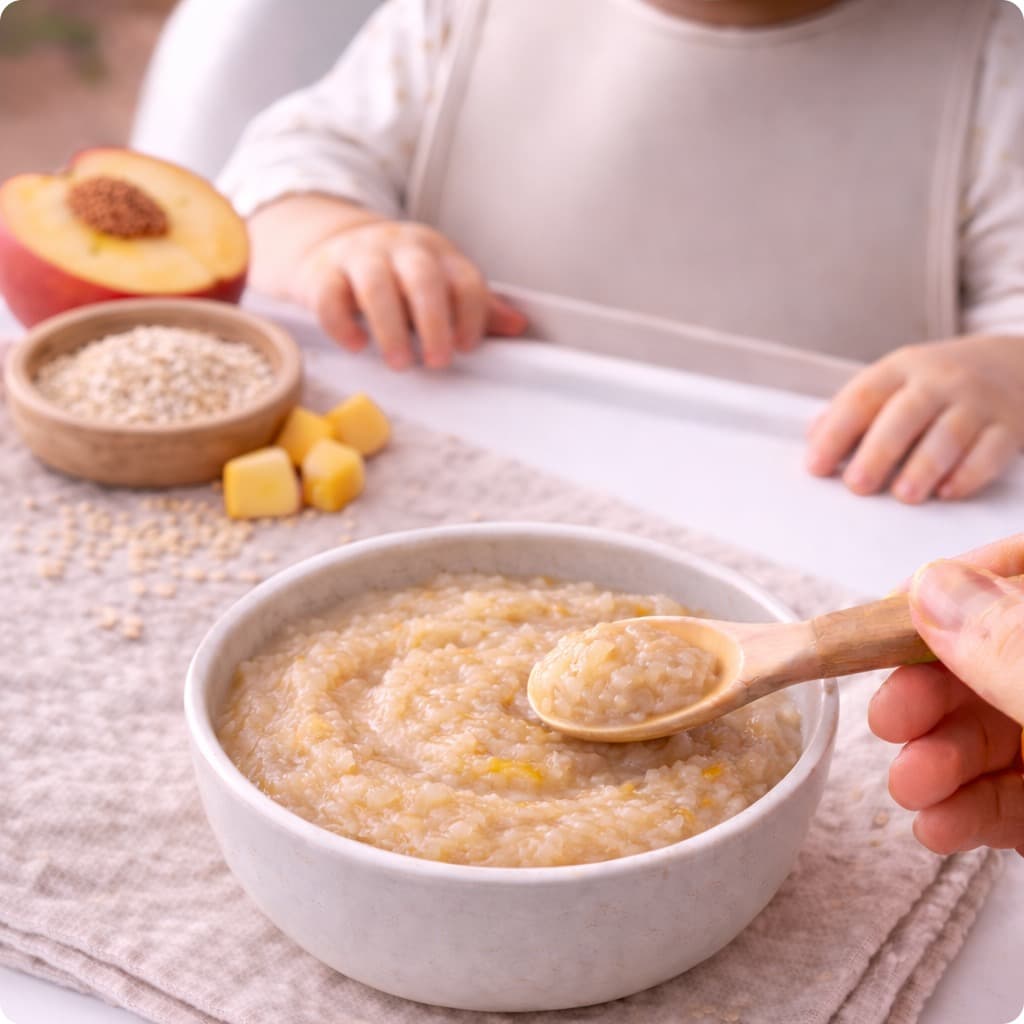
Peach Wheat Cereal

Cottage Cheese & Peach
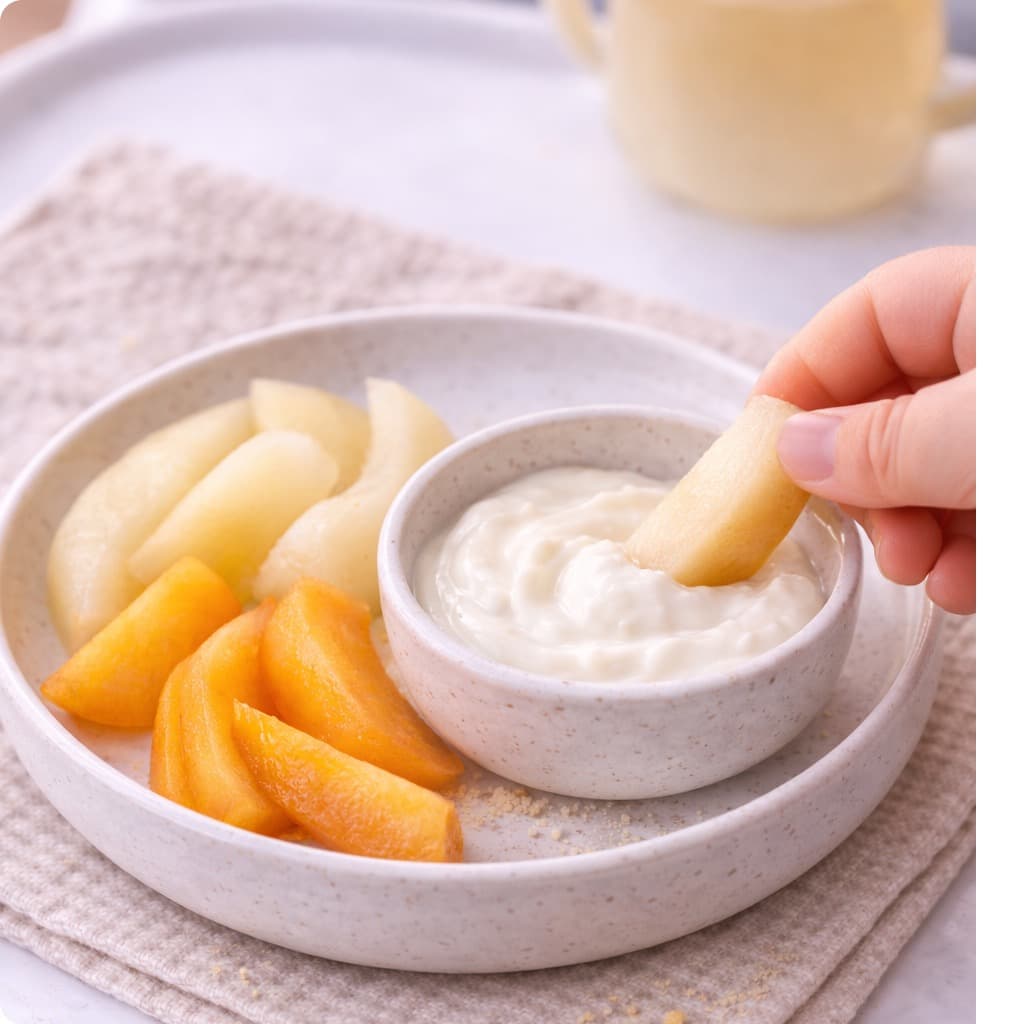
Fruit Wedges & Yogurt Dip
See all peach recipes for babies. Explore baby breakfast recipes, baby-led weaning recipes and first foods for baby for more ideas.
Related Guides
Frequently Asked Questions
Can a six-month-old have raw peach?
A fully ripe soft peach may be served mashed without cooking when a baby is ready for solids. If the flesh is still firm, steam or simmer it until easily mashed, then cool before serving. Remove the entire stone in either case.
What if the peach stone will not come out?
For a clingstone peach, cut the soft flesh away from the stone rather than forcing the halves apart. Check for hard fragments before mashing or offering any pieces.
Can babies eat canned peaches?
Choose peach packed in water or its own juice, preferably with no added sugar. Check for pit fragments, assess firmness and slippery shapes, and mash or further soften the fruit as needed; avoid treating a canned wedge as automatically safe.
Should I remove peach skin for a baby?
Remove peel if it is leathery, separates in long chewy strips or is difficult for the child to manage. The aim is a manageable soft texture, not a universal peeling age.
Sources & References
This guide is informed by current guidelines from leading health organizations:
- ●CDC - When, What, and How to Introduce Solid Foods CDC
- ●NHS - Your Baby's First Solid Foods NHS
- ●WHO - Complementary Feeding WHO
- ●NHS - Preparing Food Safely for Babies NHS
- ●CDC — Choking Hazards (reviewed March 2026) CDC
