Can babies eat tomatoes?
Last updated October 2026
Yes.
Babies ready for solids, usually around six months, can try ripe soft tomato or cooked tomato in a suitable texture. Whole cherry tomatoes are a choking hazard; quarter small round tomatoes lengthwise following NHS advice, or offer a smooth soft preparation for beginners. Redness only where tomato touched the skin can be irritation, but a rash cannot always be diagnosed from its location alone.

When can babies eat tomatoes?
Tomatoes can be introduced with complementary foods when the baby sits upright with good head control and can swallow food. Vitamin C in tomato may help absorb non-heme iron when served with beans or lentils.
Use very ripe soft tomato flesh or cook firmer tomato until tender. Tomato sauce can be mixed into other foods without added salt. Raw pieces should depend on the child's chewing and grasping ability, not a fixed nine- or twelve-month cutoff; do not assume cooking removes the fruit's acidity.
How to serve tomatoes safely
For an early eater, use soft cooked tomato flesh or mash ripe tomato, removing any tough detached skin and hard parts. A little unsalted tomato sauce can be stirred into well-cooked pasta, legumes or vegetables.
Wash small tomatoes before slicing. Whole cherry and grape tomatoes are round choking hazards. NHS guidance recommends quartering small round fruits; slice lengthwise into quarters, never across the middle into circular coins. If the flesh remains firm or slippery or the child is new to solids, mash or soften it further rather than relying on quartering alone.
As finger and chewing skills develop, offer suitable soft tomato pieces. Do not use a pea-size measurement, a birthday, or quartering alone as a safety guarantee. Remove hard seeds, stems and troublesome skin as needed.
Check packaged tomato sauce for added salt and sugar; products differ. A no-added-salt or low-salt sauce is easier to adapt for infants than one with heavy seasoning.
Safety considerations
Do not give whole small round tomatoes or coin slices. Follow NHS advice to quarter lengthwise, adapting texture further for beginners.
Remove loose tough peel if it makes a serving difficult to manage; no strict first-birthday peeling cutoff is established.
Redness where tomato contacts skin can be irritation, but do not assume every rash is harmless or exclude allergy without evaluating accompanying symptoms.
Seek medical advice for possible allergic reactions such as hives, repeated vomiting or swelling; breathing difficulty, severe swelling or collapse require emergency help.
Check sodium or salt on each sauce or canned product; choose no-added-salt or lower-salt versions rather than assuming all jars have the same ingredients.
If symptoms recur after tomato, discuss the pattern with a health professional instead of self-diagnosing a specific allergy syndrome.
Nutritional benefits for babies
Tomato provides vitamin C, which contributes to iron absorption when eaten with plant iron sources.
Tomato contains lycopene and other plant compounds; this does not guarantee a particular health benefit.
Tomato contributes some potassium as part of a varied diet.
Tomatoes offer fruit and vegetable variety, without replacing iron-rich complementary foods.
Cooked and raw tomato have different textures; choose the form your baby can manage.
Tomato recipes for babies
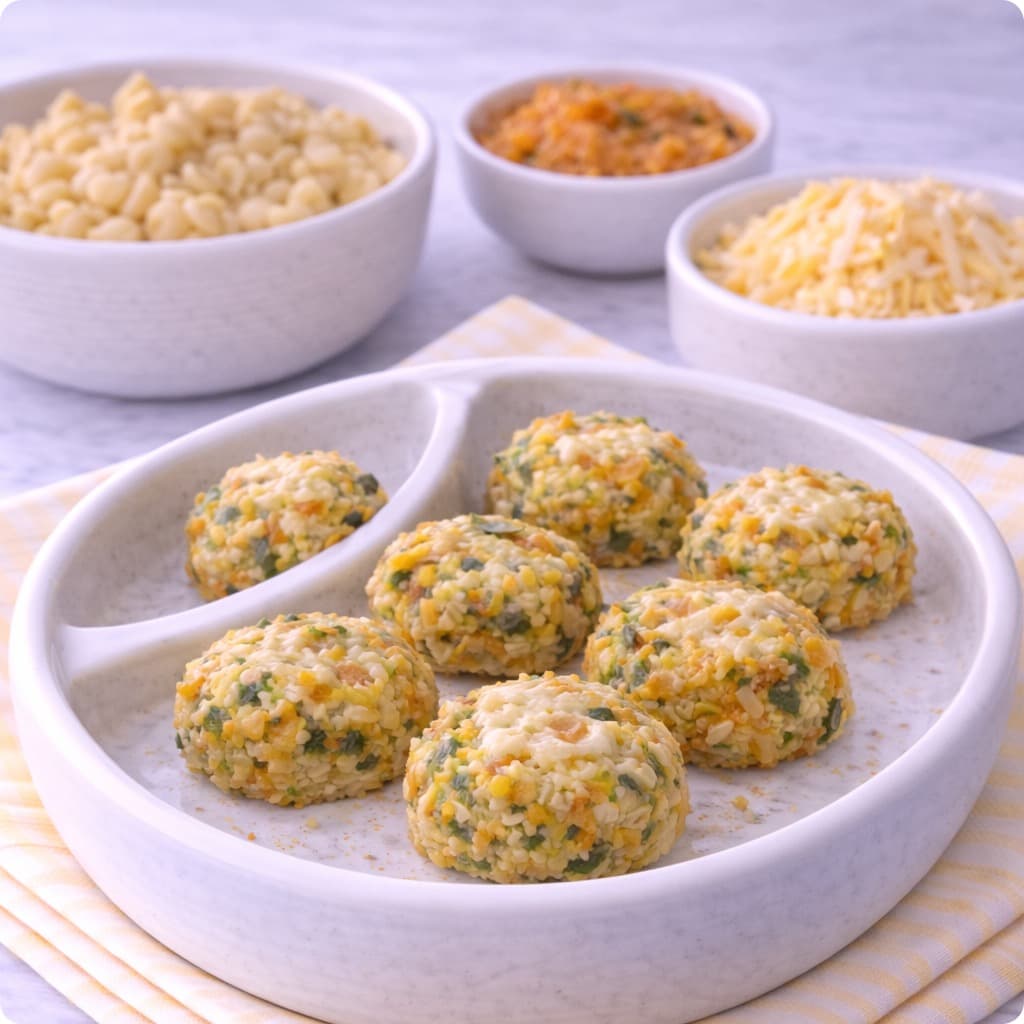
Mini Veggie Pasta Bake Bites
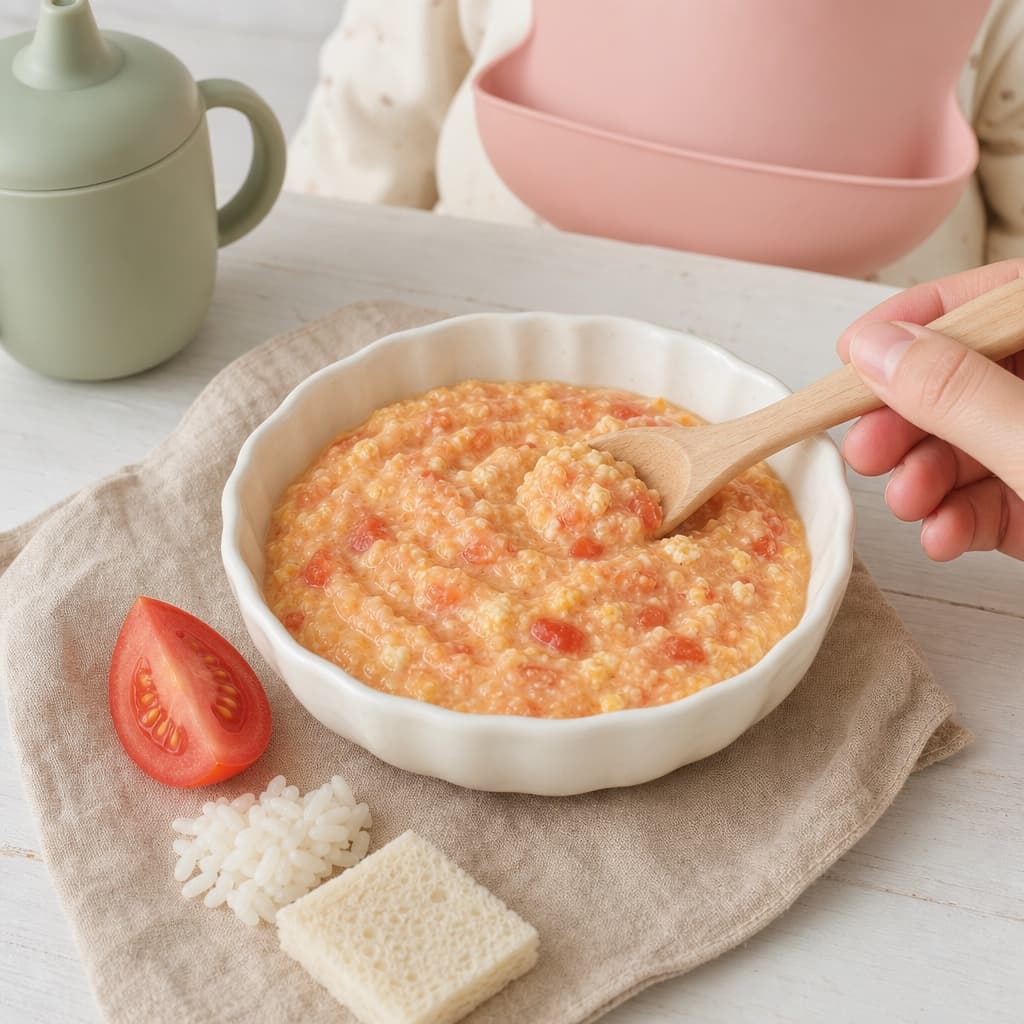
Tomato Egg Breakfast Mash
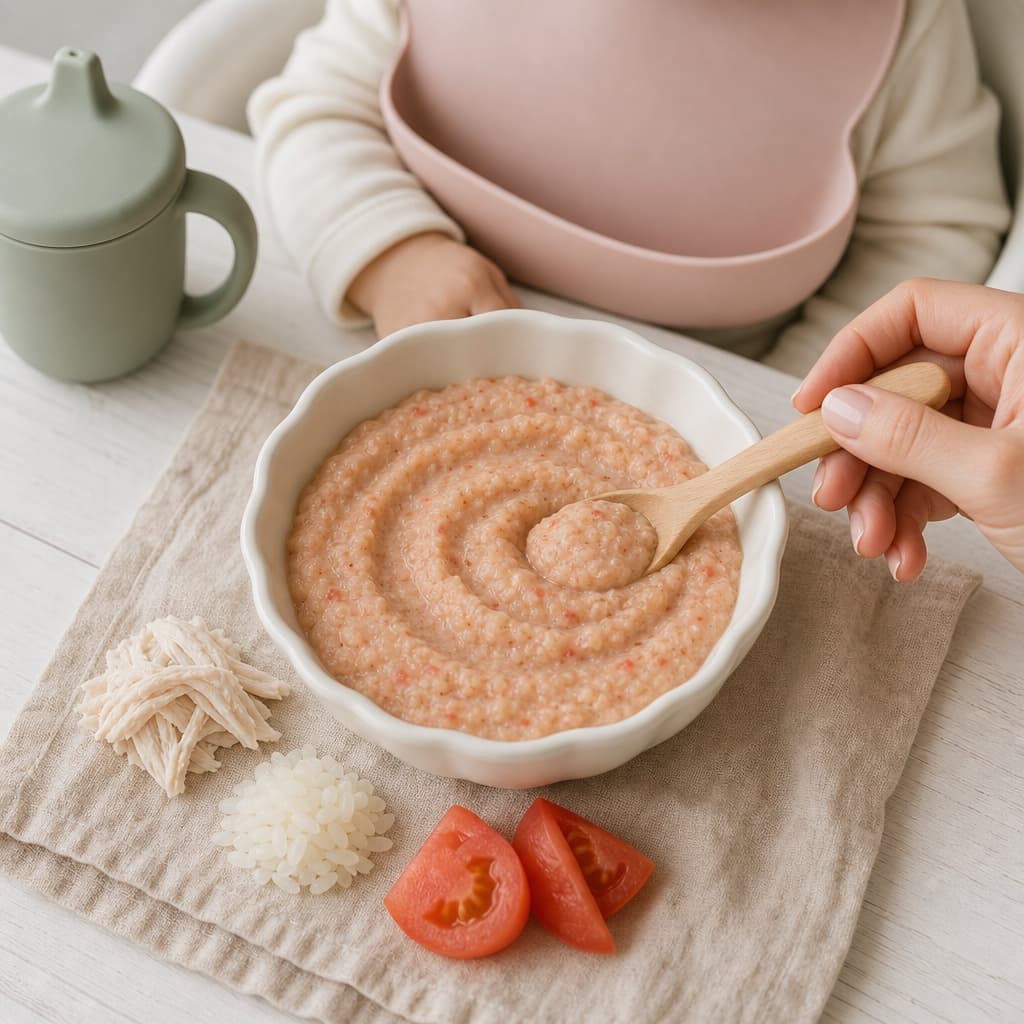
Chicken Tomato Rice Bowl
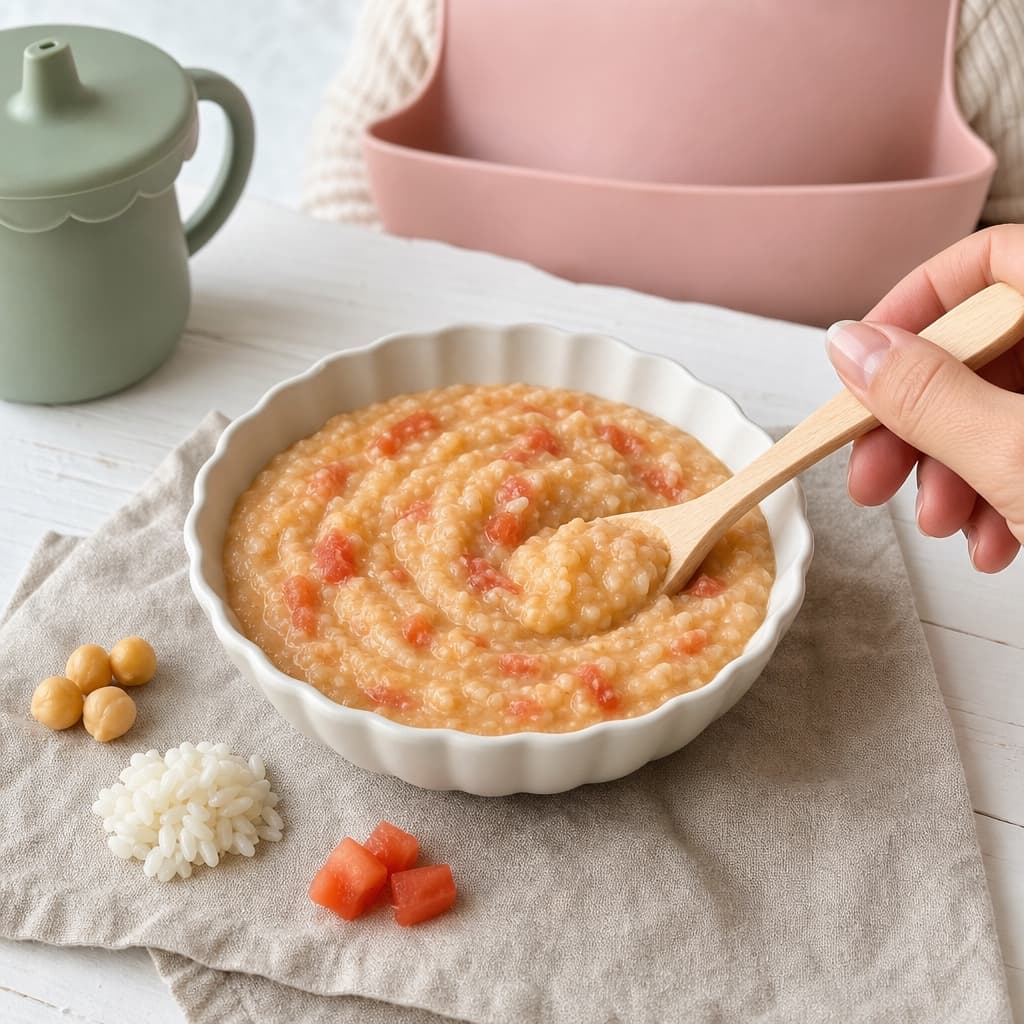
Chickpea Tomato Rice Stew
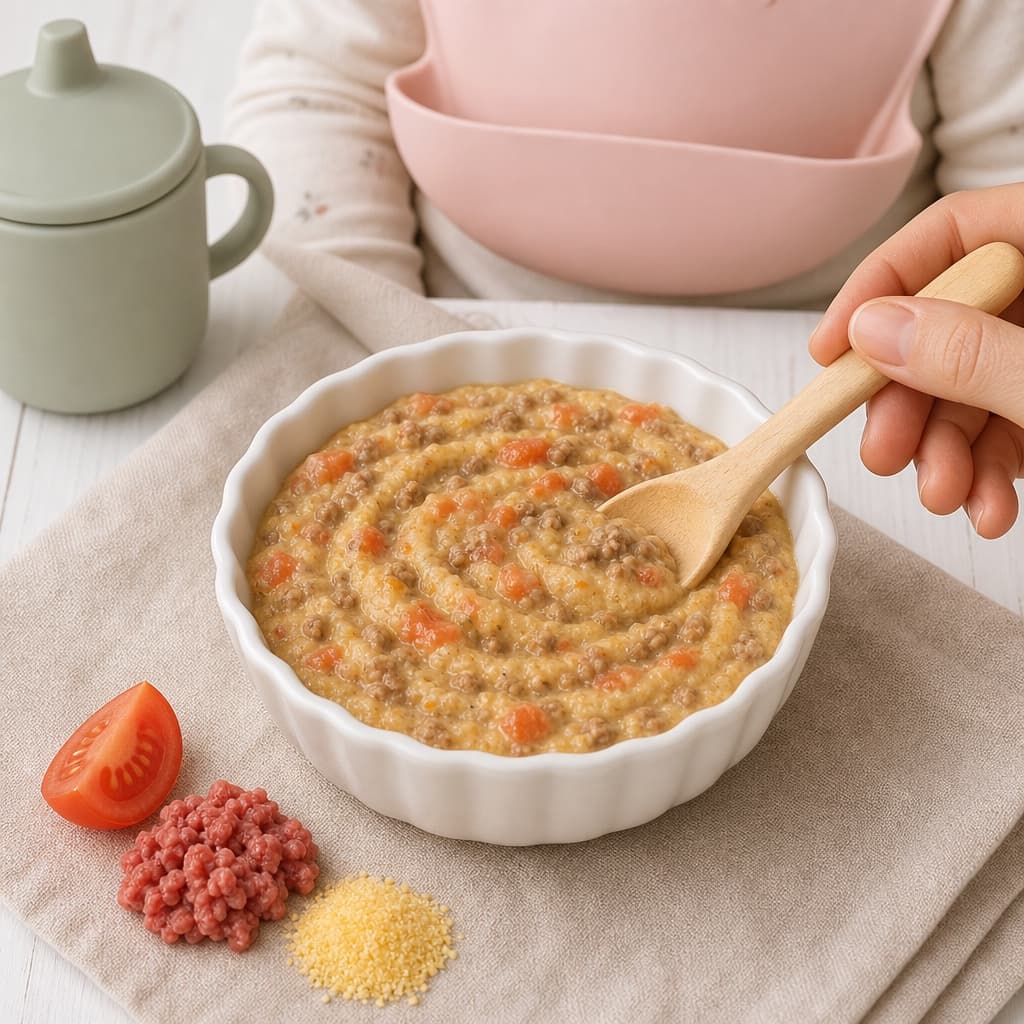
Beef Tomato Polenta Bowl
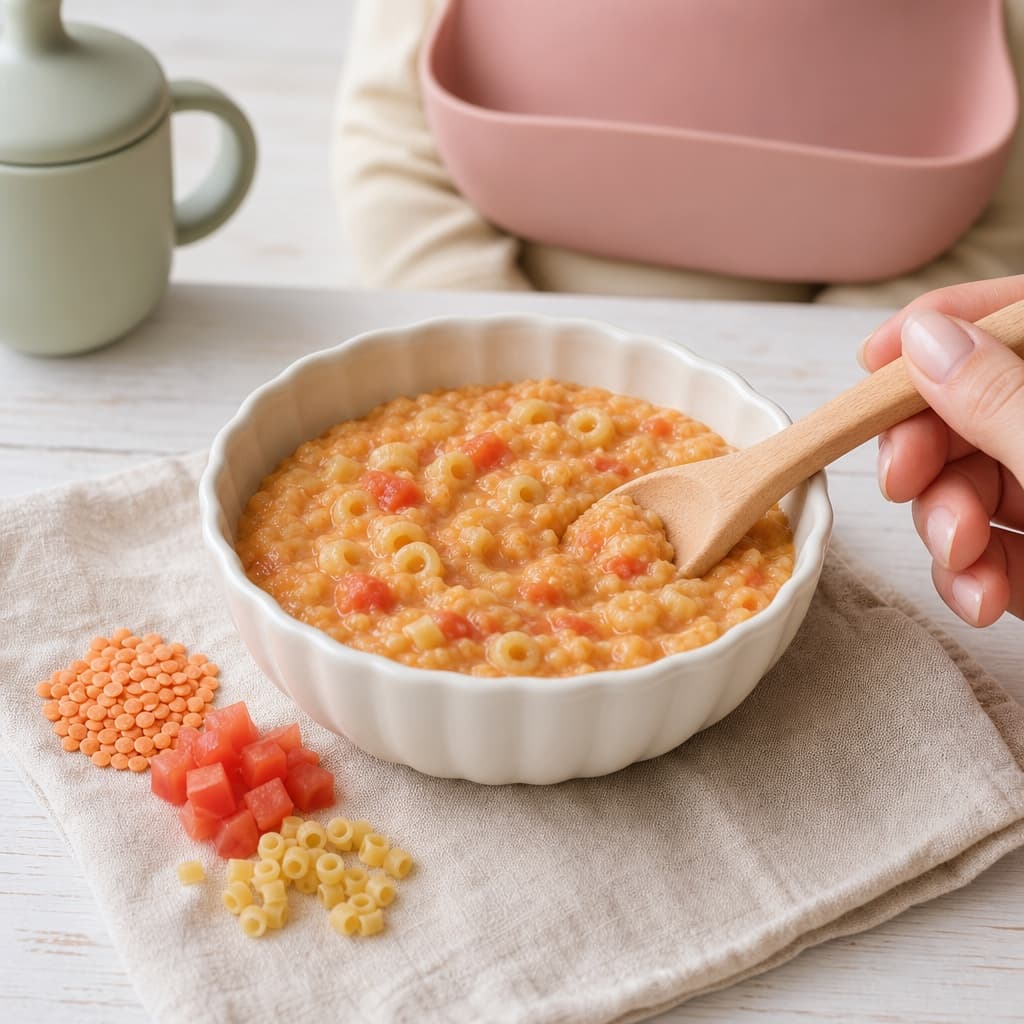
Lentil Tomato Mini Pasta Bowl
Related guides
Frequently asked questions
Are tomatoes a choking hazard for babies?
Whole cherry tomatoes pose a significant choking risk. Quarter small round tomatoes lengthwise for a child able to manage pieces; for new eaters use a smooth or suitably soft mash. Remove tough skins or seeds if they are difficult to manage.
Why does my baby's mouth get red after tomatoes?
Mild redness limited to skin that touched tomato can be contact irritation, but its location or duration alone cannot prove it is not allergy. Stop and seek clinical advice for concerning or repeat reactions; breathing difficulty or collapse warrants emergency assistance.
Can babies eat tomato sauce or pasta sauce?
A plain cooked tomato sauce without added salt may be mixed into suitable foods once solids begin. Some store-bought sauces are high in salt or sugar, so check the actual label rather than banning all jarred products or relying on one universal threshold.
Should I peel tomatoes for my baby?
Peeling can be helpful when the skin is tough, slippery or separates into chewy strips. Soft skin may be managed by some babies, but evaluate the individual serving instead of using an automatic 12- or 18-month rule.
Are tomatoes acidic enough to cause reflux?
Some children may seem uncomfortable after acidic foods, but tomato is not a universal cause of reflux and cooking does not guarantee lower acidity. Discuss persistent vomiting, feeding distress or poor growth with a clinician.
Can babies be allergic to tomatoes?
Tomato is not among the most common regulated allergens, but reactions can occur. Localized redness may reflect contact irritation; seek medical advice for hives, repeated vomiting or swelling, and immediate emergency care for breathing difficulties.
How much tomato can a baby eat?
There is no universal tablespoon requirement. Offer a small amount of soft tomato with a meal and respond to hunger and fullness cues, alongside a variety of other foods.
Sources & References
This guide is informed by current guidelines from leading health organizations:
- ●AAP - Food Allergy Prevention AAP
- ●AAP - Starting Solid Foods AAP
- ●NHS - Your Baby's First Solid Foods NHS
- ●CDC — Choking Hazards (reviewed March 2026) CDC
- ●NHS - Preparing Food Safely for Babies NHS
- ●Lewisham and Greenwich NHS — Introducing solid foods NHS
