Quick answer
Babies can eat tuna from around 6 months, once they're starting solids.
Unlike very high-mercury fish, tinned tuna is fine in moderation, but because tuna carries more mercury than white fish, it isn't counted as an oily-fish portion and should be limited.
Fish is a common allergen, so introduce tuna on its own at first and keep it in the diet once tolerated.
When babies can eat tuna
Babies can eat tuna from around 6 months, once they're starting solids.
Limit tuna because of mercury: a sensible guide is no more than about 1–2 small servings of tinned tuna a week for babies, and prefer lower-mercury white fish for more frequent fish meals.
Fish is a common allergen - offer a small amount on its own first and watch for any reaction.
See our first foods for baby guide for more ideas.
Nutritional benefits for babies
- 💚Protein - high-quality complete protein for growth.
- 💚Vitamin D - supports bone development and the immune system.
- 💚Vitamin B12 - supports nerve function and red blood cells.
- 💚Selenium - supports the immune system.
- 💚Some omega-3 (more in fresh than tinned) - supports brain development.
- 💚Soft and easy to flake and mash for babies.
How to serve tuna for babies
6–9 months: Mash well-drained tinned tuna (in spring water, no added salt) with avocado, mashed potato, or full-fat yoghurt for a smooth, spreadable texture.
6–9 months: Flake soft cooked fresh tuna and mix into purées (cook fresh tuna gently so it stays moist, not dry).
9–12 months: Tuna mashed into pasta sauce, folded into fritters, or spread on toast fingers as the pincer grasp develops.
12+ months: Tuna in family meals - pasta bakes, sandwiches, patties - kept low-salt.
Tuna recipes for babies
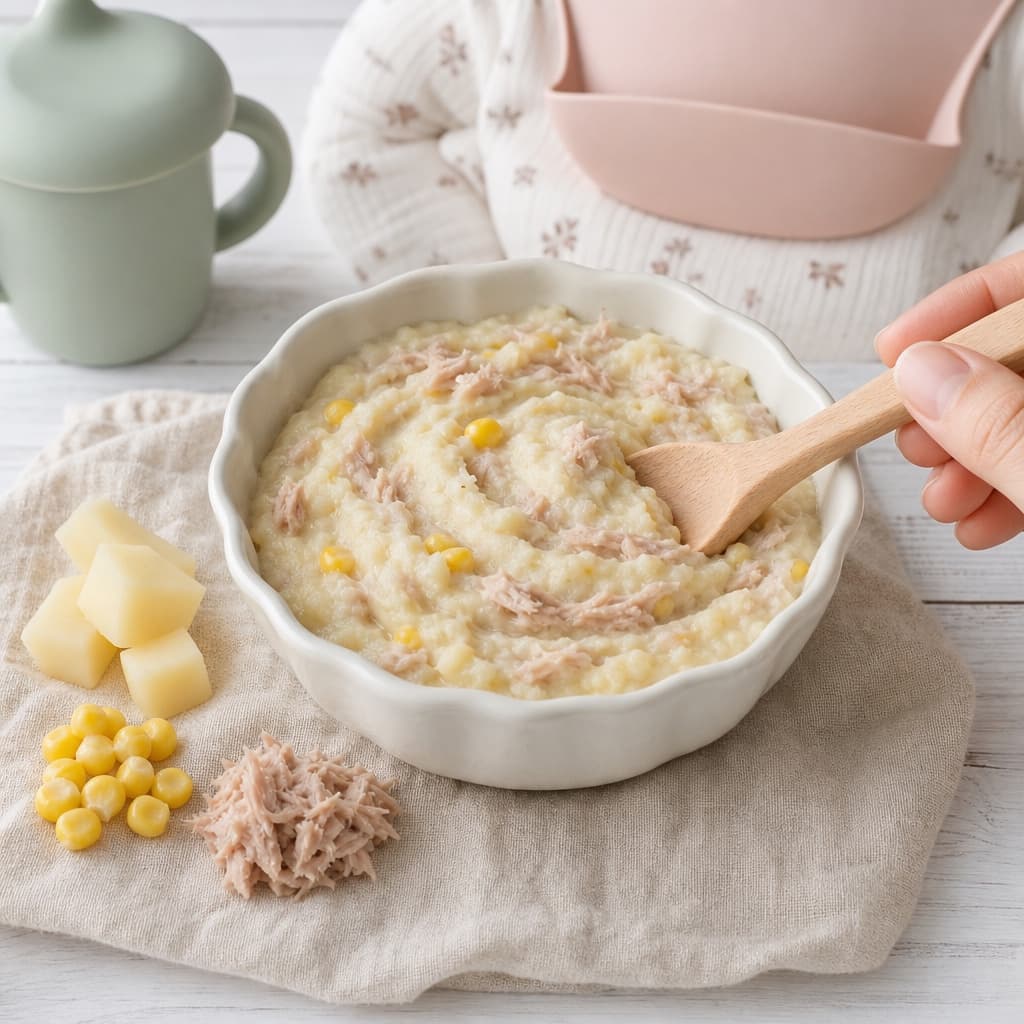
Tuna Potato Sweetcorn Mash
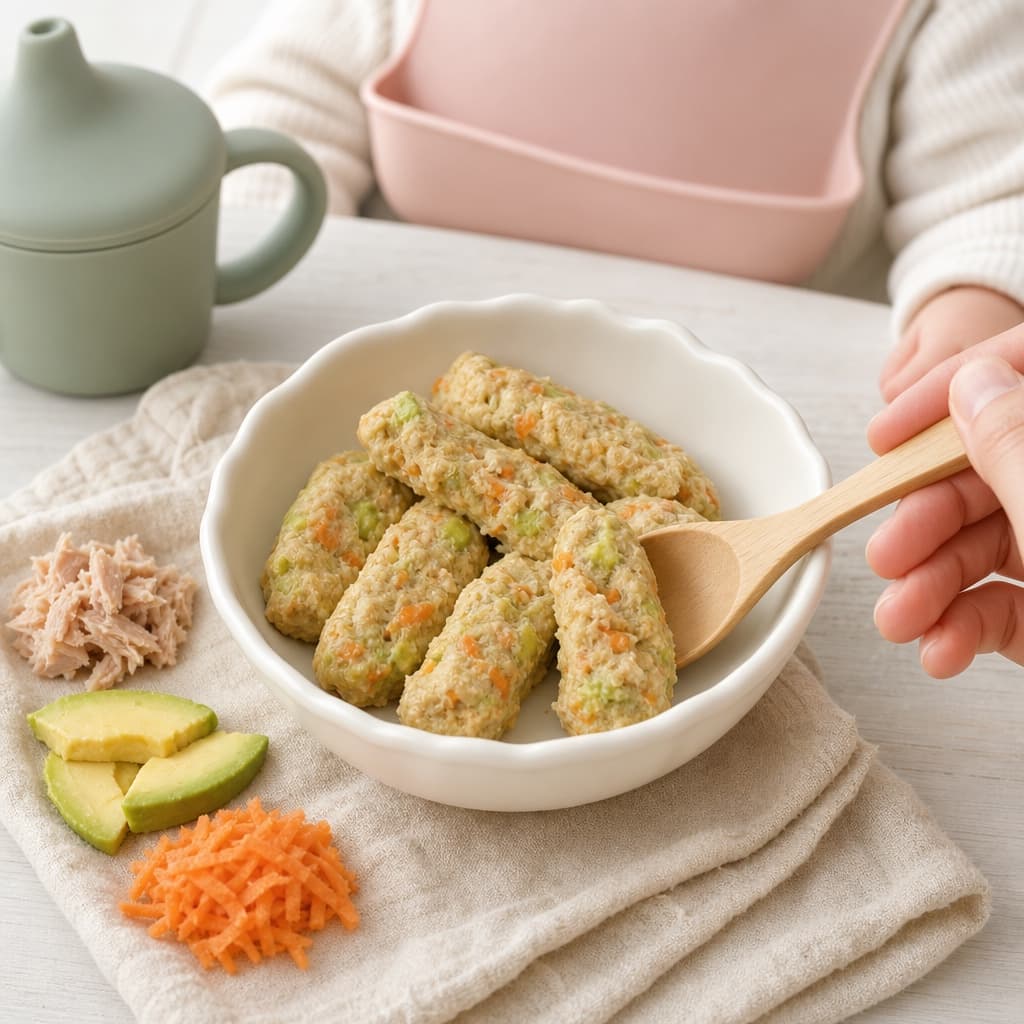
Avocado Tuna Mini Cakes
See all tuna recipes for babies. Explore baby breakfast recipes, baby-led weaning recipes and first foods for baby for more ideas.
Frequently Asked Questions
Can babies eat Tuna?
Yes. Babies can eat Tuna starting around 6 months when they begin solid foods. It should be served in a safe texture and size for babies.
When can babies eat Tuna?
Babies can eat Tuna from around 6 months when starting solids. Babies can eat tuna from around 6 months, once they're starting solids. Limit tuna because of mercury: a sensible guide is no more than about 1–2 small servings of tinned tuna a week for babies, and prefer lower-mercury white fish for more frequent fish meals. Fish is a common allergen - offer a small amount on its own first and watch for any reaction.
Is Tuna a choking hazard for babies?
Tuna is generally safe for babies when prepared properly. 6–9 months: Mash well-drained tinned tuna (in spring water, no added salt) with avocado, mashed potato, or full-fat yoghurt for a smooth, spreadable texture. 6–9 months: Flake soft cooked fresh tuna and mix into purées (cook fresh tuna gently so it stays moist, not dry). 9–12 months: Tuna mashed into pasta sauce, folded into fritters, or spread on toast fingers as the pincer grasp develops. 12+ months: Tuna in family meals - pasta bakes, sandwiches, patties - kept low-salt.
Is Tuna a common allergen?
Some babies may be allergic to Tuna. Introduce Tuna carefully when babies start solids and watch for reactions.
How should Tuna be served to babies?
6–9 months: Mash well-drained tinned tuna (in spring water, no added salt) with avocado, mashed potato, or full-fat yoghurt for a smooth, spreadable texture. 6–9 months: Flake soft cooked fresh tuna and mix into purées (cook fresh tuna gently so it stays moist, not dry). 9–12 months: Tuna mashed into pasta sauce, folded into fritters, or spread on toast fingers as the pincer grasp develops. 12+ months: Tuna in family meals - pasta bakes, sandwiches, patties - kept low-salt.
What nutrients does Tuna provide for babies?
Tuna provides nutrients like protein that support babies' growth and development.
How long can I store Tuna for babies?
Cook Tuna to a safe temperature and store it in the refrigerator for up to 2 days, or freeze in single-serving portions for up to 1 month to preserve nutrients.
Should I buy organic Tuna for my baby?
Organic Tuna isn't strictly necessary for babies, but some families prefer to reduce pesticide exposure. Wash conventional produce thoroughly. Variety and freshness matter most.
How should I introduce Tuna for the first time?
Offer a small amount of Tuna in an age-appropriate texture when your baby is hungry but not starving, ideally early in the day so you can watch for any reactions over several hours.
Is Tuna a good finger food for babies?
Tuna is often served pureed or mashed at first. As your baby develops dexterity, you can offer it as finger food in soft, manageable pieces.
What foods pair well with Tuna for baby?
Tuna pairs well with cooked grains like rice or quinoa, soft vegetables like sweet potato and broccoli, and healthy fats to round out a balanced baby meal.
Should I cook Tuna before serving it to my baby?
Ripe, soft Tuna can be served raw, cut into baby-safe shapes. If the texture still feels firm, steam it briefly until it mashes easily.
How much Tuna can a baby eat?
There's no fixed amount. Start with 1-2 tablespoons of Tuna from around 6 months and let your baby regulate intake. Breast milk or formula remains the main source of nutrition in the first year.
Should I peel or remove the pit from Tuna for my baby?
For Tuna, peeling or pitting is usually not required, but wash it well and serve in a size and texture safe for your baby.
How should I store Tuna fresh for my baby?
Store fresh Tuna in a cool, dry place or in the refrigerator crisper drawer, depending on the food. Wash just before preparing and use it when ripe and firm for the best quality for your baby.
Safety tips
- ✓Limit tuna for mercury - about 1–2 small servings a week; use lower-mercury white fish for more frequent fish meals.
- ✓Choose tinned tuna in spring water with no added salt (not brine or oil with salt).
- ✓Introduce as an allergen - a small amount first, watching for any reaction.
- ✓Check tinned tuna for any stray bones, and mash to a soft texture.
- ✓Don't serve raw tuna; cook fresh tuna thoroughly (keep it moist so it isn't a dry, choky texture).
- ✓Avoid salty tuna products and mayonnaise-heavy tuna salad for babies.
Get recipes + a feeding plan for your baby
Save this food to your baby's list, get age-appropriate recipes and follow a personalized feeding schedule - 350+ baby-safe meals in the app.
Try Nibli today to start planning your baby's meals.
verifiedSources & References
This guide is informed by current guidelines from leading health organizations: