Cod for Baby
Last updated October 2026
Cod is a lower-mercury white fish that can be introduced when your baby is ready for solids, usually around six months. It provides protein and several micronutrients, but fish is a common allergen and any bone left in a serving can be dangerous.
Quick answer
Once a baby can sit with support, control their head and swallow complementary foods, fully cooked cod can be considered. NHS guidance recommends introducing fish as a new common allergen individually and in a small amount so that a reaction is easier to recognise.
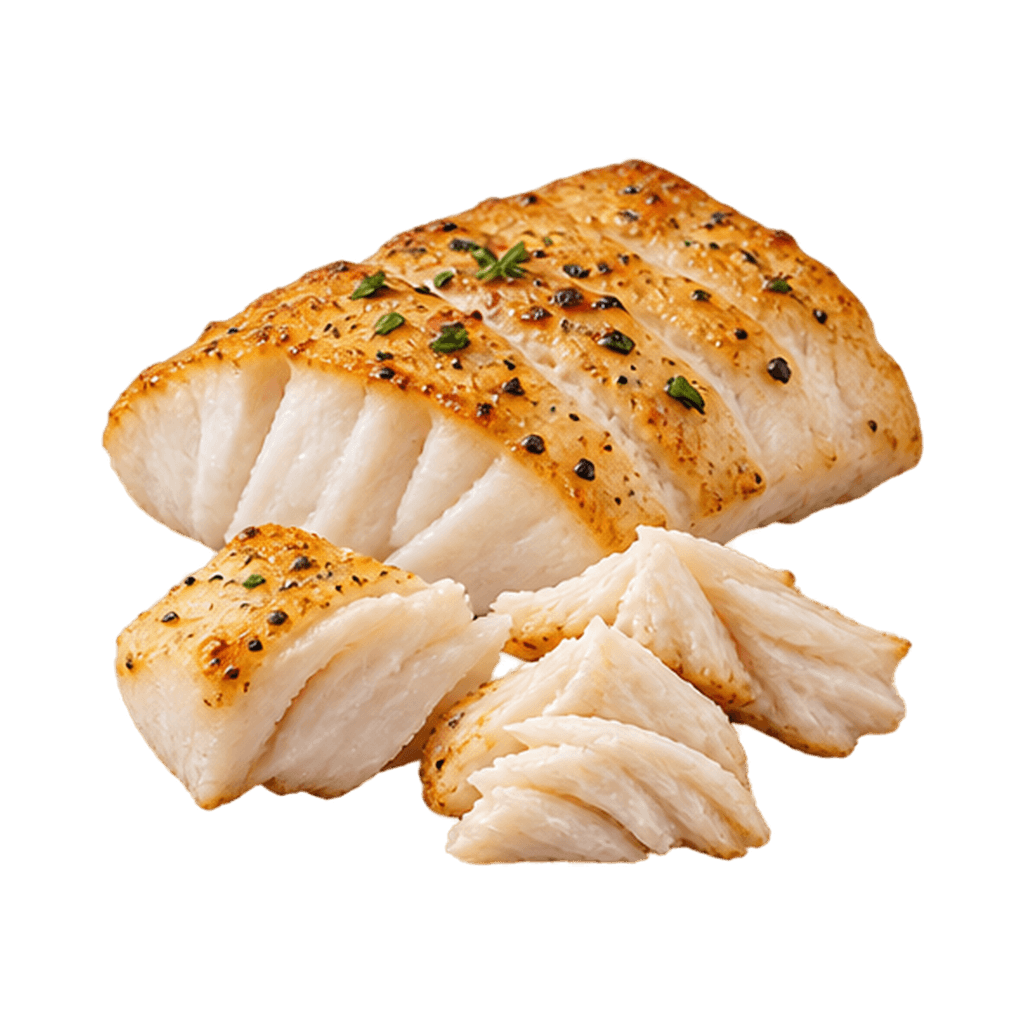
Prepare cod thoroughly and check for bones
Choose a fresh or properly thawed cod fillet from a reliable seller. Cook it to a safe fish temperature of 63°C / 145°F measured with a thermometer, or according to applicable national guidance, then allow it to cool enough to handle.
Break the fish into flakes on a clear plate and inspect and feel through the entire portion for thin pin bones, hard skin or other fragments. Remove all detectable bones; if the portion cannot be reliably checked, choose another food rather than serving it.
Mix moist flakes with mashed vegetables, unsalted potato or another tolerated soft food. Avoid dry tough pieces, raw or undercooked fish and high-salt smoked or heavily battered preparations. A soft finger-food portion may work later, but size alone does not make it choking-proof.
For a quick meal, fold fully cooked, carefully deboned cod into smooth sweet potato mash or unsalted vegetables. Introduce any new milk, wheat or egg in accompanying sauces separately if relevant.
The right shape and size depend on your baby's eating skills, not on age alone. Step-by-step preparation: How to prepare and flake white fish for baby
Also check how to cut food for baby-led weaning for general BLW cutting tips.
When can babies start cod?
If tolerated, fish can be part of the usual varied diet; no single tasting guarantees allergy prevention. A baby with a previously suspected reaction or diagnosed fish allergy needs advice from their own healthcare professional before another exposure.
Choosing cod over a high-mercury species reduces mercury exposure. The FDA/EPA fish advice distinguishes infant introduction around six months from fish-portion tables starting at ages one to three; don't copy toddler ounces as an infant serving rule.
Two checks matter before serving: cook cod fully and examine the flesh for every detectable bone. A cooked fillet can still contain pin bones; flaking it in good light and feeling through the portion is more useful than assuming a 'boneless' label guarantees none remain.
Cod is on the FDA/EPA lower-mercury Best Choices list. Their chart also provides serving sizes for children aged one and older, not a fixed ounce-and-frequency target for a six-month-old. Serve age-appropriate amounts and follow any national advice about locally caught fish.
See our first foods for baby guide for more ideas.
Fish bones, food safety, mercury and allergy
Fish is a major allergen: introduce a small amount separately from other new allergens; get emergency help for breathing trouble, severe swelling or collapse.
Cook fish fully; US FoodSafety.gov gives 63°C / 145°F for fish, or until opaque and readily separable when a thermometer is unavailable.
Inspect every bite for pin bones and hard skin. CDC specifically lists bones in fish as choking hazards.
Cod is on the FDA/EPA lower-mercury list, but the fish chart's 1–3-year serving examples are not infant-specific quantities.
Do not serve raw fish, salty smoked fish or dry firm chunks to beginning eaters.
Always supervise meals with the baby upright; different products and national advice can vary.
Cod recipes for babies
View all recipes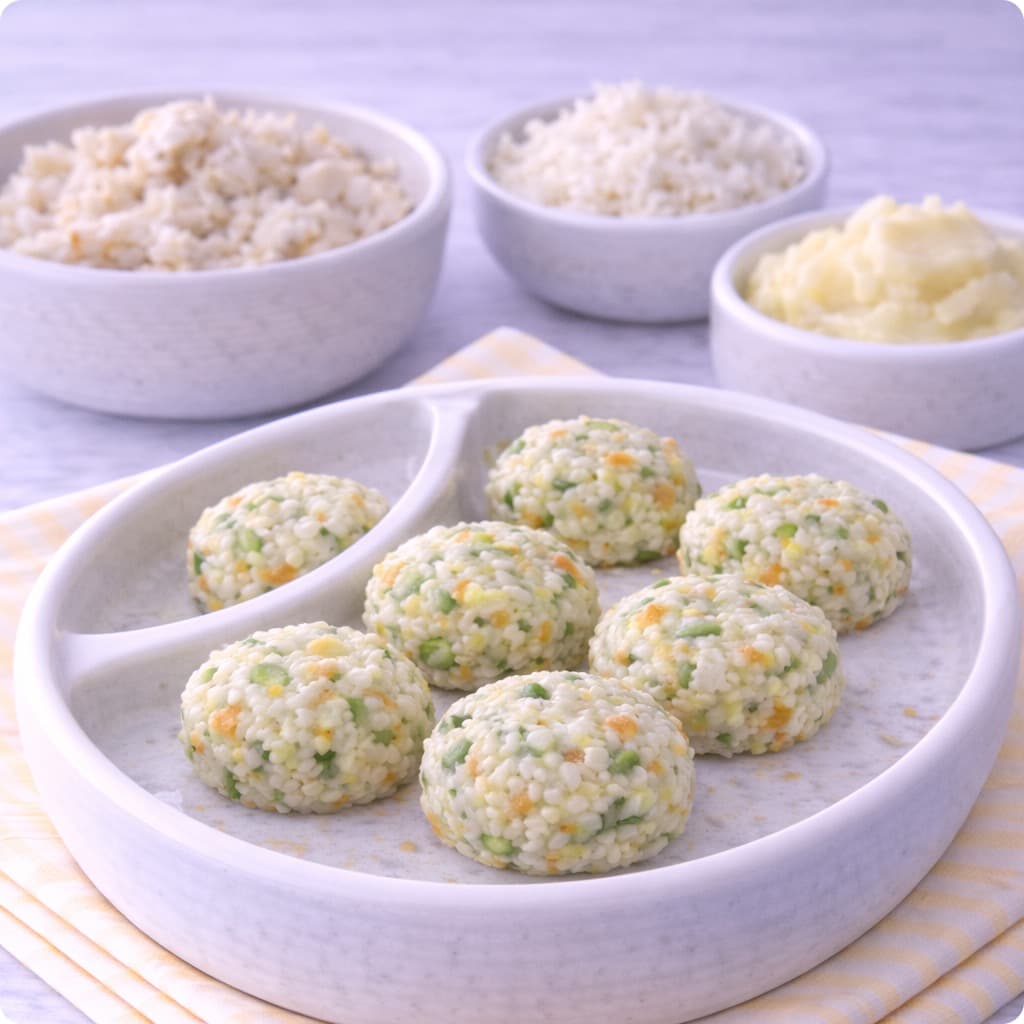
Soft Fish Rice Cakes
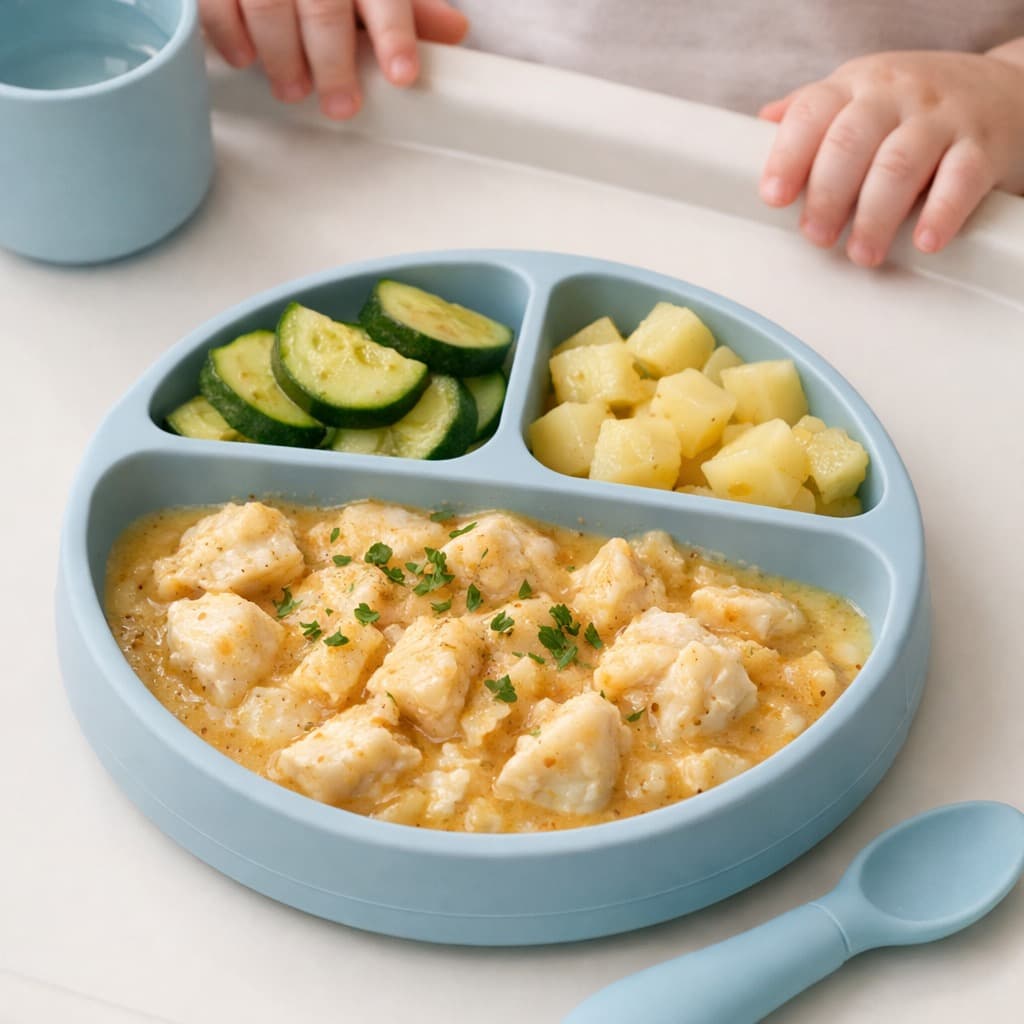
Light Fish Paprikash (Tomato-Free)
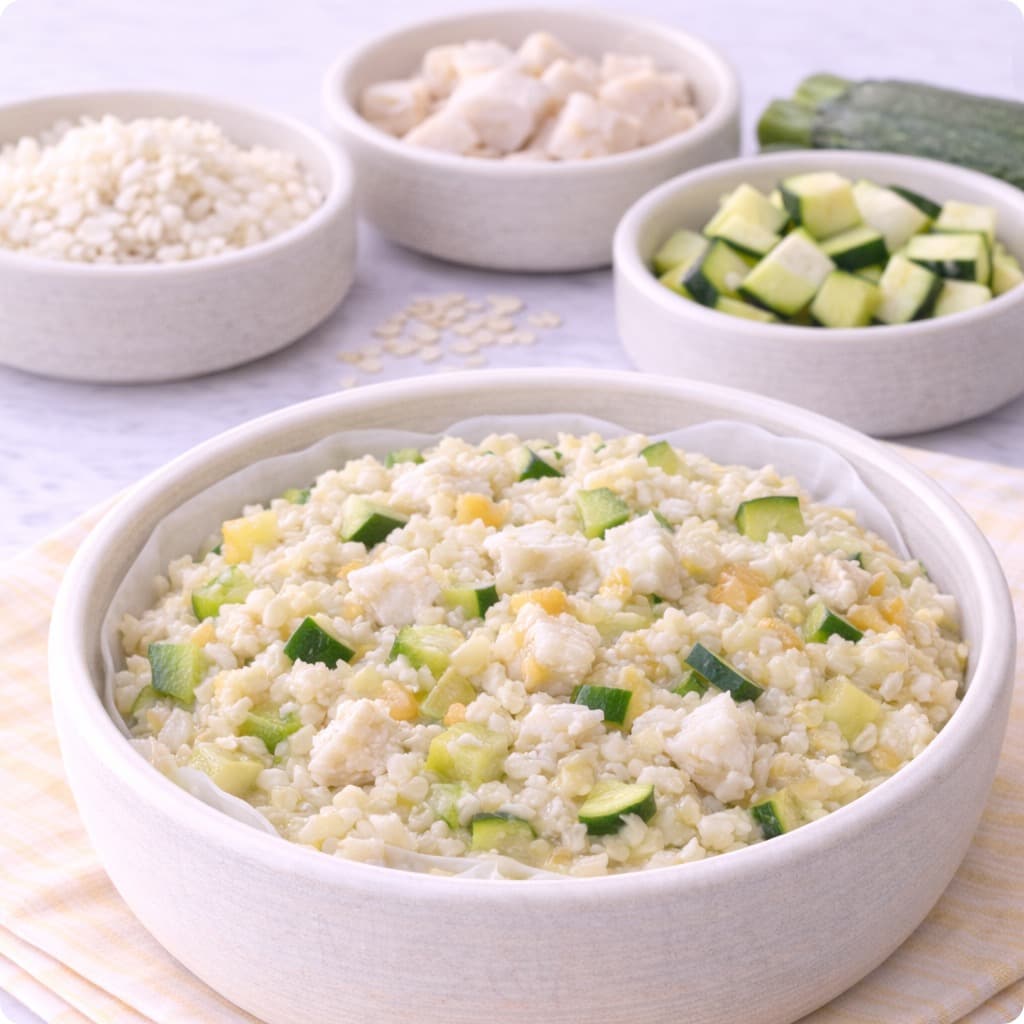
Fish + Rice + Zucchini Gentle Meal Bowl
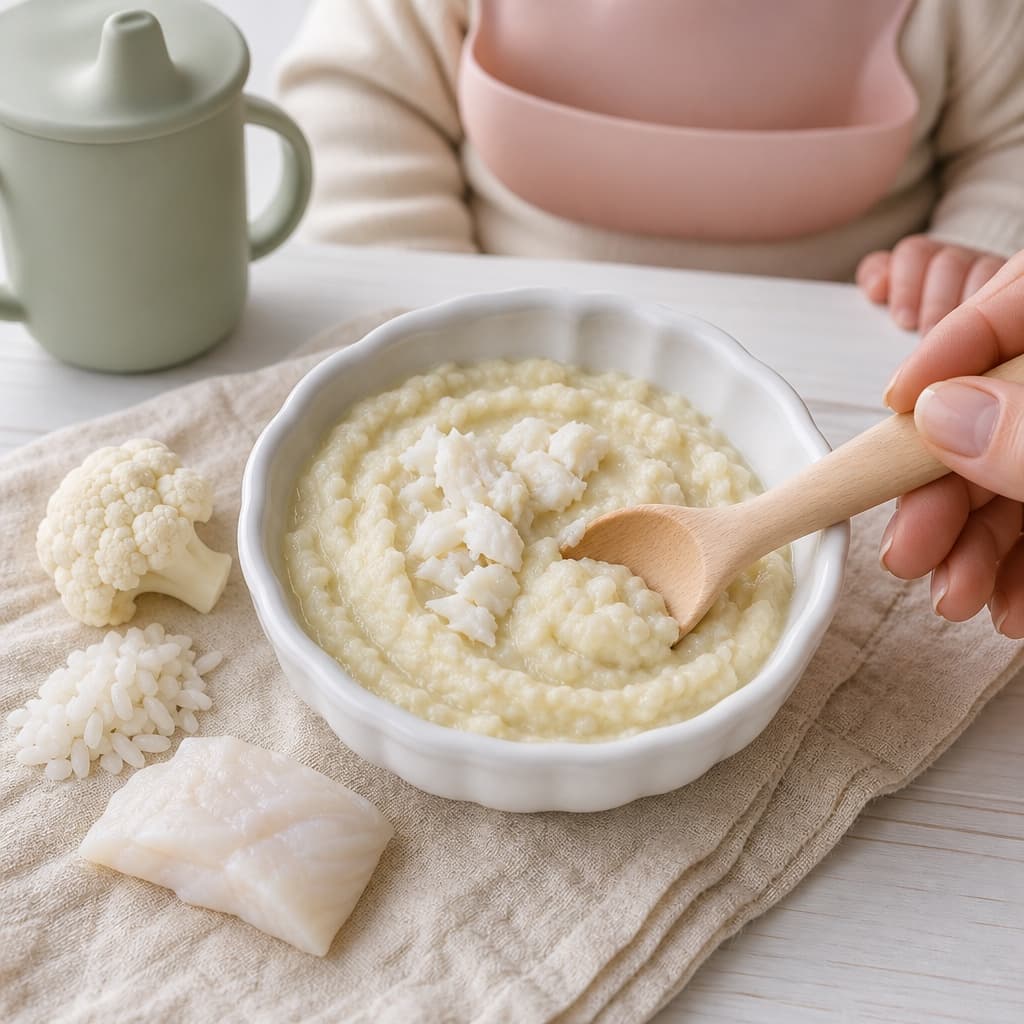
Cod Cauliflower Rice Mash
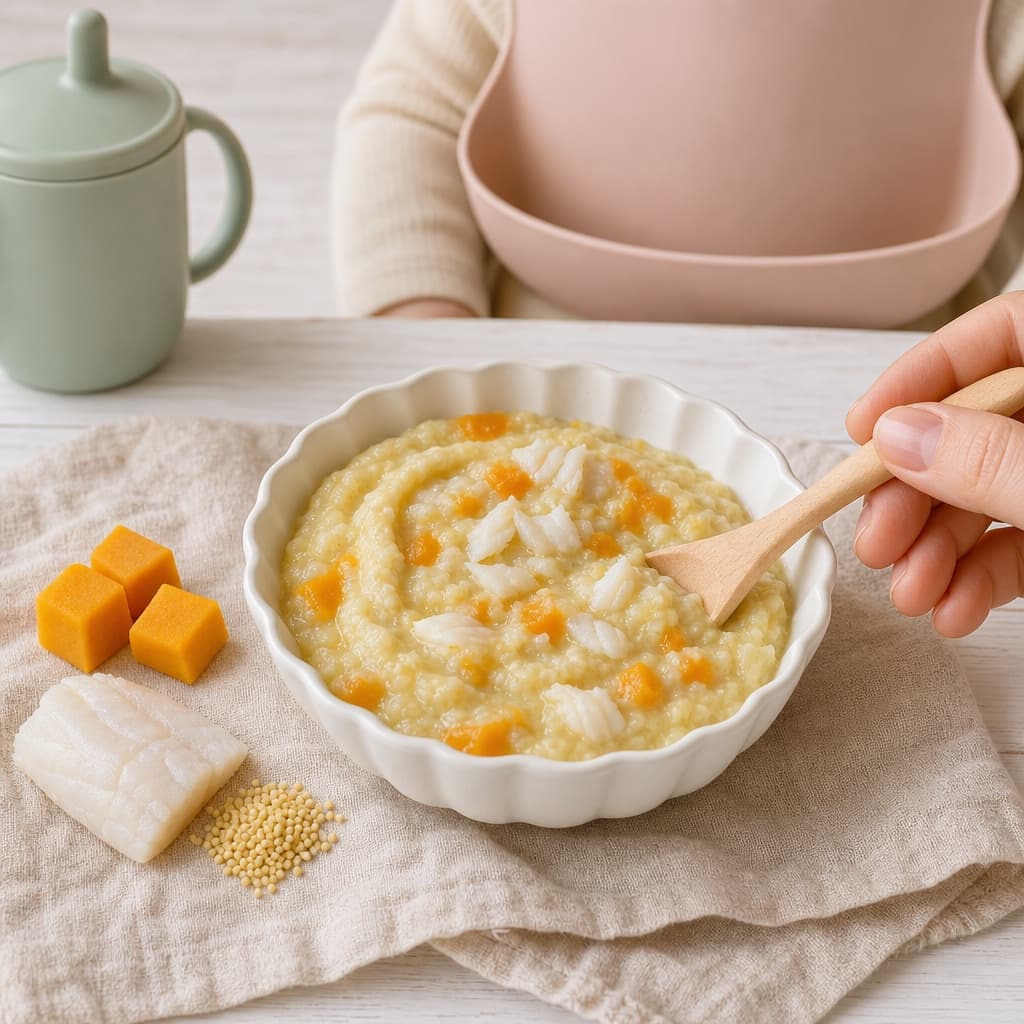
White Fish Pumpkin Millet Bowl
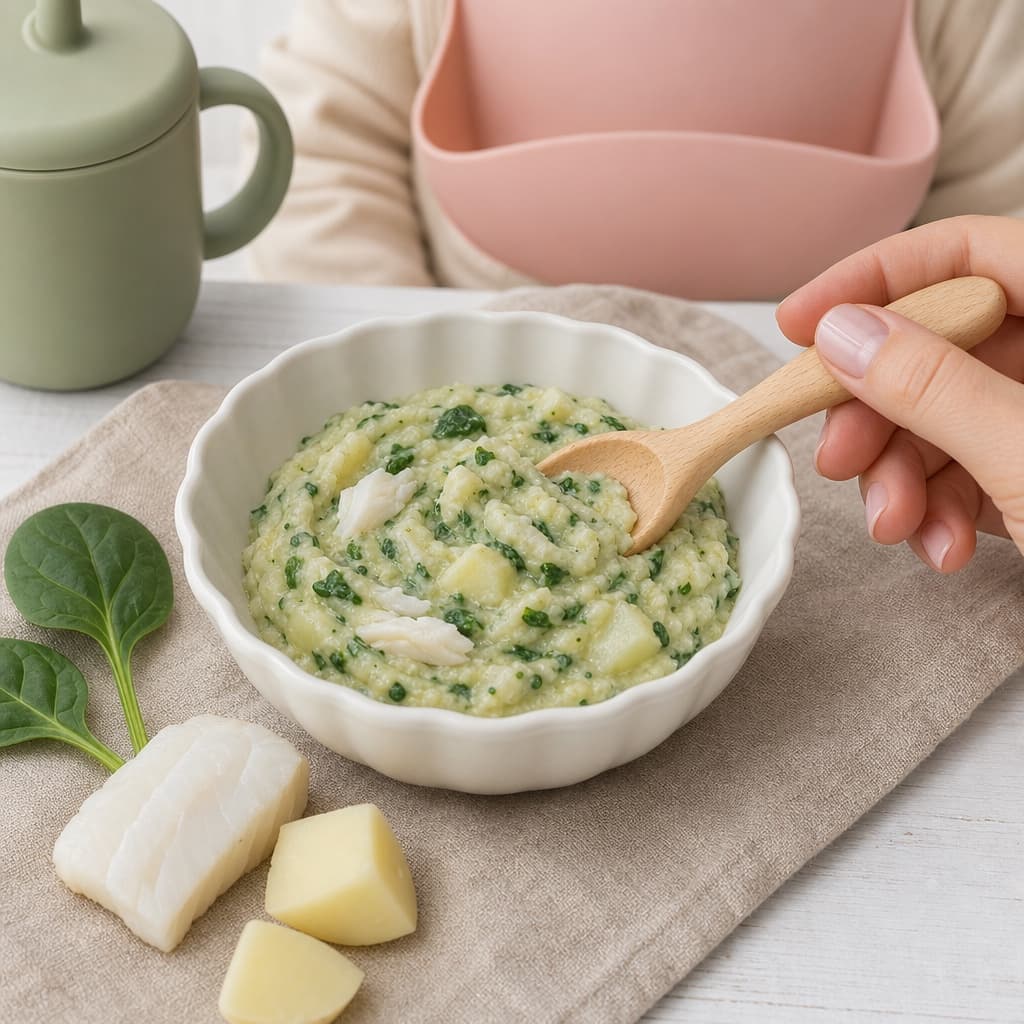
Cod Spinach Potato Mash
See all cod recipes for babies. Explore baby breakfast recipes, baby-led weaning recipes and first foods for baby for more ideas.
Related Guides
Frequently Asked Questions
When can a baby try cod?
From around six months when developmentally ready for solids, provided cod is fully cooked, inspected for bones and offered moist in a manageable texture.
Is cod low in mercury?
FDA/EPA classifies cod among its Best Choices for lower-mercury fish. Check national guidance, especially for fish caught locally.
How do I find tiny pin bones in cod?
Break the cooked fillet into flakes in good light and feel carefully through the full portion for bones and hard fragments. Remove every detectable bone before serving.
Does cod need to reach a particular temperature?
US FoodSafety.gov gives 63°C / 145°F for fish; verify doneness and avoid raw or partially cooked fish for babies.
Does cod count as a fish-allergen introduction?
Yes. Fish is a common allergen. Offer a small amount separately from other new allergens and seek healthcare advice if a reaction is suspected.
How much cod should a six-month-old eat weekly?
There is no infant ounce target in the FDA/EPA serving chart: its children's portion examples start at age one. Follow hunger cues, dietary variety and individual medical advice.
Can I use frozen cod?
Yes, when safely stored, thawed and thoroughly cooked. Check for bones just as carefully as with fresh fillets and avoid added-salt coatings.
Sources & References
This guide is informed by current guidelines from leading health organizations:
- ●FDA/EPA - Fish choices for children and families FDA
- ●NHS Best Start in Life - Introducing foods that could trigger an allergic reaction NHS
- ●FoodSafety.gov - Safe Minimum Internal Temperatures USDA
- ●CDC — Choking Hazards (reviewed March 2026) CDC
- ●NHS - Feeding your baby from around 6 months NHS