Fish for Baby
Last updated October 2026
A baby ready for solids, generally around six months, can try thoroughly cooked fish with every bone removed and the flesh served soft and moist. Fish is a common allergen, so keep the first serving's ingredients clear and follow relevant allergy advice.
Quick answer
Once ready for complementary solids, a baby can try fully cooked fish carefully checked for hidden pin bones. Serve moist flakes or fish blended into a soft already-tolerated food.
Choose the species, cook thoroughly and inspect for bones
Check the exact fish type against national advice. The FDA/EPA Best Choices group includes salmon, cod, pollock and trout; avoid species labelled Choices to Avoid.
Cook fish thoroughly according to official food-safety guidance. Separate into small moist flakes, remove every bone and inspect again with clean fingers; trim tough skin.
Early eater: offer soft cooked boneless flakes mixed with previously tolerated mash. Keep fish identifiable as the only new allergen in the meal.
Developing self-feeding: serve soft flaked fish or a moist low-salt cooked fish mixture matched to the child's grasp; avoid dry chunks, bones and raw fish.
Toddler family meals: continue bone checks, local mercury guidance, age-appropriate portions and supervision rather than a generic oily-fish limit.
The right shape and size depend on your baby's eating skills, not on age alone. Step-by-step preparation: How to prepare cooked, boneless fish
Also check how to cut food for baby-led weaning for general BLW cutting tips.
When can babies eat fish?
Fish can trigger allergy. Introduce one new allergen at a meal, note any symptoms and seek advice for an existing allergy or previous reaction. Keep tolerated allergens in the diet in suitable forms.
Use the relevant authority's species-level mercury guidance. Cooking or removing the skin does not remove mercury embedded in fish tissue.
Choose the species carefully. In the U.S. FDA/EPA chart, salmon, cod and pollock are Best Choices; shark, swordfish and bigeye tuna are Choices to Avoid. The chart's serving quantities for ages one to eleven are not infant portion prescriptions.
See our first foods for baby guide for more ideas.
Fish allergy, mercury and bone safety
Fish is a common allergen; introduce one new allergen at a meal and seek clinical guidance after a suspected reaction.
Cook fish thoroughly, check for every hidden pin bone and remove tough skin.
Choose lower-mercury fish according to national advice; salmon, cod and pollock are FDA/EPA Best Choices.
Avoid high-mercury FDA/EPA Choices to Avoid including shark, swordfish, marlin and bigeye tuna.
Check tuna and mackerel species rather than treating every variety the same.
Do not assume cooking or trimming removes mercury.
Do not repurpose fish serving amounts for ages one to eleven as infant dosing advice.
Offer moist manageable food and supervise seated meals.
Fish recipes for babies
View all recipes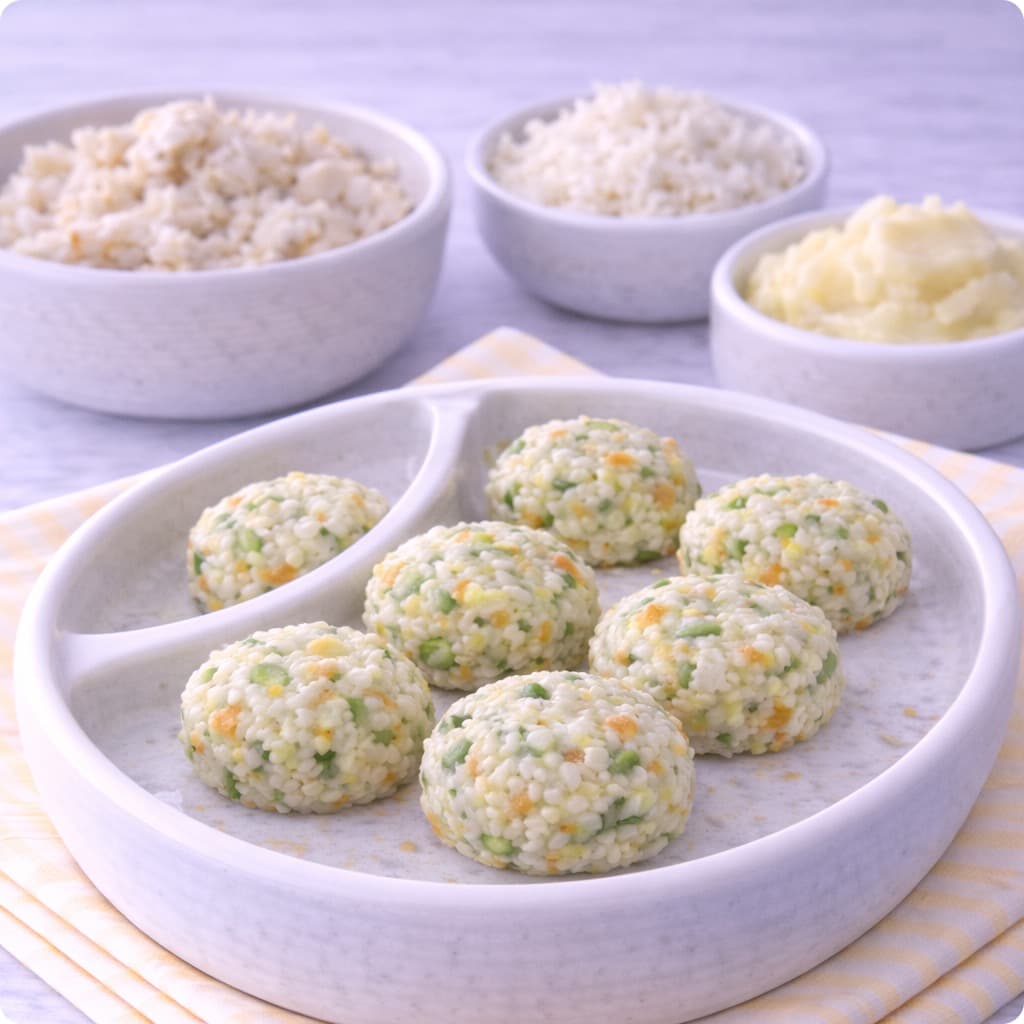
Soft Fish Rice Cakes
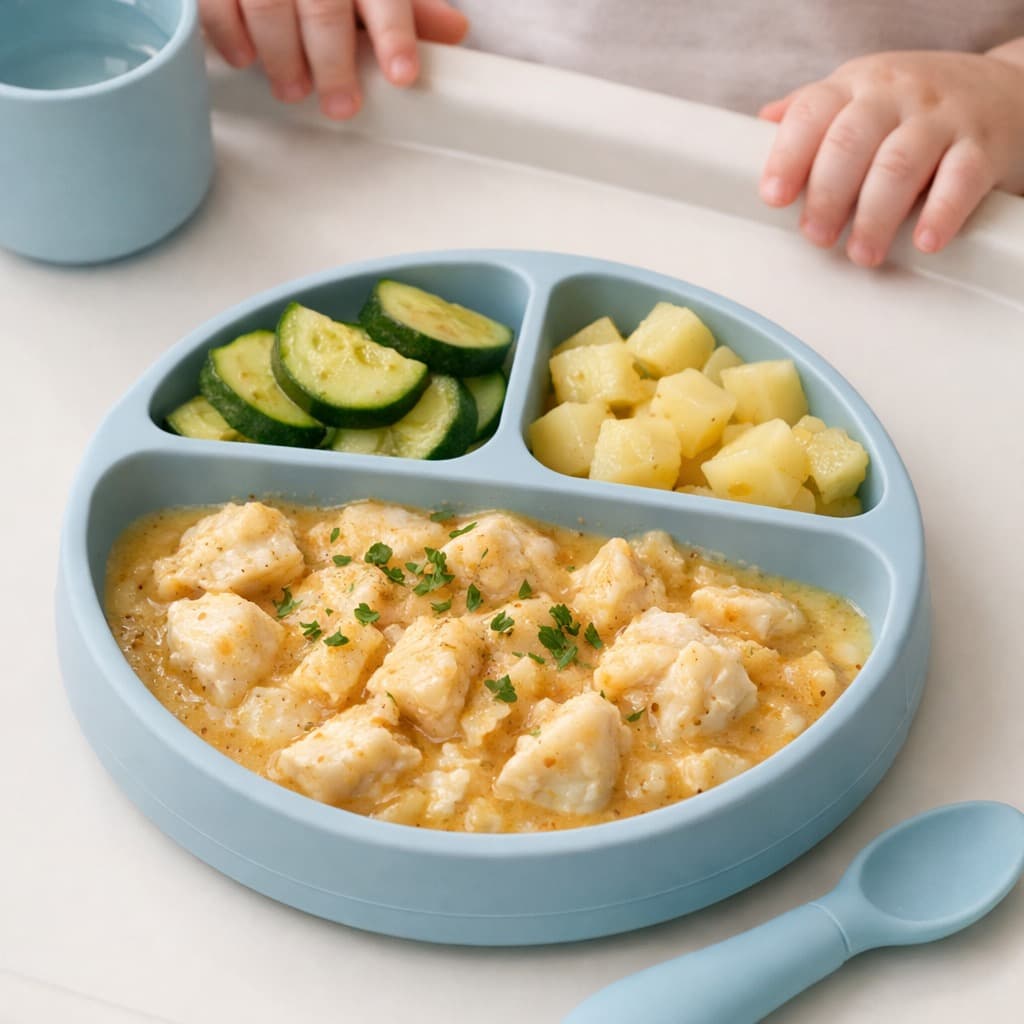
Light Fish Paprikash (Tomato-Free)
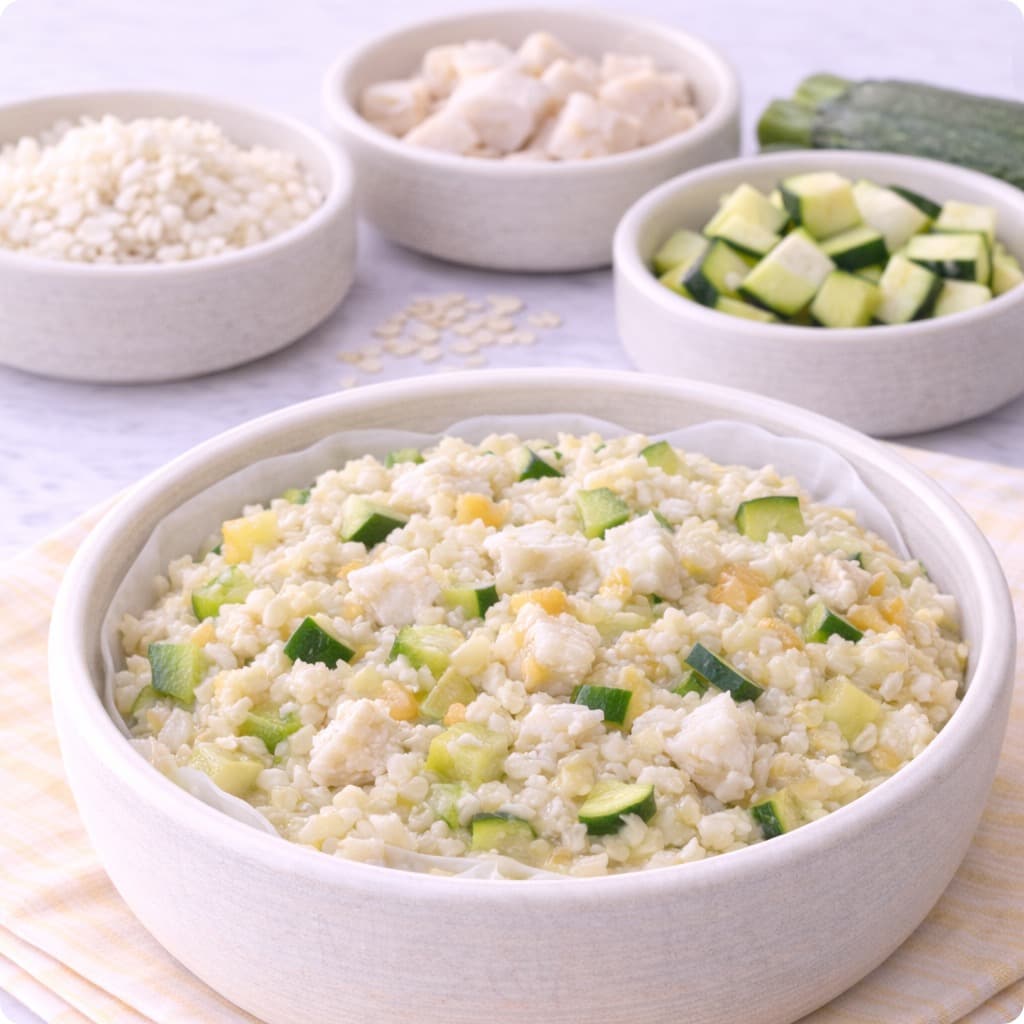
Fish + Rice + Zucchini Gentle Meal Bowl
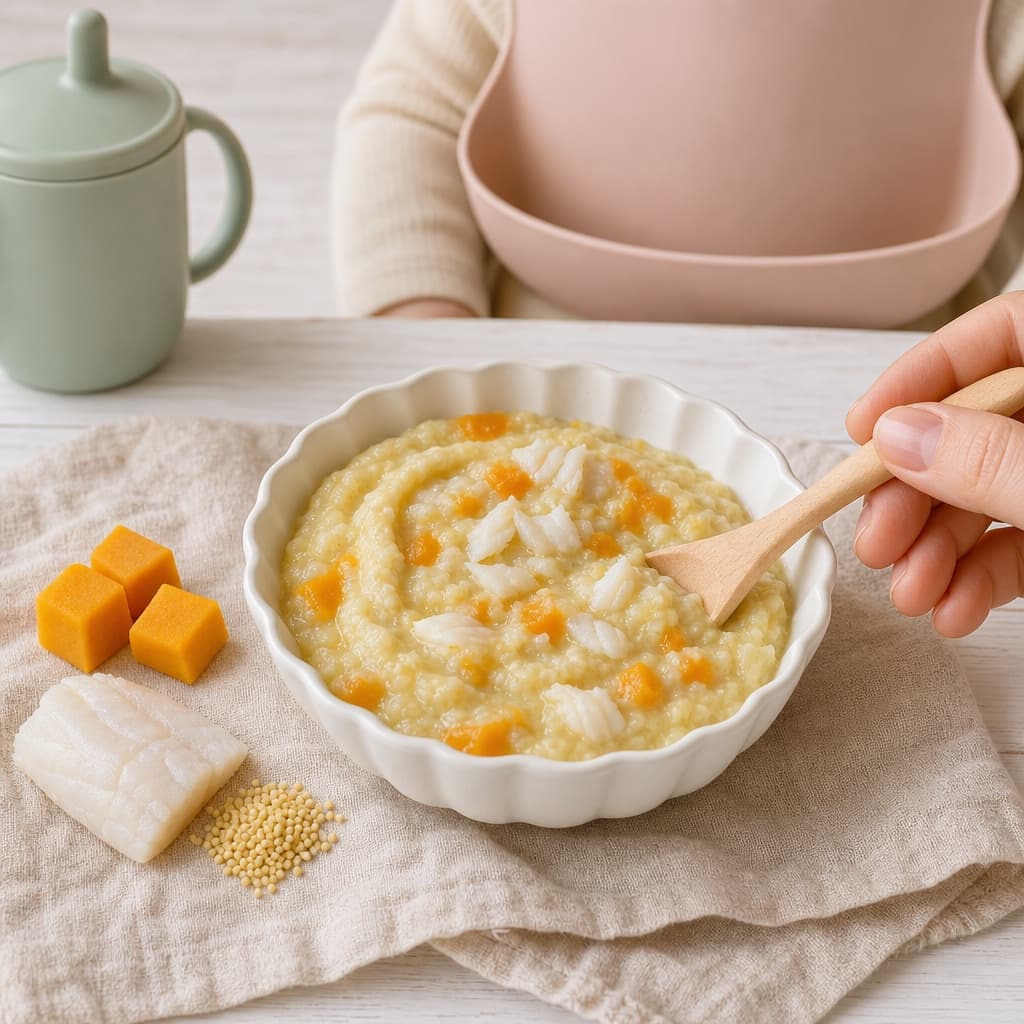
White Fish Pumpkin Millet Bowl
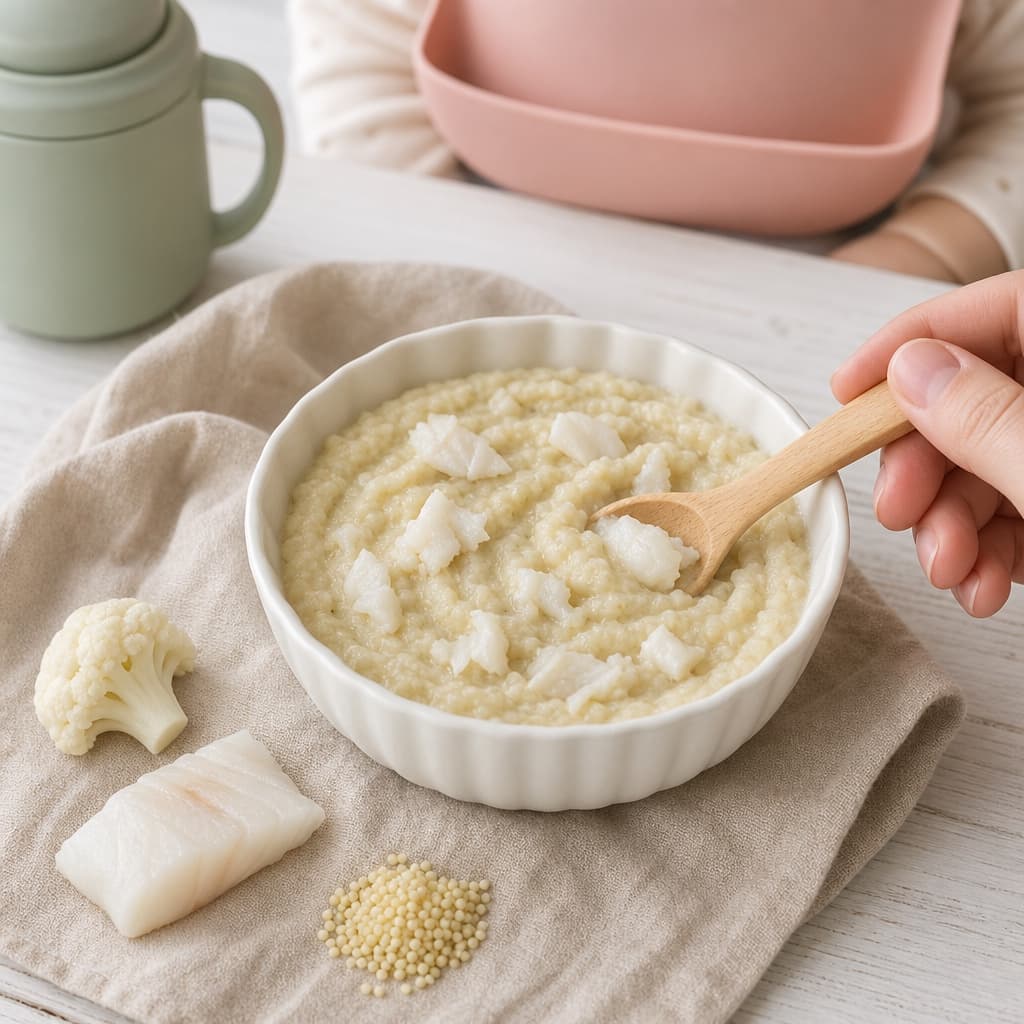
Fish Cauliflower Millet Bowl
See all fish recipes for babies. Explore baby breakfast recipes, baby-led weaning recipes and first foods for baby for more ideas.
Related Guides
Frequently Asked Questions
Which fish are lower in mercury?
The FDA/EPA Best Choices include salmon, cod, pollock, haddock, sardines and trout. Check the exact species and national advice.
Is every kind of tuna suitable?
No. Canned light tuna is a U.S. Best Choice, albacore is a Good Choice, and bigeye tuna is a Choice to Avoid.
Does cooking remove mercury?
No. Mercury is in fish tissue; choose lower-mercury species instead.
How do I check fish bones?
Flake cooked fish under good light and examine each piece carefully, feeling for small pin bones before serving.
Sources & References
This guide is informed by current guidelines from leading health organizations:
- ●FDA/EPA - Fish choices for children and families FDA
- ●FDA - Mercury Levels in Fish FDA
- ●FDA — Selecting and Serving Fresh and Frozen Seafood Safely FDA
- ●NHS - Food Allergies in Babies NHS
- ●NHS - Preparing Food Safely for Babies NHS
- ●NHS - Your Baby's First Solid Foods NHS
