Can babies eat beans?
Last updated October 2026
Yes.
Babies who are ready for solids, usually around six months, can try thoroughly cooked beans in a mashed or smooth, moist texture. Whole beans are a choking hazard, including soft tinned beans: mash or individually flatten them as your baby's eating skills develop. Dried kidney-type beans need proper soaking and vigorous boiling, not just slow cooking. Choose plain no-added-salt canned beans when convenient.
When can babies have beans?
The NHS lists beans and pulses among complementary foods from around six months and notes they provide protein, iron and zinc. Start with readiness for solids: supported upright sitting with head control, handling food and being able to swallow it. Mash cooked beans into a texture the baby can move around the mouth; a pincer grasp is not proof whole beans are safe.
Soya (soybeans and edamame) is a common allergen; other beans can also cause individual reactions. Introduce a new allergen in a small amount, one at a time, and continue it as part of the usual diet if tolerated. If your baby has a diagnosed allergy, prior reactions or significant eczema, ask a clinician about an individual introduction plan; a bean's botanical relationship to soya does not prove it must be avoided.
How to cook and serve beans for your baby
Never serve raw or undercooked dried kidney beans. The FDA warns that their natural lectin (phytohaemagglutinin) can cause severe vomiting and diarrhoea. For dried kidney-type beans, FDA guidance specifies soaking for at least 5 hours, discarding the soaking water, and vigorously boiling in fresh water for at least 30 minutes; continue cooking until fully tender. Do not rely on a slow cooker alone to destroy lectins. Follow package directions and extra local food-safety instructions for other dried varieties. Commercially canned beans are already heat-treated and need no lectin-destruction boil.
Mash or purée fully cooked tender beans and loosen with a little safe cooking liquid if needed. Blend into vegetable mash or spread a thin layer on toast a baby can manage. For a more advanced eater, thoroughly flatten each tender bean and check for tough skins or hard centres; the CDC lists whole beans as choking hazards. Texture and supervision matter more than an age-based guarantee.
Use plain canned beans labelled no-added-salt where possible. Drain and rinse salted canned beans if necessary, but do not assume this removes all sodium. Check for sauces, added sugar and allergen-containing ingredients. Take the baby's portion from a low-salt family dish before adding salty stock or seasoning.
Bean checks before you serve
Do not serve intact whole beans; mash or individually flatten well-cooked beans and check each skin and centre for firmness.
For dried kidney-type beans, discard soaking water and boil vigorously in fresh water for at least 30 minutes after a minimum 5-hour soak (FDA); do not rely on a low-heat slow cooker. Cook until tender.
Choose no-added-salt canned beans when possible; drain/rinse salted beans and compare labels rather than assuming they become salt-free.
Soya is an allergen; other legumes may also cause reactions. Introduce suspected allergens individually, in small amounts, and seek personalised advice for previous reactions.
Seat your baby upright in a highchair, and stay with them for the whole meal.
Call your local emergency number if your baby is choking and can't cough, cry or breathe effectively, and start baby choking first aid straight away.
What beans add to your baby's diet
Protein, iron and zinc. The NHS groups beans and pulses with the protein foods and notes they contain iron and zinc, which are important for babies.
Plant iron that needs a little help. The CDC lists beans and lentils as sources of non-heme iron, which is less easily absorbed than iron from meat, and says pairing it with foods high in vitamin C can help your baby absorb it.
A protein option for vegetarian families. The NHS lists dhal, beans, chickpeas and lentils as vegetable sources of protein for children from 12 months, and they can be part of meals well before then.
Easy to batch. A pot of well-cooked mashed beans can be stirred into vegetables, grains or sauces through the week.
Recipes with beans for babies

Baby Burrito Strips

Beef, Potato & Green Beans Mash
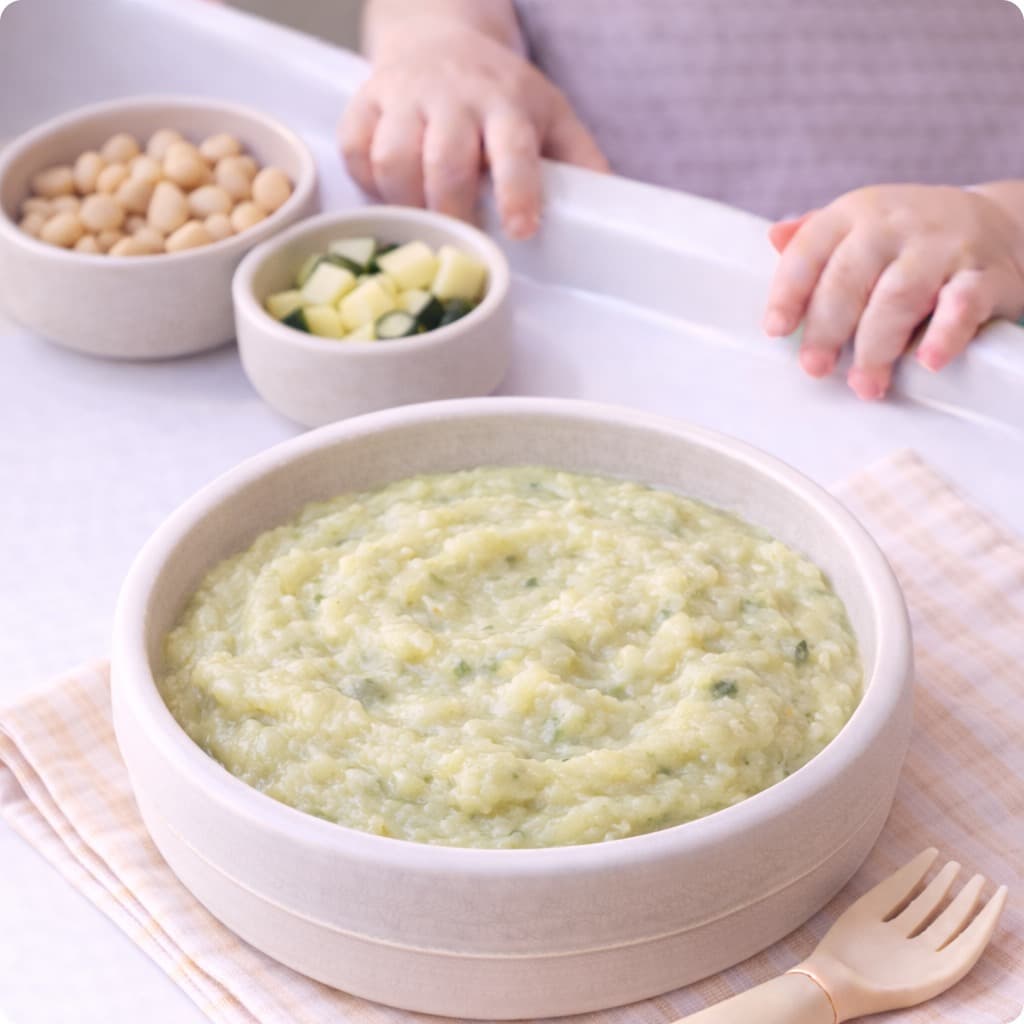
White Beans + Zucchini + Potato Puree
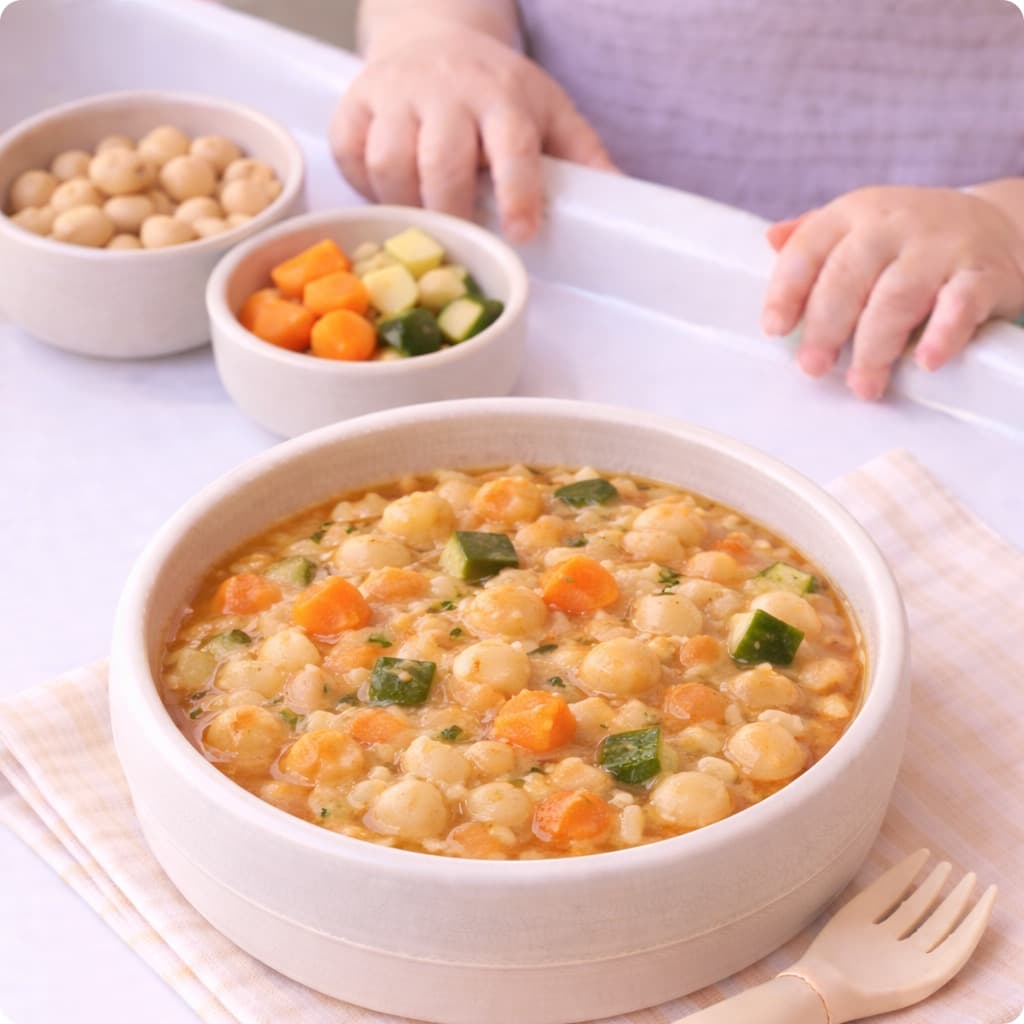
Soft Bean & Vegetable Stew (Baby Cassoulet)
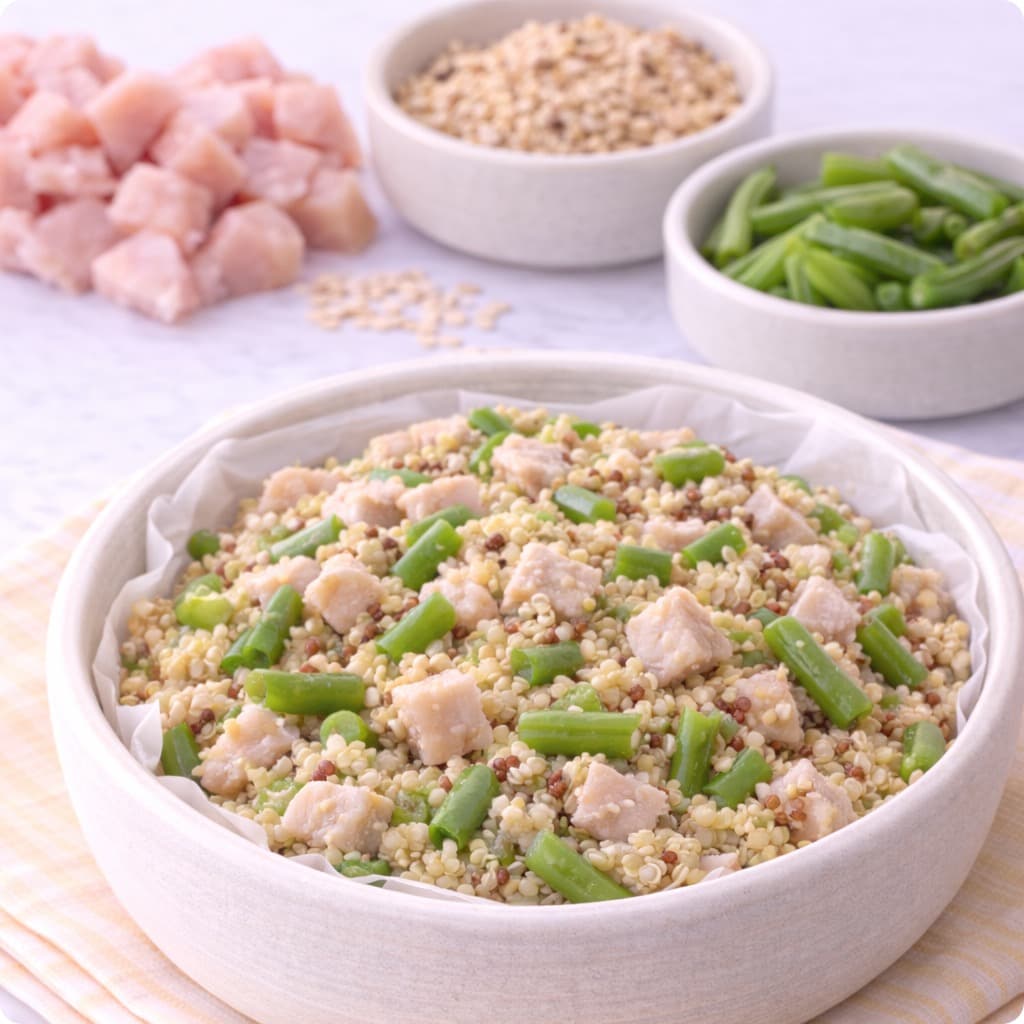
Turkey + Quinoa + Green Beans Soft Bowl
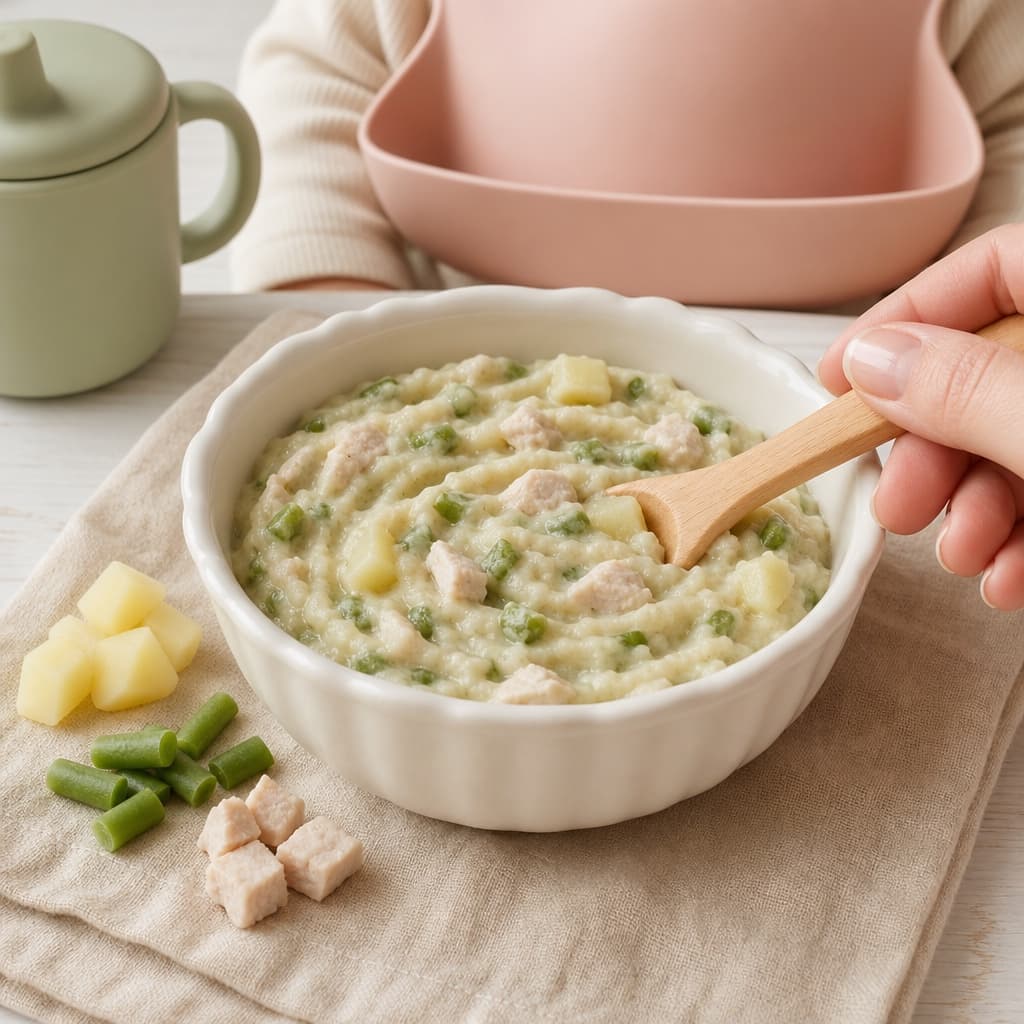
Turkey Green Bean Potato Bowl
Related guides
Beans for babies: FAQs
What does an allergic reaction to beans look like?
Allergy symptoms can include itchy hives, swelling, vomiting or coughing after eating; the NHS advises evaluating possible reactions with a clinician. Breathing difficulty, tongue or throat swelling, collapse or severe floppiness is an emergency: call local emergency services immediately and follow any prescribed anaphylaxis plan. A new reaction should not be self-diagnosed as ordinary gas or intolerance. Soybeans (edamame) are a common food allergen, but a soy allergy does not automatically establish a reaction to every other bean.
Are baked beans okay for babies?
Regular baked beans are usually cooked in a sauce with added salt and sugar, so check the label and keep them as an occasional food at most. Reduced-salt, reduced-sugar versions are a better choice than the standard tin. Plain beans that you mash yourself give you full control.
Do green beans count as beans here?
No. Green beans are eaten as a vegetable, pod and all, so they're prepared differently: cook them until soft, then mash them or serve narrow batons. See our separate green beans guide for details.
Can babies have edamame or soya beans?
Soya is a major food allergen, so introduce well-cooked, mashed soybeans in an appropriate small amount and watch for reactions, following an allergist's plan if your child is at higher risk. Do not offer whole oval edamame beans: mash, blend or thoroughly flatten them and remove any tough pods.
Can I cook dried kidney beans in a slow cooker for my baby?
Not directly from raw. Low slow-cooker temperatures may not reliably destroy kidney-bean lectins. Soak dried kidney-type beans and boil vigorously in fresh water first, following the FDA minimum and the product's instructions, before using them in a slower-cooked dish. Cook until fully tender, then mash or flatten for your baby. Ready-cooked canned beans are a simpler alternative.
Sources & References
This guide is informed by current guidelines from leading health organizations:
- ●FDA - Natural Toxins in Food FDA
- ●CDC - Iron (Infant and Toddler Nutrition) CDC
- ●NHS - Feeding your baby from around 6 months NHS
- ●NHS - Preparing Food Safely for Babies NHS
- ●CDC — Choking Hazards (reviewed March 2026) CDC
- ●NHS - Food Allergies in Babies NHS
- ●NHS - Salt in your diet NHS
- ●NHS - How to stop a child from choking NHS
