When can babies eat cod?
Cod can be introduced from around 6 months, as soon as your baby shows signs of readiness for solids. Those signs include sitting up with little or no support, holding their head steady, and bringing food or objects to their mouth. Cod is naturally soft, mild, and easy to mash or flake, which makes it a friendly early protein once your baby is eating other first foods.
Fish is one of the common food allergens, and current guidance encourages offering allergens early rather than delaying them. Once your baby has tried a few single foods without a reaction, you can add cod to the menu. Introduce it on a day when you can keep an eye on your baby for a few hours, and offer it on its own at first so any reaction is easy to spot.
How to serve cod safely
From 6 to 9 months, cook cod thoroughly until it is opaque and flakes easily, then run your fingers through every piece to remove all bones, even the tiny ones. Flake it into soft, moist pieces and mix it into mashed vegetables, a little baby-friendly sauce, or potato so it is easy to scoop and swallow. You can also offer a thick, finger-length flaked piece pressed loosely together for babies practicing self-feeding, since well-cooked cod is soft enough to squash between the gums.
From 9 to 12 months and beyond, as your baby's pincer grasp develops, you can offer smaller flakes and bite-sized soft pieces for them to pick up themselves. Keep the texture moist and tender, and avoid dry, firm, or rubbery chunks that are harder to manage. Continue checking for bones every single time, and skip added salt, breading, and heavy seasoning.
Nutritional benefits for babies
- 💚High-quality protein to support growth and developing muscles
- 💚Omega-3 fatty acids that support brain and eye development
- 💚Iodine, which helps support healthy thyroid function and metabolism
- 💚Vitamin B12 for healthy nerve function and red blood cell formation
- 💚Selenium, an antioxidant mineral that supports the immune system
- 💚Low in fat and naturally mild, making it gentle and easy to digest
Safety considerations
- ✓Cod is a common allergen. Introduce it on its own and watch for signs of a reaction such as rash, swelling, vomiting, or trouble breathing; seek urgent care for any severe symptoms.
- ✓Bones are the main choking hazard. Cook cod fully and carefully feel through every flake to remove all bones before serving.
- ✓Serve cod soft, moist, and flaked or in tender bite-sized pieces; avoid dry, firm, or rubbery chunks that are hard to chew.
- ✓Always supervise your baby while eating, keep them seated upright, and never leave them alone with food.
- ✓Introduce only one new allergen or food at a time, a few days apart, so you can identify the cause of any reaction.
Recipes with cod for babies
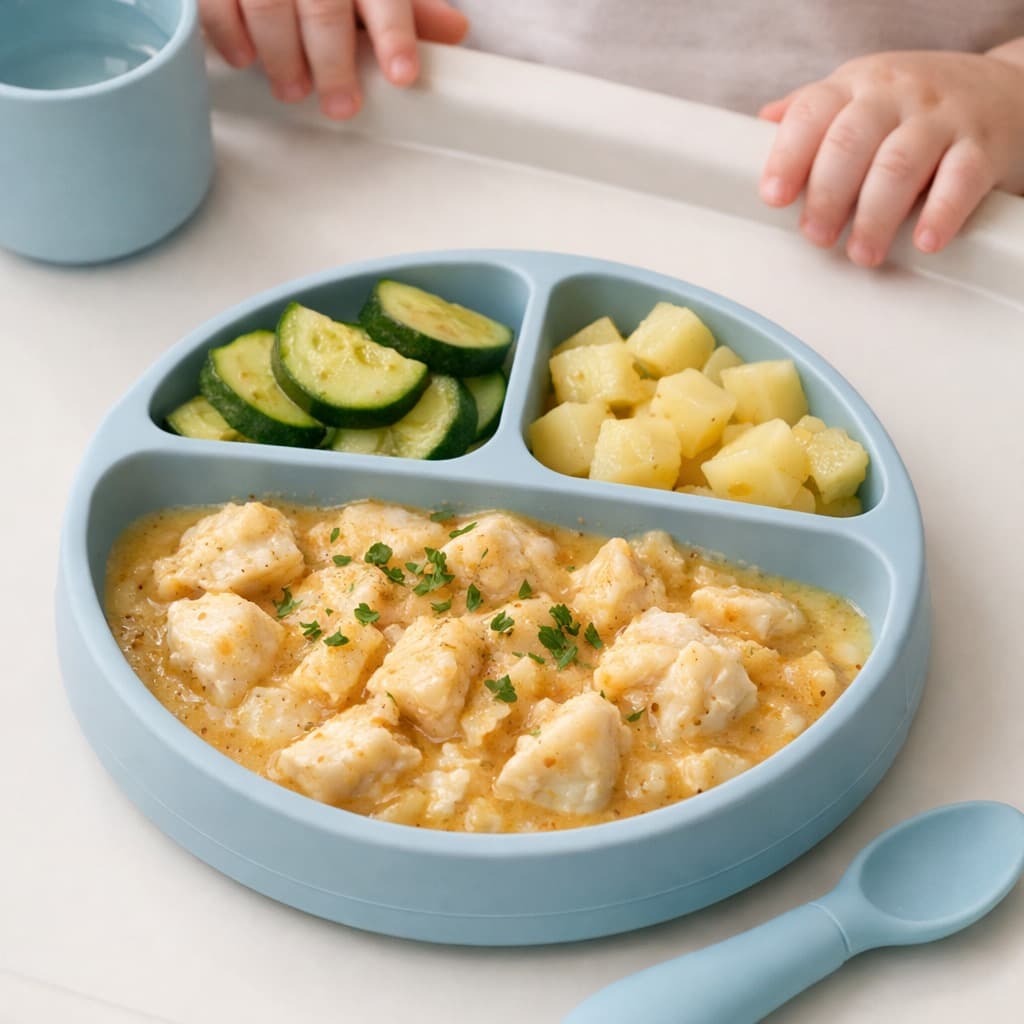
Light Fish Paprikash (Tomato-Free)
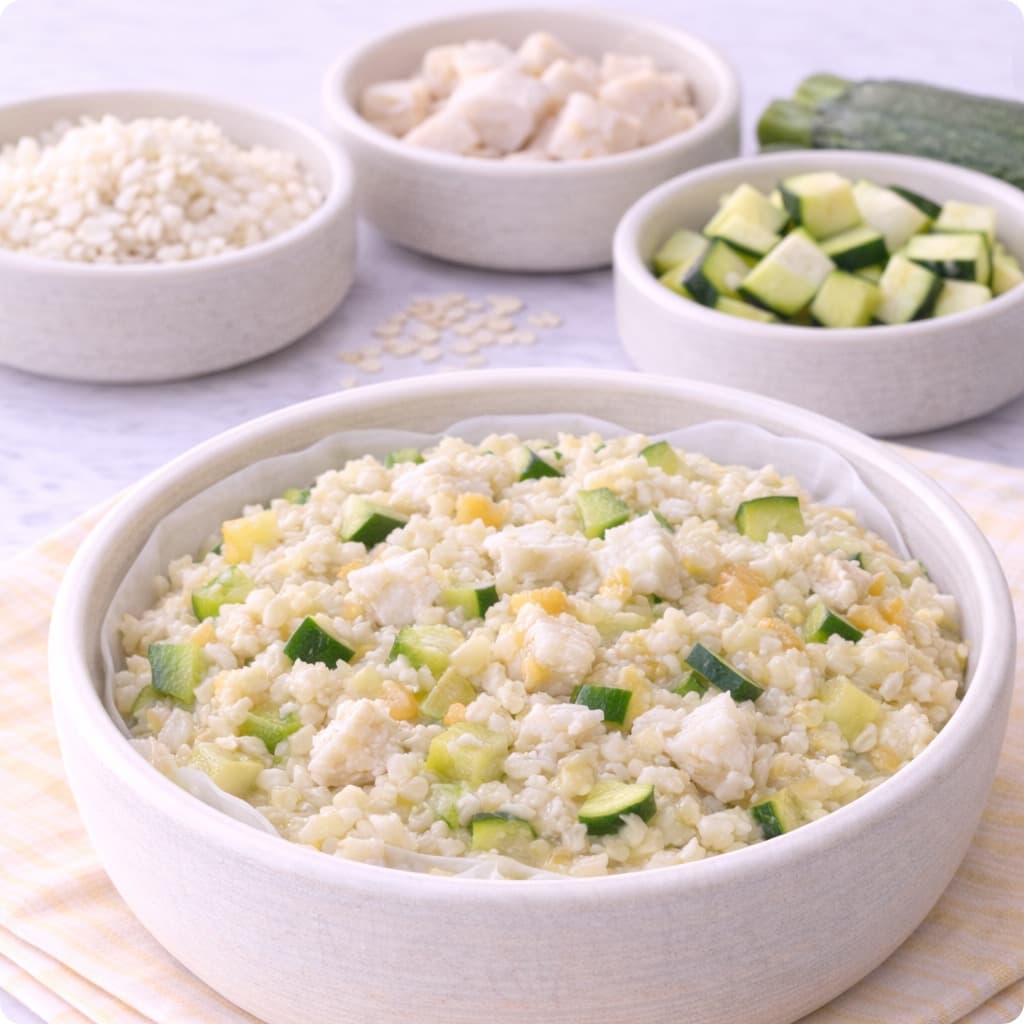
Fish + Rice + Zucchini Gentle Meal Bowl
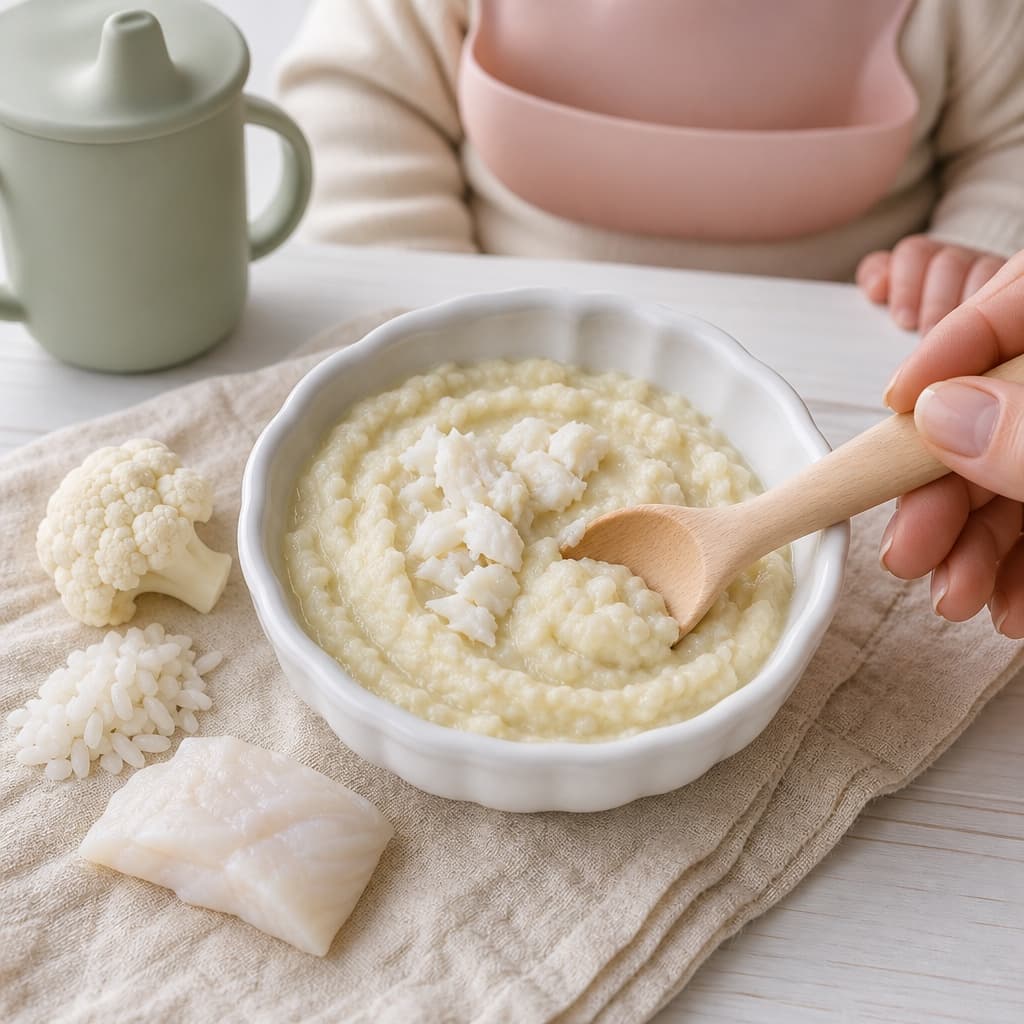
Cod Cauliflower Rice Mash
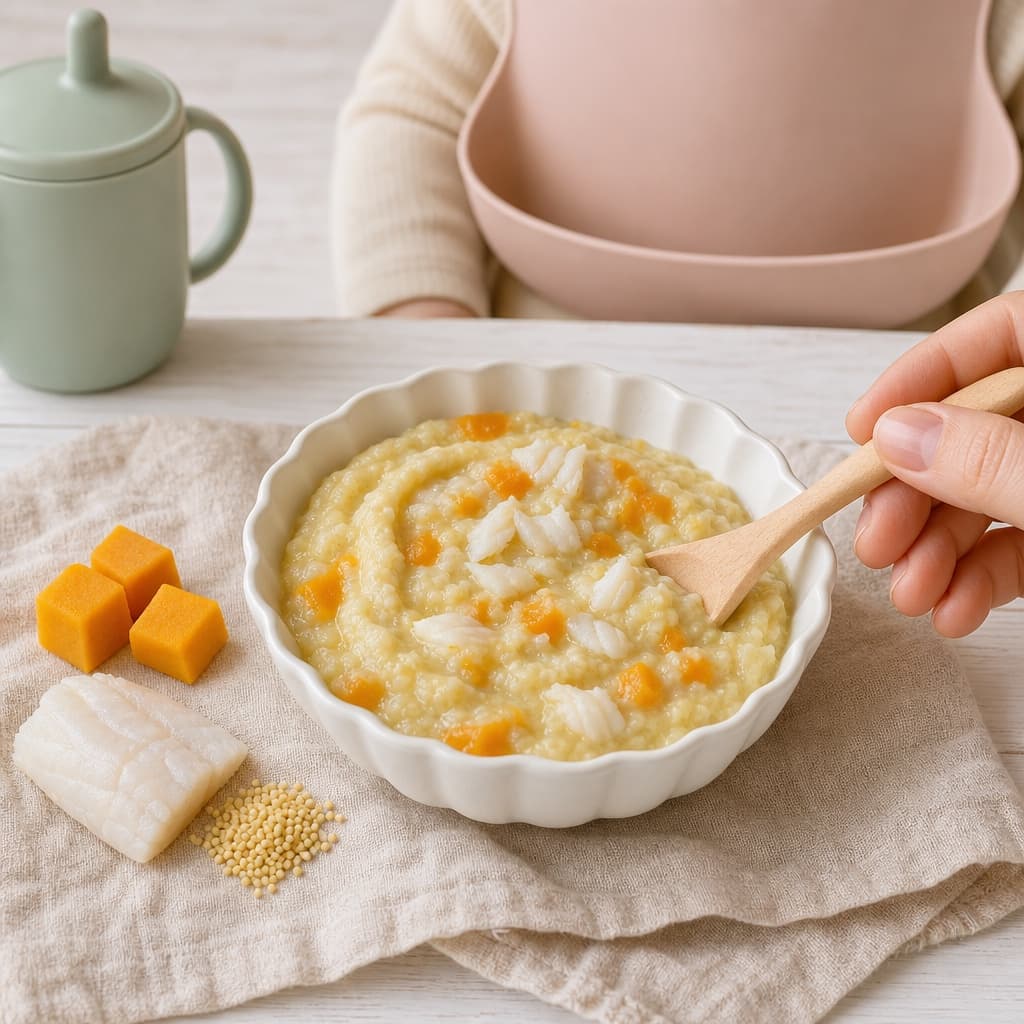
White Fish Pumpkin Millet Bowl
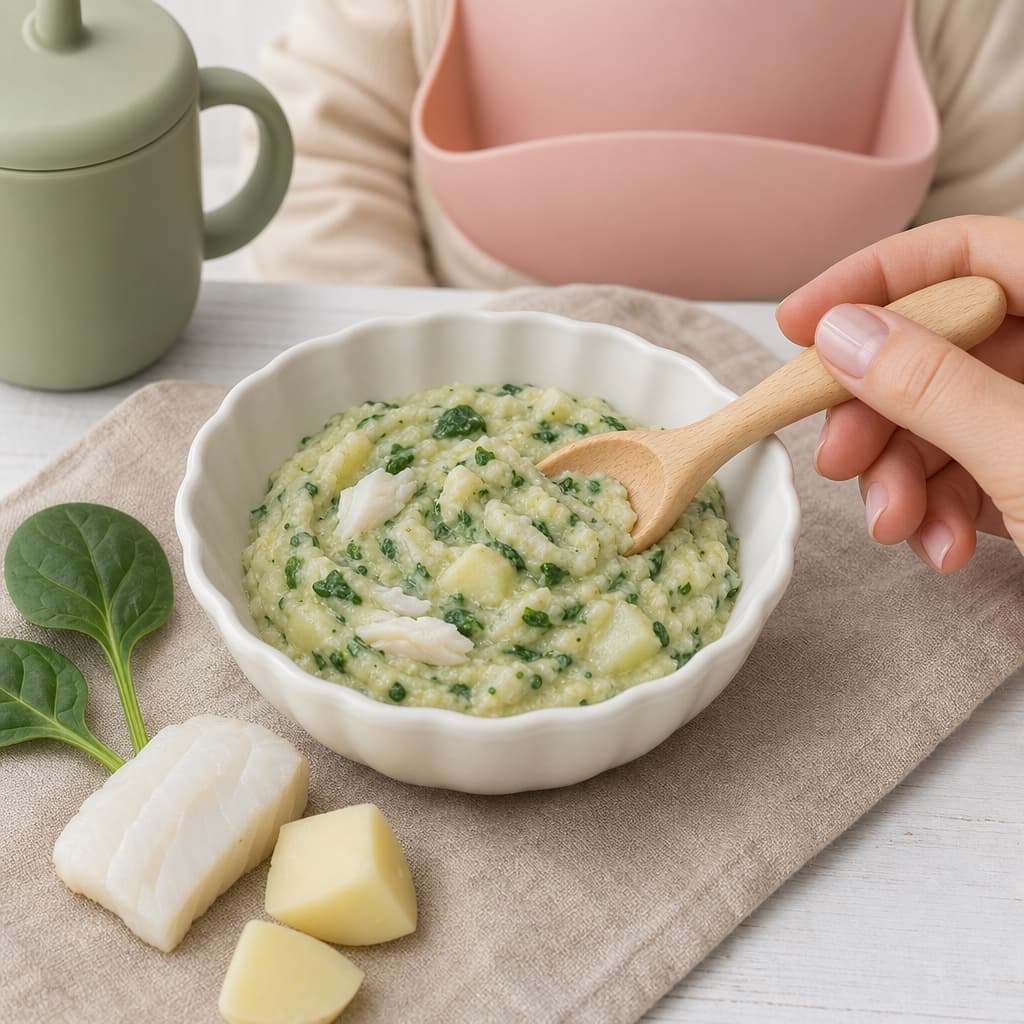
Cod Spinach Potato Mash
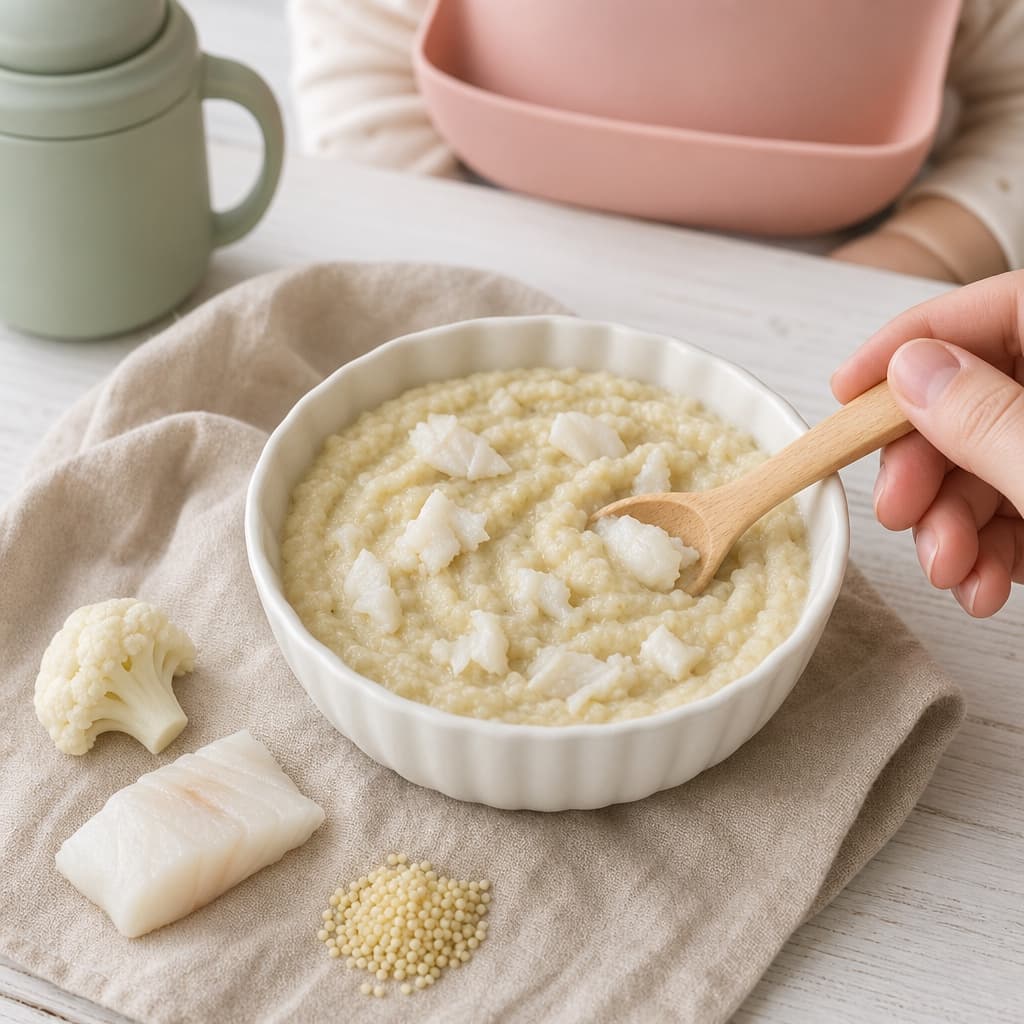
Fish Cauliflower Millet Bowl
Frequently asked questions
Is cod a good first fish for babies?
Yes, cod is a great starter fish because it is mild, low in fat, and soft enough to flake or mash easily. It is also a low-mercury fish, which makes it a sensible choice for babies. Just cook it fully and remove every bone before serving.
Can cod cause an allergic reaction in babies?
Yes, fish is one of the common food allergens, so cod can trigger a reaction in some babies. Offer it on its own the first few times and watch for symptoms like rash, swelling, vomiting, or breathing trouble. Seek immediate medical help if you notice any severe signs.
How do I remove bones from cod for my baby?
After cooking, gently flake the cod apart and run your clean fingers slowly through every piece to feel for bones, including the small thin ones. Pressing the flesh flat can help you spot them more easily. Always do this before each serving, even with fillets labeled boneless.
Is cod high in mercury?
Cod is considered a low-mercury fish, which makes it one of the better seafood options for babies and young children. You can serve it as part of a varied diet that includes other low-mercury fish. Variety helps keep overall mercury exposure low.
Can babies eat frozen or canned cod?
Frozen cod is fine as long as it is plain, fully thawed, and cooked through, and it is often just as nutritious as fresh. Avoid battered, breaded, or heavily salted varieties. Canned cod is less common, but if used, choose one with no added salt and check carefully for bones.
How much cod can my baby eat?
Babies have small stomachs, so a few flakes to a couple of tablespoons is plenty at first, and they may eat more as their appetite grows. Let your baby guide how much they take, and offer cod a couple of times a week as part of a varied diet. There is no need to push a specific amount.
What is the best way to cook cod for a baby?
Steaming, baking, or poaching cod keeps it moist and soft, which is ideal for babies. Cook it until it is opaque and flakes easily, then skip the salt and heavy seasoning. Mild herbs, a squeeze of lemon, or a little unsalted butter are all fine.
Get recipes + a feeding plan for your baby
Save this food to your baby's list, get age-appropriate recipes and follow a personalized feeding schedule - 350+ baby-safe meals in the app.
verifiedSources & References
This guide is informed by current guidelines from leading health organizations: