When can babies eat couscous?
Couscous can be offered from around 6 months, when your baby can sit upright with support, holds their head steady, and shows interest in food. Because couscous is made from durum wheat, it contains gluten, and wheat is one of the common food allergens. The AAP notes that there is no benefit to delaying common allergens once solids have started, so it is fine to introduce wheat foods like couscous early while watching for any reaction. Both regular and whole-wheat couscous are suitable, and the whole-wheat version adds extra fiber.
Remember that breast milk or formula remains your baby's main source of nutrition until 12 months, and the WHO encourages continued breastfeeding alongside solid foods, so couscous is a complement to milk feeds, not a replacement. The tiny, soft granules of standard couscous are gentle on new eaters, which makes it a friendly early grain alongside iron-rich foods. Pearl couscous, the larger chewy variety, is best saved until around 9 months and cooked until each piece squishes easily between your fingers.
How to serve couscous safely
From 6 to 9 months, cook couscous until it is fully soft and then moisten it well, because dry couscous clumps together and can be hard for a new eater to manage. Prepare it with plain water or unsalted broth rather than stock cubes or seasoned mixes, then stir it into a vegetable sauce, mashed avocado, pureed lentils, or another smooth food. The result should be a soft, cohesive mash your baby can eat from a preloaded spoon or scoop up with their hands.
From 9 to 12 months and beyond, moist couscous pressed into small, pinch-sized portions gives your baby great pincer-grasp practice, and it mixes easily into soft stews, flaked fish, or well-cooked vegetables. Around 9 months you can also introduce soft-cooked pearl couscous once it squishes easily between two fingers. Keep seasoning minimal: the NHS advises keeping salt and sugar low for children under 24 months, so flavor with herbs, mild spices, or a squeeze of lemon instead.
Nutritional benefits for babies
- 💚Provides carbohydrates, a key source of energy for growing babies
- 💚A notable source of selenium, which supports the immune system and thyroid
- 💚Contains plant-based protein to support growth and development
- 💚Supplies B vitamins, including niacin and folate
- 💚Whole-wheat couscous adds fiber for healthy digestion
- 💚Its tiny, soft granules offer gentle texture practice and pair well with iron-rich foods like lentils, beans, and meat
Safety considerations
- ✓Couscous is made from wheat, one of the common food allergens, and it contains gluten. Introduce it early, offer it on a day you can watch your baby, and look for reactions such as hives, swelling, vomiting, or trouble breathing.
- ✓Dry or undercooked couscous clumps together and is hard for babies to manage. Always cook it fully and serve it moistened with unsalted broth, a vegetable sauce, or mashed into purees.
- ✓Cook couscous in plain water or unsalted broth and skip stock cubes, seasoned packets, and salty sauces; babies need minimal salt before 24 months.
- ✓Pearl couscous is larger and chewier than standard couscous, so wait until around 9 months and cook it until each piece squishes easily between two fingers.
- ✓Always supervise your baby while eating, keep them seated upright, and introduce couscous and any new mix-in one at a time, a few days apart, so you can pinpoint the cause of any reaction.
Recipes with couscous for babies
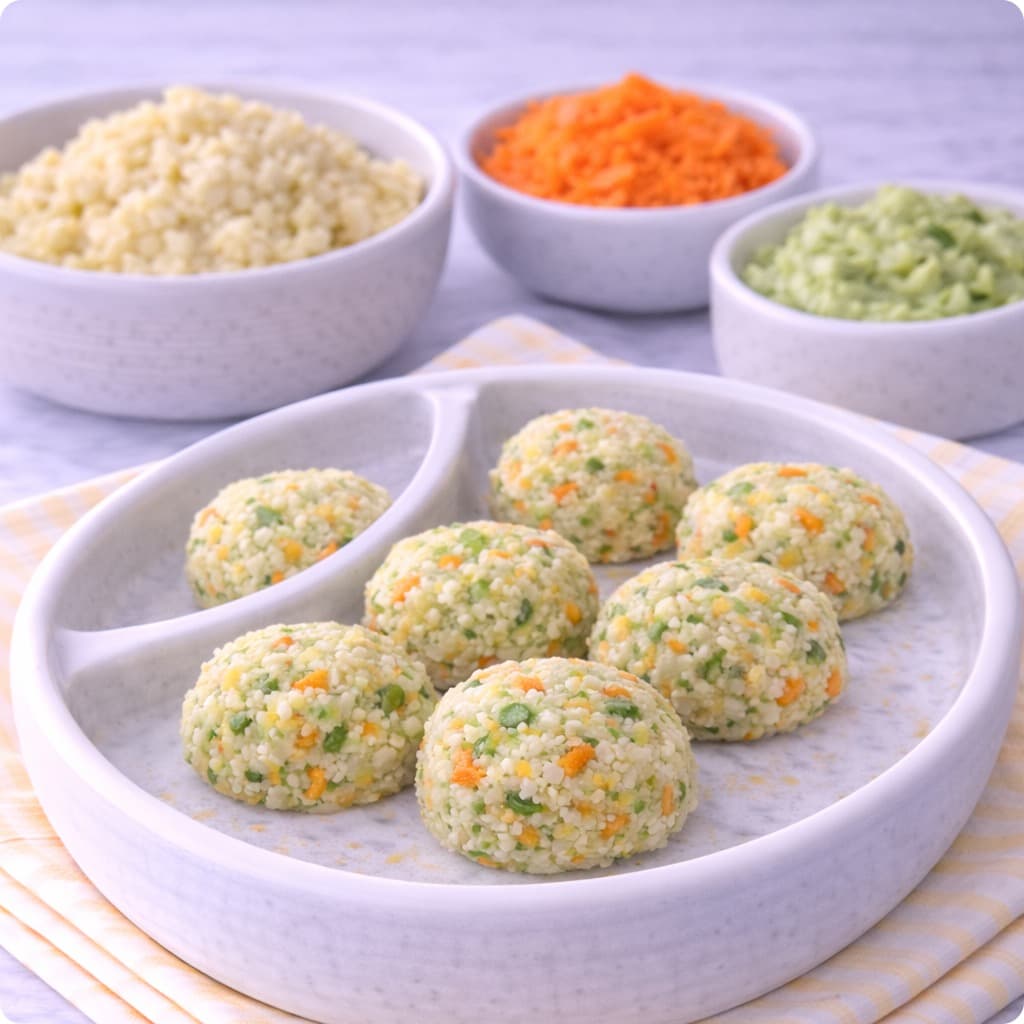
Soft Veggie Couscous Balls
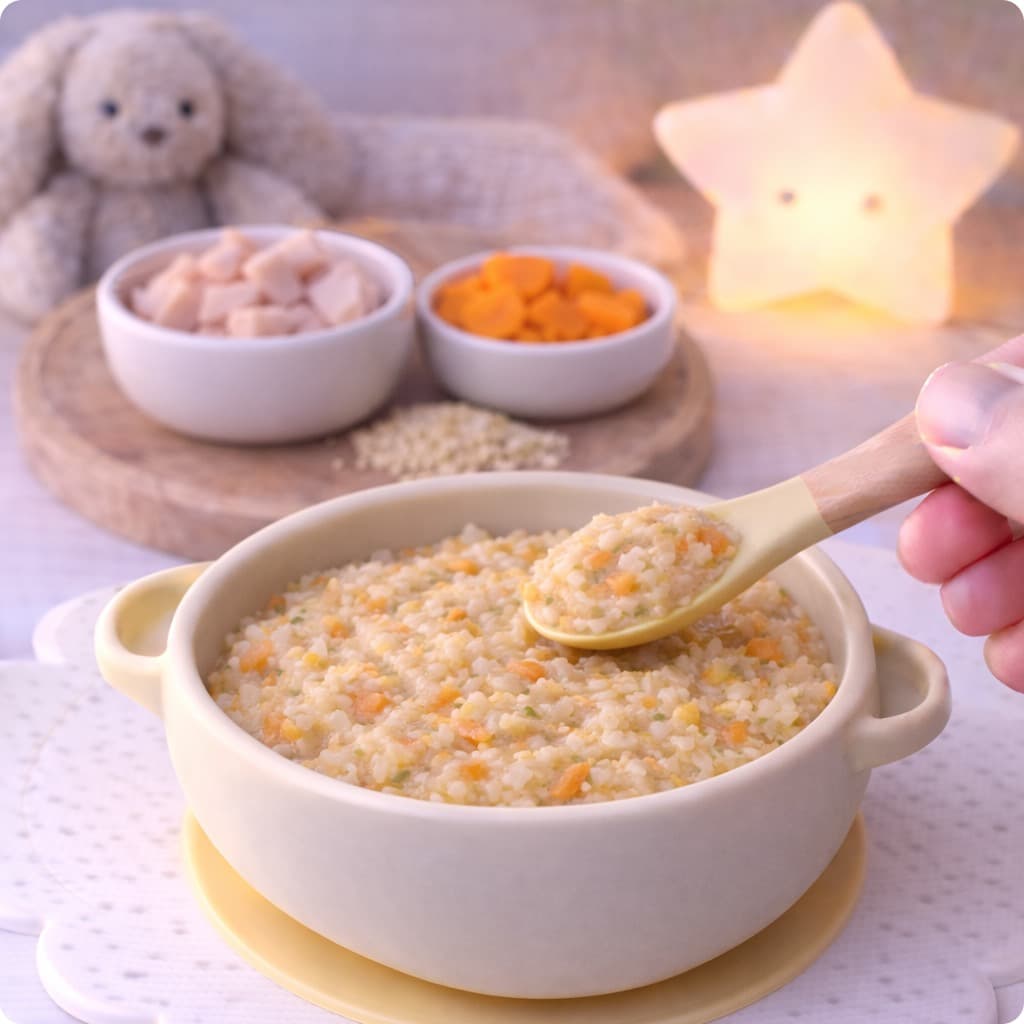
Turkey, Carrot & Couscous Bowl
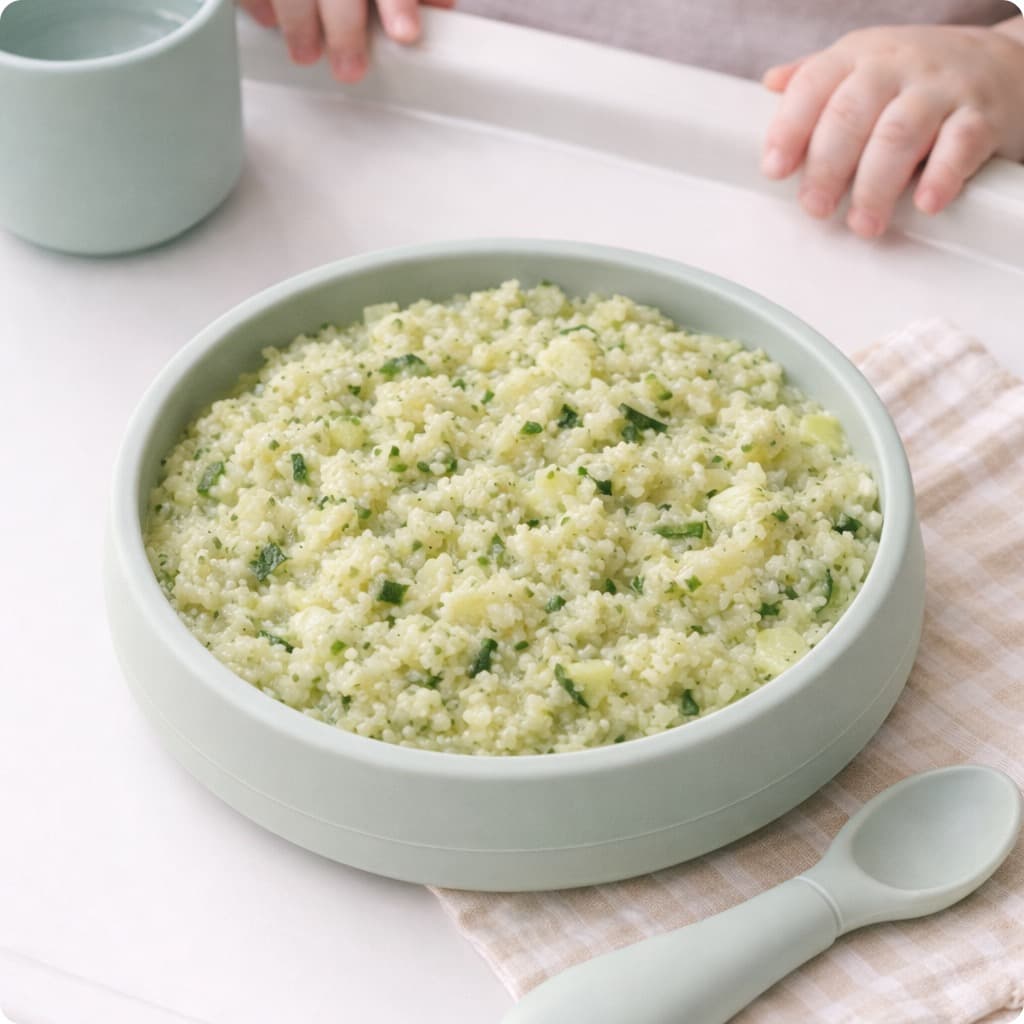
Couscous + Zucchini + Olive Oil Mash
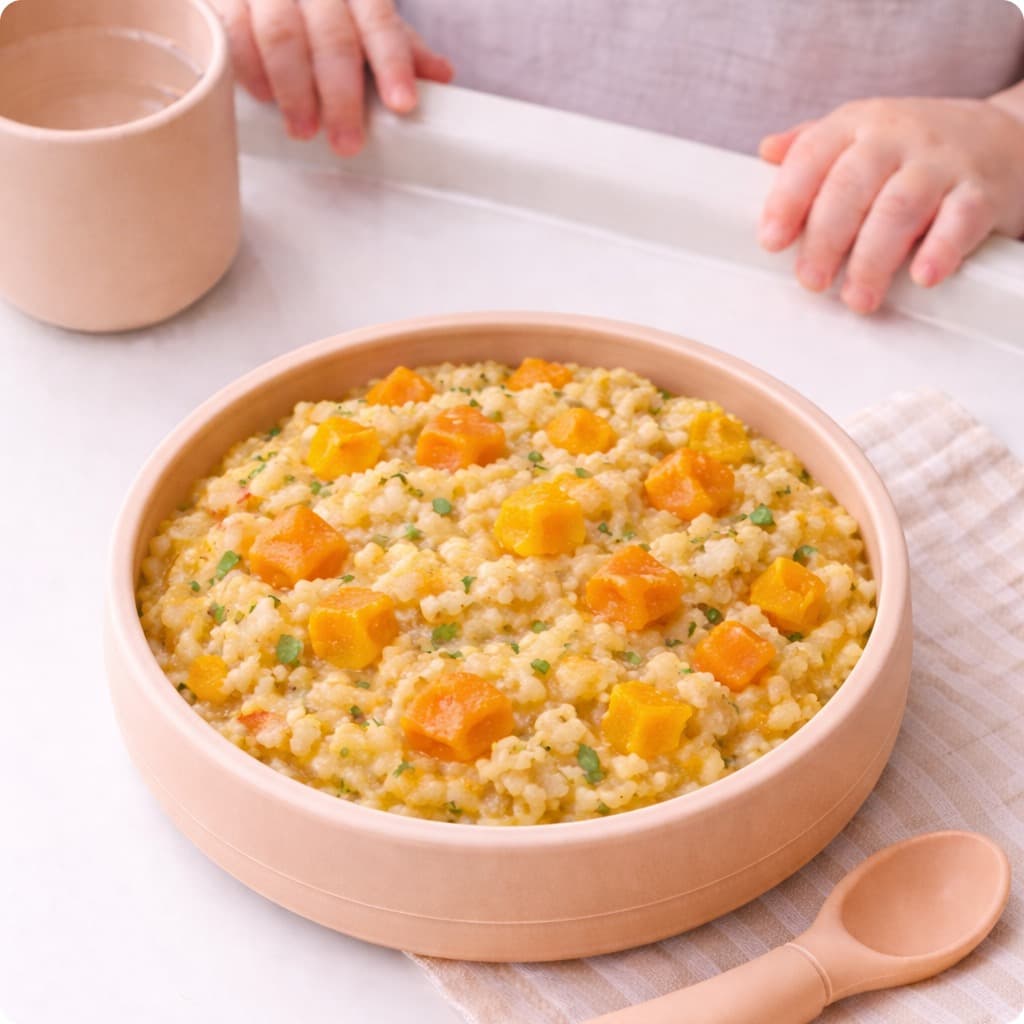
Couscous + Carrot + Pumpkin Mash
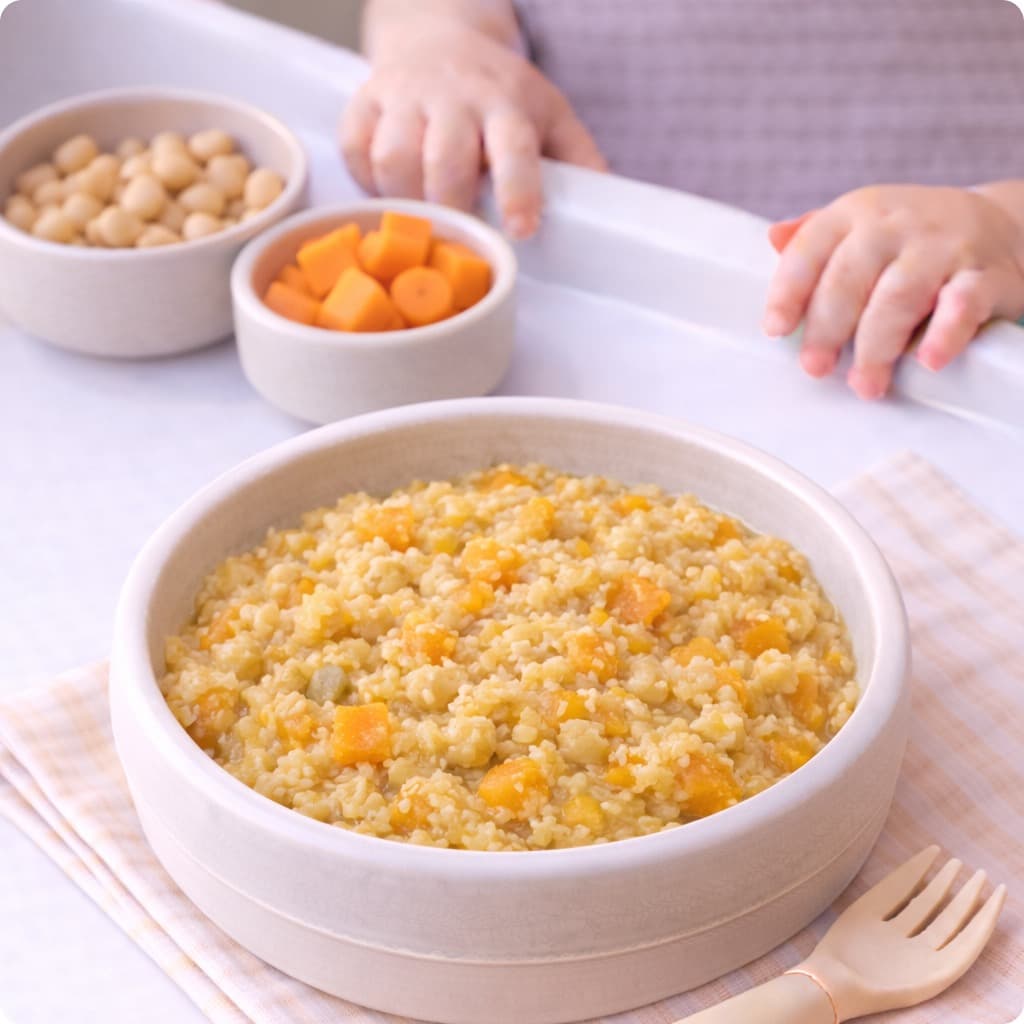
Chickpeas + Pumpkin + Couscous
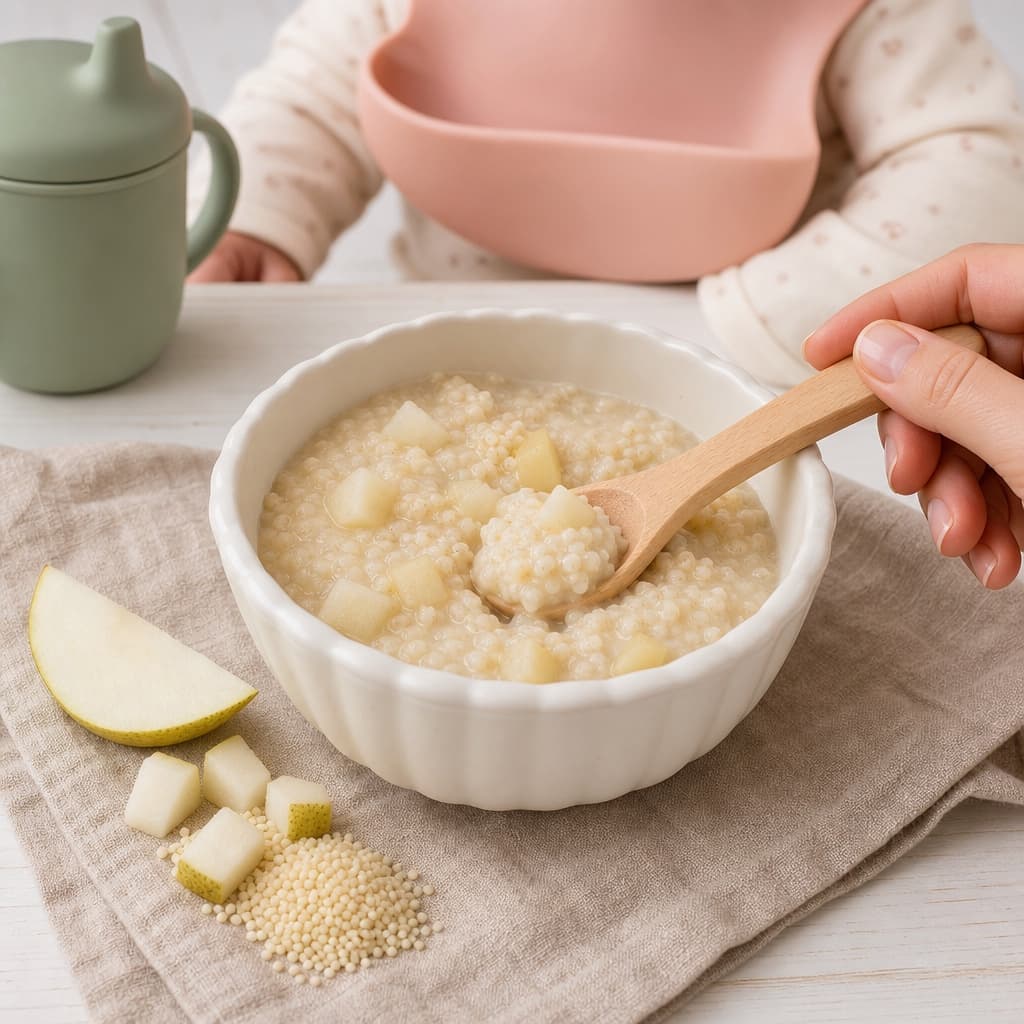
Pear Breakfast Couscous
Frequently asked questions
Is couscous safe for babies under 1 year?
Yes, couscous is generally safe from around 6 months, once your baby is ready for solids. Cook it fully, moisten it well, and prepare it without added salt. It should complement breast milk or formula, which remain the main source of nutrition before 12 months.
Is couscous a choking hazard for babies?
Standard couscous granules are tiny and soft, so they are not a typical choking hazard on their own. The main issue is dryness: dry couscous clumps together and is hard to swallow, so always serve it well moistened with broth, sauce, or purees. Supervise your baby and keep them seated upright while eating.
Does couscous contain gluten?
Yes. Couscous is made from durum wheat, so it contains gluten and counts as a wheat allergen exposure. If celiac disease or wheat allergy runs in your family, talk with your pediatrician about how to introduce it. For most babies, early introduction with careful observation is recommended.
How do I cook couscous for a 6 month old?
Cook it in plain water or unsalted broth until fully soft, then fluff it and stir in enough sauce, puree, or mashed vegetables to make it moist and cohesive. Avoid stock cubes and seasoned couscous mixes, which are high in salt. A soft, slightly wet mash on a preloaded spoon works well at this age.
Can babies eat pearl couscous?
Yes, but a little later than standard couscous. Pearl couscous is larger and chewier, so it is best from around 9 months, cooked until each piece squishes easily between two fingers. Serve it in a moist dish and keep supervising your baby as they eat.
Is whole-wheat couscous better for babies?
Whole-wheat couscous adds extra fiber and slightly more nutrients, so it is a good choice when available. Regular couscous is also perfectly fine and has the same soft, baby-friendly texture. Offering a mix of grains over time matters more than any single choice.
Can couscous cause an allergic reaction in babies?
It can, because couscous is made from wheat, one of the common food allergens. Offer it for the first time on a day you can watch your baby and look for hives, swelling, vomiting, or trouble breathing. Call your doctor with any concerns, and seek emergency care for breathing difficulties.
Get recipes + a feeding plan for your baby
Save this food to your baby's list, get age-appropriate recipes and follow a personalized feeding schedule - 350+ baby-safe meals in the app.
verifiedSources & References
This guide is informed by current guidelines from leading health organizations: