Can babies eat sardines?
Last updated October 2026
Yes.
Thoroughly cooked sardines can be offered once a baby is ready for solids, usually around 6 months, if they are prepared to remove choking hazards. Sardines are classed as a lower-mercury fish choice by the FDA, but fish is a major allergen. Check carefully for bones, flake and mash the fish to a soft moist texture, and compare sodium on canned products.
When can babies try sardines?
Fish can be introduced with other complementary foods from around 6 months once a baby has the developmental skills to start solids. Introduce fish as a potential allergen in a small amount on its own at first so you can identify a reaction; if tolerated, include it in the diet again over time.
The FDA/EPA identifies sardines as a lower-mercury 'Best Choices' fish, but its specific two-servings-per-week and ounce portions apply to children aged 1–11, not to a six-month-old. For a younger infant, do not copy those serving quantities; discuss individual dietary needs with a clinician when needed.
How to prepare sardines for a baby
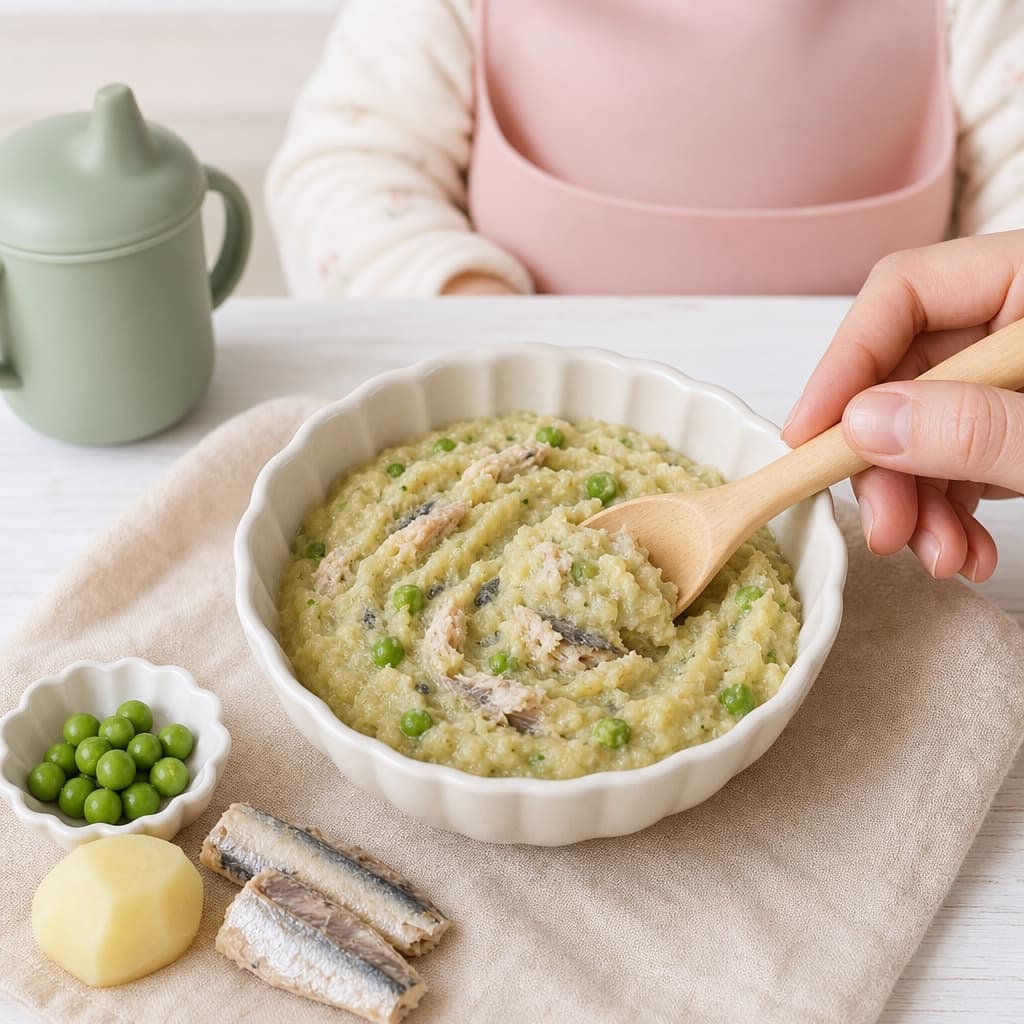
Choose fully cooked sardines, fresh or canned, without strongly salted sauces. Read the sodium label: 'in water' does not automatically mean low sodium, and rinsing cannot guarantee a specific salt reduction. Break the fish apart under good light and remove skin, spines and all detectable bones or hard fragments. Mash or flake the fish finely, moisten as needed, and inspect every spoonful before serving.
Fresh sardines must be fully cooked and carefully deboned. Avoid raw, lightly cooked, smoked or heavily salted fish. Offer soft moist flakes or a mash mixed with a food your baby already handles; adjust the texture to their skills. Stay with the baby, seated upright, for the entire meal.
Fish-specific safety checks
Fish is a common allergen. Introduce it separately from other new allergens and seek emergency care for breathing difficulty, marked swelling or collapse.
Fish bones are a choking hazard according to the CDC. Never promise that every canned bone is soft enough to swallow; inspect and remove detectable bones and fragments.
Compare sodium labels, including water-packed sardines. Do not rely on rinsing alone to make a high-sodium product suitable.
Avoid raw or lightly cooked fish and check fresh sardines carefully for bones after cooking.
FDA/EPA fish frequencies and child ounce portions are for ages 1–11, not an infant-specific feeding prescription.
Nutrients in sardines
Sardines provide protein and long-chain omega-3 fats, including DHA.
They can supply vitamin B12 and vitamin D, with amounts varying by product.
The FDA lists sardines among fish with comparatively lower mercury levels; 'lower' does not mean zero.
Calcium can come from edible processed bones, but bone safety and the product's texture must be assessed carefully rather than assumed.
Recipes with sardines for babies
Related guides
Frequently asked questions
Can a baby eat canned sardines?
Canned sardines may be convenient if the fish is fully cooked and the final texture is soft and moist. Check the sodium label and examine the fish closely for bones or hard fragments before mashing.
Are canned sardine bones safe for babies?
Do not assume all canned bones are safe simply because canning softens them. The CDC lists fish bones as a choking hazard. Inspect each portion closely and remove detectable bones and hard pieces; ask a feeding professional if you cannot prepare a suitable texture.
Are sardines high in mercury?
The FDA/EPA puts sardines in its 'Best Choices' lower-mercury group. That classification supports choosing them over high-mercury fish, but does not justify unlimited servings or a universal infant portion.
Should I rinse sardines to remove salt?
Rinsing may remove surface liquid but does not establish a reliable sodium content. Compare the nutrition panels and choose a lower-sodium product where possible; avoid brined and heavily seasoned options.
How often can a six-month-old have sardines?
There is no infant-specific sardine frequency in the FDA/EPA child serving chart, which starts at age one. Focus on variety and talk to your child's clinician if you need an individual feeding plan.
Can I serve sardines as finger food?
Only when the fish has been carefully checked for bones and the baby can manage the soft moist texture. Flaked fish worked into a mash may be easier for a new eater than a whole fish or firm patty.
What should I watch for with fish allergy?
Signs may include hives, swelling or repeated vomiting. Breathing difficulty, collapse or significant swelling requires emergency help. If your child already has an identified food allergy, ask their clinician about introducing fish.
Sources & References
This guide is informed by current guidelines from leading health organizations:
- ●NHS - Feeding your baby from around 6 months NHS
- ●NHS Best Start in Life - Introducing foods that could trigger an allergic reaction NHS
- ●FDA - Mercury Levels in Fish FDA
- ●CDC — Choking Hazards (reviewed March 2026) CDC
- ●NHS - Foods to Avoid Giving Babies NHS
