When can babies eat peas?
Most babies are ready to start solids around 6 months of age, when they can sit up with little or no support, hold their head steady, and show interest in food by reaching for it and bringing it to their mouth. Peas can be one of your baby's early vegetables because they are soft when cooked and easy to mash. There is no need to wait or to introduce peas in any particular order compared to other vegetables.
Peas are not considered a common allergen, so there is no reason to delay them out of allergy concern. As with any new food, it can be helpful to offer peas on their own for a couple of days so you can watch for any reaction before combining them with other foods. Always check with your pediatrician if your baby was born prematurely or has specific health concerns about starting solids.
How to serve peas safely
From about 6 to 9 months, the main concern with peas is their small, round shape, which can be a choking hazard if served whole. Cook peas until very soft, then mash or puree them into a smooth or lightly textured consistency. You can stir mashed peas into other purees, blend them into a soup, or offer them on a preloaded spoon. Make sure each pea is broken down rather than left whole and firm.
From around 9 to 12 months and beyond, as your baby develops a pincer grasp and more chewing skills, you can offer flattened or gently smashed whole peas so the round shape is broken. You can also mix peas into soft mashes, fritters, or pasta. Even as your baby gets older, avoid serving large amounts of firm, whole peas at once, and continue to smash or flatten them until you are confident in your child's chewing ability.
Nutritional benefits for babies
- 💚Provide plant-based protein to support growth and development
- 💚A good source of dietary fiber, which supports healthy digestion
- 💚Contain vitamin C, which helps the body absorb iron from foods
- 💚Supply vitamin K and several B vitamins, including folate
- 💚Offer iron, an important nutrient for babies starting solids
- 💚Naturally sweet and soft, making them easy for babies to accept
Safety considerations
- ✓Peas are not a common allergen, but introduce them on their own at first and watch for any reaction.
- ✓Whole, round peas are a choking hazard for babies and young toddlers, so always mash, smash, or flatten them.
- ✓Cook peas until soft and never serve them firm, raw, or frozen straight from the bag.
- ✓Always stay within arm's reach and supervise your baby closely while they eat.
- ✓Make sure your baby is seated upright and never eating while crawling, walking, or distracted.
Recipes with peas for babies
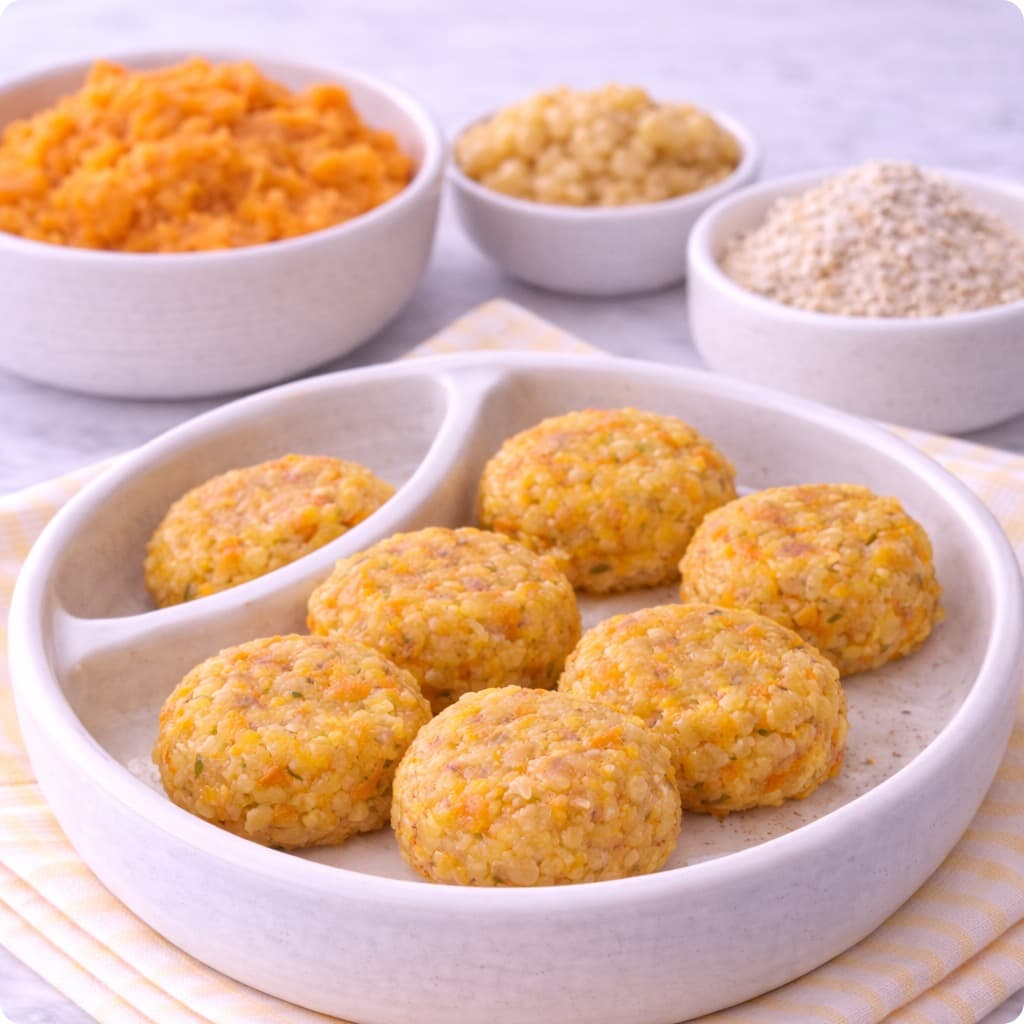
Sweet Potato Chickpea Patties
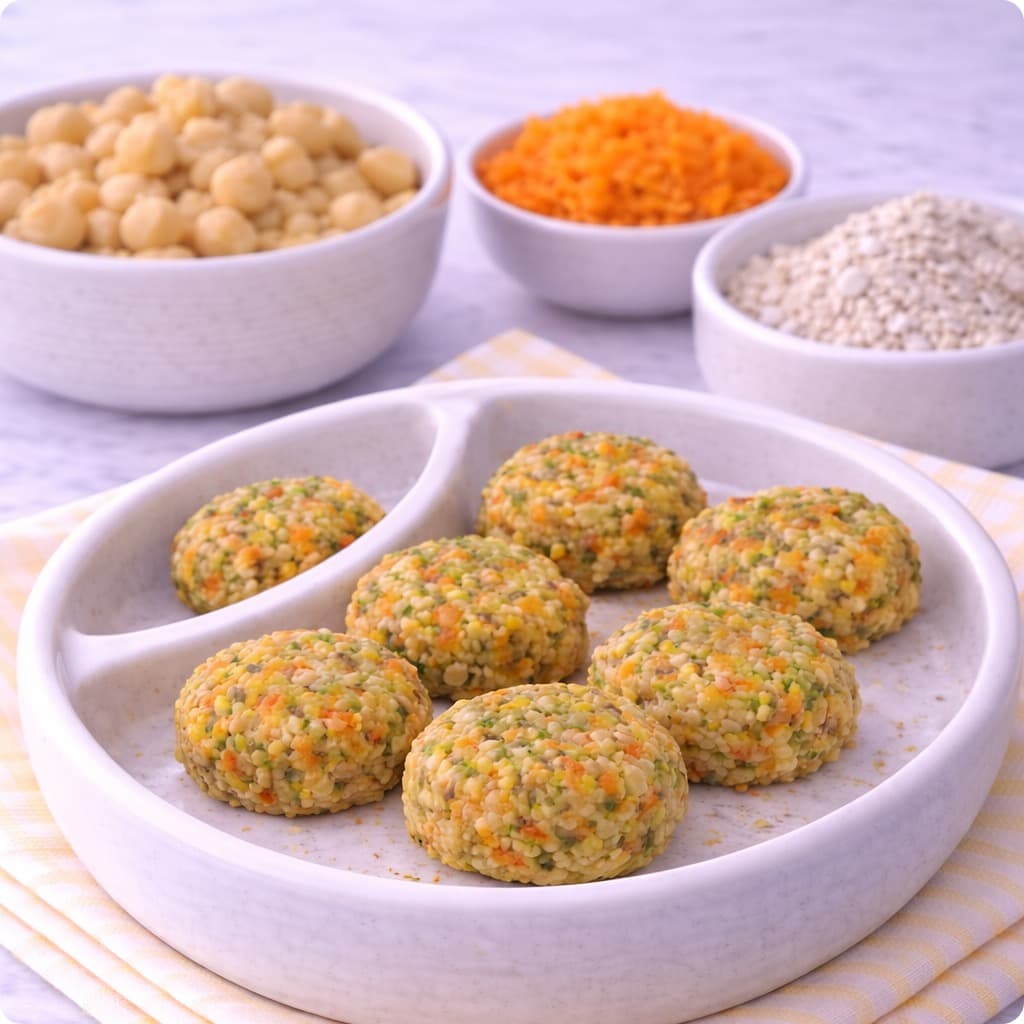
Baby Falafel Patties
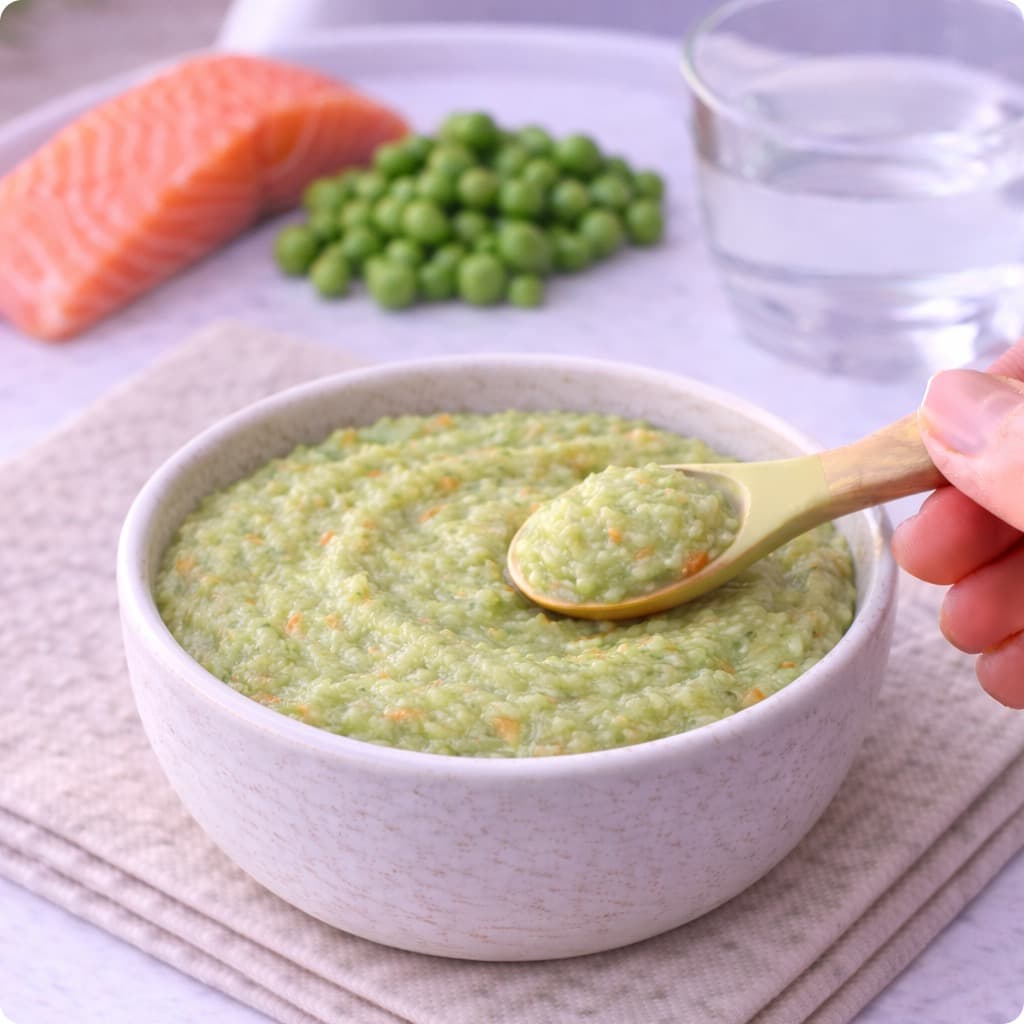
Salmon & Pea Mash
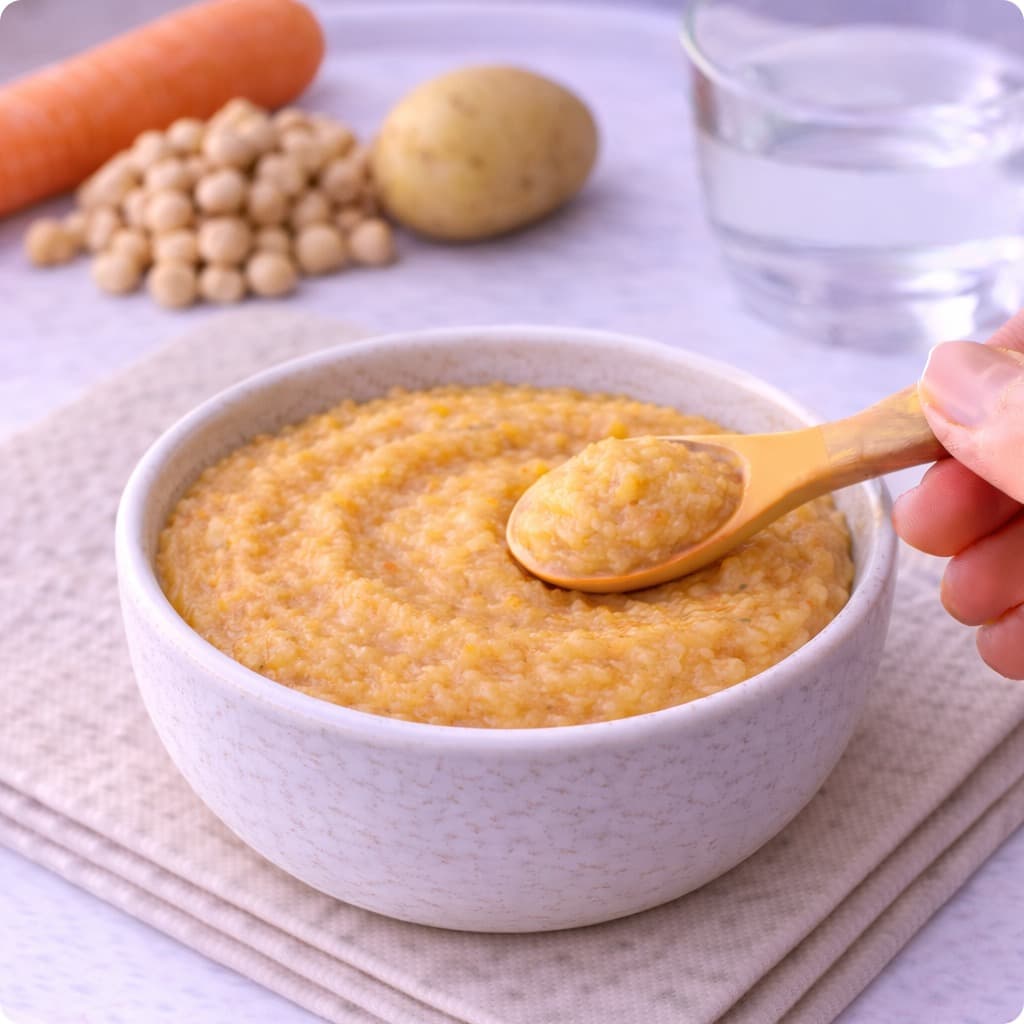
Chickpeas, Carrot & Potato Mash
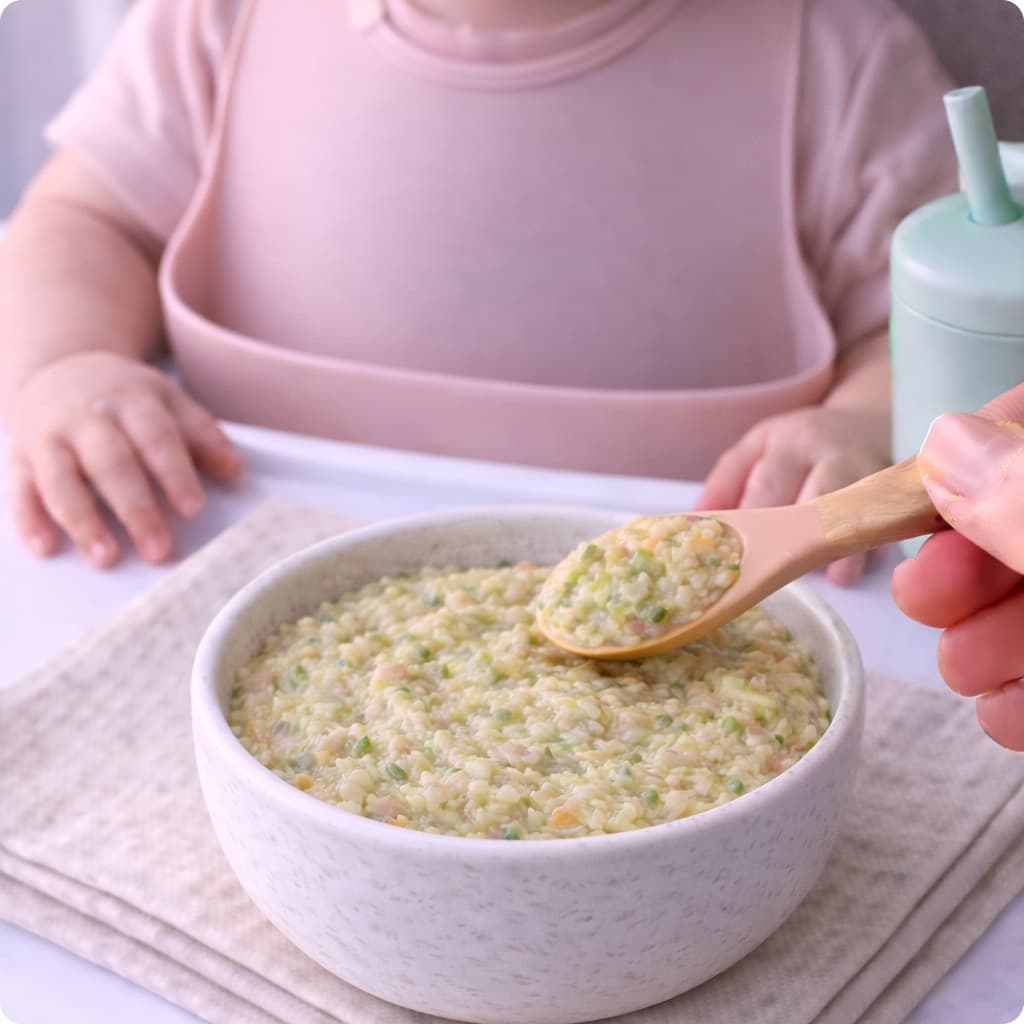
Salmon, Potato & Peas
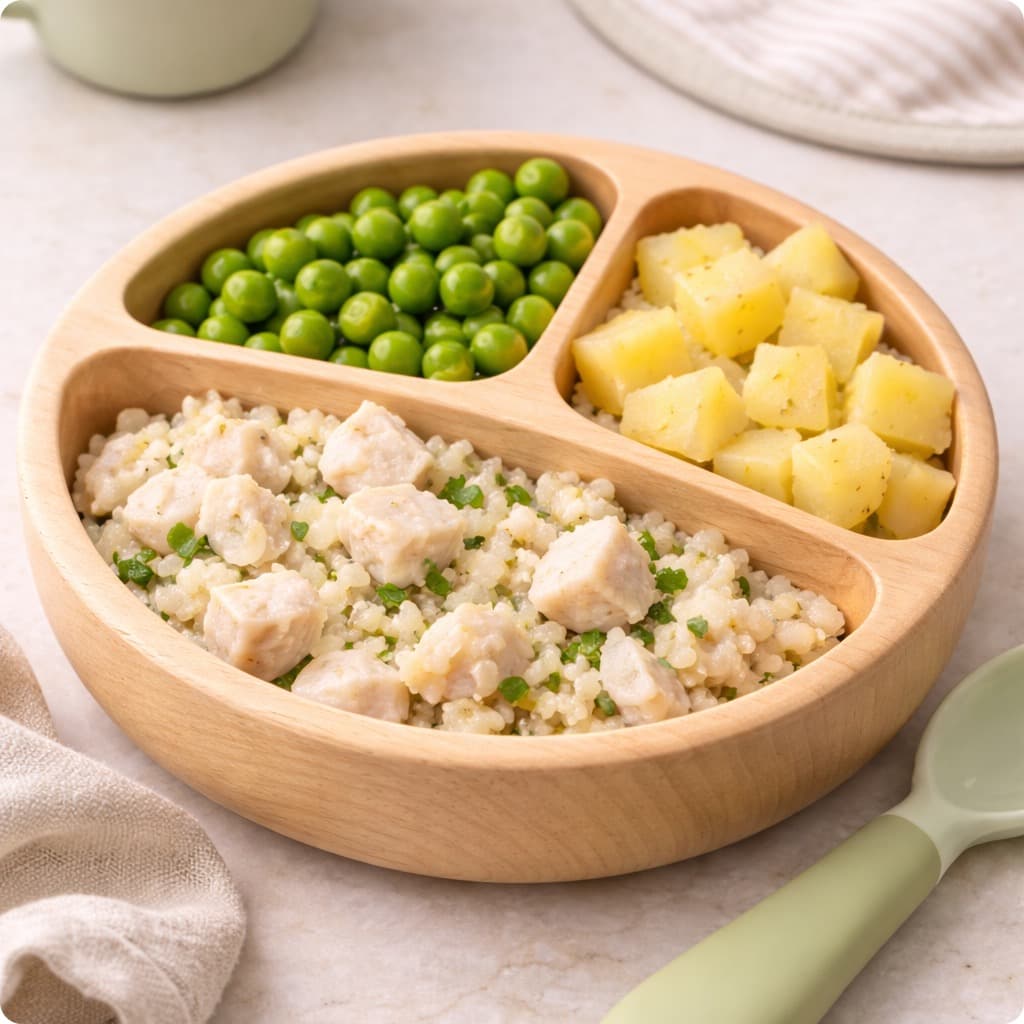
Hake, Potato & Peas
Frequently asked questions
Can babies eat whole peas?
Whole, round peas can be a choking hazard for babies and young toddlers because of their size and shape. It is safest to mash, smash, or flatten cooked peas before serving. As your child develops stronger chewing skills, usually well into toddlerhood, you can gradually offer whole soft peas while still supervising closely.
Are peas a choking hazard for babies?
Yes, peas can be a choking hazard because they are small and round, a shape that can easily block a baby's airway. Cooking peas until very soft and then mashing or flattening them greatly reduces this risk. Always supervise your baby during meals and keep them seated upright while eating.
Can I give my 6 month old peas?
Yes, you can offer peas to a 6 month old who is showing signs of readiness for solids, such as sitting up with support and reaching for food. At this age, cook the peas until soft and mash or puree them rather than serving them whole. Offer them on a spoon or stirred into other smooth foods.
Are frozen peas okay for babies?
Frozen peas are perfectly fine for babies as long as you cook them until soft before serving. Never offer peas frozen or only partly thawed, as their firm, round shape is a choking hazard. Steaming or boiling frozen peas until tender and then mashing them works well.
Can babies be allergic to peas?
Peas are not a common allergen, and reactions are uncommon. As with any new food, it is still a good idea to introduce peas on their own and watch for signs such as a rash, swelling, vomiting, or trouble breathing. If you notice any concerning symptoms, stop offering peas and contact your pediatrician.
How do I serve peas for baby-led weaning?
For baby-led weaning, smash or flatten cooked peas so the round shape is broken, which makes them safer for self-feeding. You can also mix peas into soft fritters, mashes, or pasta that your baby can pick up. Avoid leaving whole, firm peas on the tray for babies who are just learning to feed themselves.
Should I peel peas for my baby?
You do not usually need to peel peas for your baby, since the skin softens when cooked and is easy to mash. If your baby is very new to solids or you want a smoother texture, you can puree cooked peas and strain them to remove any skins. As your baby gets used to more texture, mashed peas with skins are fine.
Get recipes + a feeding plan for your baby
Save this food to your baby's list, get age-appropriate recipes and follow a personalized feeding schedule - 350+ baby-safe meals in the app.
verifiedSources & References
This guide is informed by current guidelines from leading health organizations: