Quick answer
Most babies are ready to start solids around 6 months of age, when they can sit up with little or no support, hold their head steady, and show interest in food by reaching for it and bringing it to their mouth. Peas can be one of your baby's early vegetables because they are soft when cooked and easy to mash, and there is no need to introduce them in any particular order compared to other vegetables.
When can babies eat peas?
Most babies are ready to start solids around 6 months of age, when they can sit up with little or no support, hold their head steady, and show interest in food by reaching for it and bringing it to their mouth. Peas can be one of your baby's early vegetables because they are soft when cooked and easy to mash, and there is no need to introduce them in any particular order compared to other vegetables.
Peas are not considered a common allergen, so there is no reason to delay them out of allergy concern. As with any new food, offer peas on their own for a couple of days so you can watch for any reaction before combining them with other foods. If your baby was born prematurely or has specific health concerns about starting solids, check with your pediatrician first.
See our first foods for baby guide for more ideas.
Safety Tips
- ✓Whole, round peas are a choking hazard for babies and young toddlers, so mash, smash, or flatten them until your child chews reliably.
- ✓Cook peas until soft, and never serve them firm, raw, or frozen straight from the bag.
- ✓Offer small amounts at a time rather than a big pile, so your baby cannot scoop several peas into their mouth at once.
- ✓Introduce peas on their own at first and watch for any reaction, even though they are not a common allergen.
- ✓Always stay within arm's reach and supervise closely, with your baby seated upright and never eating while crawling, walking, or distracted.
Select Baby's Age
How to serve peas for a 6 month old
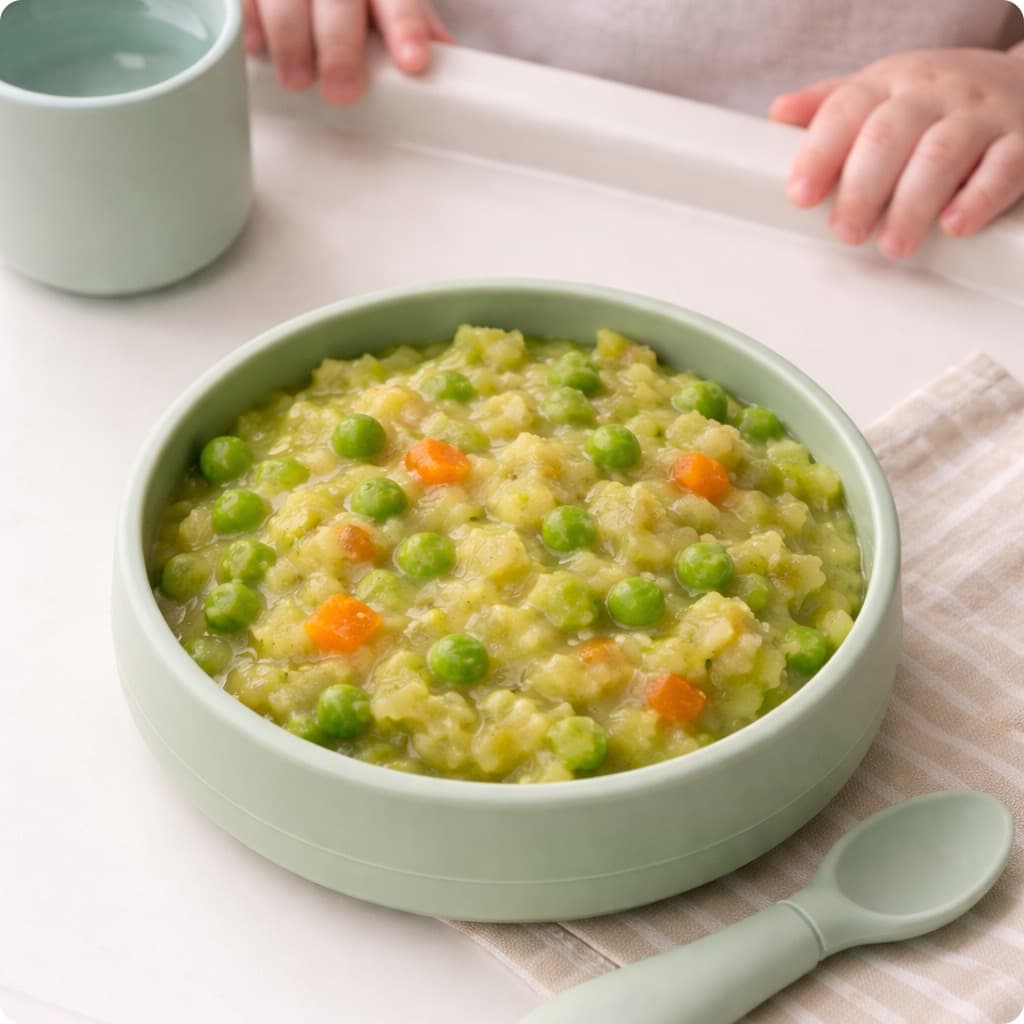
At 6 months, the main concern with peas is their small, round shape, which can be a choking hazard if they are served whole and firm. Cook fresh or frozen peas until they are very soft, then mash or puree them into a smooth or lightly textured consistency, making sure each pea, roughly 1 cm in size, is broken down rather than left whole. Stir mashed peas into other purees, blend them into a mild soup, or offer them on a preloaded spoon for your baby to bring to their mouth. A thick pea mash also spreads nicely on a soft toast strip for early self-feeding. Never serve raw or firm peas, or peas straight from the freezer bag, and always supervise with your baby seated upright.
6 month baby feeding schedule for more tips.
Pea recipe ideas for babies
Once your baby is comfortable with mashed peas, try these simple, baby-friendly ways to serve them. See our baby recipes.
- ★Mashed pea and potato stew with a soft, spoonable texture.
- ★Mini pea pancakes made with blended peas for easy self-feeding.
- ★Pea and ricotta pasta stars with soft-cooked peas stirred through.
- ★Smooth pea puree blended with a little mint and offered on a preloaded spoon.
Explore our baby-led weaning food list and first foods for baby for more inspiration.
Frequently Asked Questions
When can babies eat peas?
Most babies can eat peas from around 6 months when starting solids. Always serve it in a safe size and texture appropriate for your baby's age and development.
How do you cut peas for baby led weaning?
For babies around 6 months, peas should be cut into large pieces that are easy to grasp with their hands. As babies develop their chewing skills, the pieces can gradually become smaller.
How to serve peas baby led weaning?
For BLW, cut peas into strips or wedges that babies can hold. The texture should be soft enough to mash easily with gentle pressure.
Can babies choke on peas?
peas can become a choking hazard if served in small round or hard pieces. Cutting it into larger soft pieces appropriate for baby-led weaning helps reduce choking risk.
How should peas be served to a 6 month old?
At around 6 months, peas should be served in large soft pieces that babies can hold with their hands. See our full ingredient guide.
Is peas safe for baby led weaning?
peas can be included in baby-led weaning when cut into safe shapes and soft textures that babies can hold and gum.
How small should peas be cut for older babies?
From around 9 months, babies typically use a pincer grasp, so peas can be cut into smaller pea-sized pieces. Continue ensuring pieces are soft enough to mash and watch for any choking risk shapes.
Should peas be cooked or raw for babies?
Cook peas until easily mashable when raw textures are too firm for babies to gum. Soft ripe fruits are often offered raw, while firmer foods are typically steamed, roasted, or boiled until tender.
Can peas be served as a finger food at 6 months?
Yes, peas can be a 6-month finger food when cut into long graspable strips and softened to a mashable texture. Always supervise meals and adjust shape as your baby's chewing skills develop.
How to cut peas for a 7 month old?
At 7 months babies still use a palmar (whole-hand) grasp. Cut peas into long strips about 2-3 inches long and finger-width thick, with part sticking out of the fist for chewing. Soft enough to mash between two fingers.
How to cut peas for an 8 month old?
At 8 months babies are refining grasp and may begin pincering. Continue offering peas in 2-inch strips alongside a few small pea-sized pieces to practice the pincer grasp. Cooked until easily mashable.
How to cut peas for a 9 month old?
At 9 months most babies have developed the pincer grasp. Cut peas into pea-sized pieces (about ½ inch / 1.5 cm) for self-feeding practice. Continue avoiding round, hard, or sticky shapes; soft enough to mash with mild pressure.
How to cut peas for a 10 month old?
At 10 months babies eat a wider variety of textures. Offer peas in pea-sized pieces or small bite-sized cubes (½ inch / 1.5 cm). They can manage slightly firmer textures, but pieces should still mash easily.
How to cut peas for a 12 month old?
From 12 months babies eat in pieces about ½ inch (1.5 cm). Round foods (grapes, cherry tomatoes) must still be quartered until age 4 due to choking risk. Soft enough to chew without much molar work.
Can babies eat peas for breakfast?
Yes - peas can be part of a balanced baby breakfast when prepared in baby-safe shapes. Pair with a protein, healthy fat, or whole grain (eggs, yogurt, oats, nut butter on toast) for a complete morning meal.
verifiedSources & References
This guide is informed by current guidelines from leading health organizations:
Get cutting guides + your baby's meal plan
Safe cuts for every food and age, a feeding schedule that grows with your baby, and 350+ recipes to match - all in one app.
Try Nibli today to start planning your baby's meals.