What do you want to know?
Deep dive
Plum →Plum for parents: when to introduce, how to cook or mash to avoid tartness, fiber and vitamin benefits, constipation tips and gentle puree and finger-food recipes for babies.
Nutrition highlights
- Fibre - supports healthy digestion and can help relieve constipation.
- Vitamin C - supports the immune system and iron absorption.
- Sorbitol - a natural sugar alcohol that gently softens stools.
- Vitamins A and K - support vision and bone health.
Safety quick tips
- Always remove the hard stone (pit) before serving - it's a serious choking hazard.
- Choose ripe, soft plums; steam firm ones until soft for young babies.
- Peel the skin for younger babies if it's tough; leave it on a wedge only as a handle.
Common questions
Can babies eat Plum?
Yes. Babies can eat Plum starting around 6 months when they begin solid foods. It should be served in a safe texture and size for babies.
When can babies eat Plum?
Babies can eat Plum from around 6 months when starting solids. Babies can eat plum from around 6 months, once they're starting solids. Choose ripe, soft plums that give to gentle pressure; steam firm plums until soft for young babies. Always remove the hard stone (pit) before serving.
Is Plum a choking hazard for babies?
Plum can be a choking hazard if served in unsafe shapes. Always remove the hard stone (pit) before serving - it's a serious choking hazard. Choose ripe, soft plums; steam firm ones until soft for young babies. Peel the skin for younger babies if it's tough; leave it on a wedge only as a handle. Cut into wedges or strips, not round slices, for younger babies. Offer as part of a varied diet; lots of plum can loosen stools (helpful for constipation). Always supervise eating with your baby sat upright.
Is Plum a common allergen?
Plum is not typically a common allergen for babies. Many babies can try it from around 6 months as part of a varied diet.
How should Plum be served to babies?
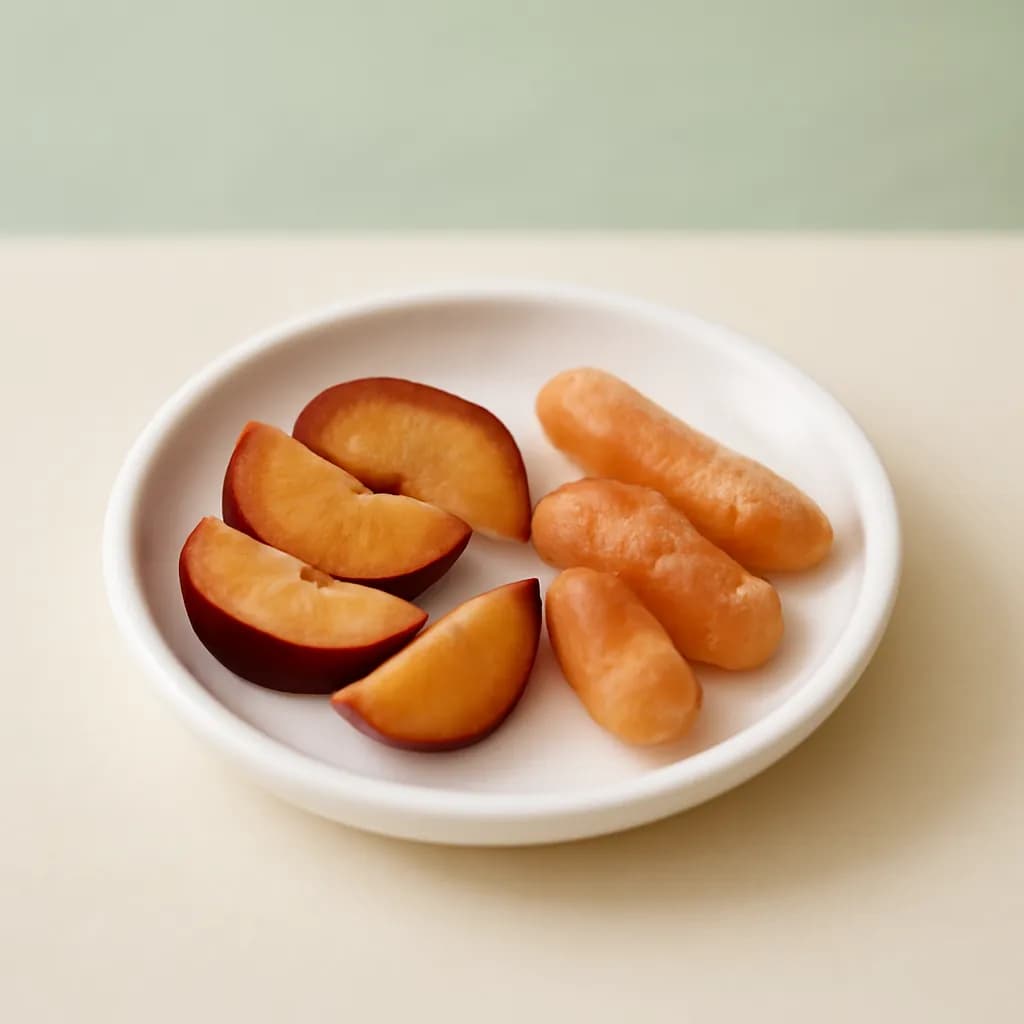
6–9 months: Offer ripe plum in soft wedges (stone removed); steam firm plums until soft first. 6–9 months: Mash or purée ripe plum, alone or mixed with apple, pear, or oatmeal. 9–12 months: Small soft plum pieces as the pincer grasp develops. 12+ months: Plum in fruit salads, baked, or in porridge (still remove the stone).
What nutrients does Plum provide for babies?
Plum provides nutrients like fibre, vitamin C, iron that support babies' growth and development.
How long can I store Plum for babies?
Cook Plum to a safe temperature and store it in the refrigerator for up to 2 days, or freeze in single-serving portions for up to 1 month to preserve nutrients.
Should I buy organic Plum for my baby?
Organic Plum isn't strictly necessary for babies, but some families prefer to reduce pesticide exposure. Wash conventional produce thoroughly. Variety and freshness matter most.