What 6-month-olds can do at meals
Around 6 months most babies can sit with minimal support, hold their head steady, and reach for food. Their tongue-thrust reflex is fading, which lets them move food to the back of the mouth and swallow.
Most 6-month-olds use a palm grasp - they squeeze food in their fist rather than pinching with thumb and finger. That means finger foods need to be cut as long, baby-fist-sized strips so part of the food sticks out and can be bitten off, not popped whole into the mouth.
Top first foods for 6-month-olds
Avocado spears
A creamy, healthy-fat first food. Cut into long, finger-sized spears or mash with a fork - skin removed.
Banana spears
Naturally soft and sweet. Peel halfway and offer the unpeeled half as a handle, or cut into thick spears.
Steamed sweet potato
Iron-supportive, easy to digest, and naturally sweet. Steam or roast until very soft and cut into long wedges or mash.
Iron-fortified oatmeal
Provides iron from the very first introduction. Cook until creamy and thin with breast milk or formula for a smooth texture.
Soft-cooked carrot sticks
Vitamin A and beta-carotene. Steam carrot batons until tender enough to mash with light pressure between two fingers.
Soft pear slices
Naturally sweet and gentle. Choose ripe pears that yield to gentle pressure; cut into thick spears or steam for firmer fruit.
Steamed broccoli florets
Easy to grasp by the stem. Steam until very soft - tree-shaped florets give 6-month-olds a built-in handle.
Plain whole-milk yogurt
Calcium, protein, and probiotics. Choose plain unsweetened yogurt and serve on a pre-loaded spoon.
Well-cooked egg
Top-9 allergen, high in choline and iron. Hard-boil for 10-12 minutes and offer as wedges, or scramble in soft pieces.
Soft cooked chicken
An excellent iron source. Slow-cook or poach until very tender, then shred along the grain into long, soft strips.
Roasted beetroot strips
Folate, plant-based iron, and natural sweetness. Roast whole until soft, peel, then cut into baby-finger-sized strips. Don't be alarmed by pink urine the next day.
Steamed fennel wedges
A mild, slightly sweet bulb that becomes silky when steamed. Cut the cooked bulb into baby-finger wedges - gentle on tiny tummies and a favourite in European baby-food jars.
Cucumber spears (peeled, chilled)
Peel, deseed, and cut into long batons. Refrigerate 30 minutes for a soothing teething stick - supervise closely. Never thin coin slices.
Buckwheat porridge
Naturally gluten-free, iron-rich, and a complete plant protein. Cook 30 g groats in 200 ml water until very soft (~20 min), then mash or blend.
Plain whole-milk kefir
Probiotic fermented dairy - start with 1–2 teaspoons stirred into porridge or fruit puree. Plain only, no added sugar. Not a substitute for breast milk or formula.
Tahini (thinned)
An ideal vehicle to introduce sesame, a top-9 allergen. ¼ teaspoon stirred into porridge or yogurt for first exposure. NEVER a whole spoonful of pure tahini - always thinned.
Date paste
Soak pitted dates, blend smooth, and stir into oatmeal or yogurt for natural sweetness. ALWAYS pit-free. Avoid whole dates or chunks under 12 months.
Sample meal combos at 6 months
- ★Avocado spears + iron-fortified oatmeal
- ★Sweet potato wedges + plain yogurt for dipping
- ★Steamed broccoli florets + soft chicken strips
- ★Mashed banana + nut butter (thinly spread on toast strip)
Safety tips for 6-month-olds
- ✓Cut all finger foods into long, palm-sized strips - never round slices, which match a baby's airway.
- ✓No honey before 12 months due to infant botulism risk.
- ✓No added salt - a baby's kidneys can't handle the sodium load.
- ✓No added sugar - babies don't need it and it crowds out nutrient-dense foods.
- ✓Always supervise meals; never leave baby unattended with food.
- ✓Introduce common allergens (egg, dairy, peanut, fish, wheat, soy) one at a time and watch for reactions.
When to call your pediatrician
Call your pediatrician for any sign of an allergic reaction (hives, swelling, vomiting, breathing changes), repeated gagging or choking incidents, persistent food refusal across many days, or if your baby is not gaining weight as expected. Severe symptoms like trouble breathing or sudden lethargy are emergencies - call your local emergency number.
Recipes for 6-month-olds
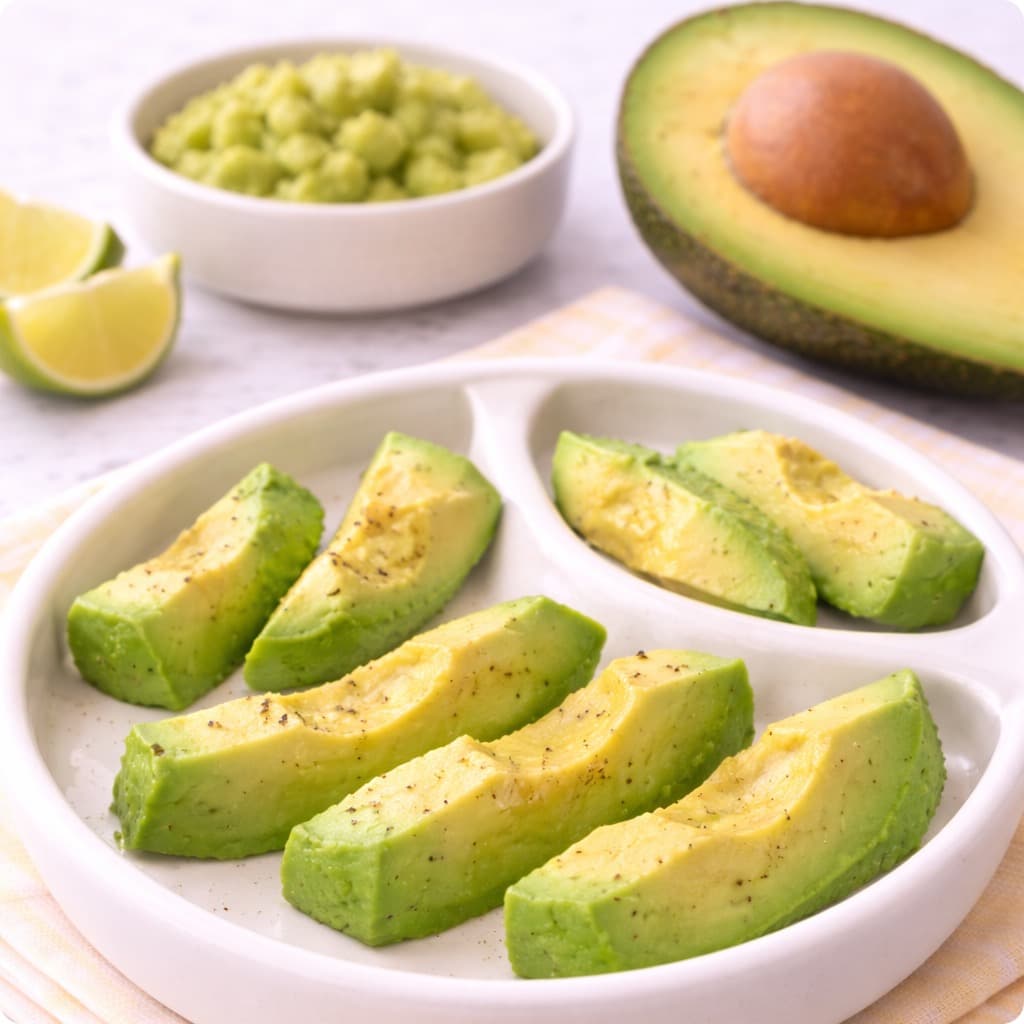
Avocado Wedges
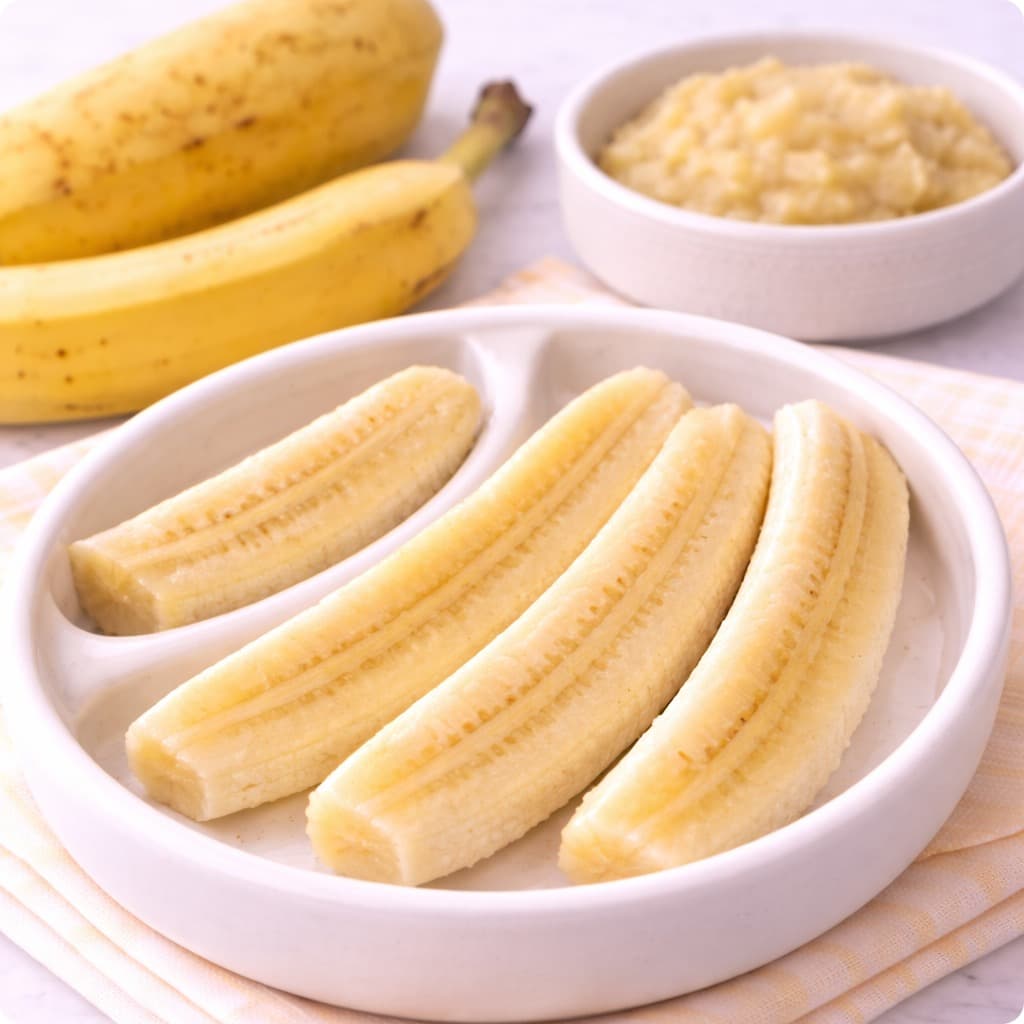
Banana Spears
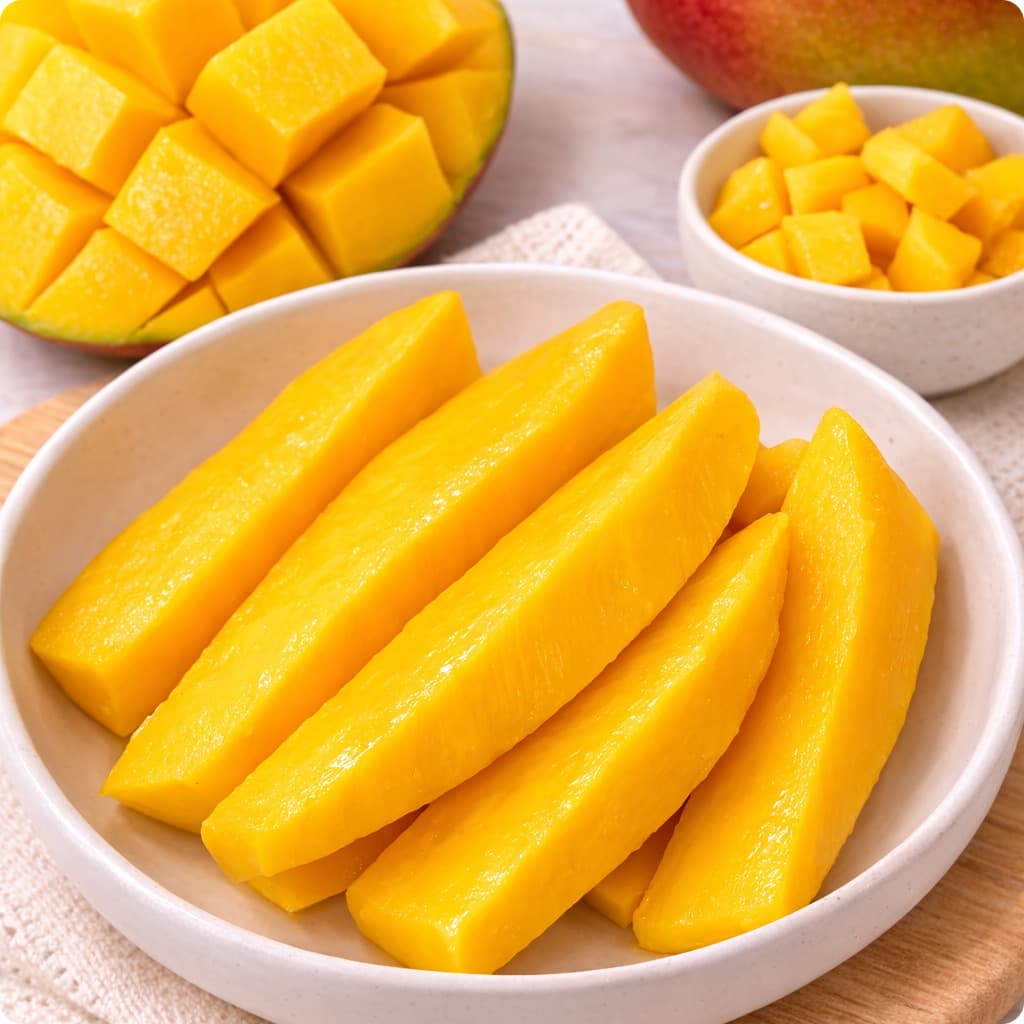
Mango Spears
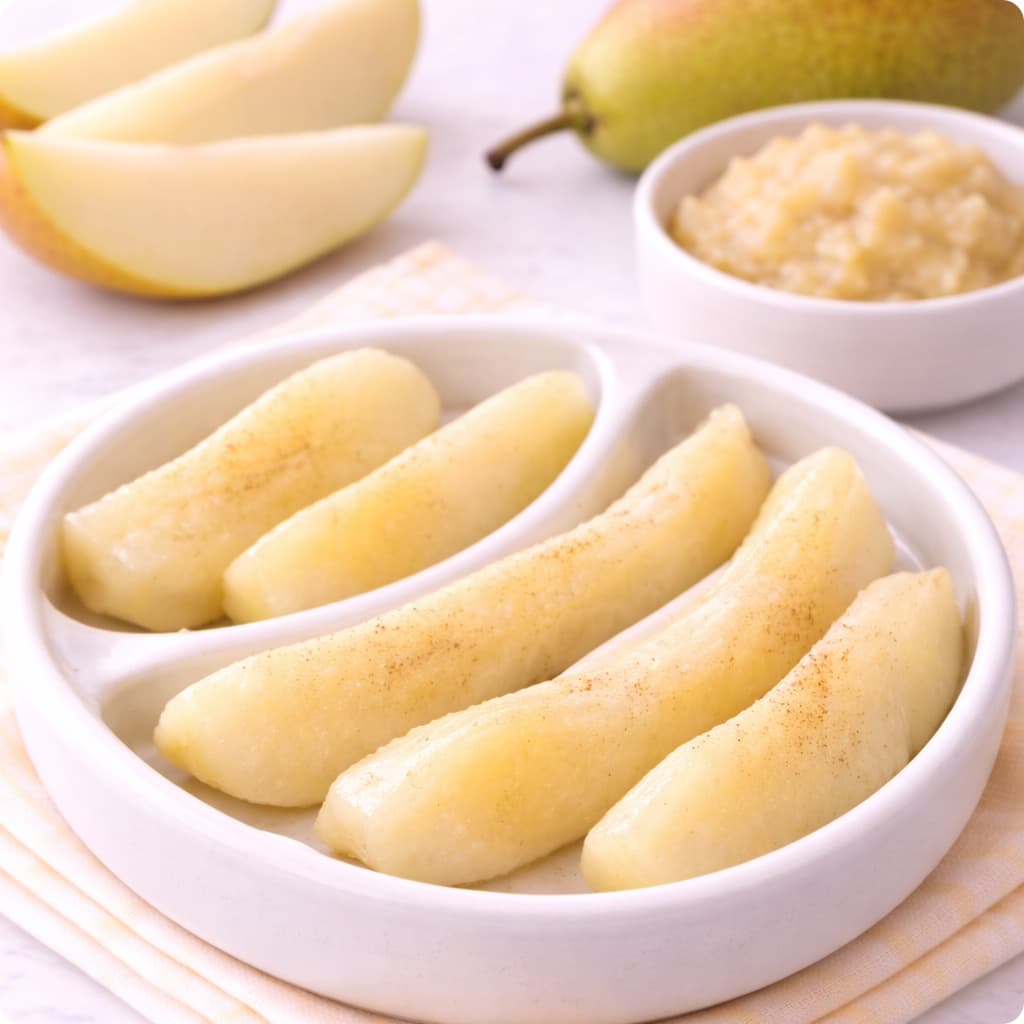
Soft Pear Wedges
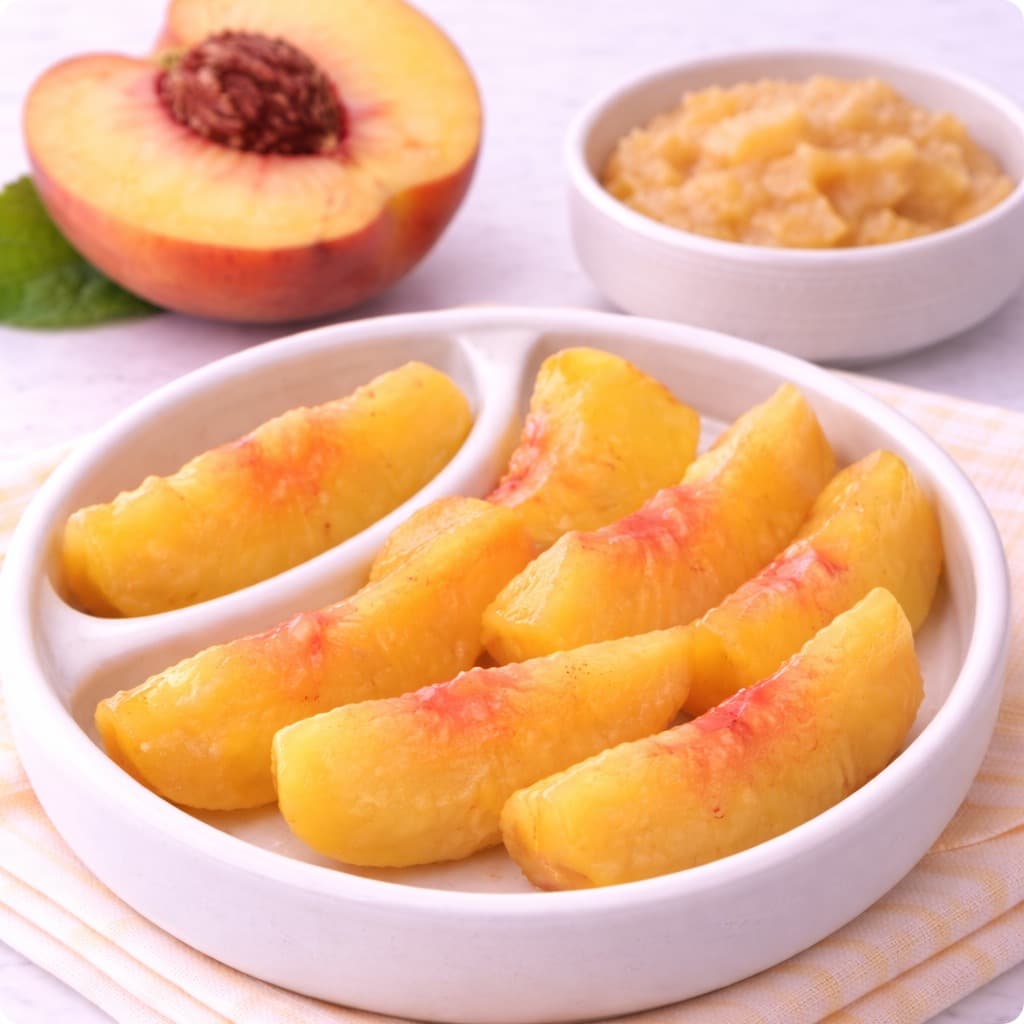
Soft Peach Slices
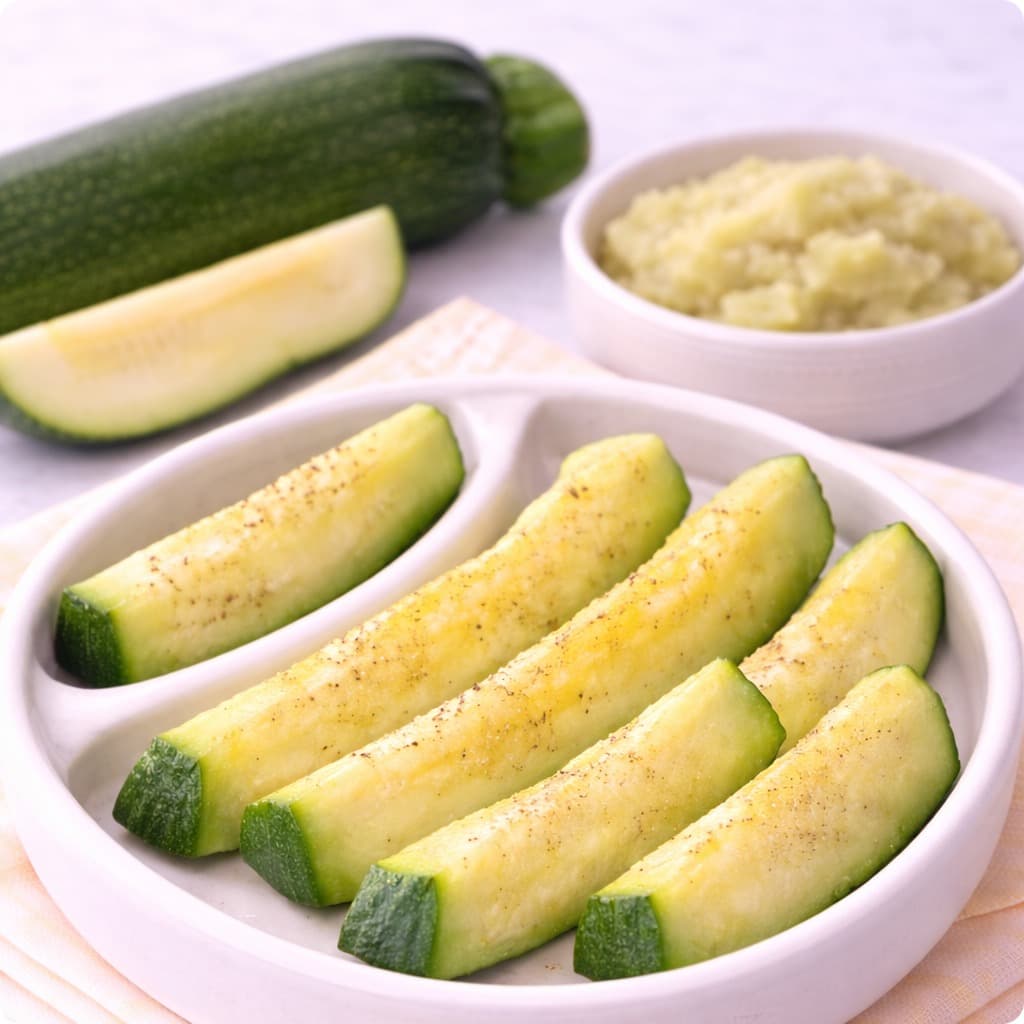
Soft Zucchini Spears
Frequently asked questions
How much food should a 6-month-old eat?
Start with 1-2 tablespoons of food once or twice a day and let your baby decide how much. By the end of the first month of solids many 6-month-olds eat 1-2 small meals plus breast milk or formula. Your baby's appetite is the best guide - never force feeding.
What foods should I avoid at 6 months?
Avoid honey, added salt, added sugar, cow's milk as a drink (yogurt and cheese are fine), unpasteurized dairy, raw or undercooked eggs/fish/meat, large pieces of nuts, whole grapes, and any choking-shaped foods (round slices of hot dog, whole cherry tomatoes, hard chunks).
Can I add salt or sugar to baby food?
No. Babies have small kidneys that struggle with sodium, and added sugar crowds out nutrient-dense foods and shapes flavor preferences. Use herbs, spices (mild, no chili), garlic, lemon, and natural sweetness from fruit and vegetables instead.
Should I worry about choking at 6 months?
Choking is a real risk, but the difference between gagging (loud, normal, protective) and choking (silent) is important. Cut foods into palm-sized strips, avoid round shapes, sit your baby upright, and stay within arm's reach. Consider an infant CPR course for peace of mind.
What if my baby refuses food?
Refusal is normal at the start. Babies are exploring, and most milk feeds still cover their nutrition needs. Offer food in a relaxed setting, eat alongside your baby, and keep meals short (10-15 minutes). Try the same food on different days - it can take 10+ exposures before a baby accepts a new flavor.
Do I need to start with rice cereal?
No. Iron-fortified cereal is one option, but you can equally start with iron-rich whole foods (meat, beans, lentils, tofu, fortified oatmeal). Many guidelines now suggest oatmeal cereal over rice cereal because rice can carry more arsenic.
When should I introduce allergens?
Introduce common allergens (egg, dairy, peanut, fish, wheat, soy, tree nuts, sesame) early - around 6 months and once your baby has handled a few first foods. Offer one new allergen at a time, in the morning, and watch for reactions for 2-3 days.
Get your baby's personalized feeding plan
A daily feeding schedule, 350+ age-matched recipes, allergen tracking and cutting guides - all tailored to your baby's age in the Nibli app.
verifiedSources & References
This guide is informed by current guidelines from leading health organizations: