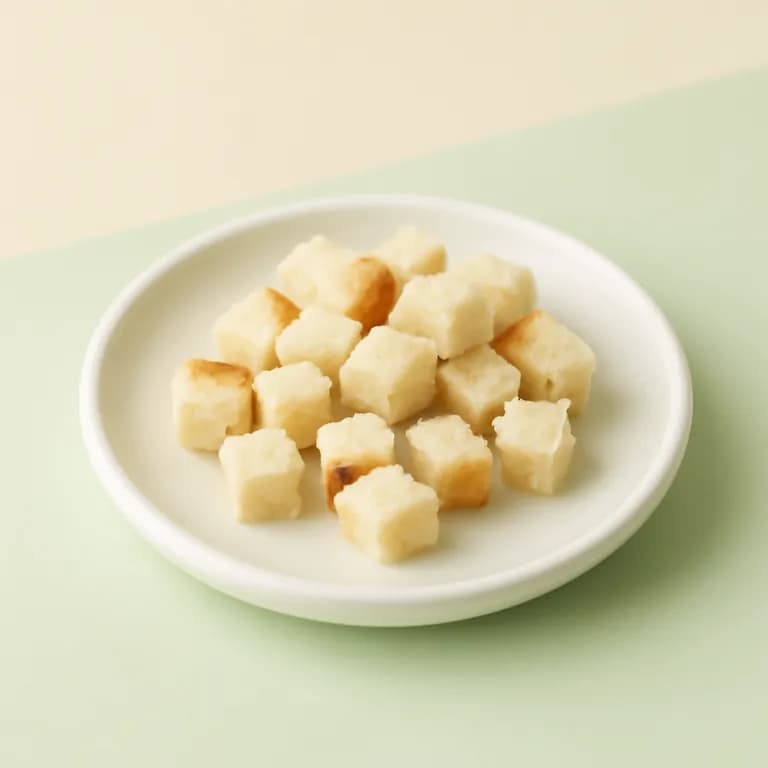
Quick answer
Babies can eat bread from around 6 months, once they're ready for solids.
Bread is typically made from wheat, so it's a useful way to introduce gluten and wheat (a common allergen) early and keep it in the diet.
The main things to watch are salt (shop bread can be surprisingly salty) and texture - soft fresh bread can ball up into a sticky lump, so toasting or topping it helps.
When babies can eat bread
Babies can eat bread from around 6 months, once they're ready for solids.
Lightly toasted bread (toast fingers) is often recommended over soft fresh bread for younger babies - soft bread can become gummy and stick to the roof of the mouth, while toast is firmer and easier to gum.
Bread contains wheat and gluten; introducing it from around 6 months and keeping it in the diet supports allergen introduction.
Check the salt content - choose lower-salt loaves and offer bread as one part of a varied diet rather than a daily staple.
See our first foods for baby guide for more ideas.
Nutritional benefits for babies
- 💚Carbohydrates - provide energy for growing, active babies.
- 💚Introduces wheat and gluten - supports early, regular allergen exposure.
- 💚Wholemeal and seeded breads add fibre, iron, and B vitamins.
- 💚A practical vehicle for nutritious toppings (mashed avocado, thinly spread nut or seed butters, hummus, mashed egg).
- 💚Helps babies practise self-feeding, biting, and chewing skills.
How to serve bread for babies
6–9 months: Lightly toast bread and cut into finger-width strips - toast holds its shape better than soft bread and is easier to gum. A thin scrape of a soft topping (mashed avocado, smooth nut or seed butter, hummus) adds nutrition and flavour.
6–9 months: Avoid thick, doughy white bread on its own - it can compress into a sticky ball. Toasting reduces this.
9–12 months: Smaller toast pieces or soft sandwich fingers with thin fillings as chewing improves.
12+ months: Sandwiches cut into small pieces, soft breadsticks, and a wider range of breads. Keep an eye on total salt across the day.
How to cut bread for BLW
For safe shapes and sizes by age, see our detailed How to cut bread for BLW guide.
Also check how to cut food for baby-led weaning for general BLW cutting tips.
Bread recipes for babies
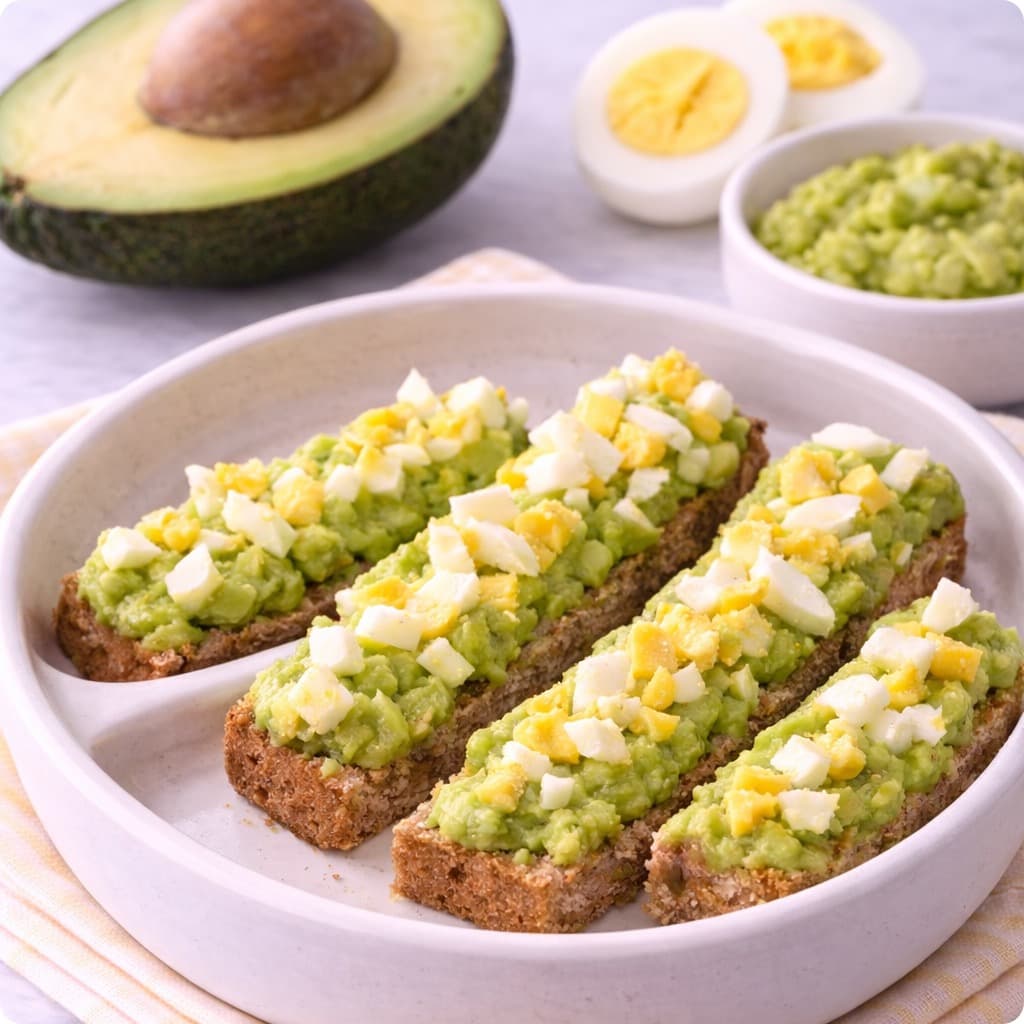
Egg Avocado Toast Fingers
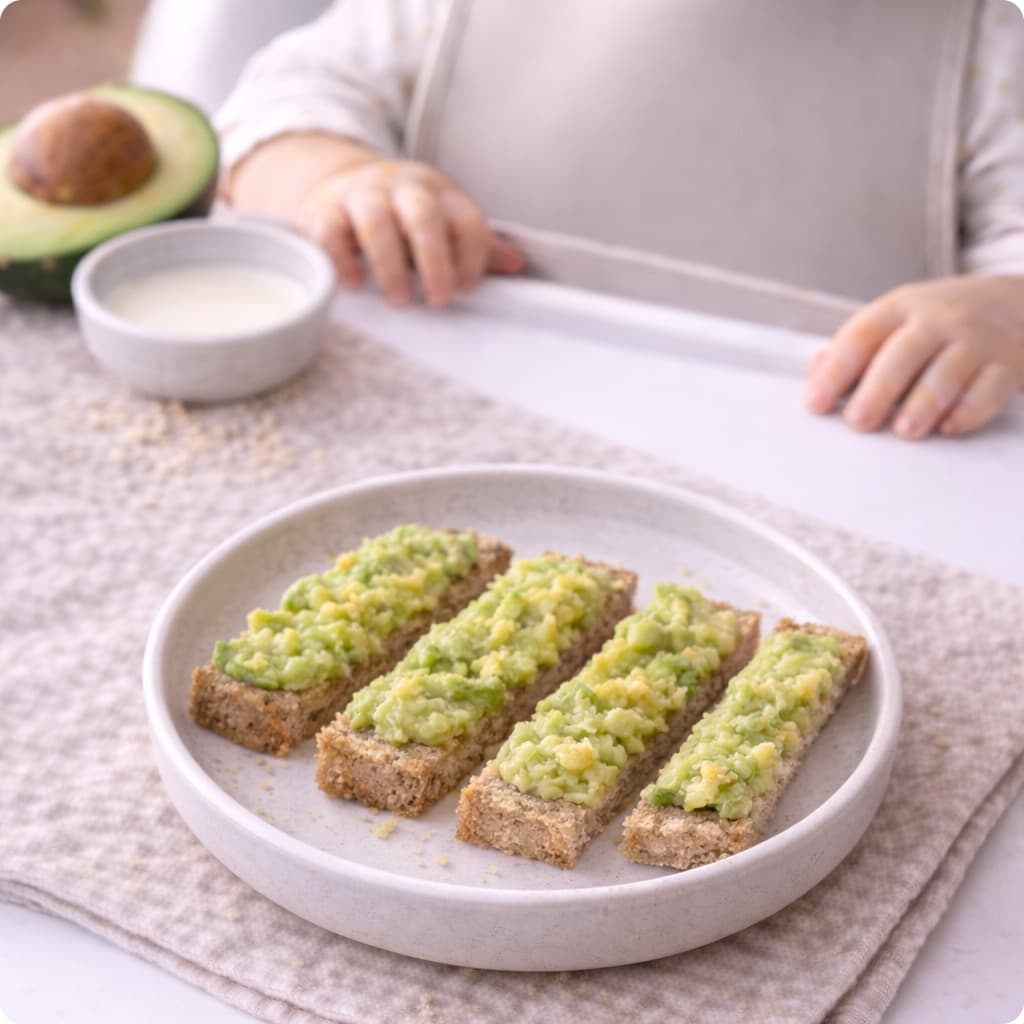
Avocado Toast Fingers (BLW)
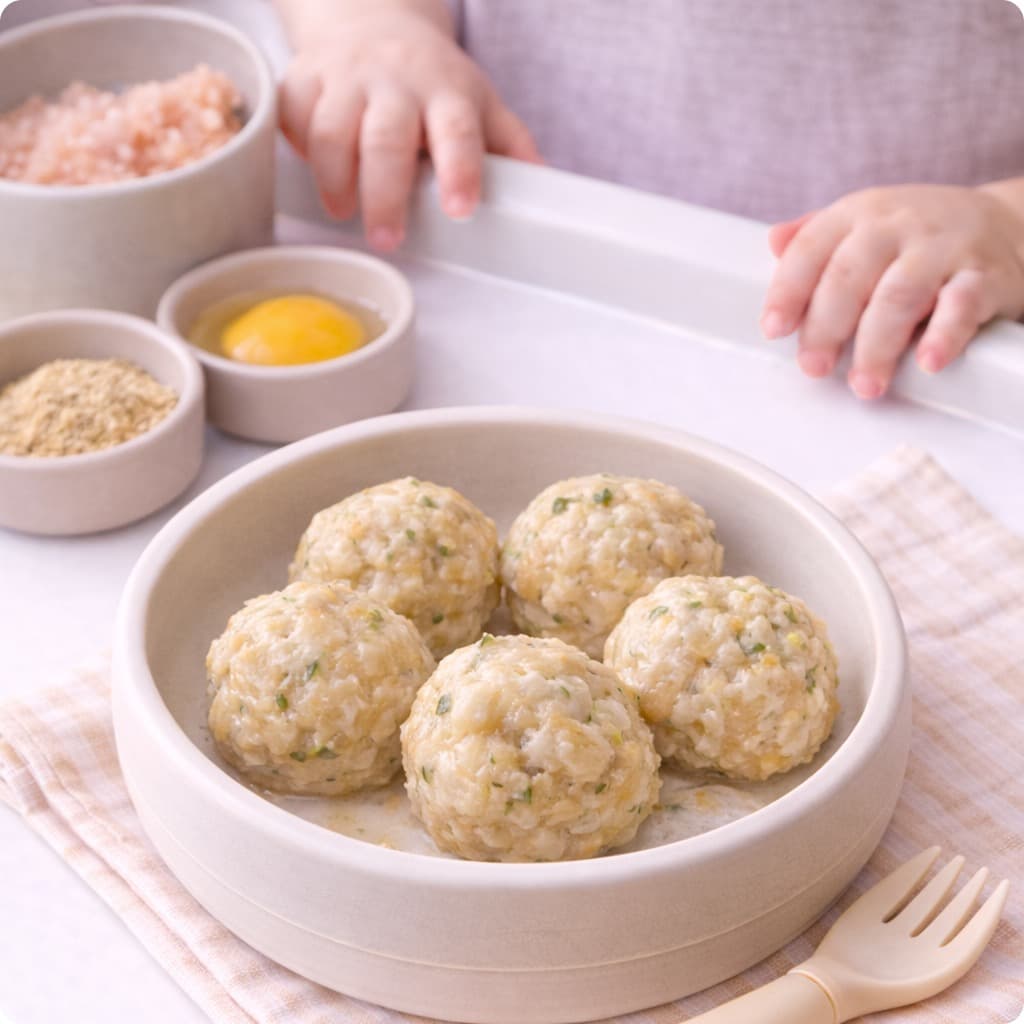
Chicken BLW Meatballs (Soft)
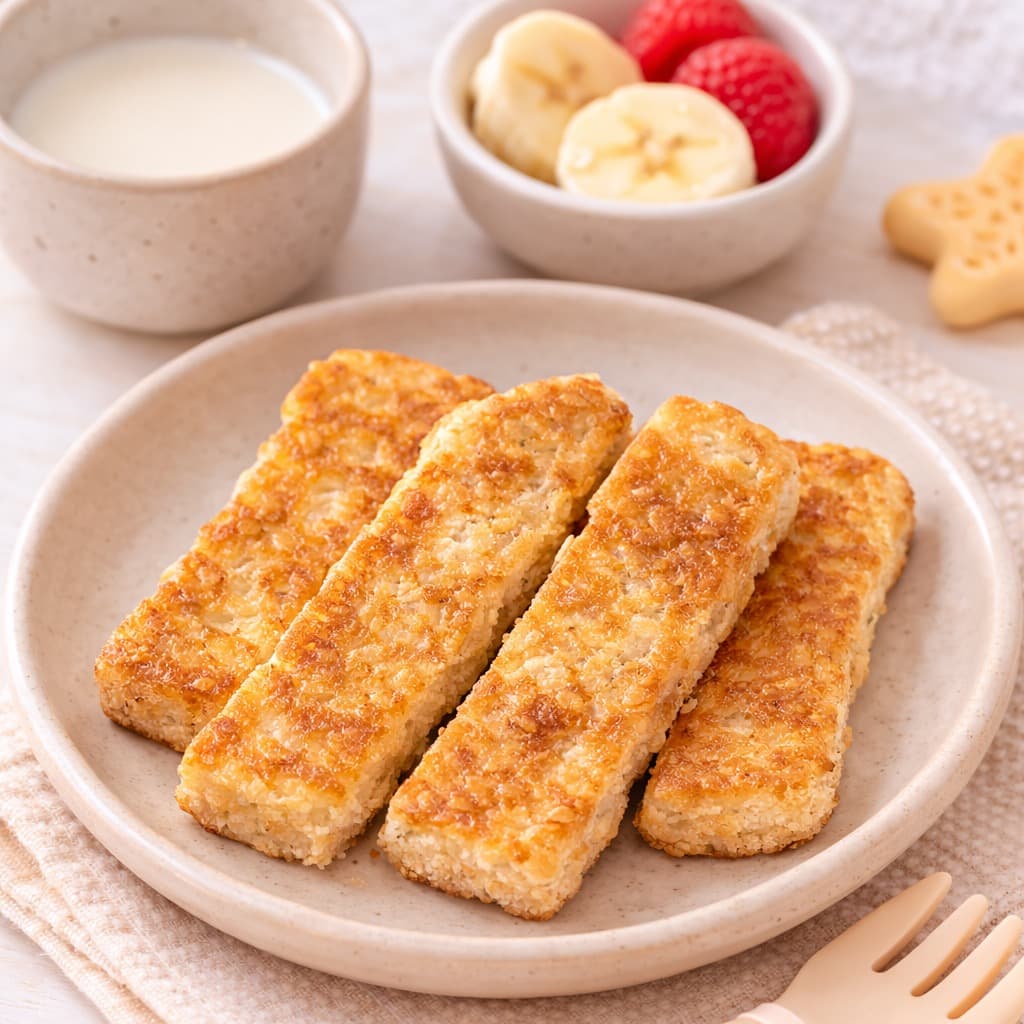
French Toast BLW Strips (Baby Safe)
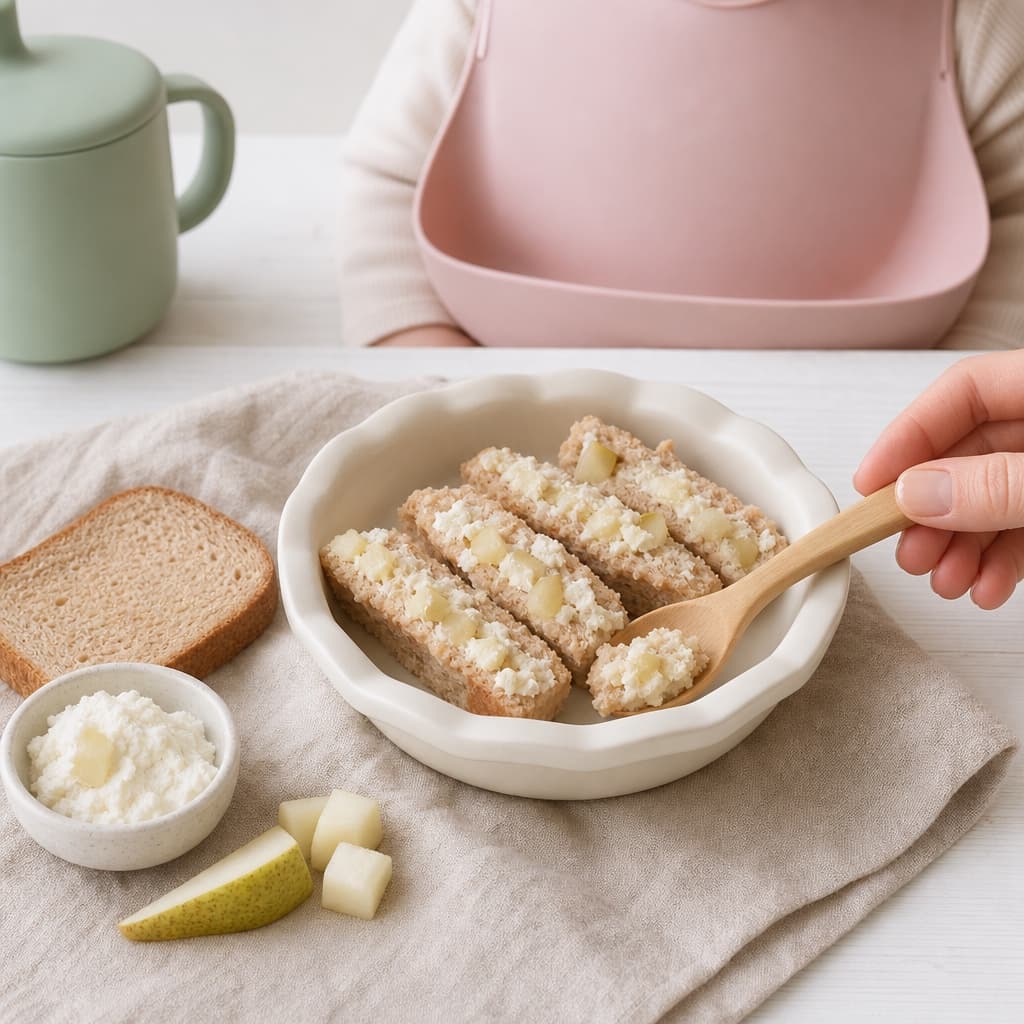
Pear Ricotta Toast Strips
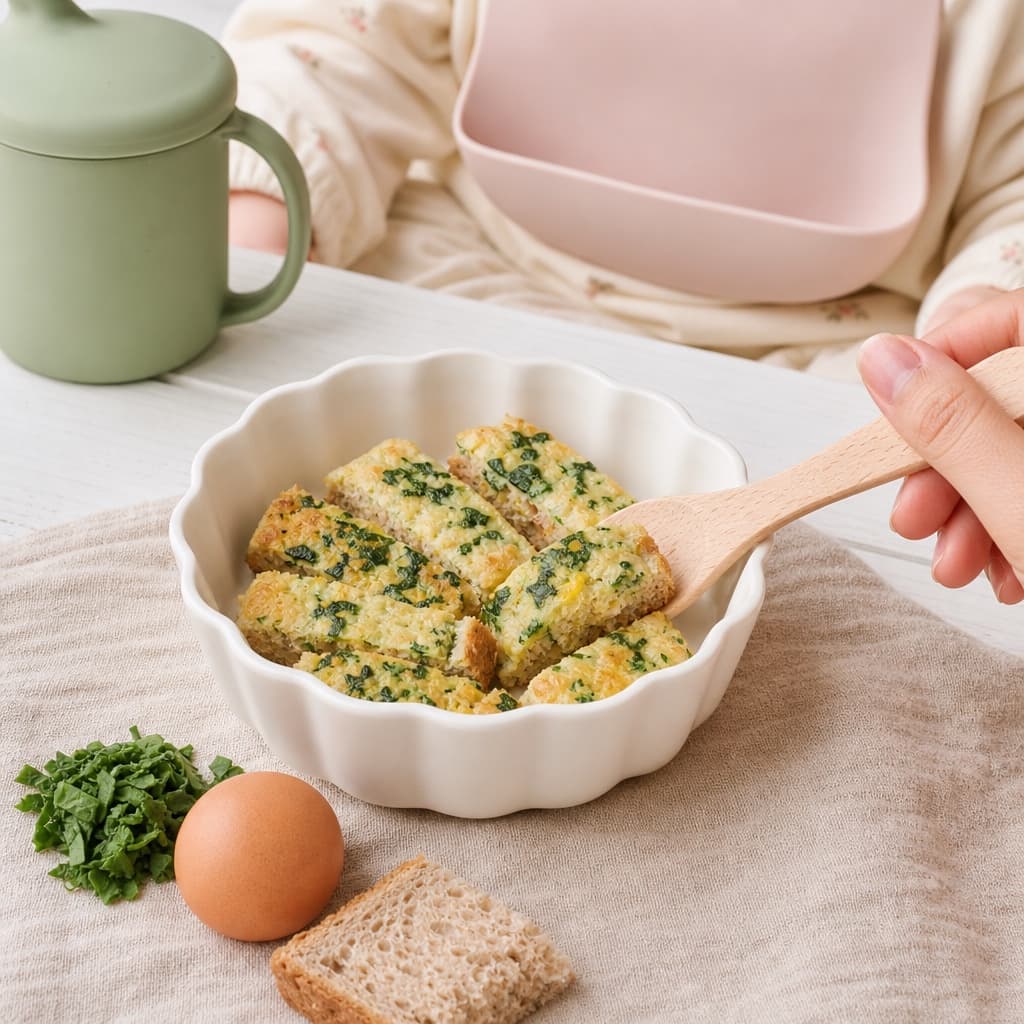
Spinach Egg Toast Bites
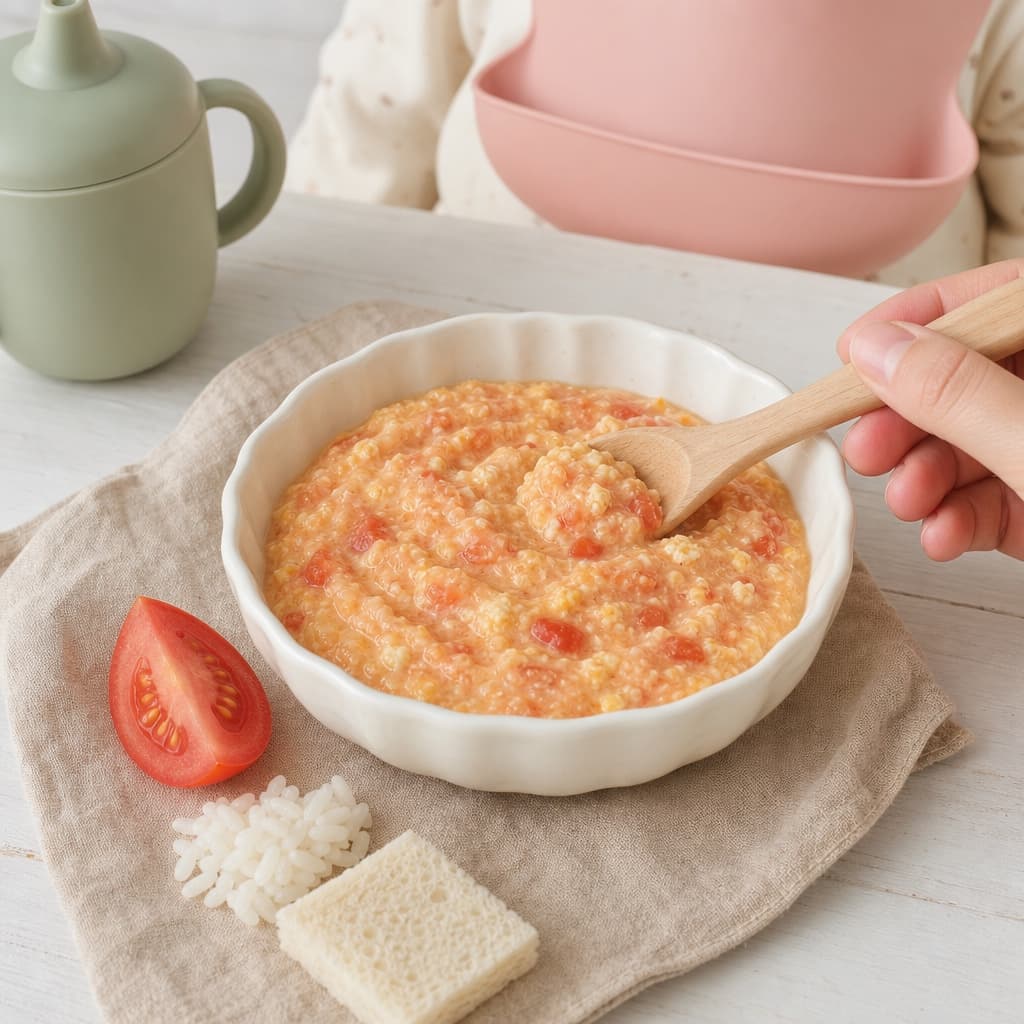
Tomato Egg Breakfast Mash
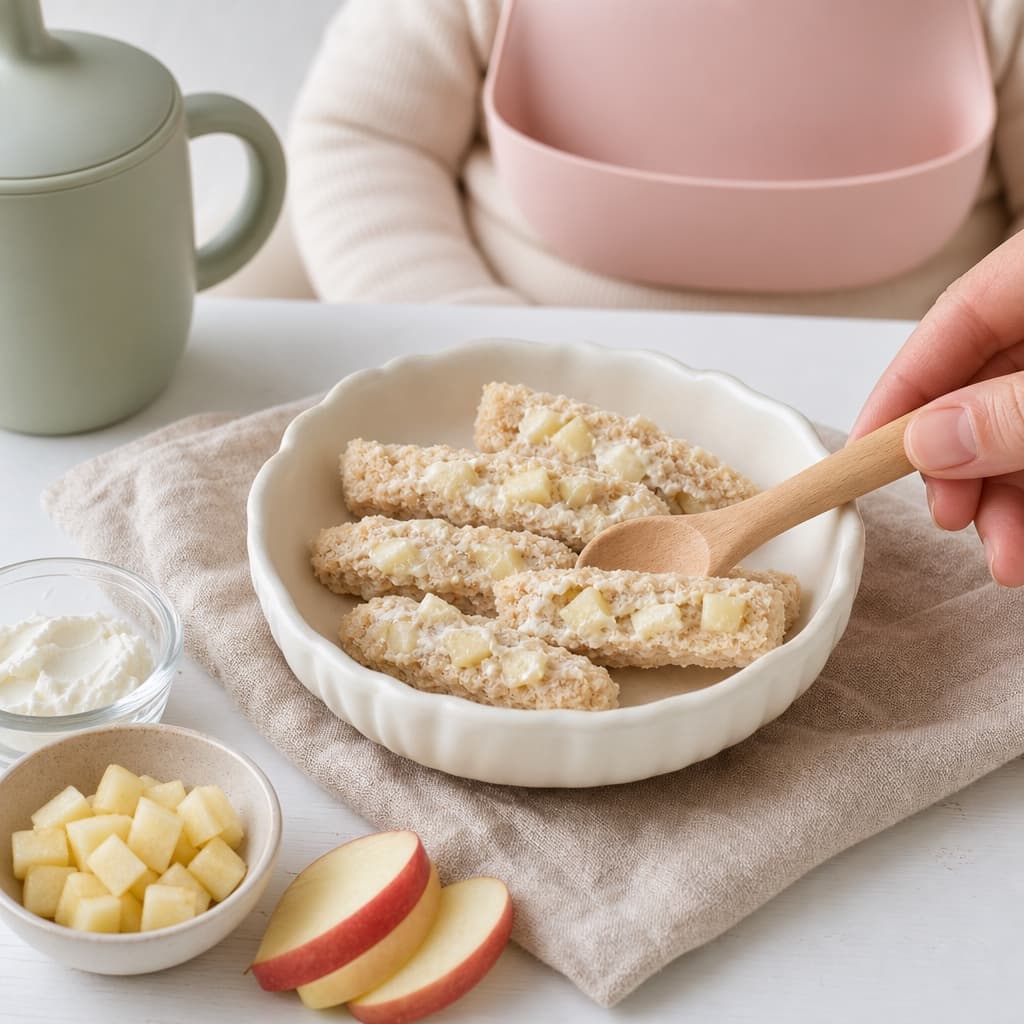
Cream Cheese Apple Toast Fingers
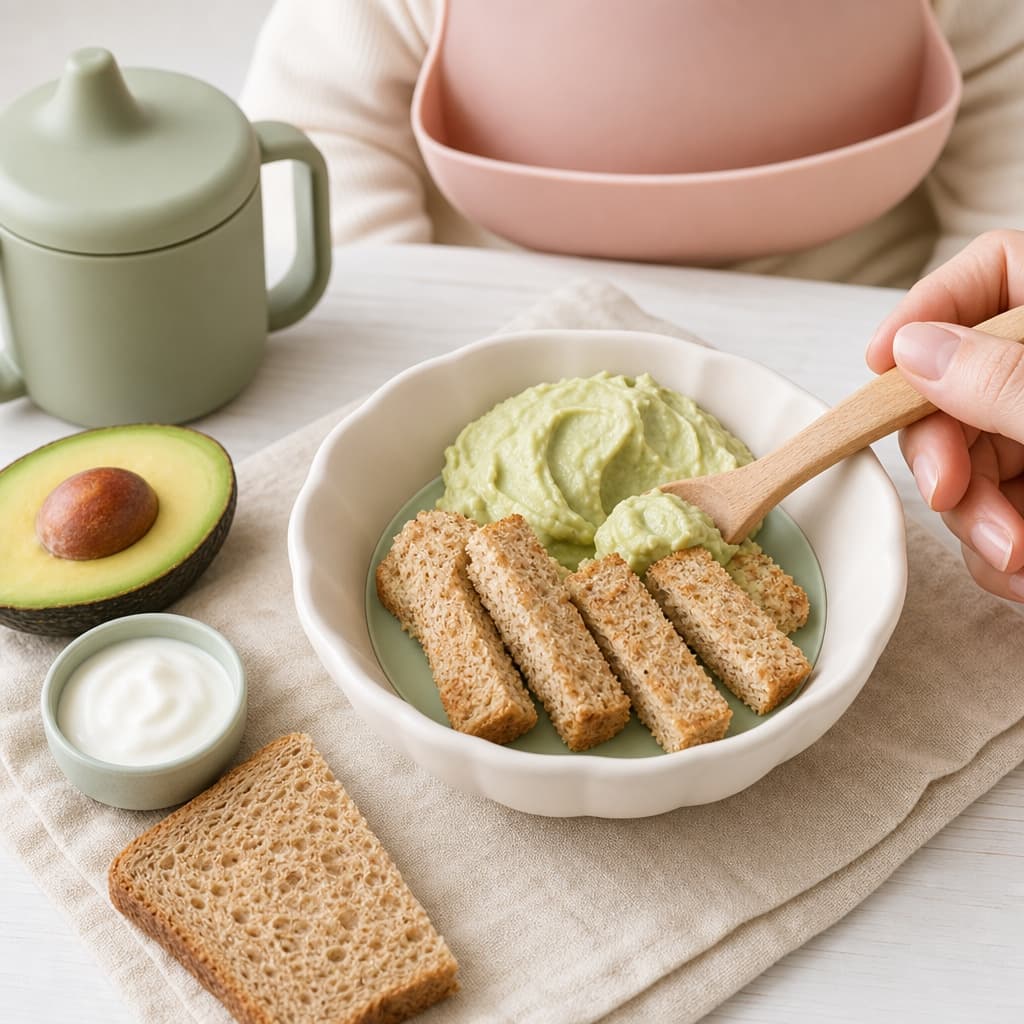
Avocado Yogurt Dip with Toast Strips
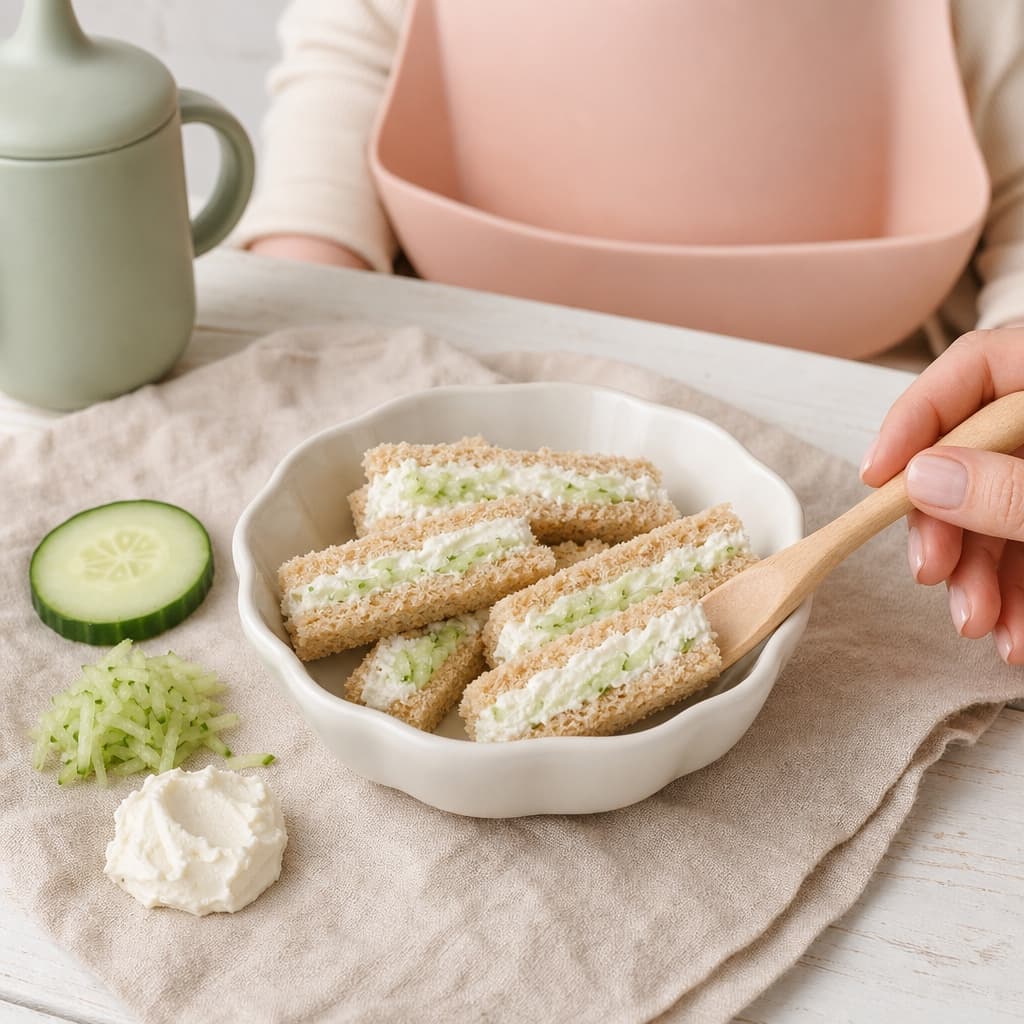
Cream Cheese Cucumber Toast Fingers
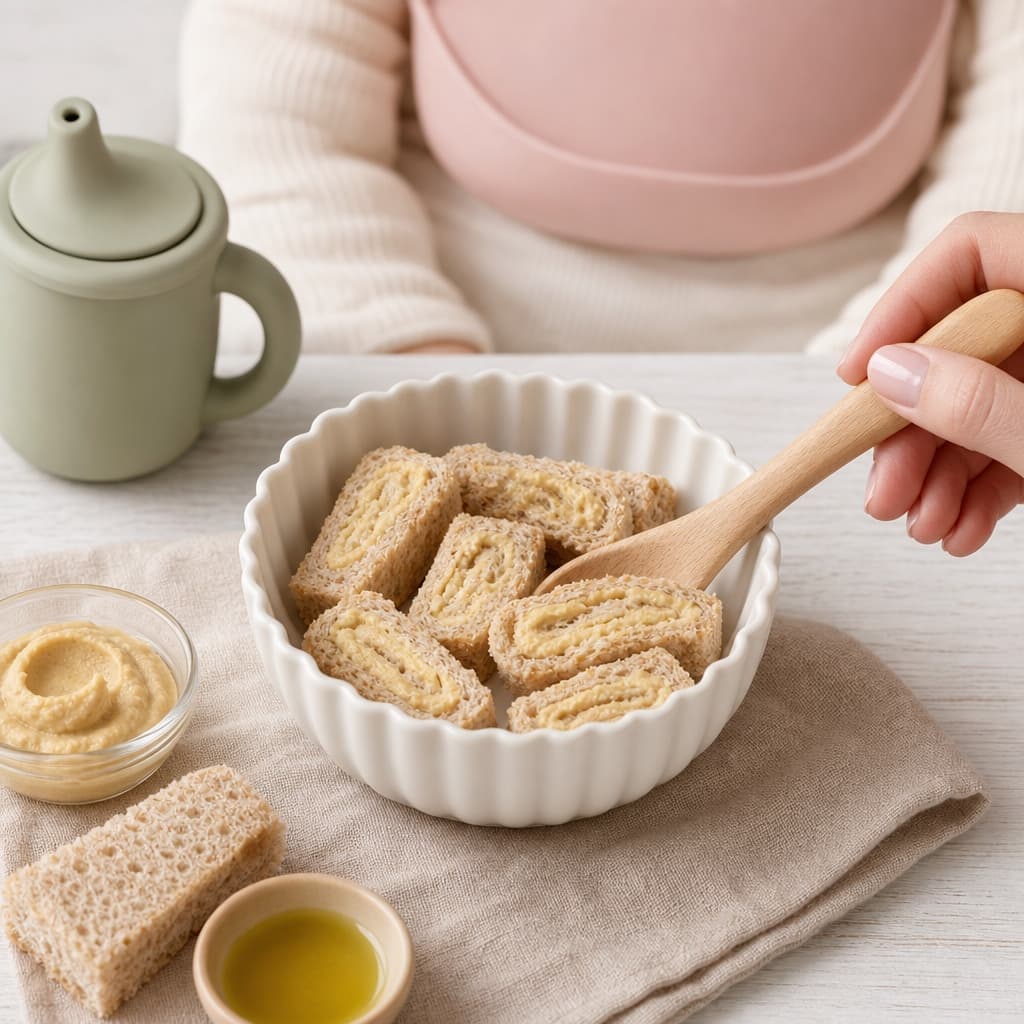
Hummus Toast Pinwheels
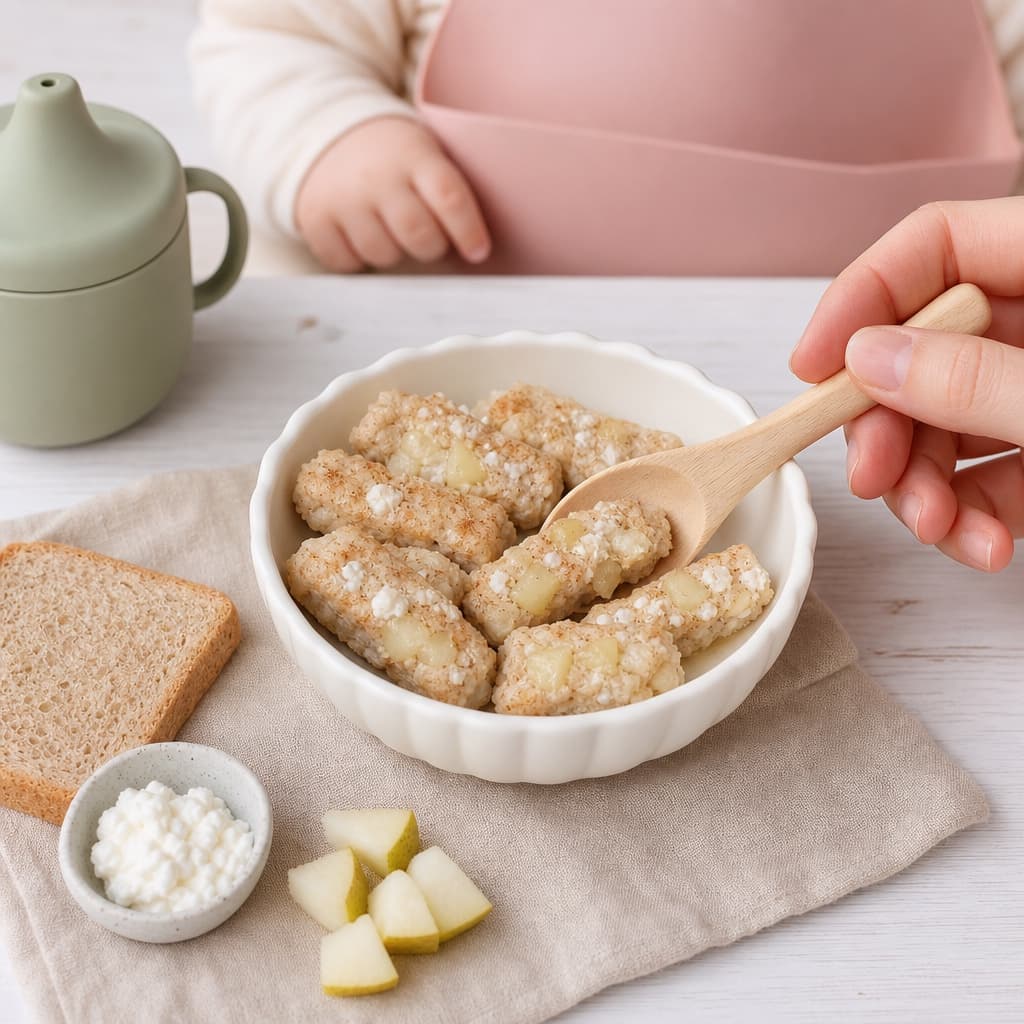
Pear Cottage Toast Bites
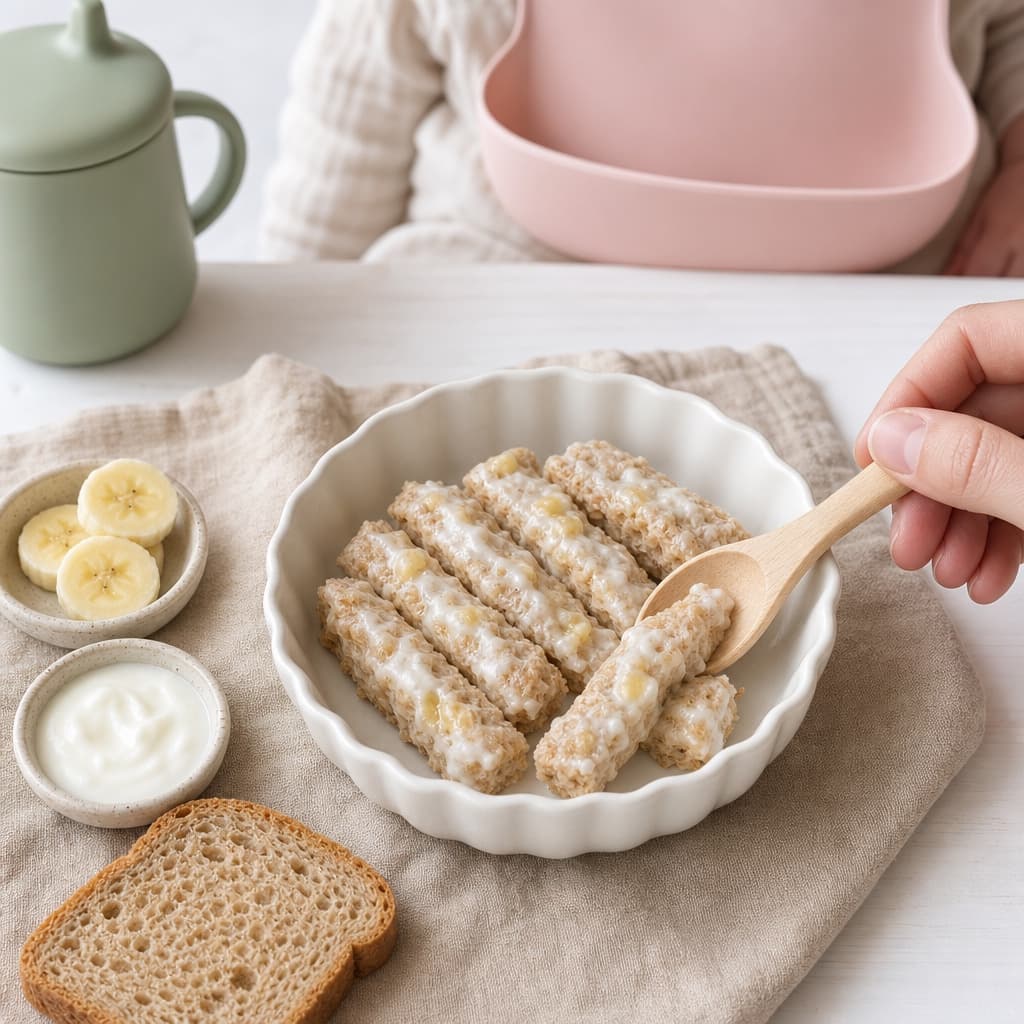
Banana Yogurt Toast Soldiers
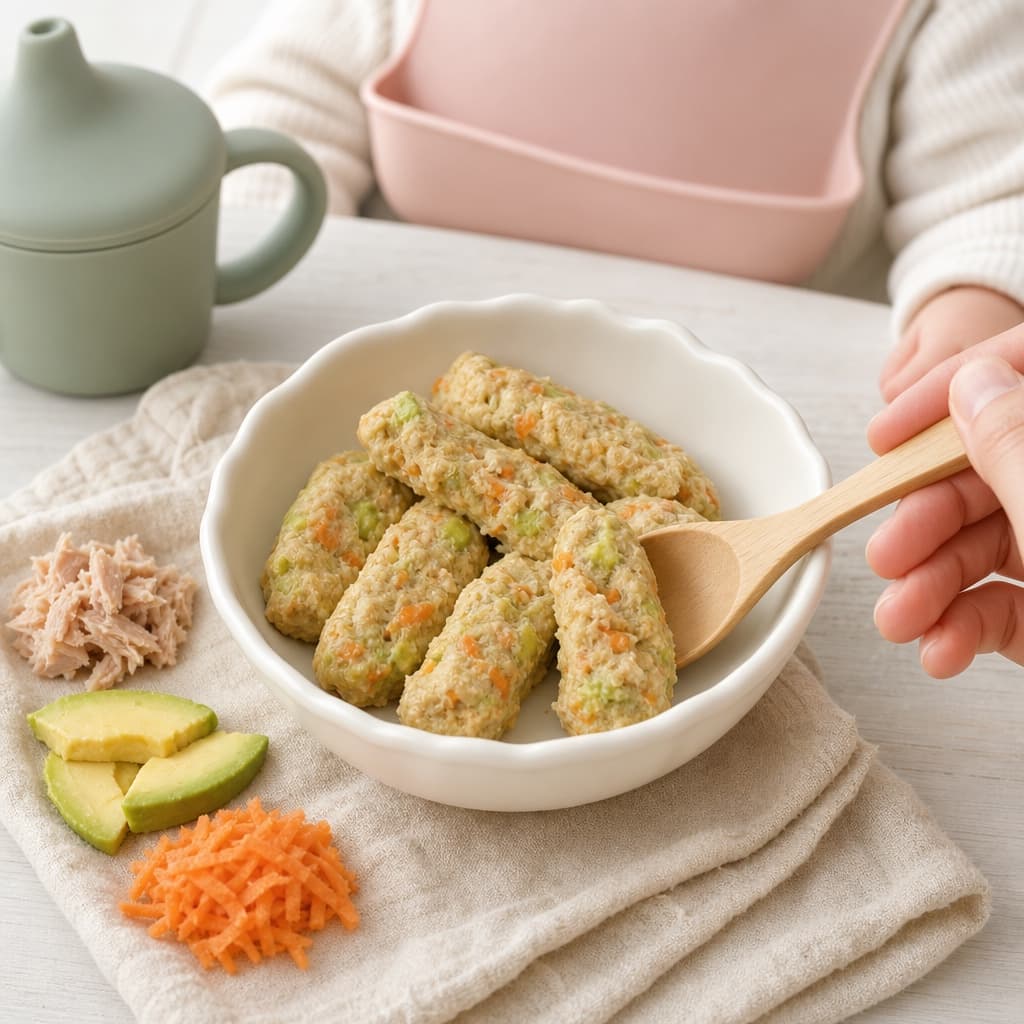
Avocado Tuna Mini Cakes
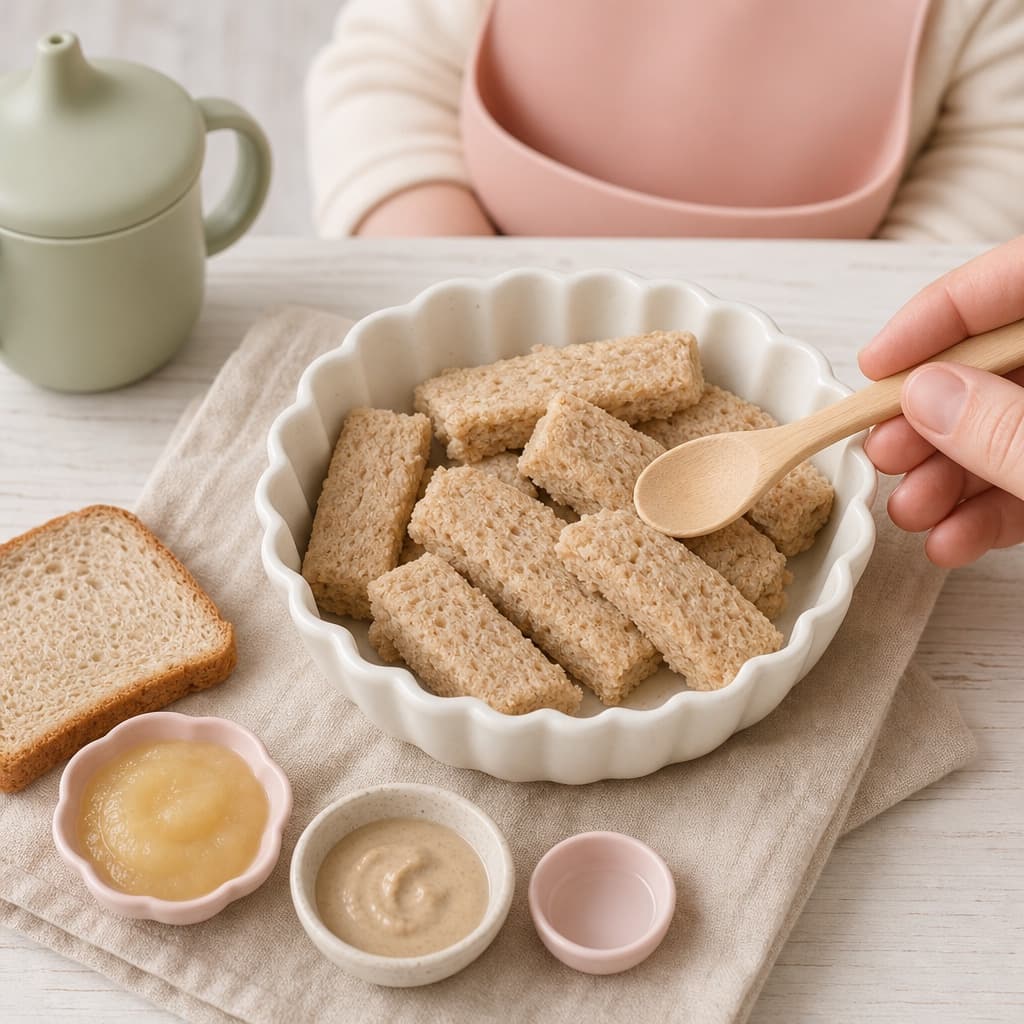
Apple Tahini Toast Strips
See all bread recipes for babies. Explore baby breakfast recipes, baby-led weaning recipes and first foods for baby for more ideas.
Frequently Asked Questions
Can babies eat Bread?
Yes. Babies can eat Bread starting around 6 months when they begin solid foods. It should be served in a safe texture and size for babies.
When can babies eat Bread?
Babies can eat Bread from around 6 months when starting solids. Babies can eat bread from around 6 months, once they're ready for solids. Lightly toasted bread (toast fingers) is often recommended over soft fresh bread for younger babies - soft bread can become gummy and stick to the roof of the mouth, while toast is firmer and easier to gum. Bread contains wheat and gluten; introducing it from around 6 months and keeping it in the diet supports allergen introduction. Check the salt content - choose lower-salt loaves and offer bread as one part of a varied diet rather than a daily staple.
Is Bread a choking hazard for babies?
Bread can be a choking hazard if served in unsafe shapes. Lightly toast bread for younger babies - soft fresh bread can ball up and stick to the roof of the mouth. Choose lower-salt bread; babies under 12 months should have less than 1g of salt (0.4g sodium) a day, and bread is a hidden source. Spread toppings thinly - never thick globs of nut or seed butter, which can be a choking risk. Cut into finger-width strips for younger babies and smaller pieces as they get older. Offer wheat-based bread to introduce gluten early, then keep it in the diet. Avoid bread made with honey (no honey under 12 months) and watch for whole nuts or seeds a very young baby could inhale.
Is Bread a common allergen?
Some babies may be allergic to Bread. Introduce Bread carefully when babies start solids and watch for reactions.
How should Bread be served to babies?
6–9 months: Lightly toast bread and cut into finger-width strips - toast holds its shape better than soft bread and is easier to gum. A thin scrape of a soft topping (mashed avocado, smooth nut or seed butter, hummus) adds nutrition and flavour. 6–9 months: Avoid thick, doughy white bread on its own - it can compress into a sticky ball. Toasting reduces this. 9–12 months: Smaller toast pieces or soft sandwich fingers with thin fillings as chewing improves. 12+ months: Sandwiches cut into small pieces, soft breadsticks, and a wider range of breads. Keep an eye on total salt across the day.
What nutrients does Bread provide for babies?
Bread provides nutrients like fibre, iron, carbohydrates that support babies' growth and development.
How long can I store Bread for babies?
Cook Bread to a safe temperature and store it in the refrigerator for up to 2 days, or freeze in single-serving portions for up to 1 month to preserve nutrients.
Should I buy organic Bread for my baby?
Organic Bread isn't strictly necessary for babies, but some families prefer to reduce pesticide exposure. Wash conventional produce thoroughly. Variety and freshness matter most.
How should I introduce Bread for the first time?
Offer a small amount of Bread in an age-appropriate texture when your baby is hungry but not starving, ideally early in the day so you can watch for any reactions over several hours.
Is Bread a good finger food for babies?
Yes. Bread can be an excellent finger food for babies when cut into strips or soft pieces they can grasp. Make sure the texture mashes easily between your fingers.
What foods pair well with Bread for baby?
Bread pairs well with mashed fruit, soft cooked vegetables, yogurt, or pureed protein for a balanced bowl your baby can enjoy.
Should I cook Bread before serving it to my baby?
Ripe, soft Bread can be served raw, cut into baby-safe shapes. If the texture still feels firm, steam it briefly until it mashes easily.
How much Bread can a baby eat?
There's no fixed amount. Start with 1-2 tablespoons of Bread from around 6 months and let your baby regulate intake. Breast milk or formula remains the main source of nutrition in the first year.
Should I peel or remove the pit from Bread for my baby?
For Bread, peeling or pitting is usually not required, but wash it well and serve in a size and texture safe for your baby.
How should I store Bread fresh for my baby?
Store fresh Bread in a cool, dry place or in the refrigerator crisper drawer, depending on the food. Wash just before preparing and use it when ripe and firm for the best quality for your baby.
Safety tips
- ✓Lightly toast bread for younger babies - soft fresh bread can ball up and stick to the roof of the mouth.
- ✓Choose lower-salt bread; babies under 12 months should have less than 1g of salt (0.4g sodium) a day, and bread is a hidden source.
- ✓Spread toppings thinly - never thick globs of nut or seed butter, which can be a choking risk.
- ✓Cut into finger-width strips for younger babies and smaller pieces as they get older.
- ✓Offer wheat-based bread to introduce gluten early, then keep it in the diet.
- ✓Avoid bread made with honey (no honey under 12 months) and watch for whole nuts or seeds a very young baby could inhale.
Get recipes + a feeding plan for your baby
Save this food to your baby's list, get age-appropriate recipes and follow a personalized feeding schedule - 350+ baby-safe meals in the app.
Try Nibli today to start planning your baby's meals.
verifiedSources & References
This guide is informed by current guidelines from leading health organizations: