How to Serve Lentils for Baby
Last updated October 2026
Lentils can become a soft first-food mash or mild dal when cooked thoroughly. Red lentils usually break down quickly, while green and brown lentils can retain their skins and shape; check the actual tenderness rather than assuming every lentil is ready after a fixed cooking time.
They contribute plant protein and non-haem iron to a varied diet, but their iron is not absorbed as readily as iron from meat. Combine them with a vitamin C-containing food over the course of meals and continue offering other suitable iron sources.
Quick answer
A baby who is developmentally ready for complementary solids, usually around six months, can have properly cooked, mashable lentils. The NHS includes pulses among first foods; the CDC advises soft, mashed or puréed textures while eating skills develop.

Select Baby's Age
6–8 months
Beginning eater: very soft red lentil mash or dal
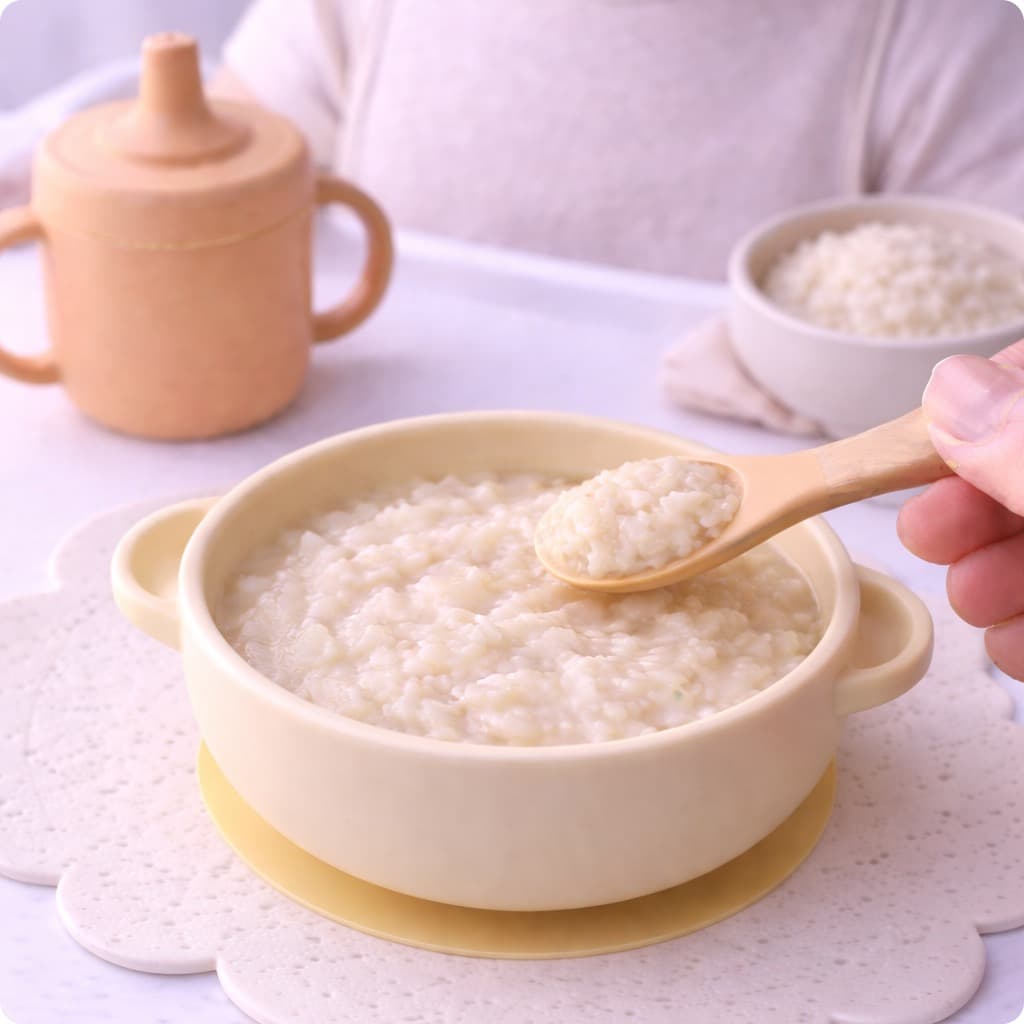
Rinse lentils and cook in water until they break down and can be crushed easily with a fork. Blend or mash into a spoonable texture; thin a thick dal with water, breast milk or appropriately prepared formula if needed. Avoid added salt, hard skins, dried lentil fragments or firm whole pieces. Offer from a preloaded spoon or with familiar soft vegetables after checking the final temperature.
6 month baby feeding schedule for more tips.
9–11 months
More texture: thick mash with fully tender lentils
As chewing and self-feeding develop, move from smooth to a thicker soft mash. Thoroughly tender brown or green lentils may be incorporated into vegetable mash so individual skins do not stay hard or separate into firm pellets. A baby who cannot manage the texture can continue with a smooth red-lentil preparation; no nine-month milestone requires whole intact lentils. Keep the mixture moist and easy to compress.
12+ months
Toddler foods: well-cooked lentil soups and soft patties
Offer mild soft dal, lentil-vegetable soup, or a tender lentil mixture with family food, using a low-salt portion. Soft lentil patties can be suitable when they are fully cooked and crumble or mash readily, with no crunchy crust or hard beans. Check the child's chewing and swallowing ability; a first birthday is not permission to serve firm undercooked pulses.
When can babies try lentils?
Rinse and inspect dry lentils for small stones, then cook until there is no firm centre. Red lentils often soften into a spoonable paste; larger green or brown lentils may need extra cooking and mashing. Follow package instructions for prepared lentils and check canned varieties for added salt.
An unfamiliar lentil meal may cause digestive discomfort in some children, but gas is not inevitable and is not a reason to prescribe an arbitrary waiting period. Offer a manageable portion and adapt to appetite, tolerance and existing foods.
See our first foods for baby guide for more ideas.
Simple lentil serving ideas
These are illustrative soft-food combinations, not recipes confirmed by a kitchen trial.
- Smooth no-salt red lentil and carrot dal
- Fork-mashed cooked green lentils blended into pumpkin purée
- Very soft lentil and tomato vegetable mash
- Moist, tender lentil-and-vegetable mixture served from a spoon
Explore our baby-led weaning food list and first foods for baby for more inspiration.
More Cutting Guides
Related Guides
View all feeding guidesFrequently Asked Questions
Can my baby eat lentils from around six months?
Yes, when developmentally ready for solids, if the lentils are cooked all the way through and mashed or puréed into a manageable texture.
Which lentils make the smoothest first mash?
Red lentils usually break down most readily. Green or brown lentils can also work when cooked until thoroughly tender and blended or mashed.
Do lentils provide all the iron a baby needs?
No single food should be relied upon for iron. Lentils contribute non-haem iron; include a variety of iron sources and vitamin C-containing foods.
Can I use canned lentils for baby food?
Yes if appropriately cooked and soft. Choose low- or no-added-salt when possible, drain and rinse, and mash or soften further as needed.
Sources & References
This guide is informed by current guidelines from leading health organizations:
- ●NHS - Your Baby's First Solid Foods NHS
- ●CDC - When, What, and How to Introduce Solid Foods CDC
- ●CDC — Choking Hazards (reviewed March 2026) CDC
- ●NHS - Preparing Food Safely for Babies NHS
