What do you want to know?
Deep dive
Peas →Peas explained for parents: when to introduce, how to mash or serve whole safely, fiber and vitamin benefits, and quick puree and finger-food recipes for babies.
Nutrition highlights
- Plant protein - supports growth and is useful in vegetarian diets.
- Fibre - supports healthy digestion.
- Vitamin C - supports the immune system and iron absorption.
- Vitamin K and folate - support bones and cell development.
Safety quick tips
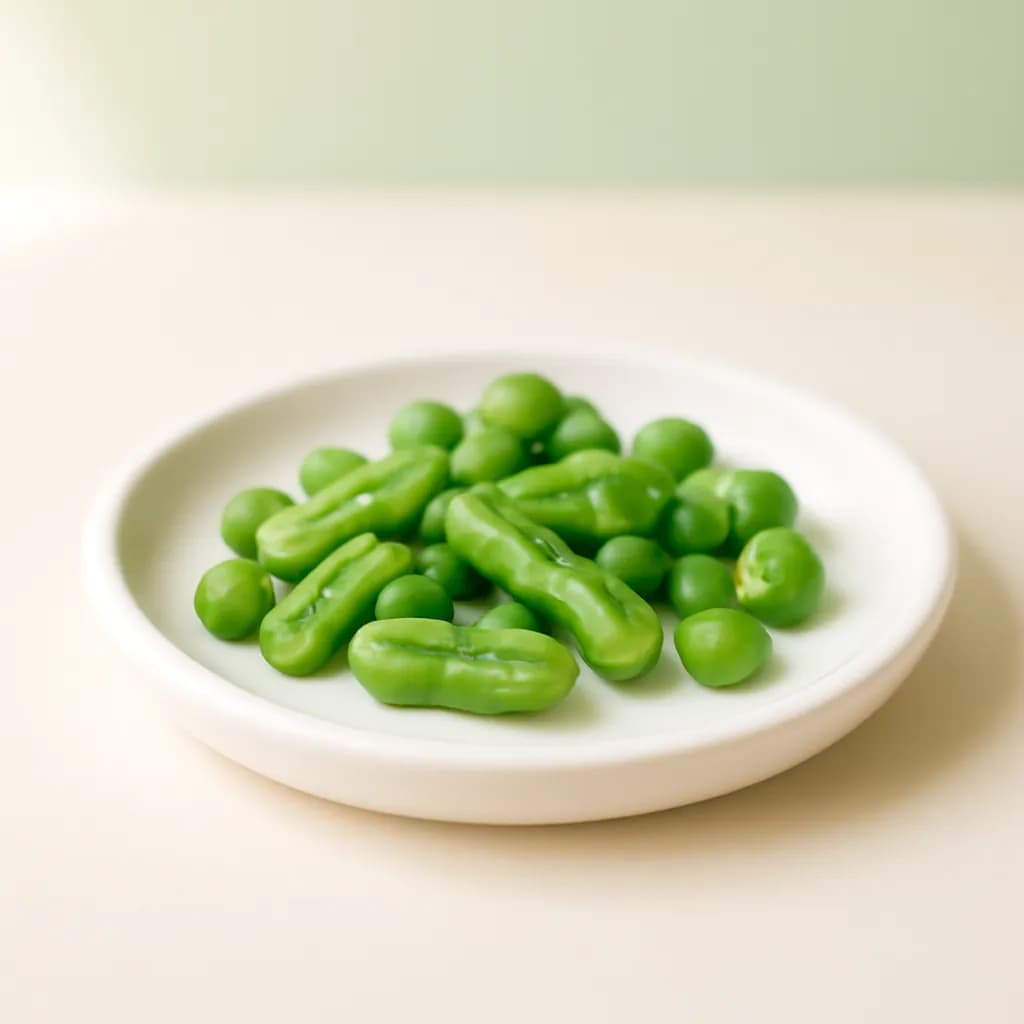
- Cook peas until soft and mash, blend, or lightly squash for younger babies - whole firm peas can be a choking risk.
- Frozen peas should be cooked, then cooled to a safe temperature before serving.
- Avoid adding salt; peas are naturally sweet.
Common questions
Can babies eat Peas?
Yes. Babies can eat Peas starting around 6 months when they begin solid foods. It should be served in a safe texture and size for babies.
When can babies eat Peas?
Babies can eat Peas from around 6 months when starting solids. Babies can eat peas from around 6 months, once they're starting solids. Cook peas until soft, then mash, blend, or lightly squash - whole firm peas can be a choking risk for young babies. Frozen peas (cooked) are just as nutritious as fresh and very convenient.
Is Peas a choking hazard for babies?
Peas can be a choking hazard if served in unsafe shapes. Cook peas until soft and mash, blend, or lightly squash for younger babies - whole firm peas can be a choking risk. Frozen peas should be cooked, then cooled to a safe temperature before serving. Avoid adding salt; peas are naturally sweet. Introduce mushy or blended first, moving to whole soft peas as skills develop. Offer as part of a varied diet. Always supervise eating with your baby sat upright.
Is Peas a common allergen?
Peas is not typically a common allergen for babies. Many babies can try it from around 6 months as part of a varied diet.
How should Peas be served to babies?
6–9 months: Cook peas soft and blend into a smooth purée, or mash well and mix into potato or other vegetables. 6–9 months: Fold mashed peas into fritters or thick patties for BLW (loose peas are hard to self-feed early on). 9–12 months: Lightly squashed whole soft peas as the pincer grasp develops. 12+ months: Peas in pasta, rice dishes, soups, and family meals (low-salt).
What nutrients does Peas provide for babies?
Peas provides nutrients like fibre, vitamin C, iron, folate that support babies' growth and development.
How long can I store Peas for babies?
Cook Peas to a safe temperature and store it in the refrigerator for up to 2 days, or freeze in single-serving portions for up to 1 month to preserve nutrients.
Should I buy organic Peas for my baby?
Organic Peas isn't strictly necessary for babies, but some families prefer to reduce pesticide exposure. Wash conventional produce thoroughly. Variety and freshness matter most.