How to Serve Rice for Baby
Last updated October 2026
Rice and iron-fortified infant rice cereal can be introduced after a baby is ready for solids, usually around six months. For an early eater, thoroughly cooked, moist rice mixed into a mash is often easier to manage than dry or chewy grains. There is no universal rice-ball dimension that makes a serving safe.
Rice tends to contain more inorganic arsenic than some other grains. The FDA and CDC advise offering a variety of iron-fortified infant cereals, including oat, barley and multigrain, rather than relying on rice cereal as the only grain. The FDA reports that boiling ordinary rice in excess water and draining can lower inorganic arsenic, but may also remove useful nutrients; rinsing alone has minimal impact on arsenic according to FDA research.
Cooked rice has an additional food-safety concern: follow NHS guidance to cool it within one hour, refrigerate or freeze promptly, use refrigerated rice within 24 hours and reheat it no more than once. This is distinct from arsenic and requires careful handling even for very soft rice.
Quick answer
A baby ready for complementary foods around six months may have a smooth iron-fortified rice cereal, properly prepared according to the package, or very soft cooked rice mashed with a familiar food. Iron-rich food variety is particularly important at this stage.
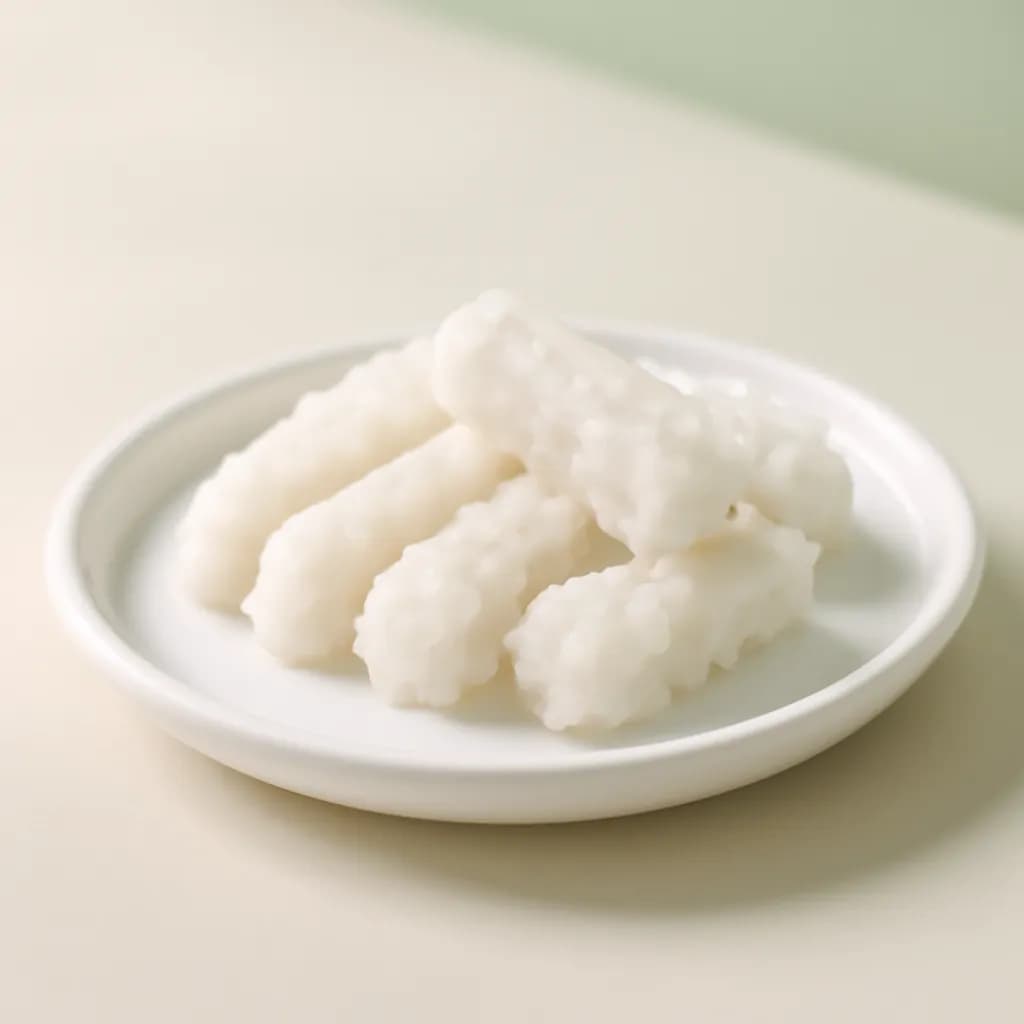
Select Baby's Age
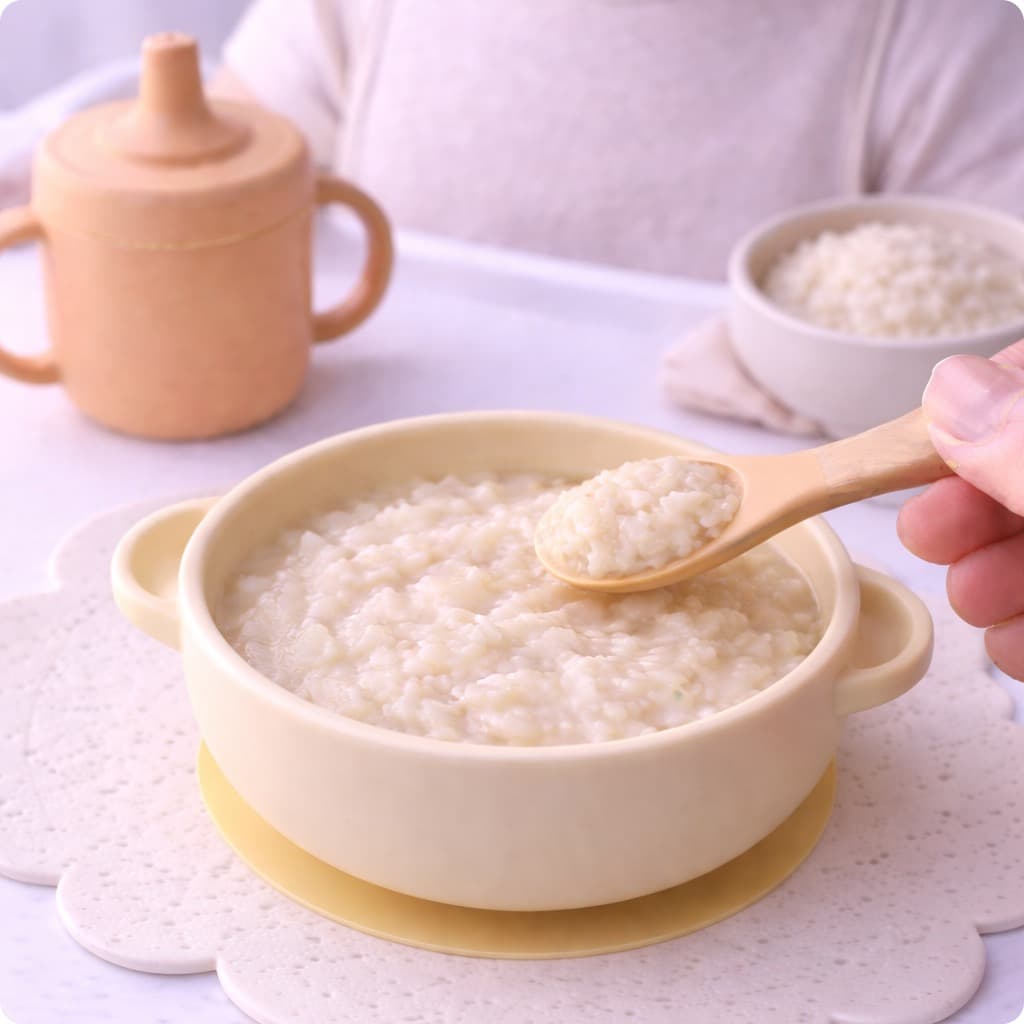
6–8 months
Beginning solids: moist rice mash or iron-fortified cereal
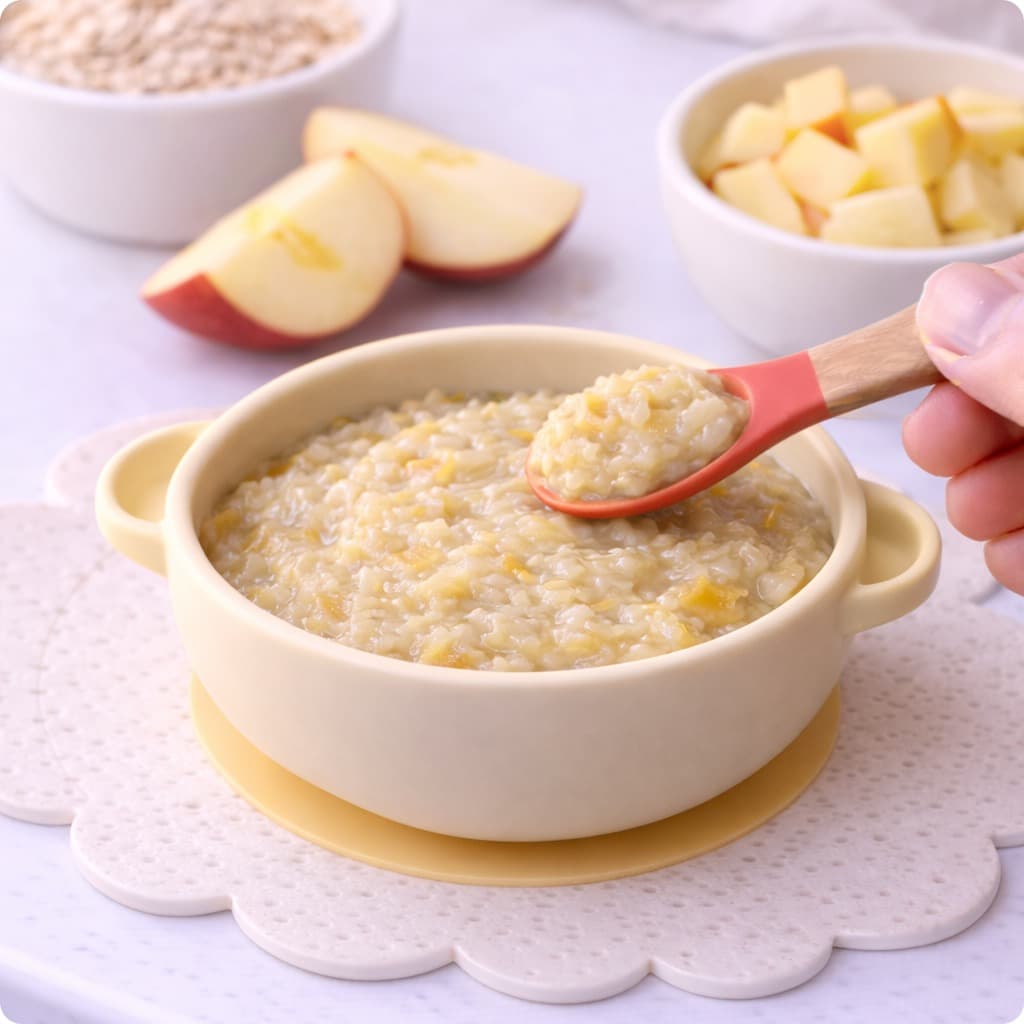
Use an iron-fortified infant cereal prepared with the child's usual milk feed or water according to packet instructions. For ordinary cooked rice, cook until very soft and mash into a moist cohesive texture with already tolerated vegetables or lentils. Avoid hard cooked kernels, dry piles or dense sticky balls; test the food in front of you. Rotate other fortified cereals in the week rather than relying only on rice. Serve immediately or follow prompt NHS cooked-rice cooling procedures. Keep the baby upright and supervised.
6 month baby feeding schedule for more tips.
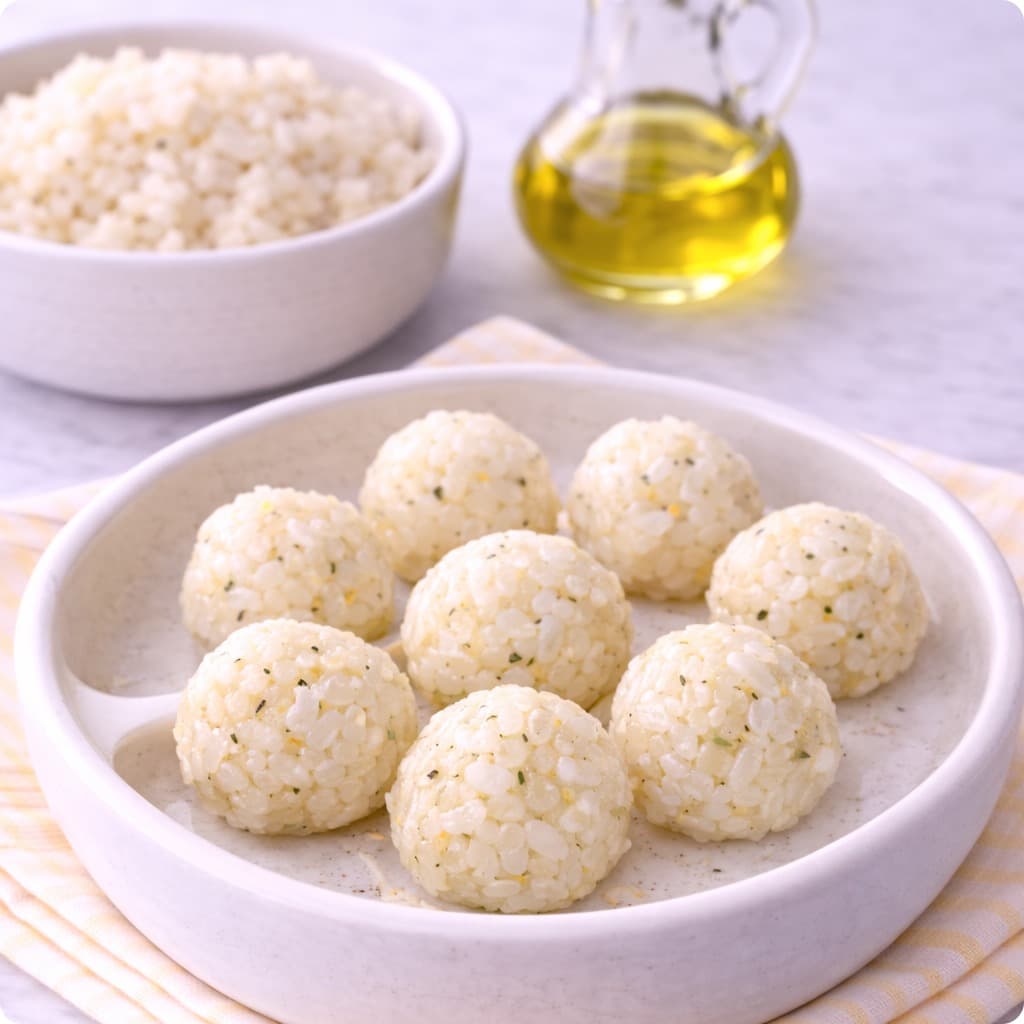
9–11 months
Developing grasp: moist soft rice, not fixed-size balls
If the child can chew soft textures, try a moist rice-and-vegetable mash or small, gently pressed soft portions that fall apart easily. Avoid dense compact balls, firm grains and hard toppings. A former recommendation of 2–3 cm rice balls is not supported as a universal safe dimension; adjust to demonstrated swallowing and chewing skills. Use unsalted cooked vegetables, lentils or fully cooked boneless fish that have been tolerated. Follow cooked-rice storage and reheating rules if it was made in advance.
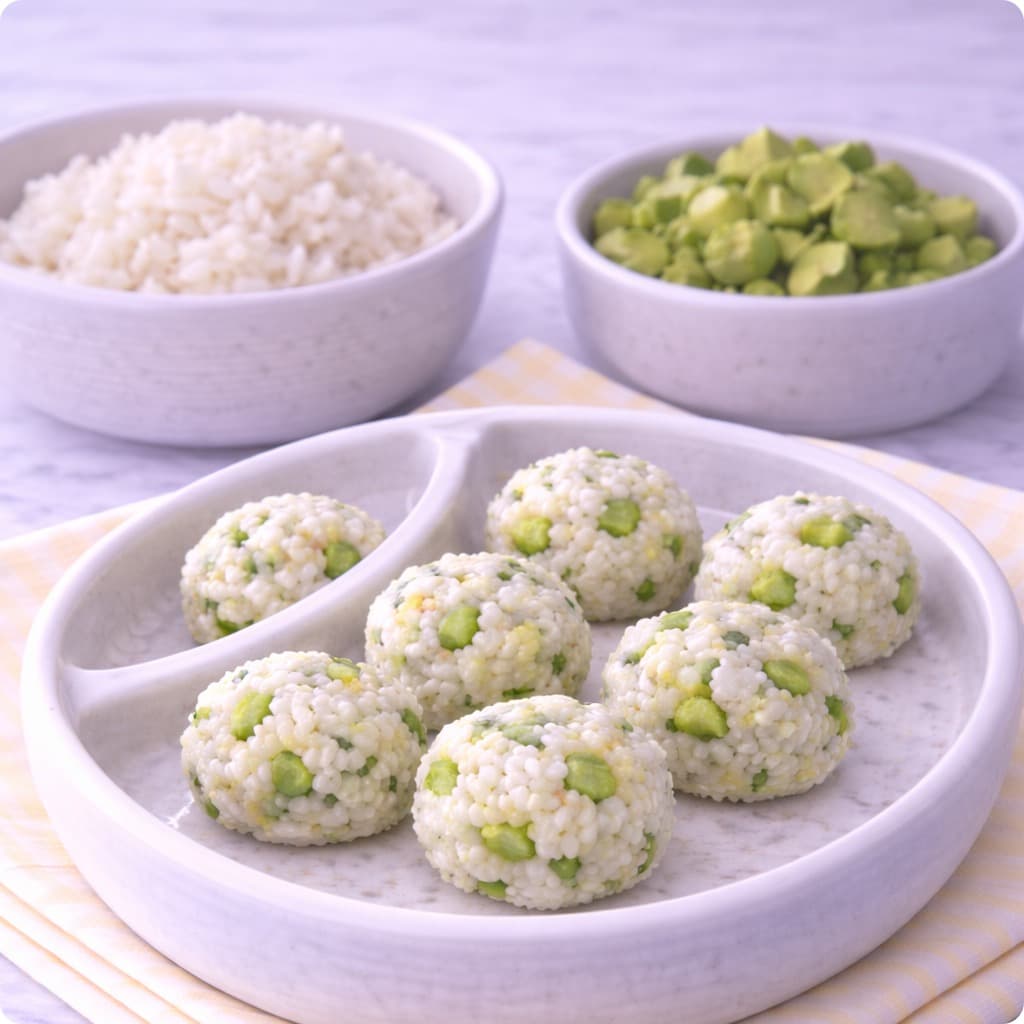
12+ months
Toddler rice meals with careful storage and grain variety
Soft rice can be mixed into curries, cooked vegetable stews and other low-salt family foods as the toddler develops independent spoon-feeding. Keep grains moist and avoid compact hard rice clusters; never combine with raw fish in infant or toddler meals. Continue rotating rice with oat, barley or other age-appropriate grains. The NHS says cooked rice should be cooled within an hour, refrigerated for at most 24 hours and reheated no more than once until steaming hot, then cooled to serving temperature. Do not treat a preset rice-ball size as choking-proof.
When can babies have rice, and why vary grains?
Do not make rice cereal the only infant cereal. CDC and FDA encourage alternatives such as oat, barley and multigrain infant cereals because rice can contribute inorganic arsenic exposure.
For cooked rice, preparing with excess water and draining can reduce arsenic but also remove some nutrients. Rinsing alone should not be portrayed as a proven substantial arsenic reduction. Do not offer rice drinks to young children as a milk substitute under NHS guidance.
See our first foods for baby guide for more ideas.
Rice meals with iron-rich variety
Rice is one option among grains and should be paired with other nutrient sources.
- Smooth iron-fortified infant cereal prepared as directed.
- Thoroughly cooked rice mashed into already-tolerated soft vegetables.
- Soft rice-and-lentil mash, with no added salt.
- Moist rice and fully cooked boneless fish prepared to manageable texture.
Explore our baby-led weaning food list and first foods for baby for more inspiration.
More Cutting Guides
Related Guides
View all feeding guidesSources & References
This guide is informed by current guidelines from leading health organizations:
- ●FDA - Inorganic arsenic in infant rice cereals FDA
- ●FDA researchers - Effects of rice washing and excess-water cooking on arsenic and nutrients FDA
- ●CDC - When, What, and How to Introduce Solid Foods CDC
- ●NHS - Storing and reheating baby food NHS
- ●NHS - Foods to Avoid Giving Babies NHS
- ●CDC — Choking Hazards (reviewed March 2026) CDC
