Quick answer
Most babies can begin eating figs around 6 months of age, once they are showing signs of readiness for solid foods. These signs include being able to sit up with little or no support, holding their head steady, showing interest in what you are eating, and being able to bring food or objects to their mouth. Following AAP, NHS, and WHO guidance, solids are generally introduced around 6 months while breast milk or formula remains the main source of nutrition through the first year.
When they are in season during the warmer months, fresh figs are at their softest and most flavorful, which makes them well suited to a baby who is just starting to explore new tastes and textures. You can serve them on their own or stir them into other foods your baby already enjoys, such as yogurt or oatmeal.
As with any new food, it helps to know when figs are appropriate to introduce, how to prepare them so they are safe, and what to keep in mind if you are offering dried figs rather than fresh. This guide walks you through everything you need to feel confident serving figs to your little one.
When can babies eat fig?
Most babies can begin eating figs around 6 months of age, once they are showing signs of readiness for solid foods. These signs include being able to sit up with little or no support, holding their head steady, showing interest in what you are eating, and being able to bring food or objects to their mouth. Following AAP, NHS, and WHO guidance, solids are generally introduced around 6 months while breast milk or formula remains the main source of nutrition through the first year.
Fresh figs are the easiest form to offer first because ripe ones are naturally soft and simple to mash. Dried figs are also an option, but they are sticky, chewy, and more concentrated in natural sugars, so they should be cooked or soaked until very soft and cut small before serving.
Because figs are sweet, there is no need to add any sugar, honey, or other sweeteners. Honey in particular should never be given to babies under 1 year of age because of the risk of infant botulism.
See our first foods for baby guide for more ideas.
Nutritional benefits for babies
- 💚Figs provide dietary fiber, which supports healthy digestion and can help keep your baby's bowel movements regular.
- 💚They contain potassium, a mineral that supports normal muscle function and helps maintain fluid balance in the body.
- 💚Figs offer small amounts of calcium, which contributes to the development of strong bones and teeth.
- 💚They supply natural sugars along with some carbohydrates that give your growing baby a source of energy.
- 💚Figs contain vitamin K, which plays a role in healthy blood clotting.
- 💚They also provide plant compounds and antioxidants that are part of a varied, colorful diet.
How to serve fig safely
For babies 6 to 9 months, offer fresh ripe figs mashed into a smooth or lightly textured puree, or cut a soft peeled fig into a large wedge or quarter that your baby can hold and gum. Removing the tougher stem and any firm skin makes the fruit easier to manage. You can also stir mashed fig into yogurt, oatmeal, or another soft food your baby already eats.
From around 9 to 12 months, as your baby's pincer grasp develops, you can offer smaller soft pieces of fresh fig that are quartered or cut into small, manageable bites. Always make sure each piece is soft enough to squash between your fingers.
Dried figs are chewy and sticky, which makes them harder to manage, so soak or gently cook them until very soft and then chop them finely or mash them before serving. Never offer whole dried figs, and avoid whole or large round pieces of any fig, since these can be a choking hazard for young children.
Fig recipe ideas for babies
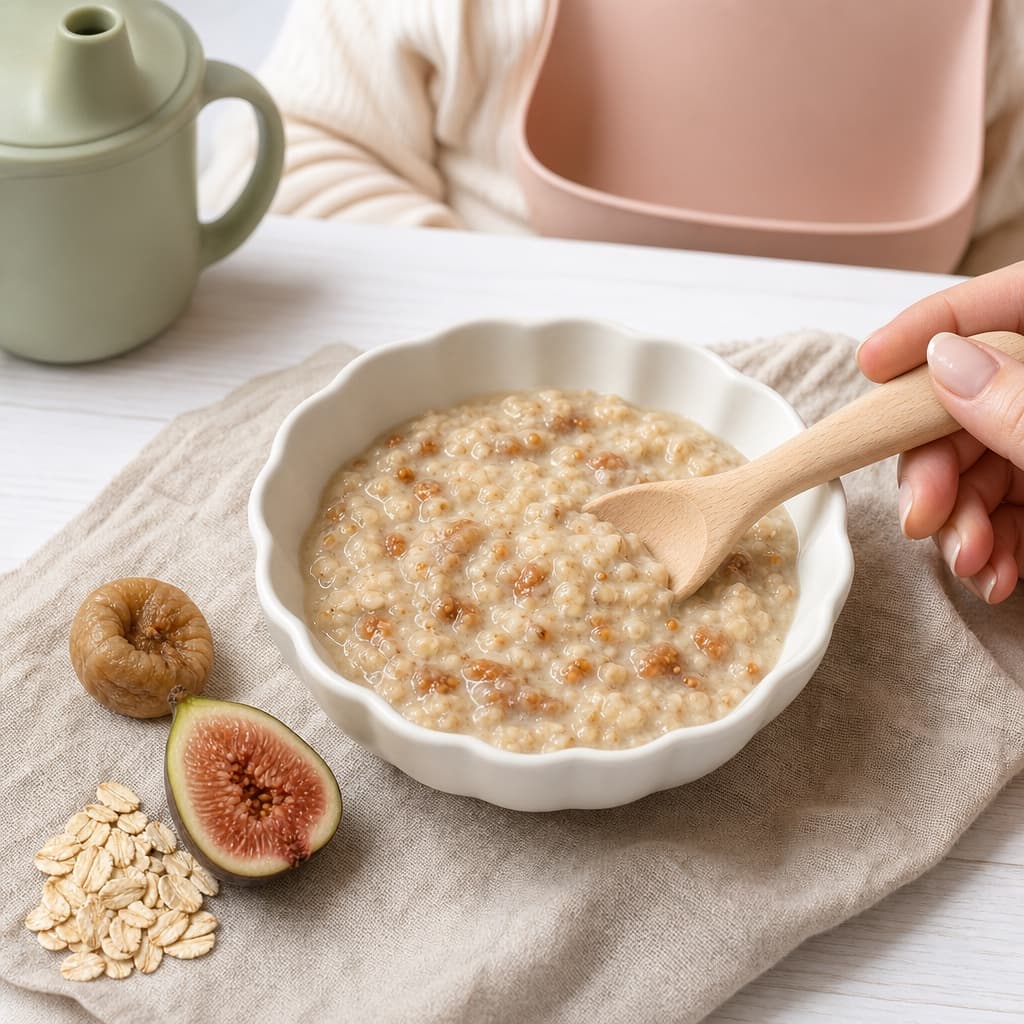
See all fig recipes for babies. Explore baby breakfast recipes, baby-led weaning recipes and first foods for baby for more ideas.
Frequently Asked Questions
Can babies eat Fig?
Yes. Babies can eat Fig starting around 6 months when they begin solid foods. It should be served in a safe texture and size for babies.
When can babies eat Fig?
Babies can eat Fig from around 6 months when starting solids. Most babies can begin eating figs around 6 months of age, once they are showing signs of readiness for solid foods. These signs include being able to sit up with little or no support, holding their head steady, showing interest in what you are eating, and being able to bring food or objects to their mouth. Following AAP, NHS, and WHO guidance, solids are generally introduced around 6 months while breast milk or formula remains the main source of nutrition through the first year. Fresh figs are the easiest form to offer first because ripe ones are naturally soft and simple to mash. Dried figs are also an option, but they are sticky, chewy, and more concentrated in natural sugars, so they should be cooked or soaked until very soft and cut small before serving. Because figs are sweet, there is no need to add any sugar, honey, or other sweeteners. Honey in particular should never be given to babies under 1 year of age because of the risk of infant botulism.
Is Fig a choking hazard for babies?
Fig can be a choking hazard if served in unsafe shapes. Choose ripe, soft fresh figs and remove the tough stem before serving to make them easier for your baby to eat. Cut figs into age-appropriate shapes: mash or offer large soft wedges for younger babies, and small soft pieces as your baby's grasp develops. Never serve whole or large round pieces. Soak or cook dried figs until very soft and chop them finely, as they are sticky and chewy and pose a greater choking risk. Do not add any sugar, salt, or honey to figs; honey should never be given to babies under 1 year because of the risk of infant botulism. Always supervise your baby closely while they are eating and make sure they are seated upright, never eating while reclining, crawling, or distracted.
Is Fig a common allergen?
Fig is not typically a common allergen for babies. Many babies can try it from around 6 months as part of a varied diet.
How should Fig be served to babies?
For babies 6 to 9 months, offer fresh ripe figs mashed into a smooth or lightly textured puree, or cut a soft peeled fig into a large wedge or quarter that your baby can hold and gum. Removing the tougher stem and any firm skin makes the fruit easier to manage. You can also stir mashed fig into yogurt, oatmeal, or another soft food your baby already eats. From around 9 to 12 months, as your baby's pincer grasp develops, you can offer smaller soft pieces of fresh fig that are quartered or cut into small, manageable bites. Always make sure each piece is soft enough to squash between your fingers. Dried figs are chewy and sticky, which makes them harder to manage, so soak or gently cook them until very soft and then chop them finely or mash them before serving. Never offer whole dried figs, and avoid whole or large round pieces of any fig, since these can be a choking hazard for young children.
What nutrients does Fig provide for babies?
Fig provides nutrients like potassium, fibre, calcium, carbohydrates that support babies' growth and development.
How long can I store Fig for babies?
Cook Fig to a safe temperature and store it in the refrigerator for up to 2 days, or freeze in single-serving portions for up to 1 month to preserve nutrients.
Should I buy organic Fig for my baby?
Organic Fig isn't strictly necessary for babies, but some families prefer to reduce pesticide exposure. Wash conventional produce thoroughly. Variety and freshness matter most.
How should I introduce Fig for the first time?
Offer a small amount of Fig in an age-appropriate texture when your baby is hungry but not starving, ideally early in the day so you can watch for any reactions over several hours.
Is Fig a good finger food for babies?
Yes. Fig can be an excellent finger food for babies when cut into strips or soft pieces they can grasp. Make sure the texture mashes easily between your fingers.
What foods pair well with Fig for baby?
Fig pairs beautifully with plain yogurt, oatmeal, soft cheese, or other fruits like ripe pear and banana for varied baby meals.
Should I cook Fig before serving it to my baby?
Ripe, soft Fig can be served raw, cut into baby-safe shapes. If the texture still feels firm, steam it briefly until it mashes easily.
How much Fig can a baby eat?
There's no fixed amount. Start with 1-2 tablespoons of Fig from around 6 months and let your baby regulate intake. Breast milk or formula remains the main source of nutrition in the first year.
Should I peel or remove the pit from Fig for my baby?
Yes. Before serving Fig to your baby, remove any inedible parts (skin, seeds, pit, or tough core) as recommended in the safety guide to reduce choking risk.
Can I mix Fig with baby cereal?
Yes. Mashing Fig and stirring it into baby cereal (oat, rice, or multigrain) is a simple way to add flavor, fiber, and nutrients to your baby's meals.
How should I store Fig fresh for my baby?
Store fresh Fig in a cool, dry place or in the refrigerator crisper drawer, depending on the food. Wash just before preparing and use it when ripe and firm for the best quality for your baby.
Safety tips
- ✓Choose ripe, soft fresh figs and remove the tough stem before serving to make them easier for your baby to eat.
- ✓Cut figs into age-appropriate shapes: mash or offer large soft wedges for younger babies, and small soft pieces as your baby's grasp develops. Never serve whole or large round pieces.
- ✓Soak or cook dried figs until very soft and chop them finely, as they are sticky and chewy and pose a greater choking risk.
- ✓Do not add any sugar, salt, or honey to figs; honey should never be given to babies under 1 year because of the risk of infant botulism.
- ✓Always supervise your baby closely while they are eating and make sure they are seated upright, never eating while reclining, crawling, or distracted.
Get recipes + a feeding plan for your baby
Save this food to your baby's list, get age-appropriate recipes and follow a personalized feeding schedule - 350+ baby-safe meals in the app.
Try Nibli today to start planning your baby's meals.
verifiedSources & References
This guide is informed by current guidelines from leading health organizations: