What do you want to know?
Deep dive
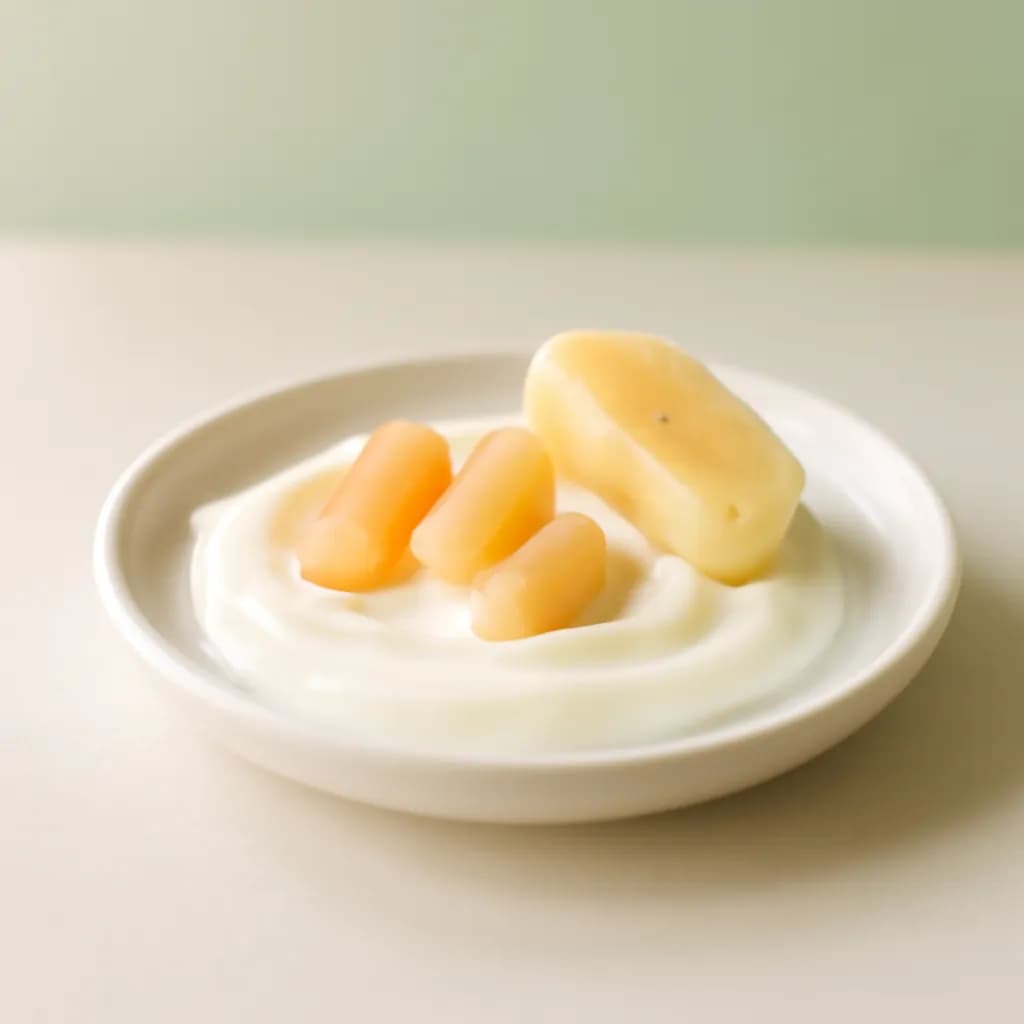
Yogurt →Yogurt basics for babies: when to introduce, choosing plain and full-fat options, probiotics and calcium benefits, portion guidance and simple yogurt-based recipes.
Nutrition highlights
- Calcium - supports strong bones and teeth.
- Protein - supports growth and development.
- Healthy fats - choose full-fat; babies need the energy for growth and brain development.
- Probiotics - live cultures may support digestive and gut health.
Safety quick tips
- Choose full-fat, plain, pasteurised yogurt - avoid added sugar and sweeteners.
- Never add honey to yogurt before 12 months (risk of infant botulism).
- Introduce as you would any allergen - a small amount first, watching for a cow's-milk reaction (rash, vomiting, swelling).
Common questions
Can babies eat Yogurt?
Yes. Babies can eat Yogurt starting around 6 months when they begin solid foods. It should be served in a safe texture and size for babies.
When can babies eat Yogurt?
Babies can eat Yogurt from around 6 months when starting solids. Babies can eat yogurt from around 6 months, once they're starting solids. Choose full-fat, plain, pasteurised yogurt; avoid sugary flavoured 'children's' yogurts and never add honey before 12 months. Yogurt is a dairy (cow's-milk) product - a common allergen - so introduce a small amount first and watch for any reaction.
Is Yogurt a choking hazard for babies?
Yogurt is generally safe for babies when prepared properly. 6–9 months: Offer plain full-fat yogurt on a pre-loaded spoon or in a bowl for early self-feeding; mix with fruit purée. 6–9 months: Swirl in mashed banana, mango, or berries; stir into oatmeal. 9–12 months: Yogurt with soft fruit pieces; use as a dip; freeze into soft yogurt drops. 12+ months: Yogurt in smoothies, overnight oats, and as a base for savoury dips (no salt).
Is Yogurt a common allergen?
Some babies may be allergic to Yogurt. Introduce Yogurt carefully when babies start solids and watch for reactions.
How should Yogurt be served to babies?
6–9 months: Offer plain full-fat yogurt on a pre-loaded spoon or in a bowl for early self-feeding; mix with fruit purée. 6–9 months: Swirl in mashed banana, mango, or berries; stir into oatmeal. 9–12 months: Yogurt with soft fruit pieces; use as a dip; freeze into soft yogurt drops. 12+ months: Yogurt in smoothies, overnight oats, and as a base for savoury dips (no salt).
What nutrients does Yogurt provide for babies?
Yogurt provides nutrients like healthy fats, calcium, protein that support babies' growth and development.
How long can I store Yogurt for babies?
Cook Yogurt to a safe temperature and store it in the refrigerator for up to 2 days, or freeze in single-serving portions for up to 1 month to preserve nutrients.
Should I buy organic Yogurt for my baby?
Organic Yogurt isn't strictly necessary for babies, but some families prefer to reduce pesticide exposure. Wash conventional produce thoroughly. Variety and freshness matter most.