How to Serve Yogurt for Baby
Last updated October 2026
Pasteurised plain full-fat yogurt is one of the dairy foods the NHS lists from around six months once a baby is ready for solids. It can be offered with a preloaded spoon, but cow's milk protein is a common allergen and yogurt is not a replacement for breast milk or formula as the main drink under one.
Choose plain, unsweetened yogurt made from pasteurised milk, and check the ingredients for honey, sweeteners, sugar and other allergens. Full-fat dairy provides energy, calcium and protein; yogurt cultures do not make cow's milk allergy harmless or prove infant gut-health treatment.
Serve at a comfortable chilled temperature, in a manageable portion, with the baby upright and supervised. The stages below illustrate possible skills rather than mandatory portion sizes or exact age milestones.
Quick answer
The NHS includes pasteurised full-fat plain yogurt from around six months, even though cow's milk as a main drink is not recommended until 12 months. Fermentation does not remove the milk-protein allergen.
Select Baby's Age
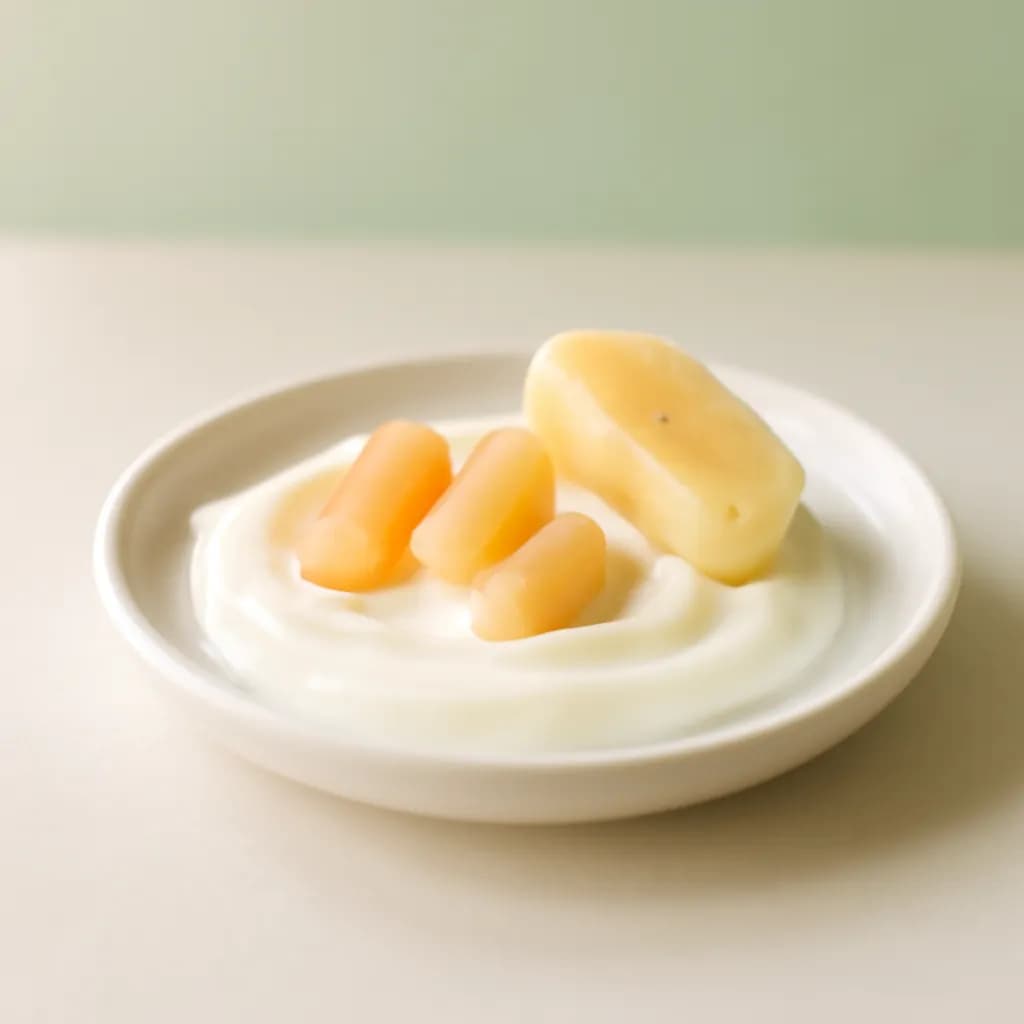
6–8 months
Beginning solids: plain yogurt on a preloaded spoon
Choose pasteurised plain unsweetened full-fat yogurt. Offer a small amount on a preloaded baby spoon or from your spoon, allowing the baby to explore and swallow at their own pace. A naturally thicker yogurt may stay on a spoon more easily, but check that the baby can handle its consistency. For first dairy exposure, keep the other ingredients familiar; never add honey under one, thick sticky nut-butter globs, hard toppings or added sugar. Keep the child seated upright and within reach throughout.
6 month baby feeding schedule for more tips.
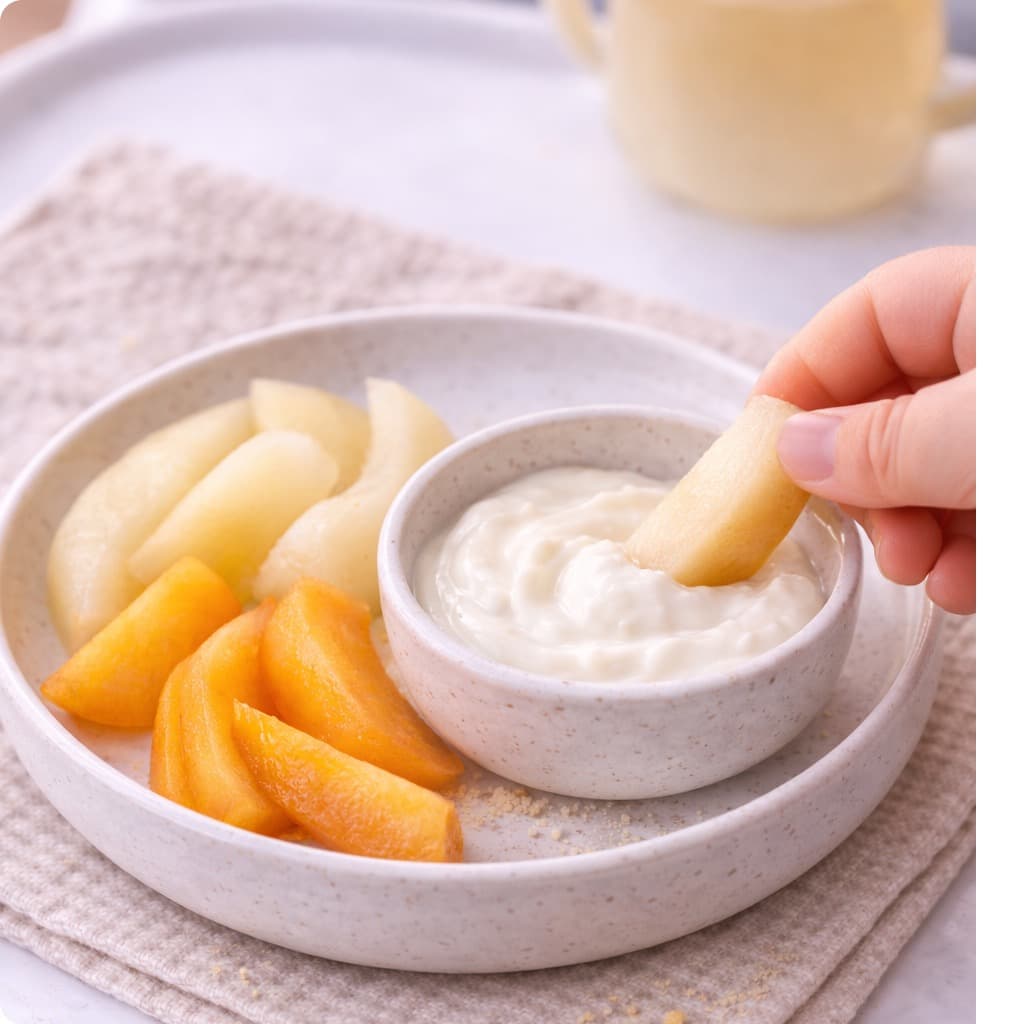
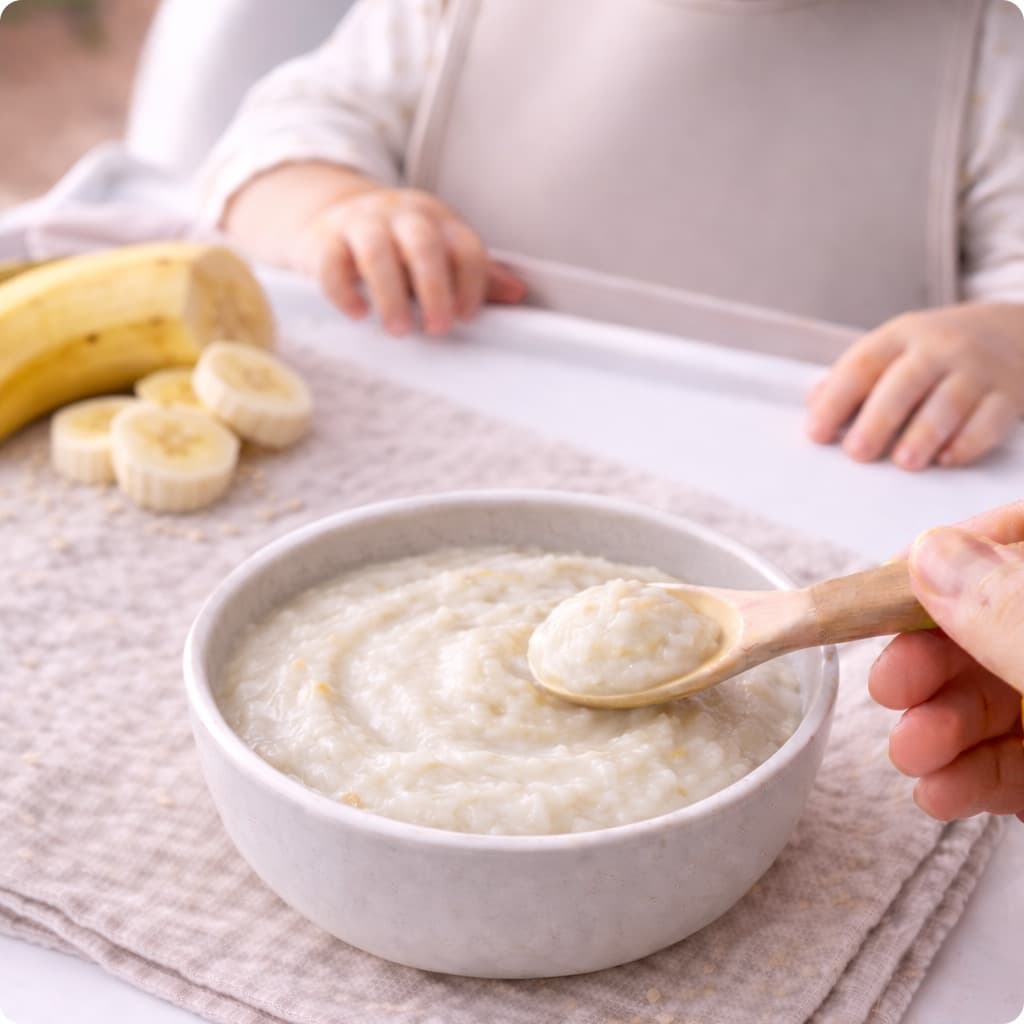
9–11 months
With more feeding control: dip soft foods or use a spoon
Continue offering plain pasteurised yogurt with a preloaded spoon or a small bowl. If your child can handle soft finger foods, yogurt can be a dip for thoroughly cooked vegetables or ripe soft fruit prepared to a safe texture. Avoid hard fruit wedges, loose whole berries, whole nuts and sticky clumps. If introducing wheat or nuts in a topping, offer each allergen separately first. No single birthday or bowl volume determines feeding readiness; follow the child's skills, appetite and main milk feeding.
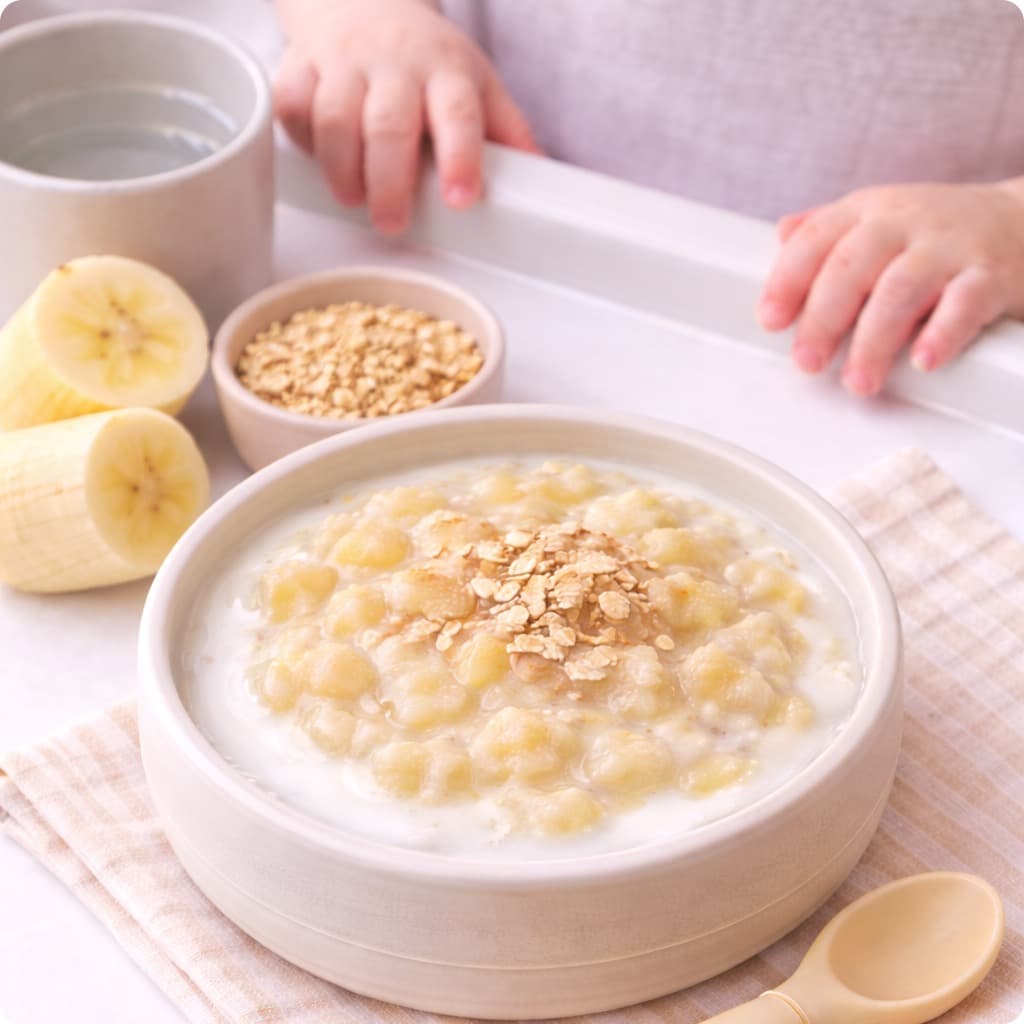
12+ months
Toddler yogurt meals: unsweetened bowls and soft toppings
After the first birthday, plain full-fat yogurt can remain part of a varied diet, served with manageable pieces of soft fruit or cooked oats. The NHS allows pasteurised cow's milk as a main drink from 12 months, but yogurt still does not replace varied iron-containing foods. Honey is no longer prohibited by the under-one botulism rule, though added sugars are best limited. Avoid hard granola clusters, whole nuts and firm berries. Keep toddlers seated and supervised, and handle chilled dairy safely.
When can babies start yogurt?
For the first dairy exposure, offer a small amount on its own rather than adding several other new allergens, and watch for a reaction. If your baby has a diagnosed cow's milk allergy or previous reaction, follow the treating clinician's plan.
Offer yogurt alongside other complementary foods and appropriate breast milk or formula feeds. There is no universal 2–4-ounce daily yogurt quota prescribed by the NHS; avoid letting large yogurt servings crowd out iron-rich foods.
See our first foods for baby guide for more ideas.
Simple unsweetened yogurt serving ideas
Try combinations only after the individual allergenic ingredients have been tolerated.
- Plain whole-milk yogurt served alone on a preloaded spoon for a first dairy exposure.
- Plain yogurt with thoroughly mashed already-tolerated banana.
- A dip for fork-soft vegetables that a child can actually grasp and chew.
- Yogurt stirred into soft cooked oats if oats and any other ingredients are already tolerated.
Explore our baby-led weaning food list and first foods for baby for more inspiration.
More Cutting Guides
Related Guides
View all feeding guidesSources & References
This guide is informed by current guidelines from leading health organizations:
- ●NHS - Feeding your baby from around 6 months NHS
- ●NHS Best Start in Life - Introducing foods that could trigger an allergic reaction NHS
- ●NHS - Foods to Avoid Giving Babies NHS
- ●NHS - Preparing Food Safely for Babies NHS
- ●NHS - Storing and reheating baby food NHS
