What do you want to know?
Deep dive
Oatmeal →Oatmeal for babies: when to introduce, how to prepare safe textures by age, fiber and iron info, and simple porridge recipes and mix-ins to suit growing appetites.
Nutrition highlights
- Fibre (including beta-glucan) - supports healthy digestion and gut health.
- Iron - fortified oats provide iron important from 6 months as stores decline.
- Complex carbohydrates - provide steady, sustained energy.
- Protein - more than most grains, supporting growth.
Safety quick tips
- Cook oatmeal until soft - avoid dry or crunchy raw oats for young babies.
- Choose fortified oats where possible for extra iron.
- Never add honey before 12 months (risk of infant botulism).
Common questions
Can babies eat Oatmeal?
Yes. Babies can eat Oatmeal starting around 6 months when they begin solid foods. It should be served in a safe texture and size for babies.
When can babies eat Oatmeal?
Babies can eat Oatmeal from around 6 months when starting solids. Babies can eat oatmeal from around 6 months, once they're starting solids. Cook oats until soft and creamy with water, breast milk, or formula; fortified oats add extra iron. Oats are naturally gluten-free but are often processed with wheat - choose certified gluten-free oats only if avoiding gluten for a medical reason.
Is Oatmeal a choking hazard for babies?
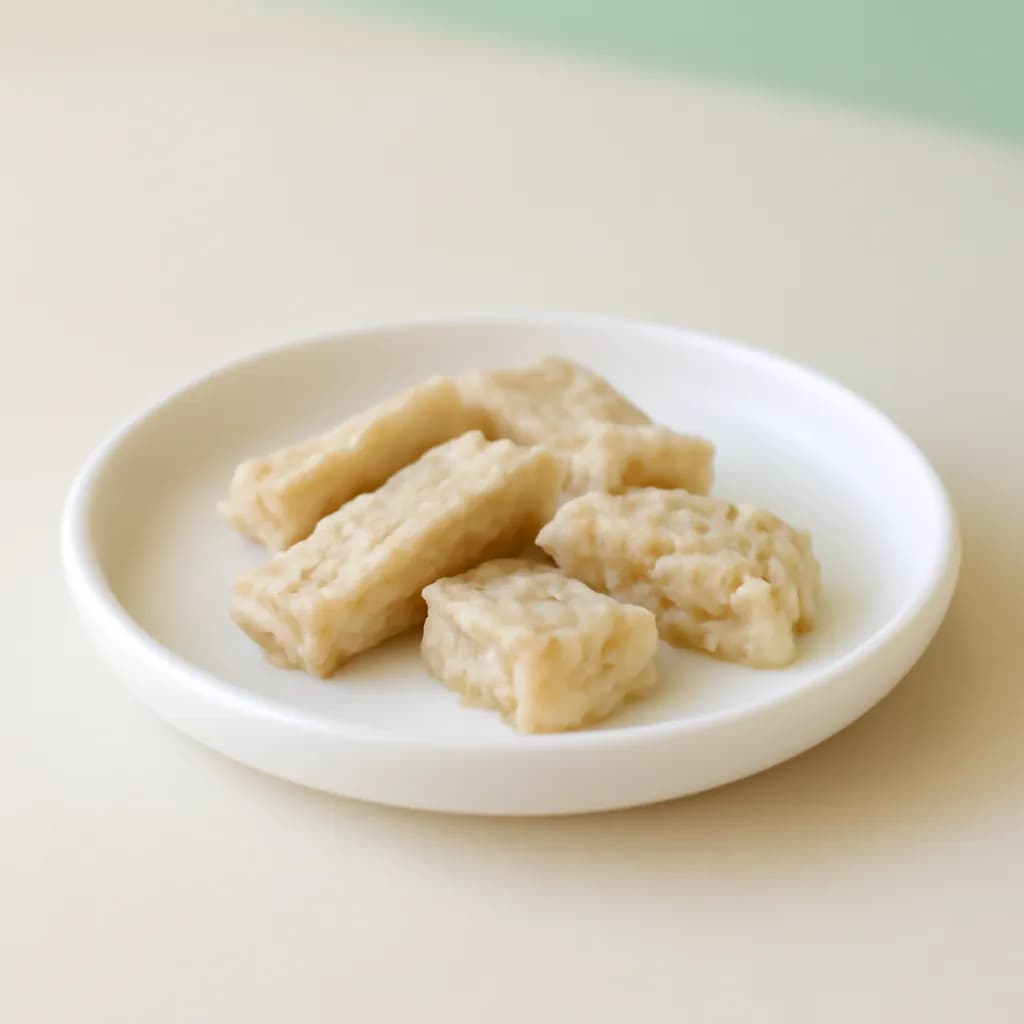
Oatmeal is generally safe for babies when prepared properly. 6–9 months: Cook oats thick and creamy; load onto a pre-loaded spoon or let your baby scoop with hands. Stir in fruit purée or a thin smear of nut or seed butter. 6–9 months: Make firmer 'oat fingers' or baked oat bars (no honey, no added sugar) for self-feeding. 9–12 months: Thicker porridge with soft fruit pieces; well-softened overnight oats. 12+ months: Oats in pancakes, muffins, bircher, and energy bites (still no honey under 12 months).
Is Oatmeal a common allergen?
Oatmeal is not typically a common allergen for babies. Many babies can try it from around 6 months as part of a varied diet.
How should Oatmeal be served to babies?
6–9 months: Cook oats thick and creamy; load onto a pre-loaded spoon or let your baby scoop with hands. Stir in fruit purée or a thin smear of nut or seed butter. 6–9 months: Make firmer 'oat fingers' or baked oat bars (no honey, no added sugar) for self-feeding. 9–12 months: Thicker porridge with soft fruit pieces; well-softened overnight oats. 12+ months: Oats in pancakes, muffins, bircher, and energy bites (still no honey under 12 months).
What nutrients does Oatmeal provide for babies?
Oatmeal provides nutrients like fibre, iron, protein, carbohydrates that support babies' growth and development.
How long can I store Oatmeal for babies?
Cook Oatmeal to a safe temperature and store it in the refrigerator for up to 2 days, or freeze in single-serving portions for up to 1 month to preserve nutrients.
Should I buy organic Oatmeal for my baby?
Organic Oatmeal isn't strictly necessary for babies, but some families prefer to reduce pesticide exposure. Wash conventional produce thoroughly. Variety and freshness matter most.