Skip to content

Creamy Avocado Pasta for Babies (9 months+)

Ripe avocado makes a creamy sauce without dairy; optional yogurt adds a milk allergen.

9 months+Dinner17 minEasy
Creamy Avocado Pasta
  • Age Range9 months+
  • Prep 2 min · Cook 15 min
  • DifficultyEasy
  • Allergen InformationContains: Wheat, Dairy

Ingredients

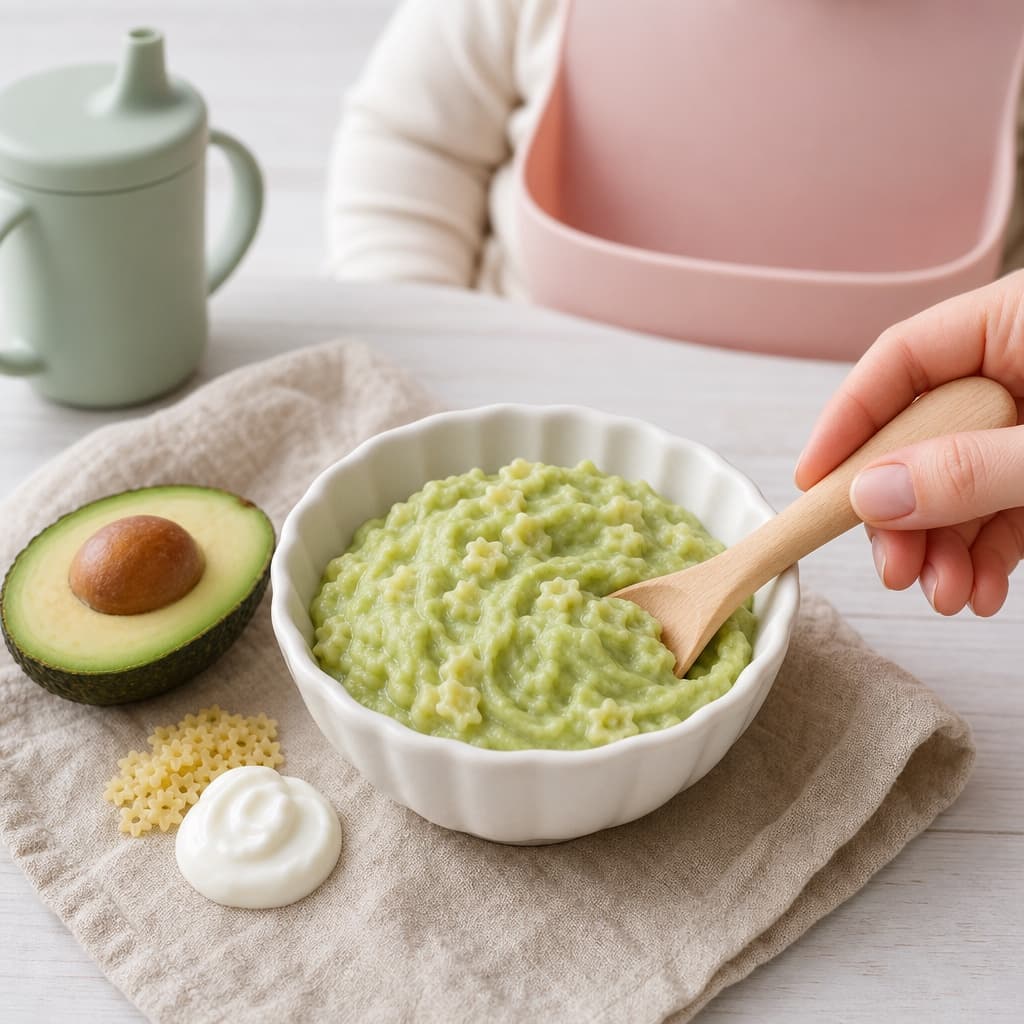
  • 1/2 ripe avocado
  • 40g small pasta (e.g. stars or small shells, wheat-based)
  • 2 tbsp warm water or reserved pasta water
  • 1 tbsp plain full-fat yogurt (optional)
  • 1 tsp olive oil

Preparation

  1. Cook wheat pasta in unsalted water until completely soft, reserving some water.

  2. Halve ripe avocado, remove stone and peel, then mash flesh until smooth.

  3. Loosen avocado with a little cooled pasta water and olive oil; fold in optional plain pasteurised yogurt if desired.

  4. Combine with soft drained pasta, adjusting with water to keep moist.

  5. Check for firm pasta and serve promptly, cool enough to eat.

Serving by Age

Offer cohesive soft avocado-coated pasta; do not leave firm pasta or slippery tough avocado.

9 months+

Serve as very soft pasta pieces coated in smooth avocado sauce; cut or mash further if needed for easier chewing.

Allergen Information

Contains wheat from pasta and milk if optional yogurt is used; check pasta for egg.

Storage

Cool clean untouched portions promptly and refrigerate covered for up to 24 hours, or freeze promptly when appropriate. Reheat cooked portions until steaming hot throughout, stir and cool before serving; discard bowl leftovers.

Frequently Asked Questions

How should I store Creamy Avocado Pasta?

Cool clean untouched portions promptly and refrigerate covered for up to 24 hours, or freeze promptly when appropriate. Reheat cooked portions until steaming hot throughout, stir and cool before serving; discard bowl leftovers.

Which allergens does Creamy Avocado Pasta contain?

It contains Wheat and Dairy. Check the labels of the products you use, and follow any allergy advice your baby has been given.

Sources & References

This guide is informed by current guidelines from leading health organizations:

Add as a preferred source on Google