Skip to content

Ricotta Pea Pasta Stars for Babies (9 months+)

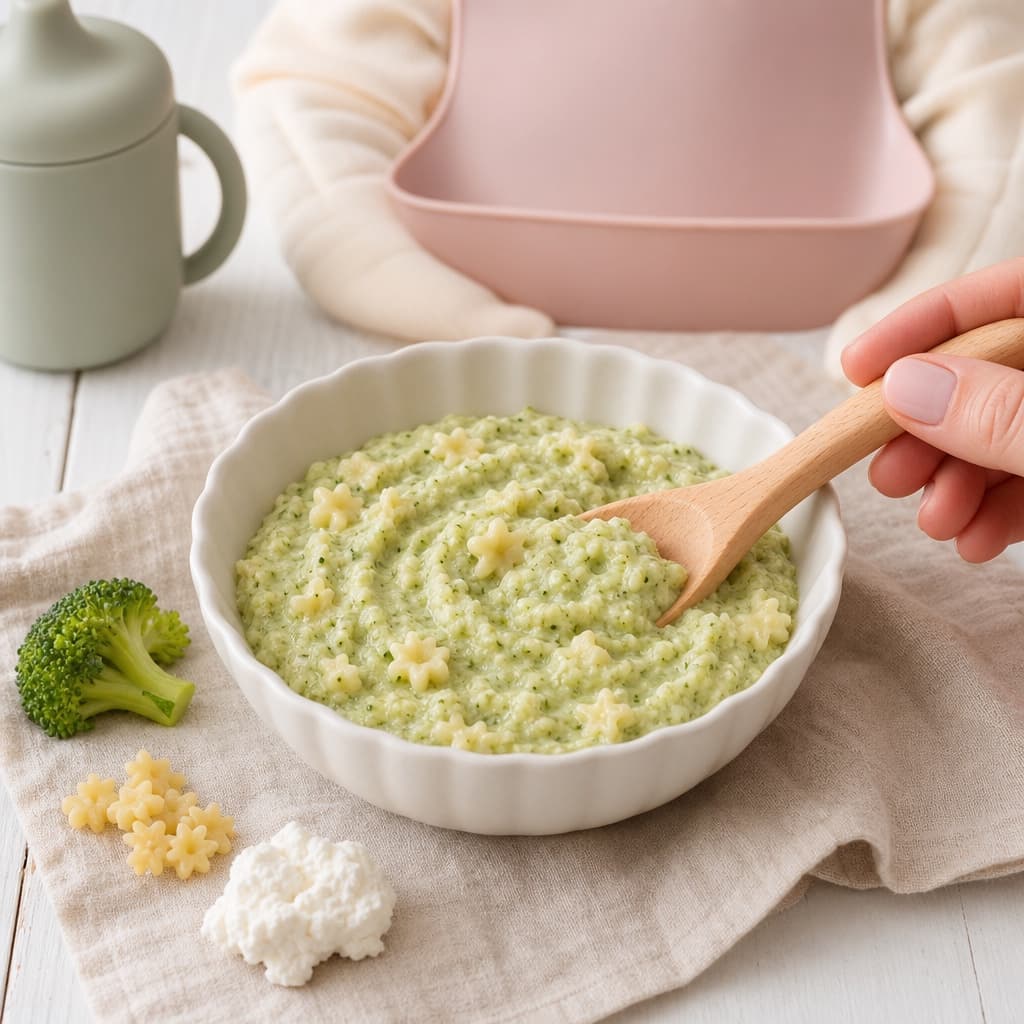
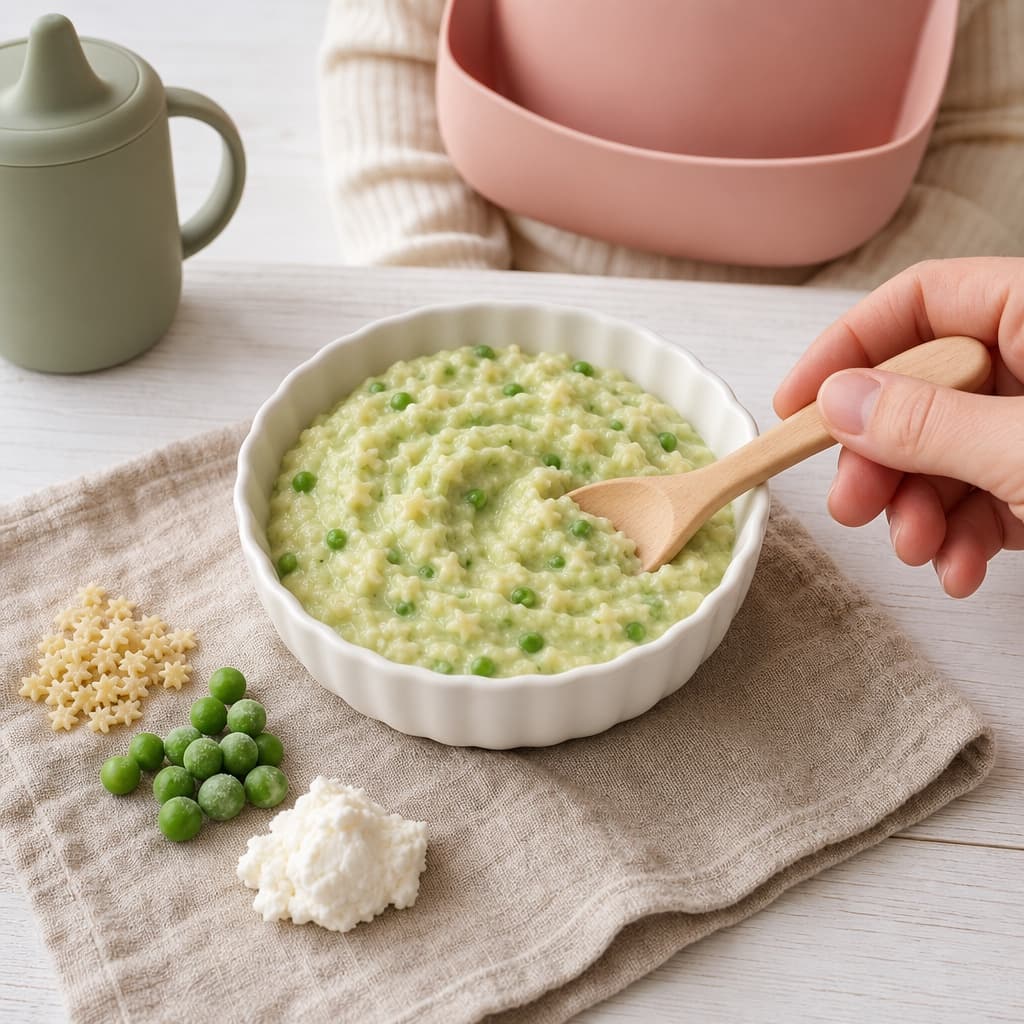
Soft wheat pasta and finely mashed peas mix with pasteurised ricotta into a creamy meal.

9 months+Dinner17 minEasy
Ricotta Pea Pasta Stars
  • Age Range9 months+
  • Prep 2 min · Cook 15 min
  • DifficultyEasy
  • Allergen InformationContains: Dairy, Wheat

Ingredients

  • 1/2 cup small pasta stars (stelline)
  • 1/3 cup frozen peas
  • 2 tbsp ricotta cheese
  • 1 tsp olive oil
  • 2-3 tbsp reserved pasta cooking water

Preparation

  1. Cook wheat pasta stars in unsalted water until very soft; reserve a little water.

  2. Cook peas separately or during pasta cooking until thoroughly soft; crush every round pea.

  3. Drain pasta, then mix with plain pasteurised ricotta, olive oil and enough warm reserved water for moisture.

  4. Fold in the mashed peas; mash further for younger texture skills.

  5. Check for whole peas or firm pasta and cool before feeding.

Serving by Age

Serve soft moist pasta and thoroughly mashed peas, never intact round peas.

9 months+

Serve as a soft, scoopable bowl with well-cooked pasta stars and mashed peas. Lightly mash further if needed and ensure pasta is very soft.

Allergen Information

Contains milk from ricotta and wheat from pasta; verify whether the pasta also contains egg.

Storage

Cool clean untouched portions promptly and refrigerate covered for up to 24 hours, or freeze promptly when appropriate. Reheat cooked portions until steaming hot throughout, stir and cool before serving; discard bowl leftovers.

Frequently Asked Questions

How should I store Ricotta Pea Pasta Stars?

Cool clean untouched portions promptly and refrigerate covered for up to 24 hours, or freeze promptly when appropriate. Reheat cooked portions until steaming hot throughout, stir and cool before serving; discard bowl leftovers.

Which allergens does Ricotta Pea Pasta Stars contain?

It contains Dairy and Wheat. Check the labels of the products you use, and follow any allergy advice your baby has been given.

Sources & References

This guide is informed by current guidelines from leading health organizations:

Add as a preferred source on Google