Breakfast at 9 months: what to expect
By 9 months the pincer grasp is usually confident, so babies pick up small pieces like quartered blueberries and pinches of oatmeal with real precision. Lumpier textures should be on the menu now: thick oatmeal, mashed rather than pureed fruit, and soft pieces to chew. The NHS encourages steady progress toward lumpy foods and finger foods around this age to build chewing skills.
Milk is still the main drink. Most 9-month-olds take 3-4 breast milk or formula feeds a day alongside 3 meals, and the World Health Organization recommends continued breastfeeding alongside family foods through the first year and beyond. A common rhythm is a milk feed on waking, then breakfast 30-60 minutes later so baby arrives hungry but not frantic.
Sample breakfasts for a 9-month-old
- Oatmeal with mashed banana + quartered blueberries
- Egg strips + toast fingers with a thin scrape of peanut butter
- Yogurt bowl with mashed pear + soft pancake strips
- Soft pancake strips + strawberry pieces + a few cheese bits
- Oatmeal with mashed berries + egg strips on the side
- Toast fingers with mashed avocado + banana pieces
Easy breakfast ideas for 9-month-olds
Oatmeal with mashed fruit
Thick-cooked oats stirred with mashed banana, pear, or berries. Serve with a preloaded spoon or let baby practice scooping with support.

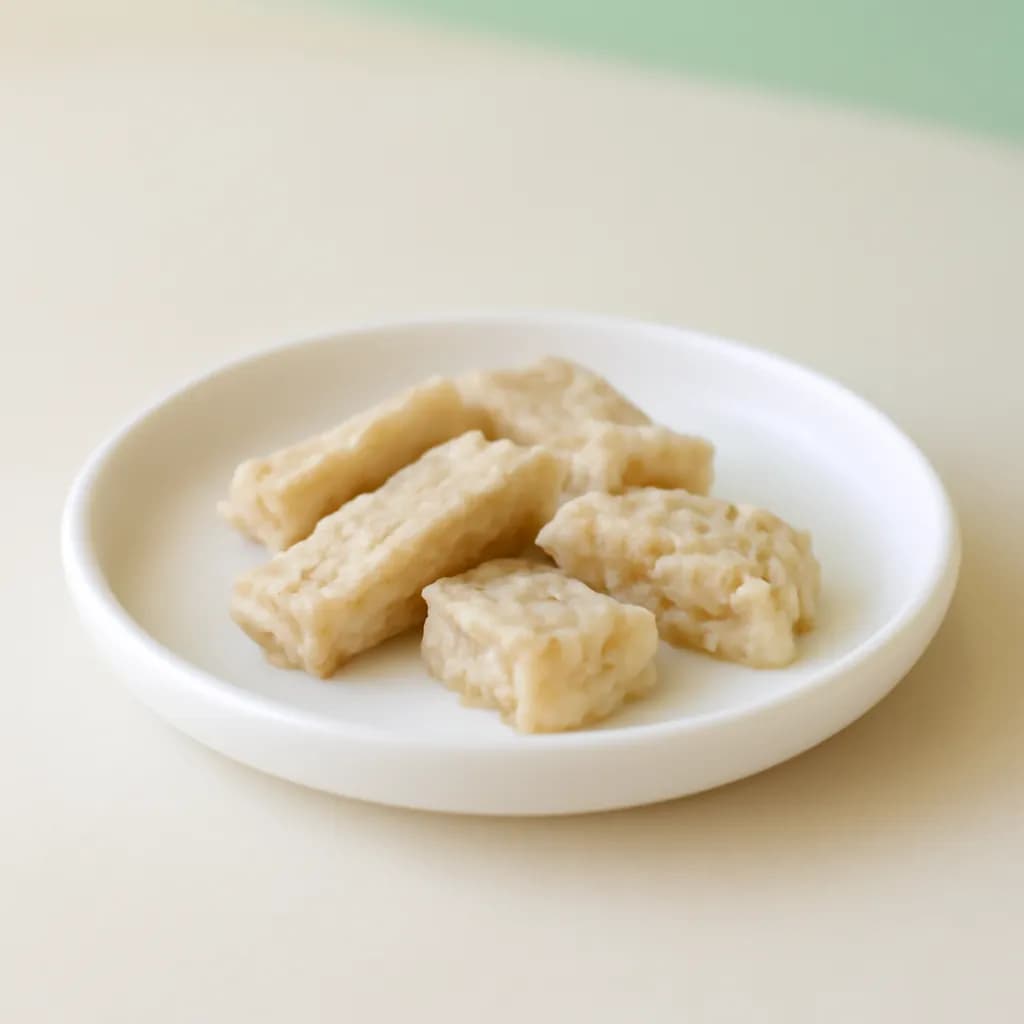
Egg strips
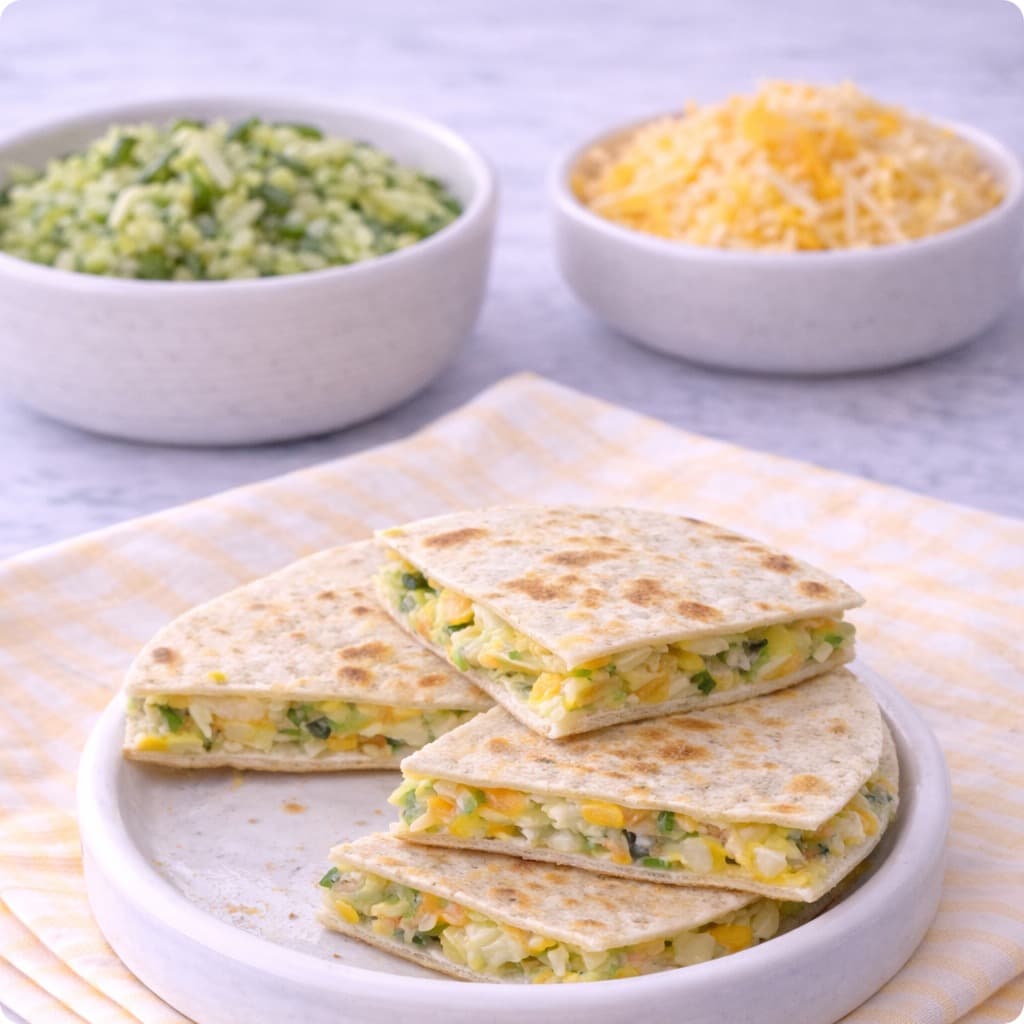
A fully cooked omelet cut into strips, plain or with finely chopped spinach. Protein, iron, and regular egg exposure in one fast breakfast.
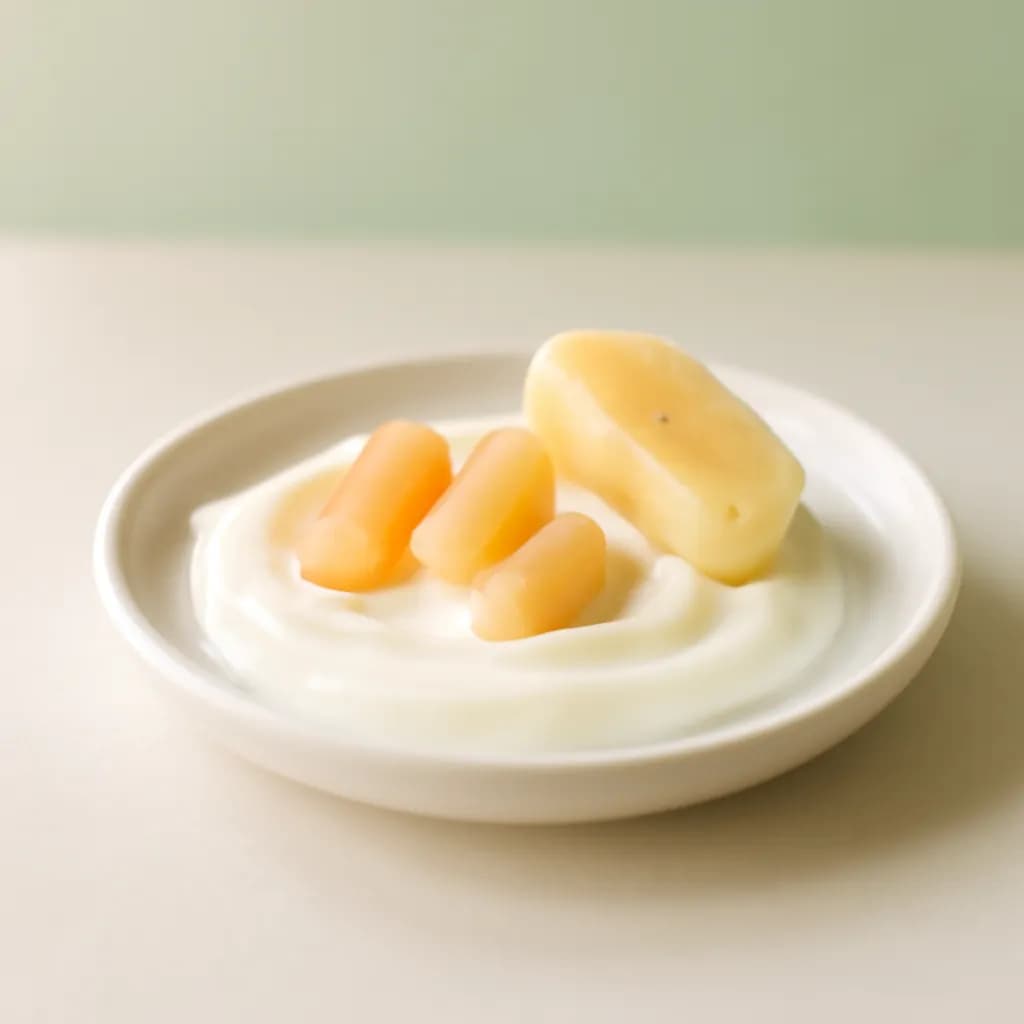
Yogurt bowl
Plain whole-milk yogurt topped with mashed or finely chopped soft fruit. Skip sweetened varieties; the fruit adds all the flavor needed.
Soft pancake strips
Thin banana-oat pancakes with no added sugar, cooked through and cut into strips. Make a batch ahead and refrigerate for quick mornings.

Banana pieces
Ripe banana split lengthwise into thirds or cut into small chunks for pincer practice. An easy no-cook addition to any plate.
Toast fingers with nut butter
Lightly toasted bread with a thin scrape of smooth peanut or almond butter, never thick globs. Keeps allergen exposure going at breakfast.

Quartered blueberries
Soft, ripe blueberries cut into quarters, or halved and flattened. Ideal small pieces for a confident pincer grasp.

Strawberry pieces
Ripe strawberries cut into thin slices or small soft pieces. The vitamin C helps iron absorption from oats and other plant foods at the same meal.
Grated cheese or soft cheese cubes
Mild pasteurized cheese, grated or in thin pea-sized bits, adds protein and calcium. Choose lower-sodium options where you can.
Breakfast safety tips for 9-month-olds
- Always supervise breakfast with baby seated upright in a highchair, even when mornings are rushed.
- Quarter blueberries and grapes, slice strawberries, and spread nut butters thin: thick globs are a choking risk.
- No honey before 12 months, including in pancakes, oatmeal, or yogurt, because of the risk of infant botulism.
- Skip added sugar and choose plain yogurt and low-sugar cereals; babies do not need sweetened breakfast foods.
- Cook eggs fully through and keep offering allergens like egg and peanut regularly once they are introduced.