Meals at 10 months: what to expect
Most 10-month-olds eat 3 meals a day, with 1 small snack emerging as milk feeds settle at around 3-4 per day. The pincer grasp is precise, chewing handles soft lumps and strips with ease, and most family food works as soft finger food with a sensible cut.
Self-feeding usually leads the meal now, with a preloaded spoon joining in for thicker foods like oatmeal and yogurt. The AAP recommends offering water in an open or straw cup at meals from this stage, so a small cup on the tray at breakfast, lunch, and dinner builds the skill before the 12-month move away from bottles.
Meal ideas for 10-month-olds, breakfast to dinner
Breakfast: oatmeal fingers with mashed banana
Thick-baked oatmeal cut into strips a confident self-feeder can grab, topped with mashed banana. Batch a tray and refrigerate for busy mornings.
Breakfast: scrambled egg with buttered toast strips
Soft scrambled egg alongside lightly toasted bread strips with unsalted butter or mashed avocado. A fast, iron- and protein-rich start to the day.
Breakfast: whole-milk yogurt with soft fruit
Plain whole-milk yogurt with mashed berries or ripe peach pieces. Hand over a preloaded spoon and let baby steer it to the mouth.
Lunch: hummus and grated cheese sandwich fingers
Soft bread spread with hummus, sprinkled with finely grated cheese, and cut into slim fingers. Serve with cucumber sticks for crunch practice.
Lunch: chickpea and veggie patties
Mashed chickpeas mixed with grated carrot and zucchini, formed into small patties and pan-cooked until golden. Soft inside, easy to grip, and batch-friendly.
Lunch: cottage cheese bowl with avocado
Cottage cheese (lower-sodium if available) with ripe avocado chunks and soft tomato pieces. A no-cook lunch that comes together in two minutes.
Dinner: mild chicken and rice with peas
Shredded chicken folded through soft rice with peas and a spoon of unsalted sauce from the family pot. Comfort food that works for everyone at the table.
Dinner: flaked salmon pasta
Soft short pasta with baked salmon flakes (checked for bones), a little olive oil, and finely chopped steamed broccoli. Aim for oily fish about twice a week.
Dinner: beef and vegetable mini meatballs
Small, soft meatballs of ground beef and grated vegetables, cooked through and served with mashed potato. Iron-rich and easy to batch for the freezer.
Snack: banana or avocado wedges
A simple mid-afternoon snack of ripe banana or avocado wedges, rolled in crushed oat flakes for grip if they slip through little fingers.
Sample full days for a 10-month-old
- ★Oatmeal fingers + banana (breakfast), hummus sandwich fingers + cucumber sticks (lunch), chicken and rice + peas (dinner)
- ★Scrambled egg + toast strips (breakfast), cottage cheese + avocado (lunch), salmon pasta + roasted zucchini (dinner)
- ★Yogurt + mashed berries (breakfast), chickpea patties + soft tomato (lunch), mini meatballs + mashed potato (dinner)
- ★Oatmeal fingers + pear slices (breakfast), grated cheese sandwich fingers + peas (lunch), flaked fish + sweet potato wedges (dinner)
- ★Yogurt + soft peach (breakfast), leftover salmon pasta (lunch), shredded chicken + veggie mash (dinner), banana wedges (snack)
Mealtime safety tips for 10-month-olds
- ✓Keep sodium low: plate baby's portion before salting family meals and choose lower-sodium cheese and bread when you can.
- ✓Halve or quarter every round food (grapes, cherry tomatoes, blueberries) and skip hard raw vegetables, whole nuts, and popcorn.
- ✓Offer water in an open or straw cup at meals; breast milk or formula remains the main drink until 12 months.
- ✓Cook eggs, meat, and fish fully through, and check flaked fish for bones.
- ✓Always supervise meals with baby seated upright in the highchair, never eating on the move.
When to call your pediatrician
Call your pediatrician for any allergic reaction (hives, swelling, vomiting, wheezing), refusal of nearly all solids across several days, gagging that consistently ends in vomiting, no progress toward self-feeding or lumpier textures, or any true choking episode. Severe symptoms like trouble breathing are emergencies - call your local emergency number.
Recipes for 10-month-olds
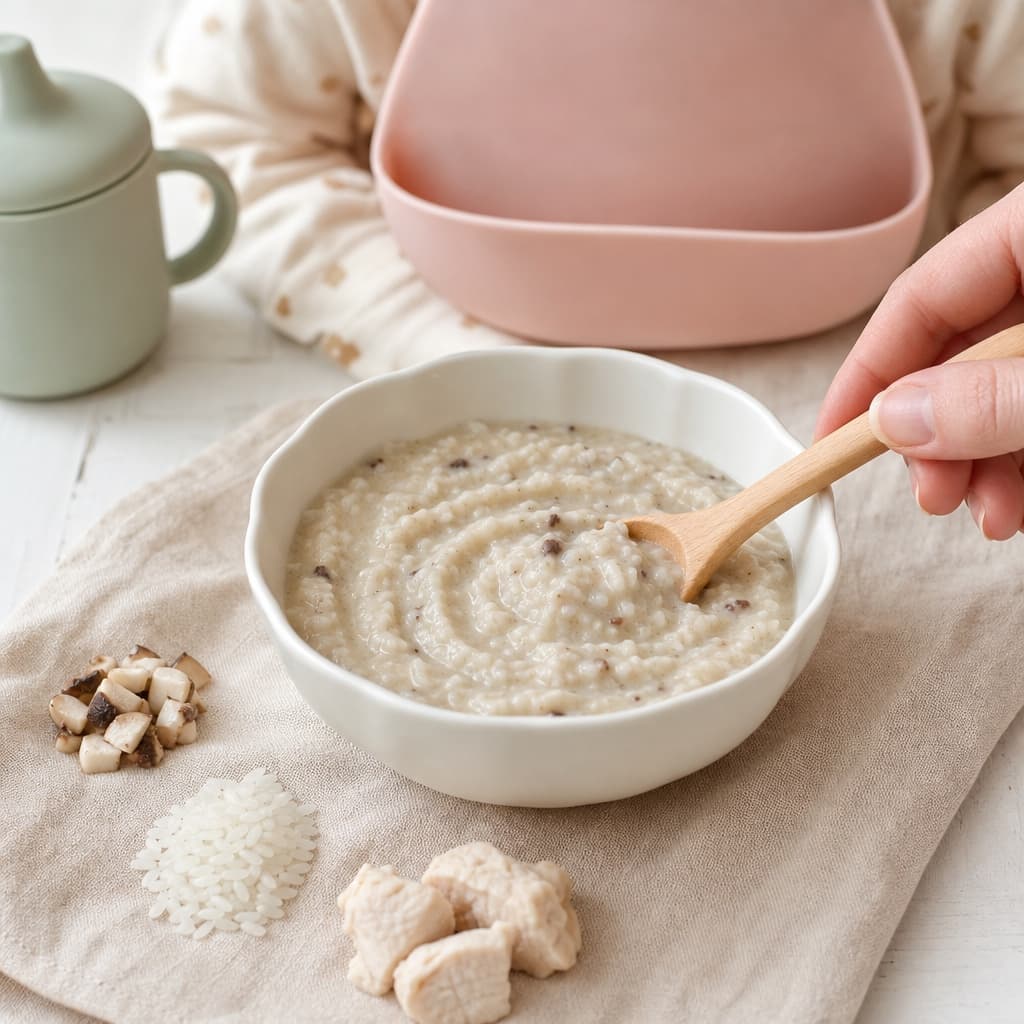
Chicken Mushroom Rice Bowl
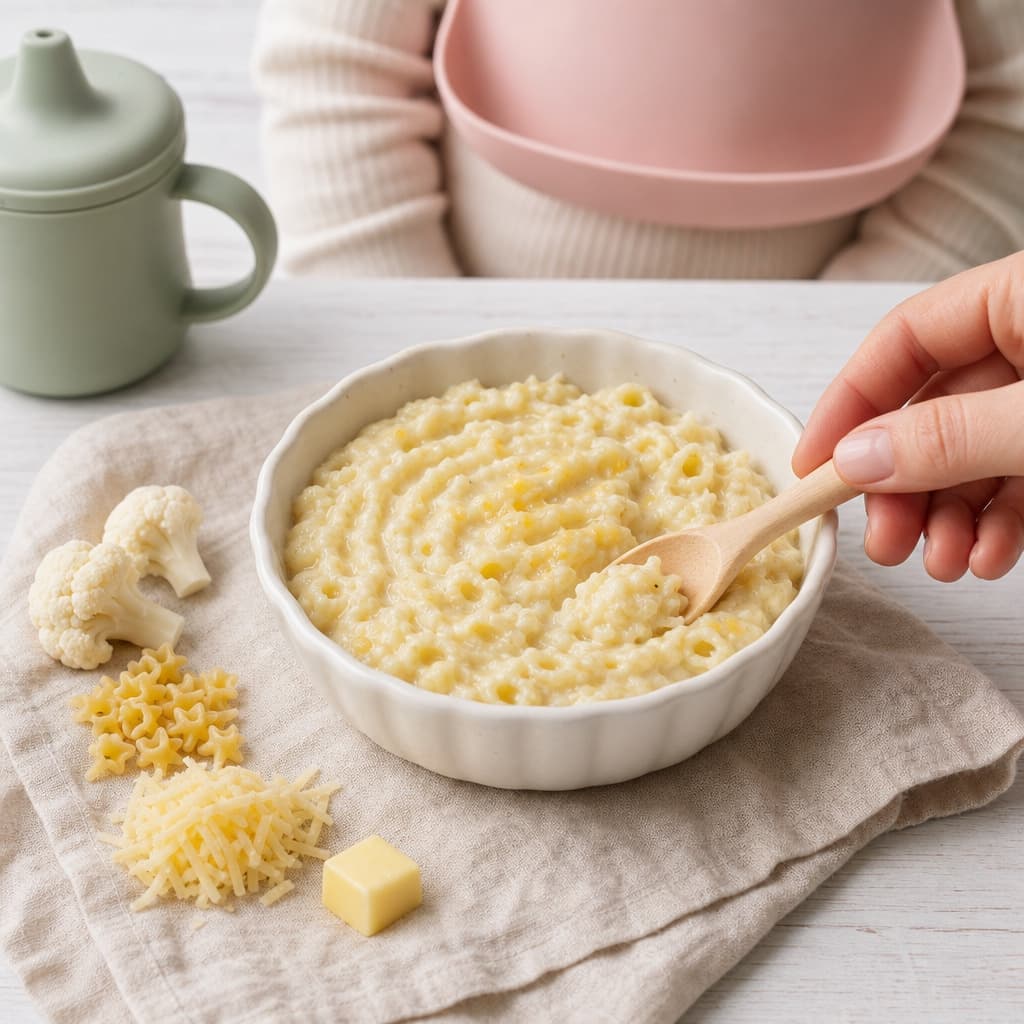
Cauliflower Cheese Baby Pasta
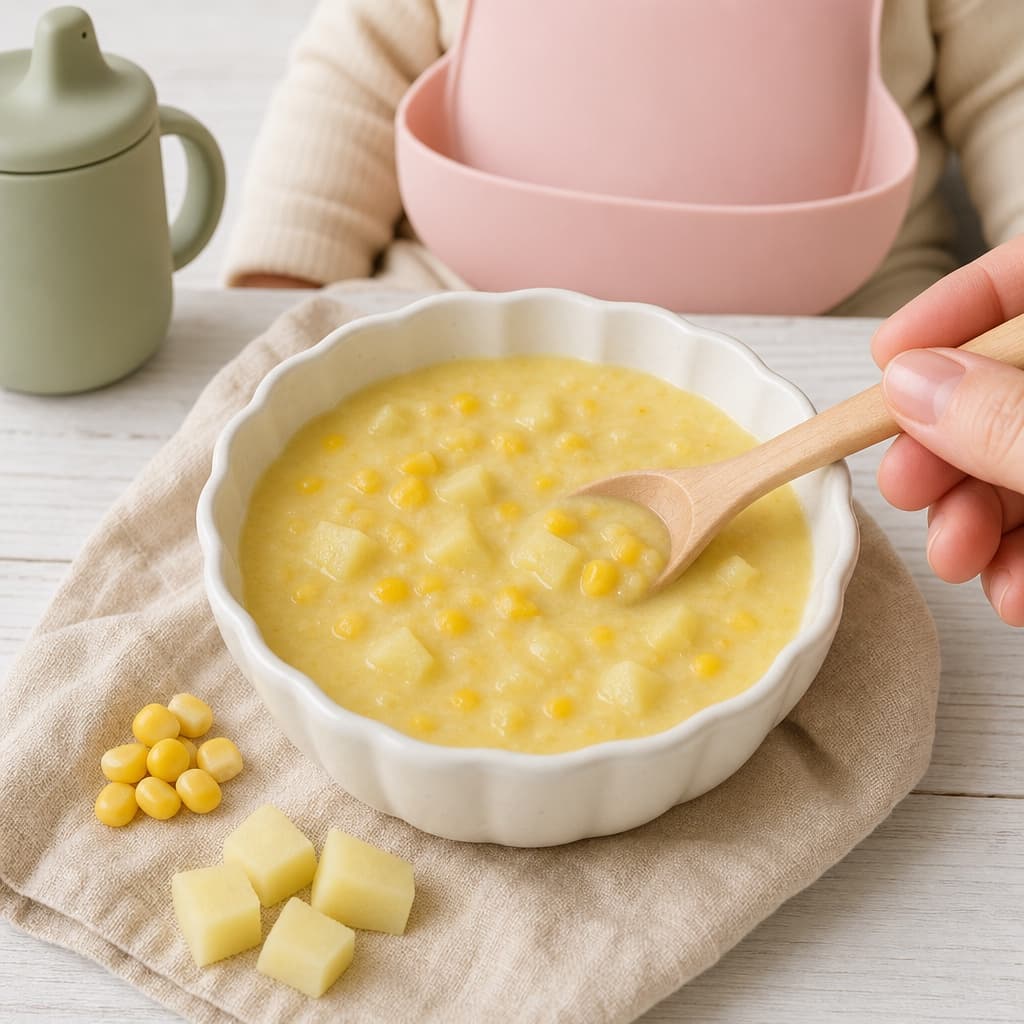
Sweetcorn Potato Chowder
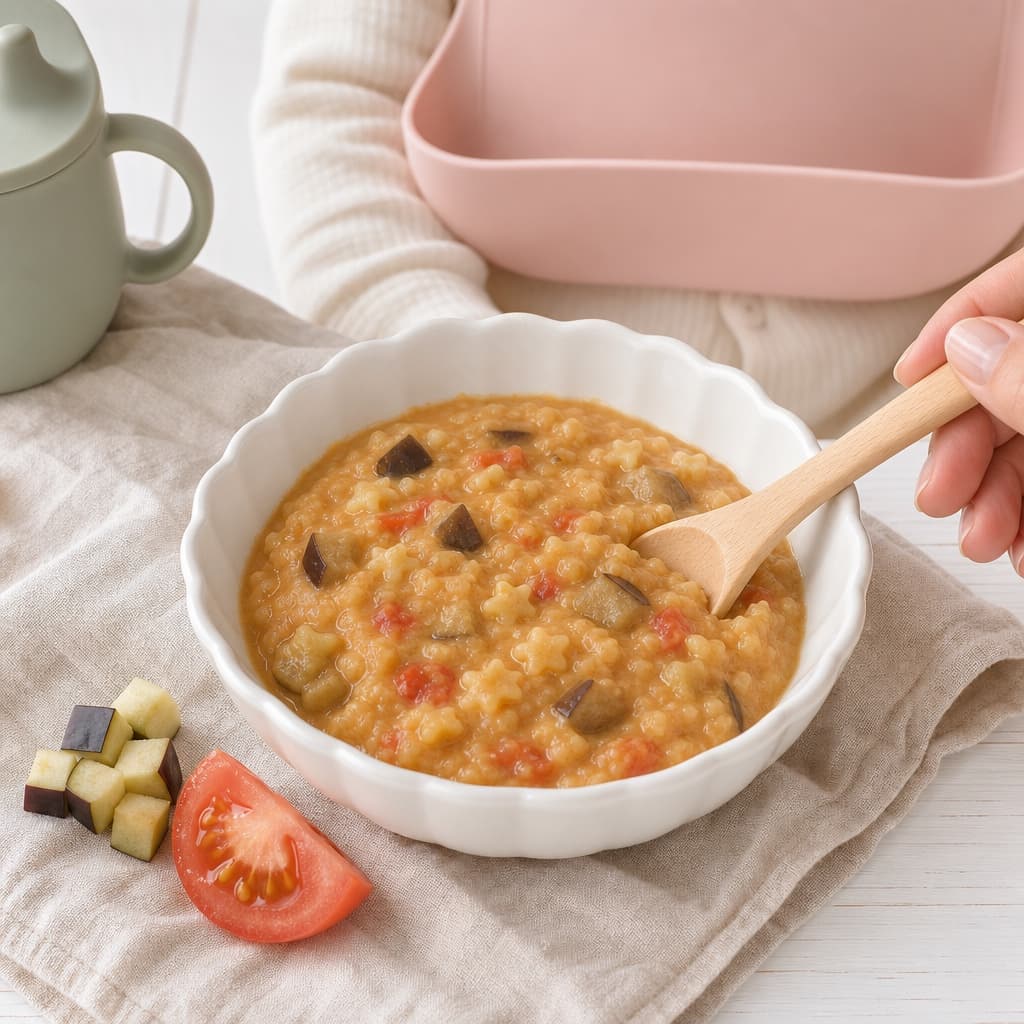
Eggplant Tomato Pasta Cream
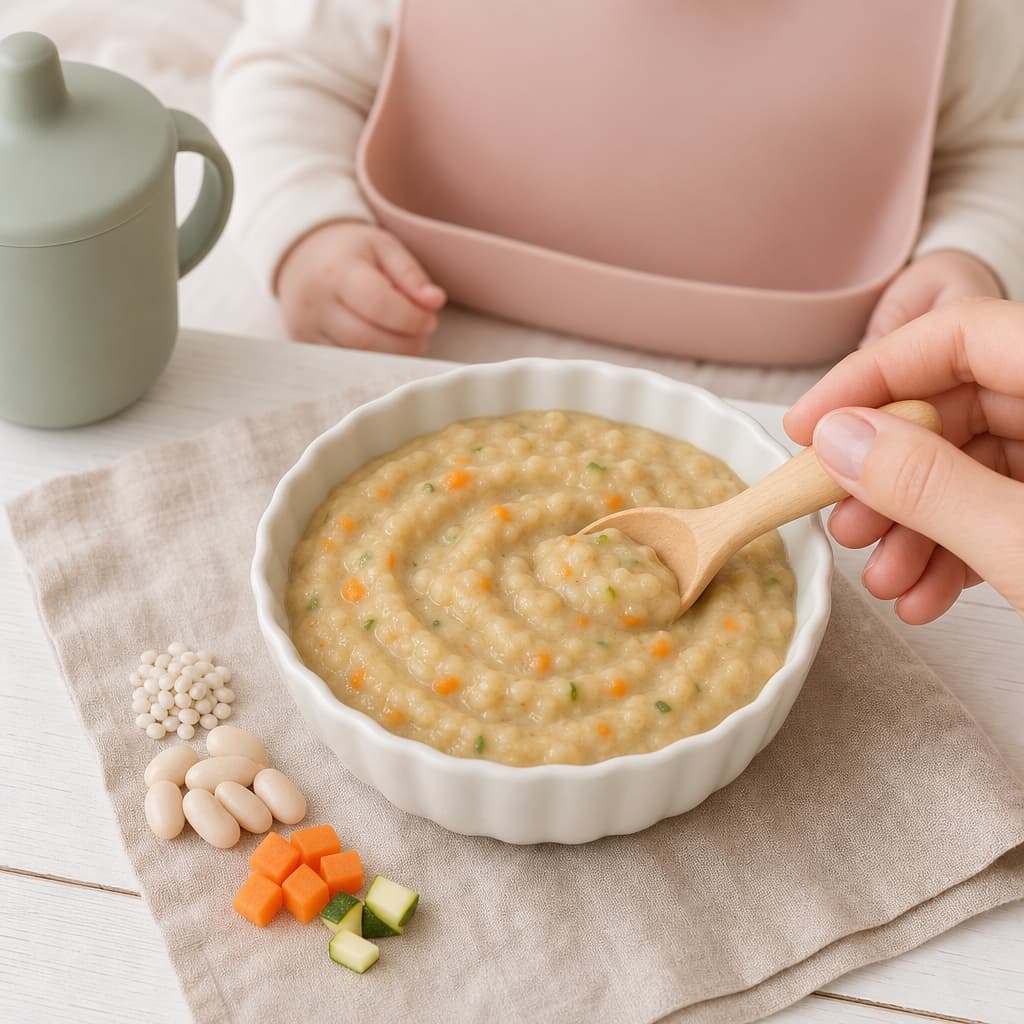
Mild Bean Barley Stew
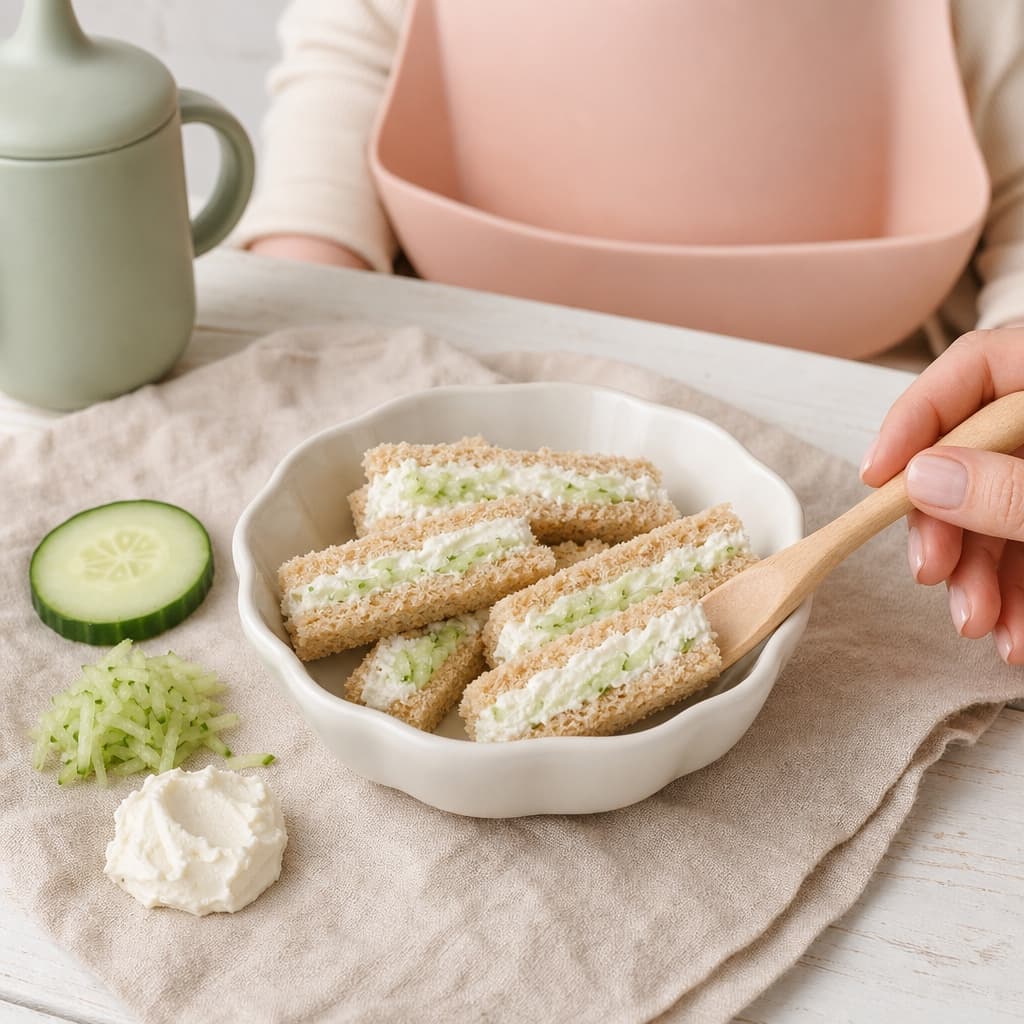
Cream Cheese Cucumber Toast Fingers
Frequently asked questions
How many meals should a 10-month-old eat?
Three meals a day is typical, and many babies add one small snack around this age. Milk settles at about 3-4 feeds per day. If your baby is not interested in a snack yet, that is fine; let appetite and your daily rhythm decide.
Does my 10-month-old really need snacks?
Not necessarily. A snack becomes useful when the gap between meals stretches past 3 hours or when milk feeds drop. Keep snacks simple and food-like (fruit wedges, yogurt, bread with hummus) rather than packaged puffs, and skip the snack on days baby is not hungry.
What cup should my baby use at meals?
An open cup or a straw cup with small amounts of water. The AAP recommends learning cup skills before phasing out bottles around 12 months. Expect spills at first; a small, weighted open cup with a little water keeps the mess manageable while the skill builds.
My baby refuses the spoon and only self-feeds. Is that OK?
Yes, and it is developmentally ideal. Self-feeding builds chewing skill, hand coordination, and appetite regulation. Serve most food as soft finger food, and hand over a preloaded spoon for oatmeal or yogurt so baby controls the last stretch to the mouth.
How much milk does a 10-month-old need?
Roughly 16-24 oz of breast milk or formula across 3-4 feeds is typical. Solids are doing more nutritional work now, so a gradual dip in milk interest is normal. WHO recommends continuing breastfeeding alongside solids well beyond this age if it works for your family.
Get your baby's personalized feeding plan
A daily feeding schedule, 350+ age-matched recipes, allergen tracking and cutting guides - all tailored to your baby's age in the Nibli app.
verifiedSources & References
This guide is informed by current guidelines from leading health organizations: