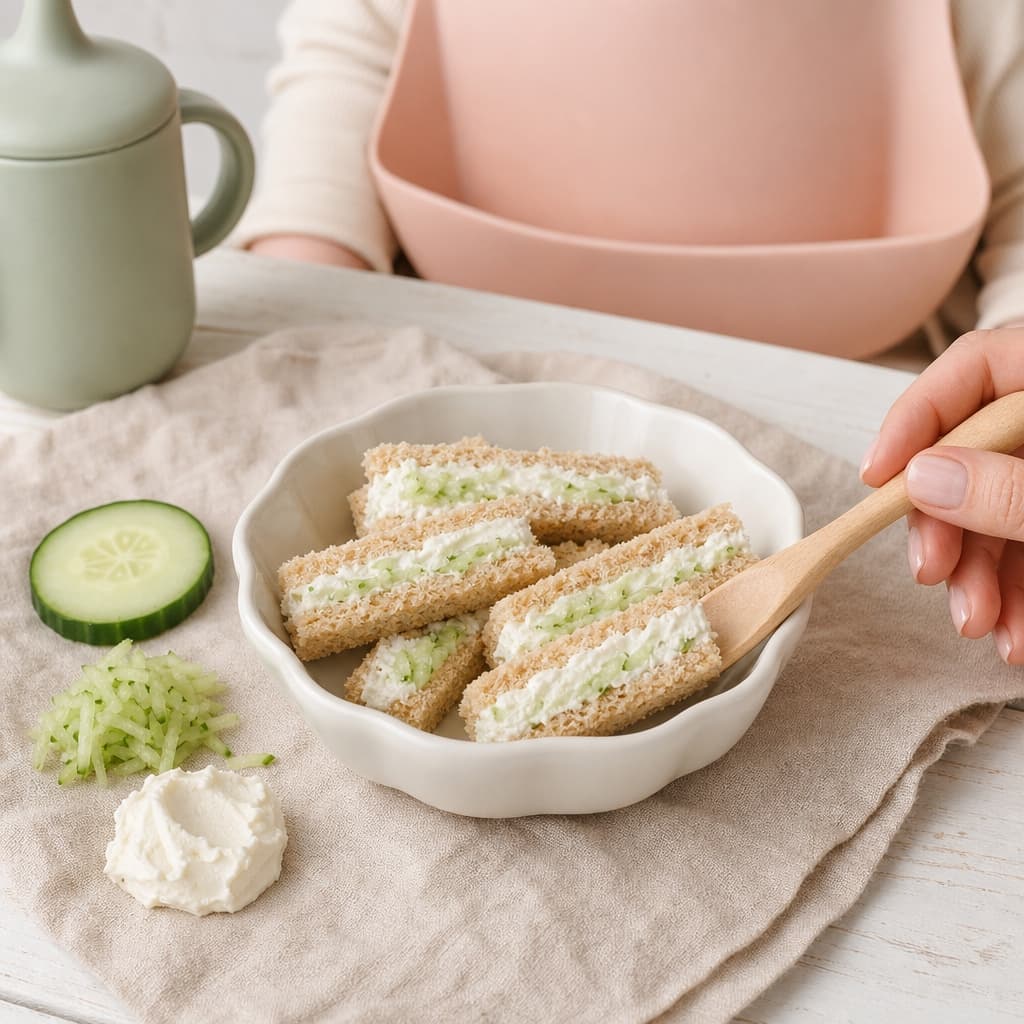
Meals at 11 months: what to expect
Most 11-month-olds eat 3 meals plus a snack, and nearly any family dish adapts with less salt and a sensible cut. Milk feeds are consolidating, often down to about 3 per day, ahead of the 12-month switch when whole milk can replace formula per AAP guidance; WHO recommends breastfeeding continue alongside family food into the second year.
Utensil practice begins in earnest now. Preloaded spoons, early fork stabs at soft cubes, and thick foods that cling to the spoon all build the skill. A batch-friendly weekly rhythm helps too: cook once, portion baby-sized servings, refrigerate or freeze, and rotate through the week so variety does not depend on nightly cooking.
Sample nearly-family meals
- Frittata squares + toast strips + squashed raspberries
- Pasta bolognese + grated cheese + steamed green beans
- Salmon fish cakes + peas + plain yogurt for dipping
- Lentil dal + soft flatbread + cucumber sticks
- Quesadilla strips + avocado + soft tomato quarters
- Chicken rice bowl + roasted vegetable batons + water in an open cup
Meal ideas for 11-month-olds

Mini vegetable frittata squares
Eggs baked with grated zucchini, cheese, and soft peppers, cut into squares. Batch a whole tray; squares keep 2 days refrigerated and freeze well.
Soft pasta bolognese
Slow-simmered beef and tomato sauce over well-cooked short pasta. Cook the family batch unsalted, portion baby's share, then season the rest.

Salmon and potato fish cakes
Flaked salmon (checked for bones) mixed with mashed potato, shaped into small cakes and baked. A freezer staple that covers oily fish for the week.
Bean and cheese quesadilla strips
Mashed black beans and grated cheese warmed in a soft tortilla, cut into slim strips. A five-minute lunch with iron, protein, and easy grip.

Chicken and vegetable rice bowl
Shredded chicken, soft rice, and finely chopped vegetables in one bowl, moistened with unsalted stock. Perfect fork-and-spoon practice territory.

Lentil dal with soft flatbread
Mild red lentil dal with turmeric and cumin (no chili, no added salt), scooped with soft flatbread strips. Batch it; dal tastes better on day two.
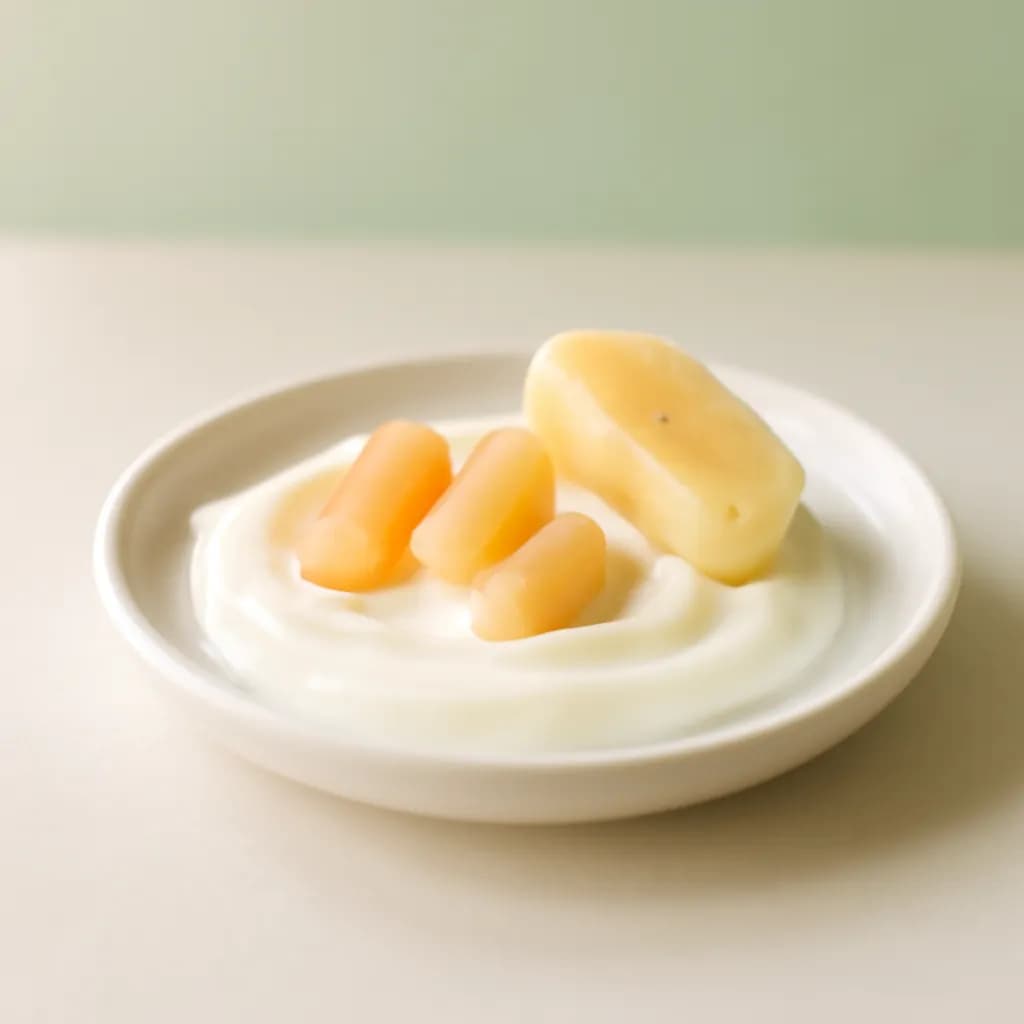
Yogurt bowl for spoon practice
Thick whole-milk yogurt with mashed fruit stirred through. Thick textures cling to the spoon, making this the ideal utensil training meal.
Roasted vegetable batch with hummus
A weekly tray of roasted carrot, zucchini, and sweet potato batons, served warm or cold with hummus for dipping across several meals.
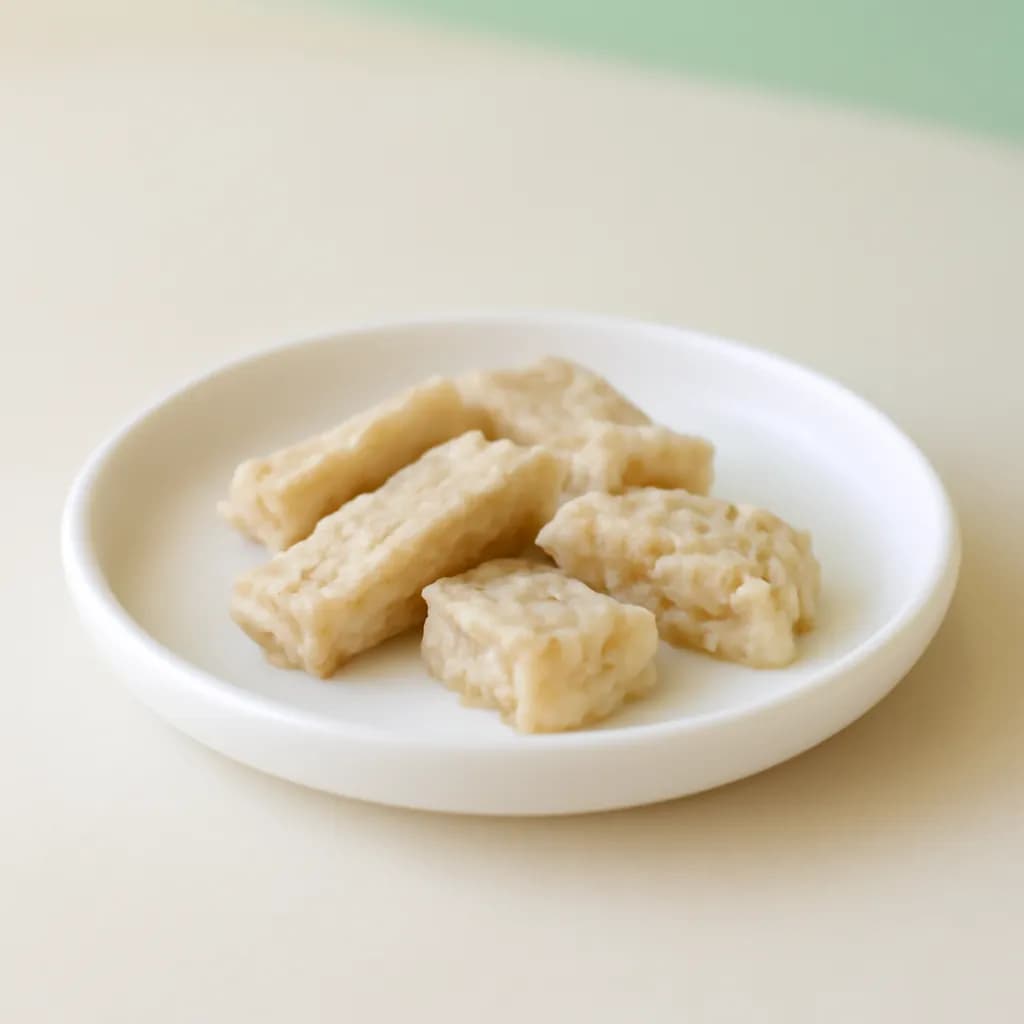
Overnight oats, spoon-thick
Oats soaked overnight in whole milk with mashed banana, served thick enough to stay on a self-loaded spoon. Make 2-3 jars at once.
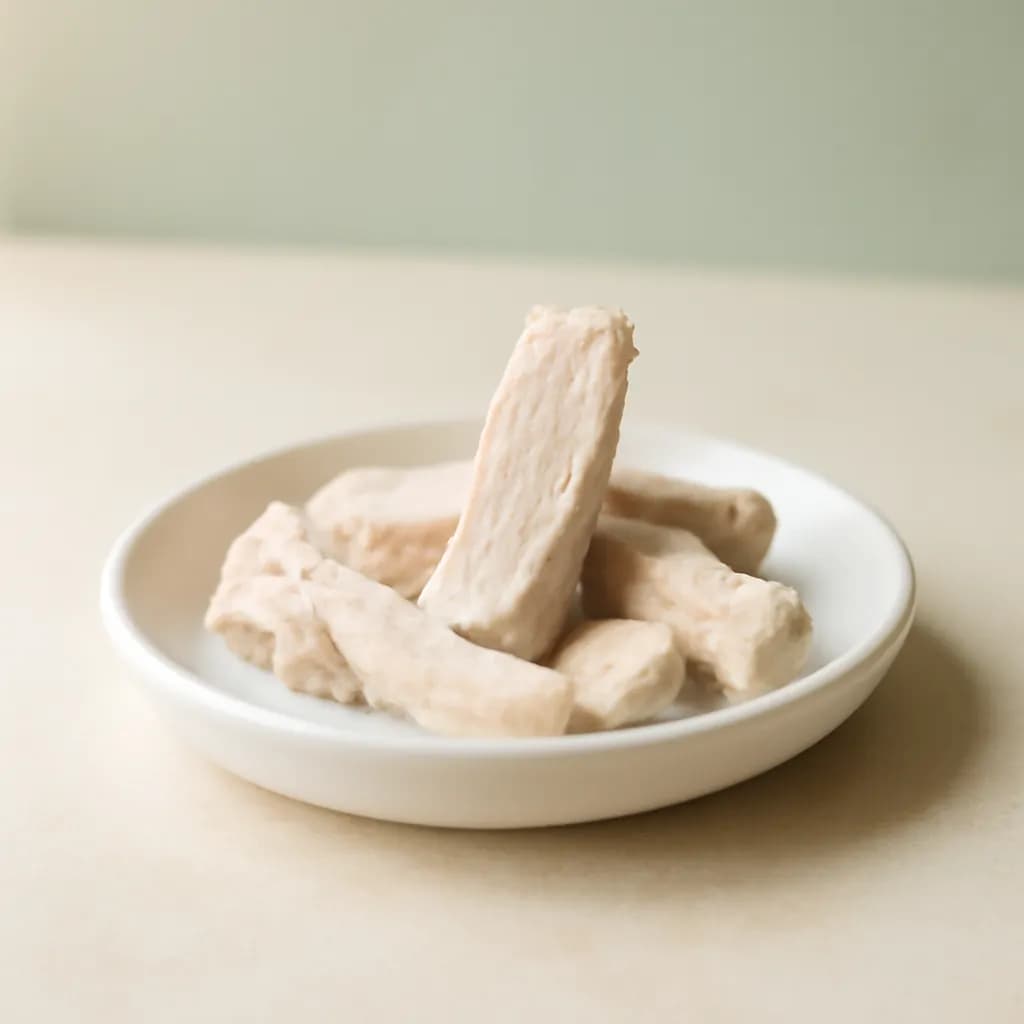
Turkey and zucchini meatballs
Ground turkey with grated zucchini keeps these meatballs soft and moist. Cook a double batch and freeze half for the following week.
Mealtime safety tips for 11-month-olds
- Season the family pot after portioning baby's share; babies under 12 months should stay under 1 g of salt per day.
- Keep cutting round foods in halves or quarters, and hold off on whole nuts, popcorn, and hard raw vegetables, which remain choking hazards well into toddlerhood.
- Batch cooking needs food safety: cool portions quickly, refrigerate within 2 hours, use within 2 days or freeze, and reheat until steaming hot just once.
- No honey until after the first birthday, including in baked goods, sauces, and yogurt swirls.
- Stay within arm's reach during meals with baby seated upright, even as self-feeding gets confident.
When to call your pediatrician
Recipes for 11-month-olds
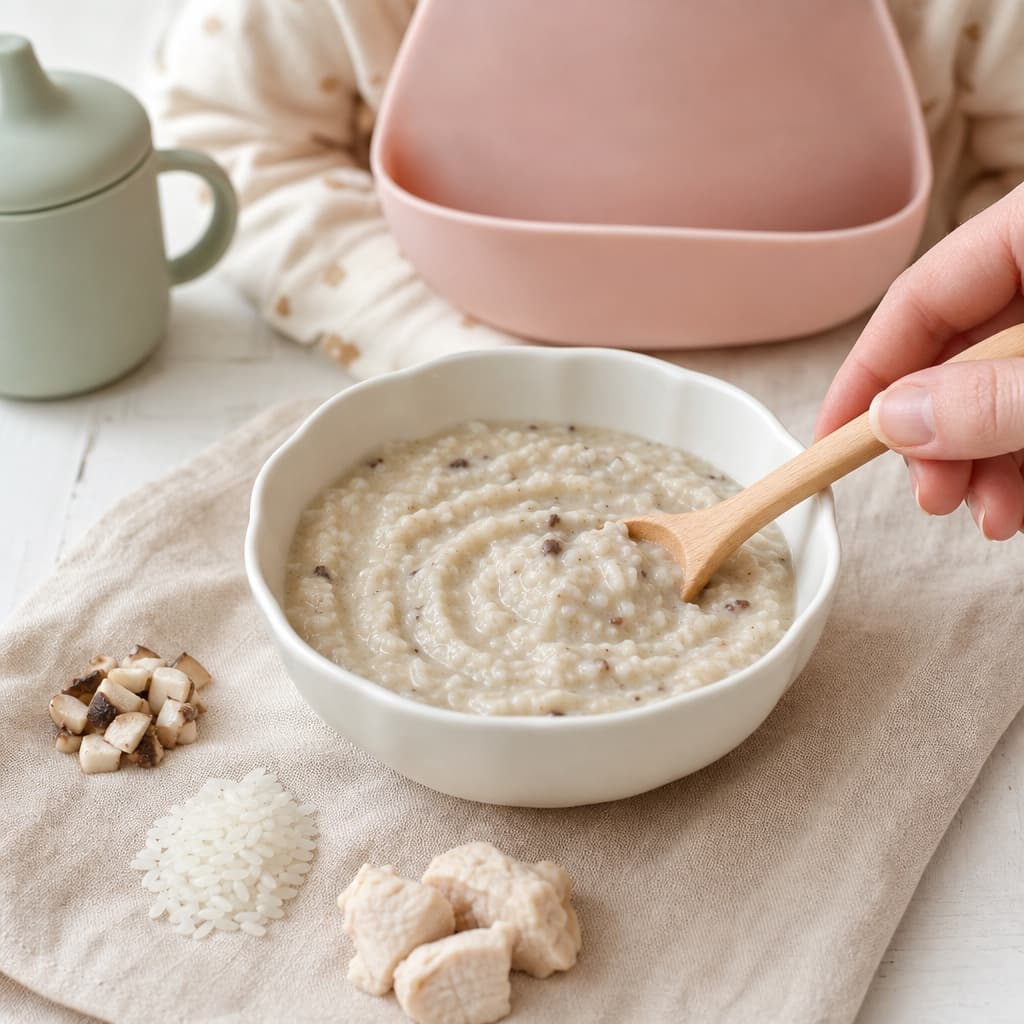
Chicken Mushroom Rice Bowl
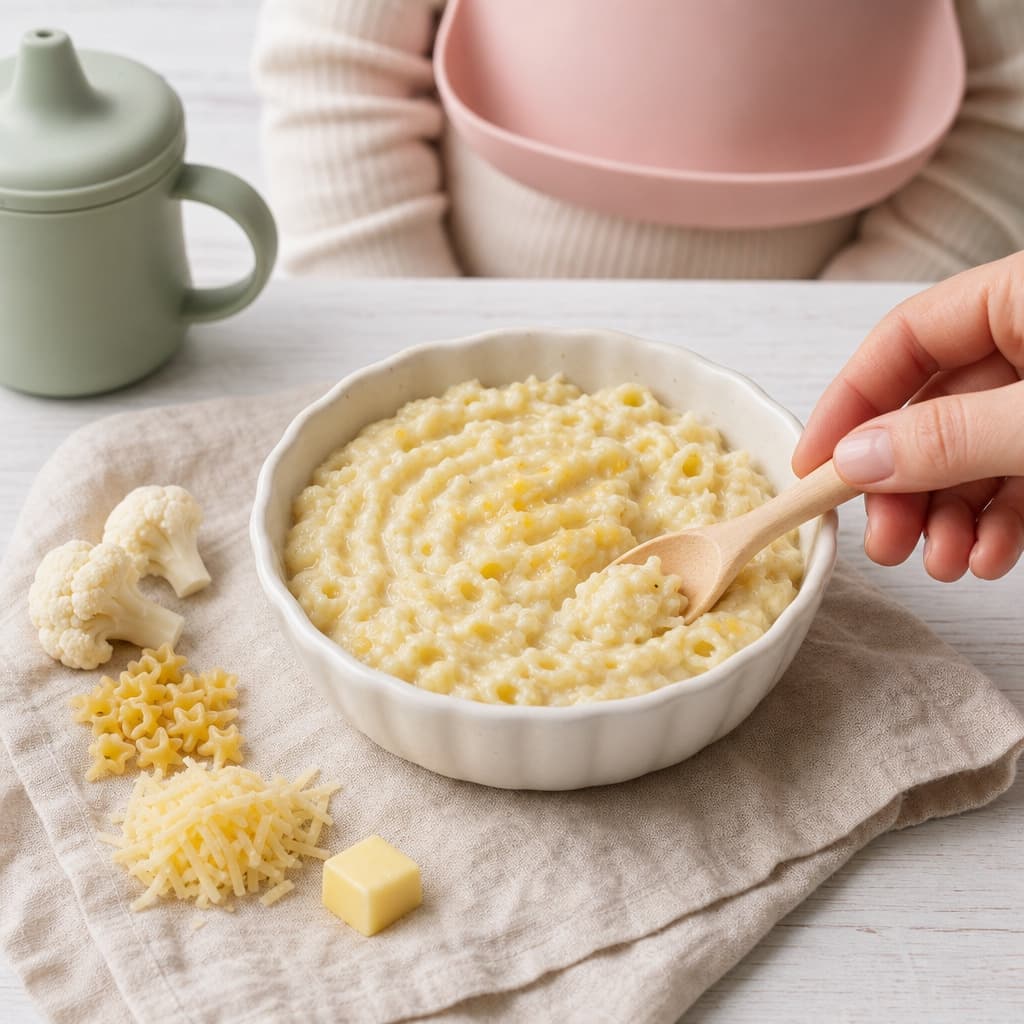
Cauliflower Cheese Baby Pasta
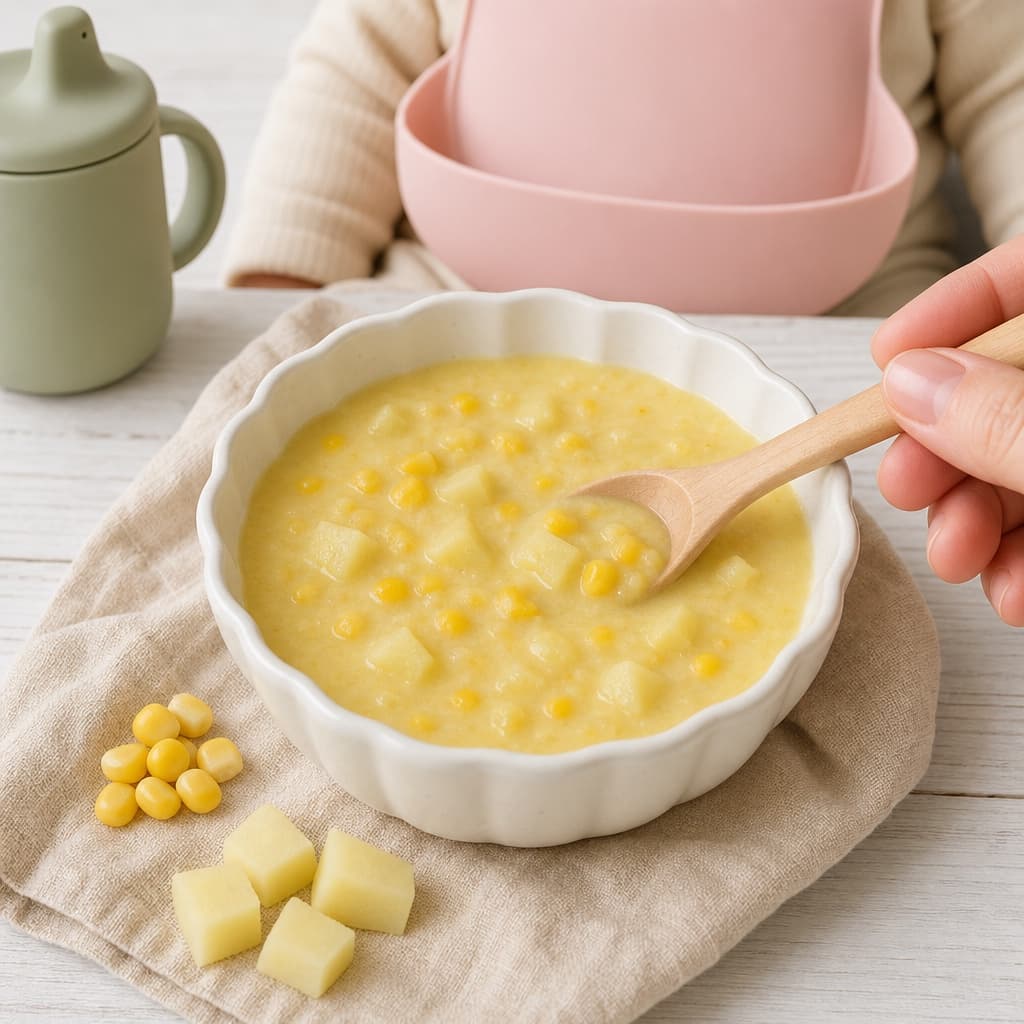
Sweetcorn Potato Chowder
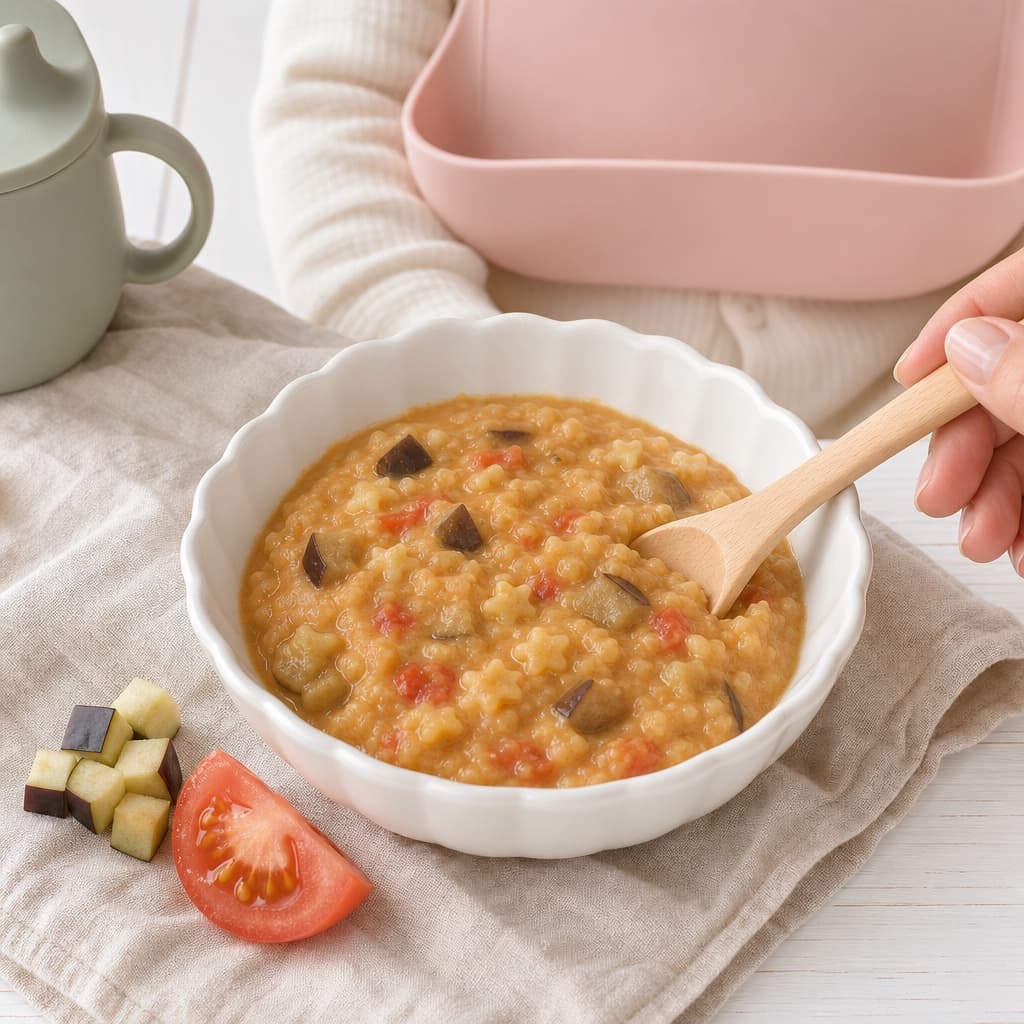
Eggplant Tomato Pasta Cream
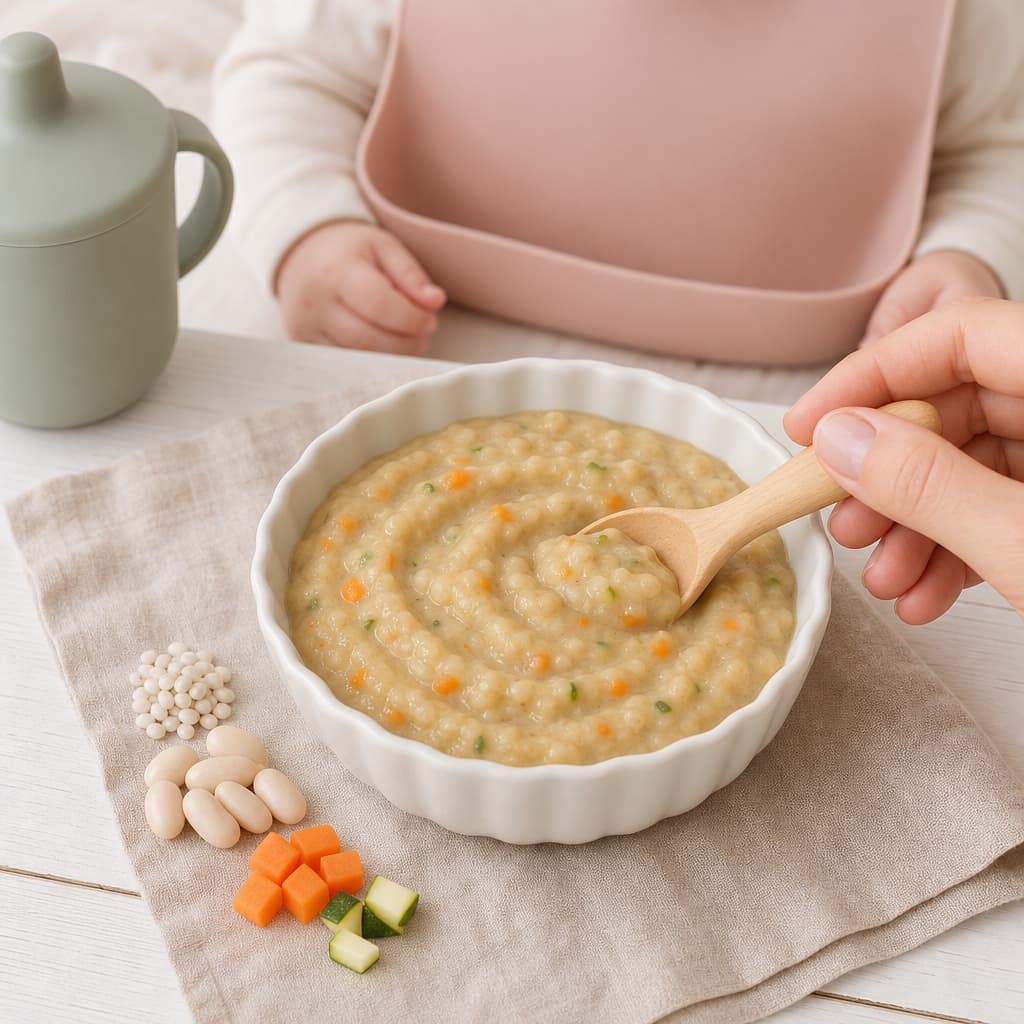
Mild Bean Barley Stew