What your 11 months old can do
Most 11 month olds are confident self-feeders. Your baby is likely picking up small pieces of food with a neat pincer grasp (thumb and forefinger) and bringing them to their mouth on their own. Many are starting to hold and drink from an open cup or straw cup with help, and some are experimenting with a spoon, even if most of the food still ends up everywhere but their mouth.
Chewing and mashing skills have come a long way. Even with only a few teeth, babies grind soft foods with their gums, so you can move beyond purees to soft lumps, minced meats, and small tender chunks. Offering a variety of textures now helps your baby learn to manage more complex foods and reduces the chance of picky eating later.
Breast milk or formula is still an important part of nutrition at 11 months, but solid foods are becoming the main source of calories and iron. Aim for three meals a day plus one or two snacks, and keep offering iron-rich and healthy-fat foods to support your baby's rapid growth and brain development.
Best foods for an 11 month old
Iron-rich meats (chicken, beef, turkey)
Well-cooked, finely minced or shredded meats give your baby the iron and protein they need as milk intake drops. Serve moist in soft strips your baby can hold, or mixed into mashed vegetables to keep it easy to chew.
Soft scrambled or hard-boiled eggs
Eggs are packed with protein and healthy fats and are easy for little hands to grab. Scramble them soft and fluffy, or offer wedges of hard-boiled egg cut into small strips or crumbled to avoid a choking hazard.
Full-fat plain yogurt
Plain whole-milk yogurt provides calcium, protein, and gut-friendly cultures. Serve it on its own or stirred with mashed fruit, and skip flavored or sweetened versions since babies under 1 do not need added sugar.
Beans and lentils
Cooked until very soft, beans and lentils are a great plant-based source of iron, protein, and fiber. Lightly mash larger beans between your fingers and serve them warm, alone or mixed into rice or vegetables.
Soft-cooked vegetables (broccoli, carrots, sweet potato)
Steam or roast vegetables until fork-tender so they mash easily with the gums. Offer them as spears or small soft pieces, and cut round shapes so nothing is coin-sized or firm enough to lodge in the throat.
Ripe soft fruit (banana, pear, peach, berries)
Naturally sweet fruit delivers vitamins, fiber, and hydration. Serve ripe fruit in small soft pieces or thin slices, and quarter grapes and cherry tomatoes lengthwise so they are never a choking risk.
Avocado
Creamy avocado is rich in the healthy fats that fuel brain growth. Serve it in soft slices your baby can grip, or mash it onto a strip of toast for an easy, nutritious meal or snack.
Well-cooked pasta
Soft pasta shapes like small shells, fusilli, or short penne are fun for practicing the pincer grasp. Cook until very tender and toss with a little olive oil, mashed vegetables, or a no-salt sauce.
Oatmeal and whole grains
Warm oatmeal, soft-cooked quinoa, or iron-fortified baby cereal make filling meals. Cook them soft and stir in mashed fruit or a spoonful of nut butter thinned with breast milk or water for extra nutrition.
Soft flaky fish
Mild fish such as salmon or cod offers protein and brain-boosting omega-3 fats. Cook it thoroughly, flake it carefully to remove every bone, and serve in small moist pieces or mixed with mashed potato.
Cheese
Pasteurized cheeses like mild cheddar or mozzarella add calcium and protein. Offer thin strips or grated shreds rather than cubes, which can be a choking hazard, and choose lower-sodium options when you can.
Whole-grain toast fingers
Lightly toasted whole-grain bread cut into strips is perfect for self-feeding. Spread with mashed avocado, a thin layer of nut butter, or hummus, and toast it firm enough that it does not turn gummy in the mouth.
Sample meals
- ★Breakfast: soft scrambled eggs with whole-grain toast fingers and a few soft banana pieces
- ★Lunch: shredded chicken with soft-cooked broccoli spears and cooked pasta shells
- ★Dinner: flaked salmon mixed with mashed sweet potato and steamed carrot sticks
- ★Snack: full-fat plain yogurt stirred with mashed berries
- ★Snack: avocado slices with grated cheese and quartered blueberries
Safety tips
- ✓Always cut round or firm foods safely: quarter grapes, cherry tomatoes, and blueberries lengthwise, and cut sausage-shaped foods into small strips rather than coins.
- ✓Avoid honey, added salt, and added sugar for the entire first year, and skip whole nuts, popcorn, hard raw vegetables, and other common choking hazards.
- ✓Keep meat, fish, and eggs moist and cooked through, and shred or mince tougher foods so your baby can manage them with their gums.
- ✓Always supervise your baby during meals, keep them seated upright in a high chair, and never let them eat while walking, crawling, or in the car seat.
- ✓Introduce common allergens like eggs, dairy, fish, and nut butters one at a time in small amounts, and watch for any reaction before adding another new food.
When to consult your doctor
Talk to your pediatrician if your baby consistently refuses solids, gags or chokes frequently, is not gaining weight as expected, or shows signs of a food allergy such as hives, swelling, vomiting, or trouble breathing. Your doctor can also advise you on iron and vitamin D needs and reassure you if you have any concerns about your baby's eating or growth.
Meal ideas for your 11 month old
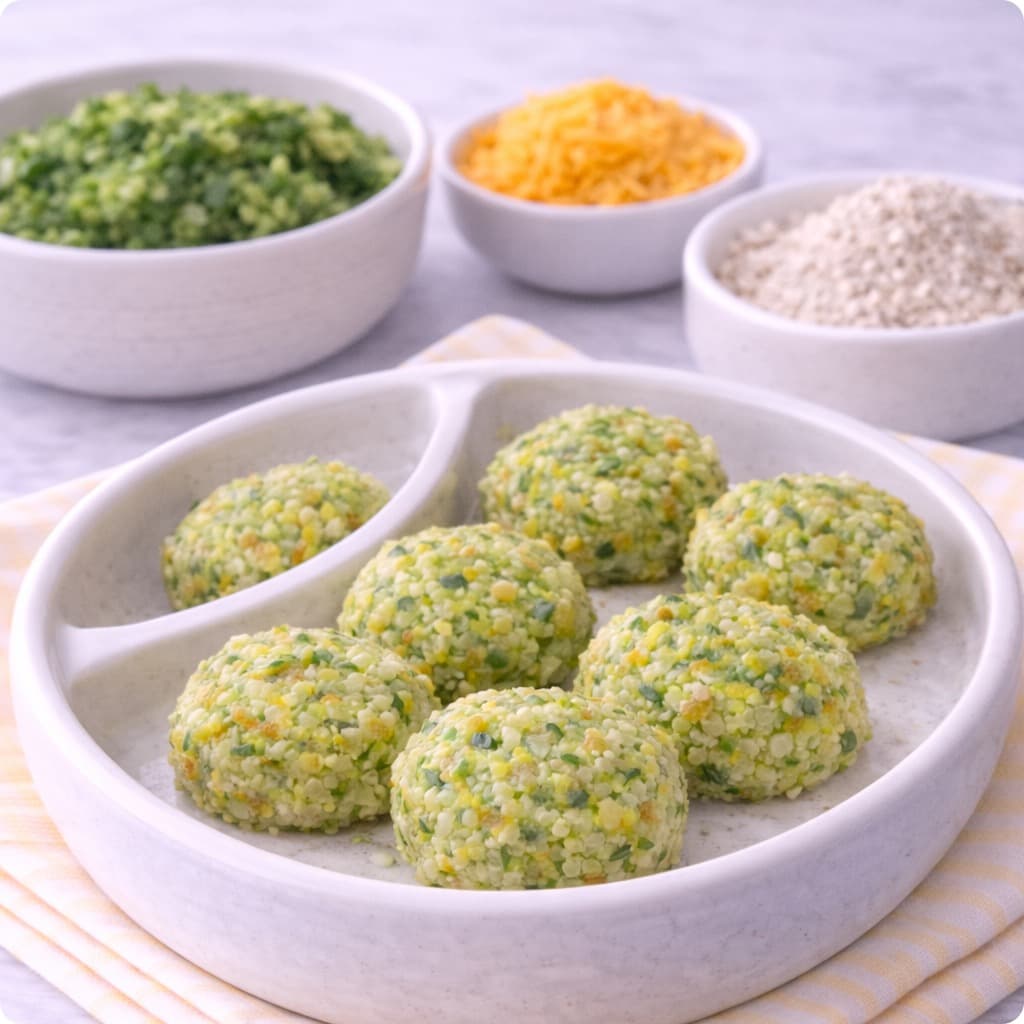
Broccoli Cheese Patties
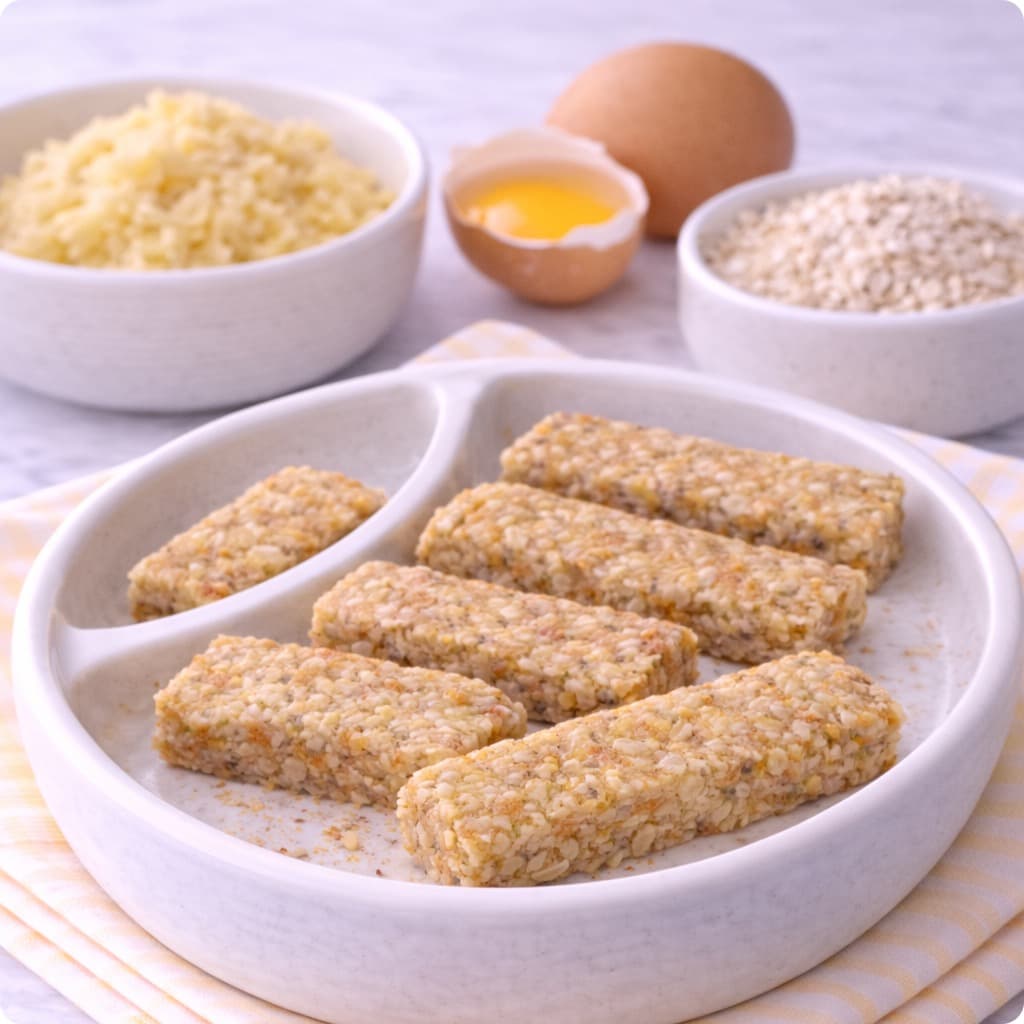
Apple Oat BLW Bars

Lentil Veggie Nuggets
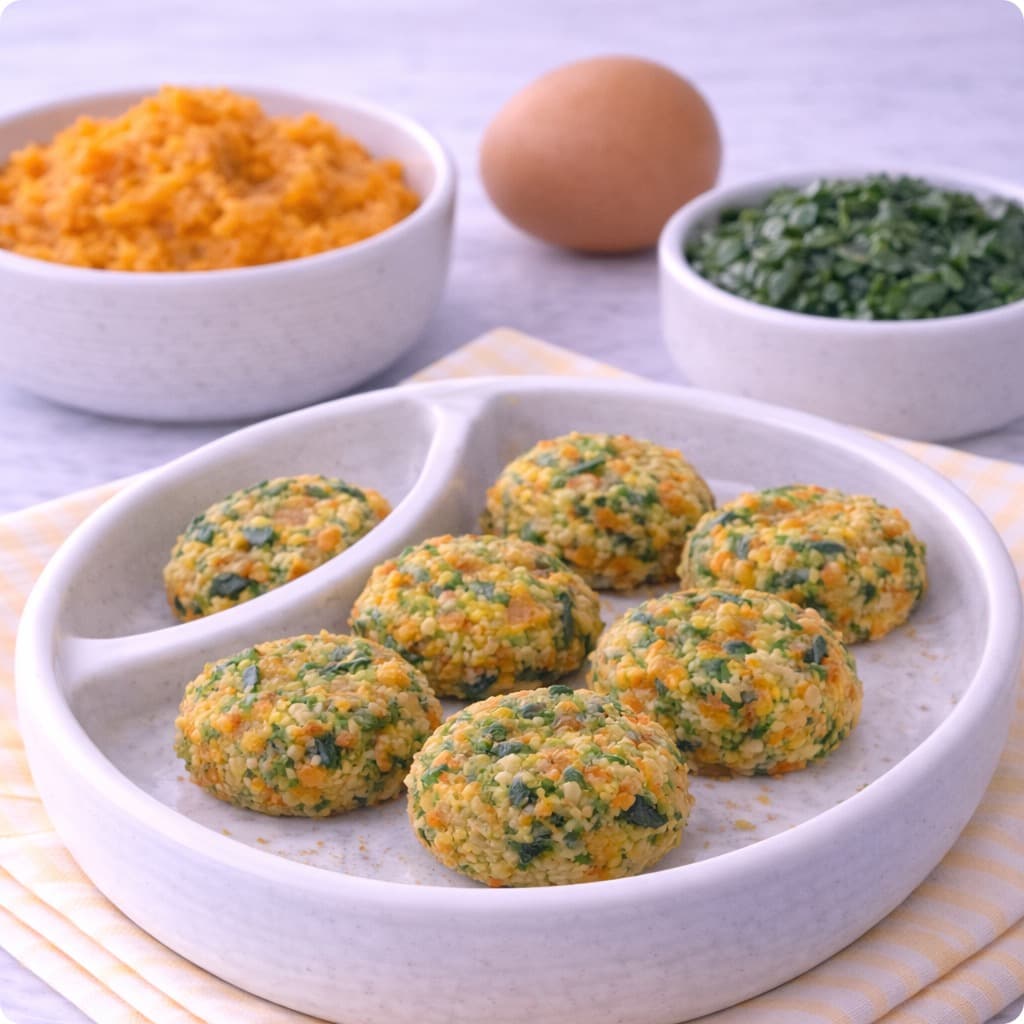
Sweet Potato Spinach Fritters
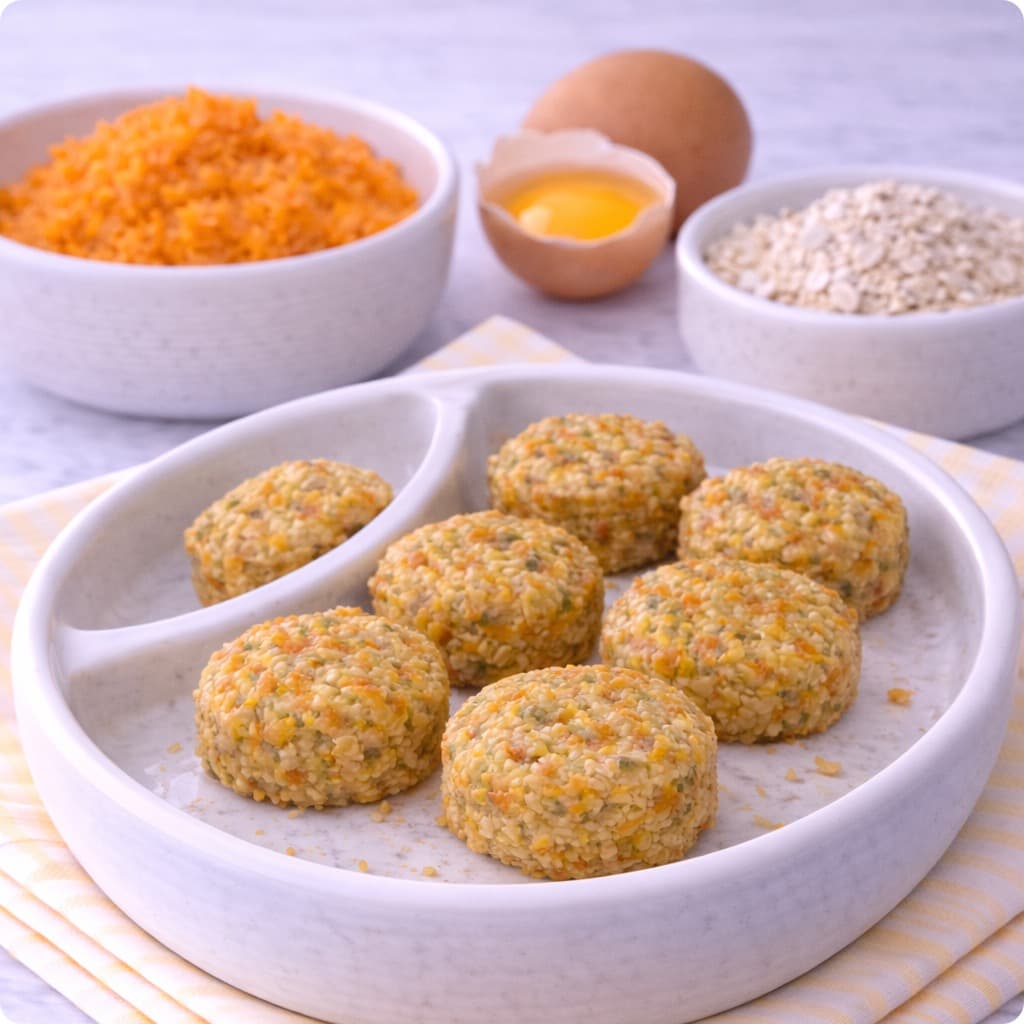
Carrot Oat BLW Muffins
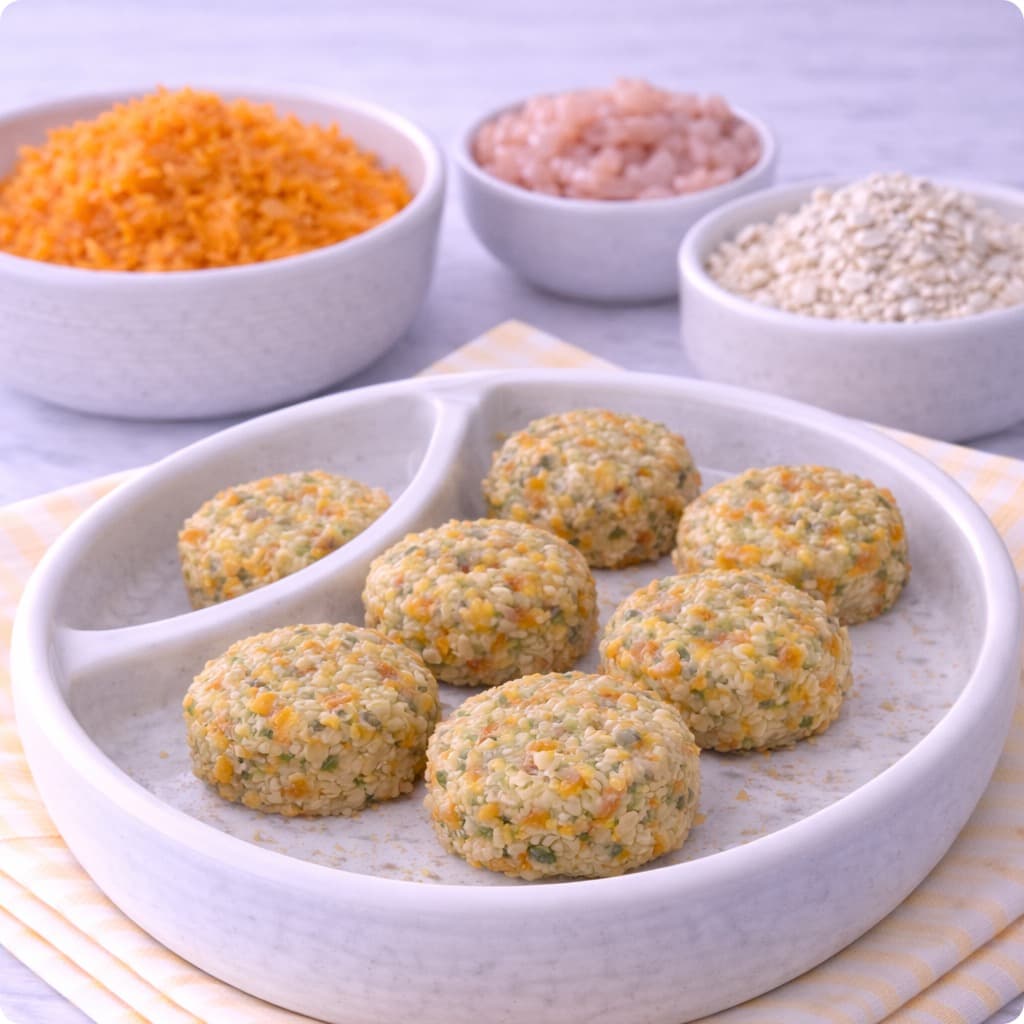
Chicken Veggie Nuggets
Frequently asked questions
How much should an 11 month old eat?
Most 11 month olds eat three meals plus one or two snacks a day, alongside breast milk or formula. Portion sizes vary a lot, so follow your baby's hunger and fullness cues rather than aiming for a set amount, and offer a variety of foods at each meal.
What finger foods are best for an 11 month old?
Great finger foods include soft-cooked vegetable pieces, ripe fruit, small pasta shapes, shredded meat, scrambled egg, grated cheese, and toast fingers. Cut everything into soft, small pieces your baby can pick up and mash easily with their gums.
Can my 11 month old eat what the rest of the family eats?
In many cases, yes. Your baby can share family meals as long as the food is made without added salt, sugar, or honey and is cut into safe, soft pieces. Set aside your baby's portion before adding seasoning, and avoid choking hazards like whole nuts and hard raw vegetables.
How much milk does an 11 month old need?
Babies this age typically drink around 16 to 24 ounces of breast milk or formula per day, though this varies. As solid meals grow, milk gradually becomes less central to nutrition, but it remains an important part of the diet until your baby turns one.
When can I introduce cow's milk?
Whole cow's milk as a main drink is generally recommended after your baby turns one, so continue breast milk or formula for now. You can still use small amounts of full-fat dairy like yogurt and cheese in your 11 month old's meals.
What foods should an 11 month old avoid?
Avoid honey, added salt and sugar, whole nuts, popcorn, hard raw vegetables, whole grapes and cherry tomatoes, chunks of hard cheese or meat, and any small round or firm foods that are choking hazards. Also skip unpasteurized foods and cow's milk as a main drink until age one.
My 11 month old refuses to eat. What should I do?
Appetite naturally varies, and some days babies eat much less than others. Keep offering a range of foods without pressure, let your baby explore and self-feed, and stay relaxed at mealtimes. If refusal is persistent or your baby is losing weight, check in with your pediatrician.
Get your baby's personalized feeding plan
A daily feeding schedule, 350+ age-matched recipes, allergen tracking and cutting guides - all tailored to your baby's age in the Nibli app.
verifiedSources & References
This guide is informed by current guidelines from leading health organizations: