What 7-month-olds can do at meals
By 7 months babies typically sit more steadily, hold larger pieces in a palm grasp with growing control, and start moving food side-to-side in the mouth (a precursor to chewing). Many begin showing interest in self-feeding from a spoon.
It's a great time to introduce more textured purees (slightly lumpy), mixed-texture meals, and additional finger foods - and to keep introducing common allergens, since the early-introduction window is well-established.
Top foods for 7-month-olds
Cooked lentils
Iron- and protein-rich. Cook until very soft, mash lightly, and offer as a thick puree or stirred into vegetable mash.
Quinoa
Complete protein and gentle texture. Cook until fluffy and serve mixed with mashed avocado or vegetable puree.
Soft pasta shapes
Small shapes like orzo, pastina, or stelline are easy to scoop. Cook past al dente and toss with a soft, unsalted sauce.
Ripe mango spears
Vitamin C and beta-carotene. Choose very ripe mango, cut into thick spears with a section of peel as a handle, or mash.
Soft peach wedges
Sweet and juicy. Use ripe peaches, peeled, cut into thick wedges - or roasted briefly to soften firmer fruit.
Salmon flakes
Omega-3 powerhouse. Bake or steam until cooked through, remove all bones, and flake into soft, fingertip-sized pieces.
Soft tofu fingers
Plant-based protein and calcium. Choose firm tofu, cut into long fingers, and pan-fry or bake briefly until lightly crisp outside.
Edamame (split lengthwise)
Complete plant protein and iron. Shell, steam very soft, then split each bean lengthwise. Soy is a top-9 allergen - keep it in the diet 2–3×/week.
Mashed black beans
An iron-rich Latin American staple. Mash well-cooked beans, mix with avocado or sweet potato, or smear on soft toast. Rinse canned beans to reduce salt.
Soft-cooked kale (chopped or in pancakes)
Exceptional vitamin K, vitamin C, and plant iron. Stem-stripped, steamed soft, then finely chopped into mashed potato cakes or egg-yolk fritters. Never raw.
Hummus
Iron, protein, and healthy fats. Choose a plain low-salt hummus and spread thinly on soft toast strips or use as a dip for vegetables.
Mild cheese (ricotta, fresh mozzarella)
Calcium and easy-to-chew protein. Stick to lower-sodium cheeses; offer as small soft pieces or mixed into pasta and vegetables.
Smooth nut butter (thin layer)
Once peanut has been safely introduced, spread thinly on toast strips. Never serve a thick blob - it's a choking risk.
Soft scrambled egg
High in choline and iron. Cook gently until just set and offer in soft, fluffy pieces or as omelet strips.
Sample meal combos at 7 months
- ★Mashed lentils + soft pasta shapes
- ★Salmon flakes + sweet potato mash
- ★Tofu fingers + steamed broccoli
- ★Plain yogurt + ripe mango spears
- ★Hummus on toast strips + soft pear slices
Safety tips for 7-month-olds
- ✓Continue palm-sized strips for finger foods; pincer-grasp size pieces aren't quite right yet.
- ✓Keep introducing allergens deliberately - egg, dairy, peanut, fish, wheat, soy, tree nuts, sesame.
- ✓Stay supervisor at every meal; eat together when you can.
- ✓Avoid added salt and sugar; choose plain whole-milk dairy, unsalted hummus, and home-cooked sauces.
- ✓Watch for delayed reactions: some babies show eczema flares or FPIES symptoms hours after eating a new food.
When to call your pediatrician
Call your pediatrician for any allergic reaction (hives, swelling, vomiting, wheezing), repeated gagging without progress, persistent feeding refusal lasting more than a week, or worsening eczema after introducing a new food. Trouble breathing or sudden lethargy are emergencies - call your local emergency number.
Recipes for 7-month-olds
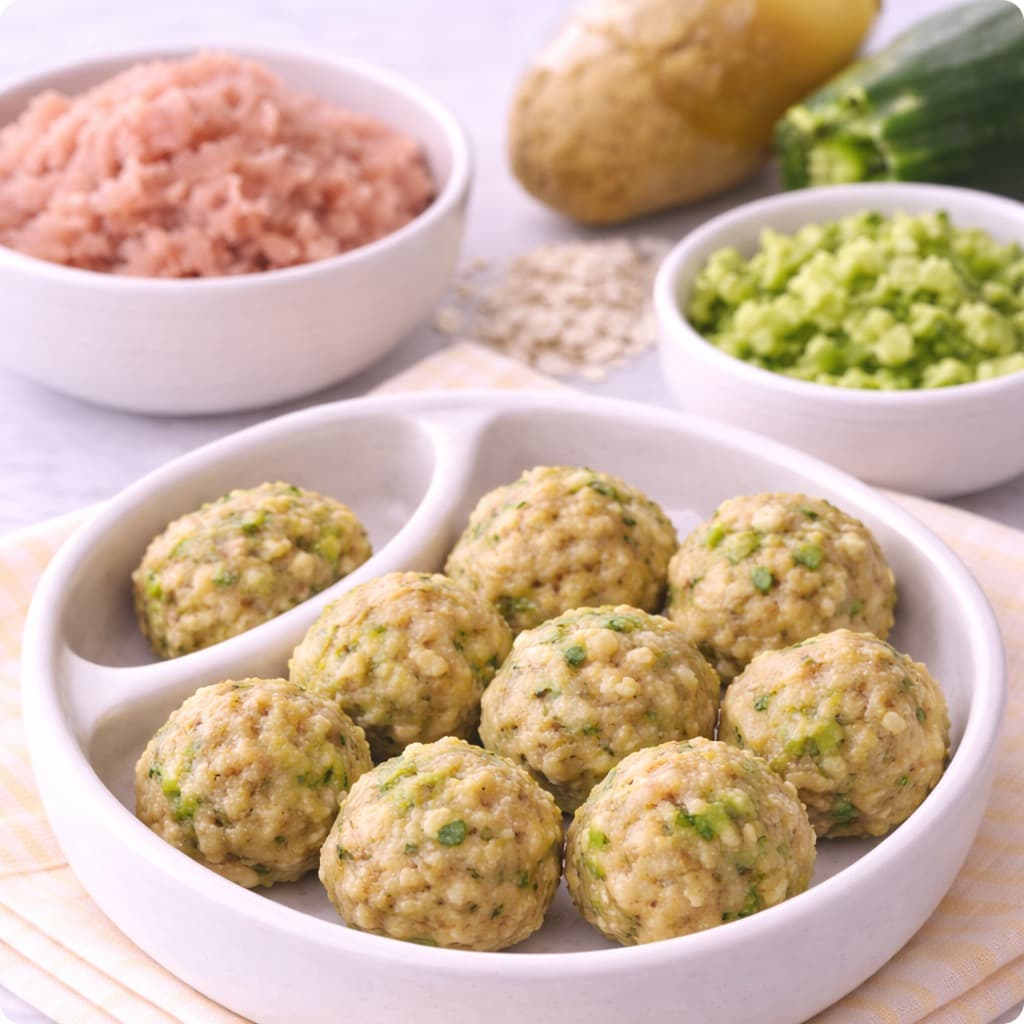
Turkey BLW Meatballs
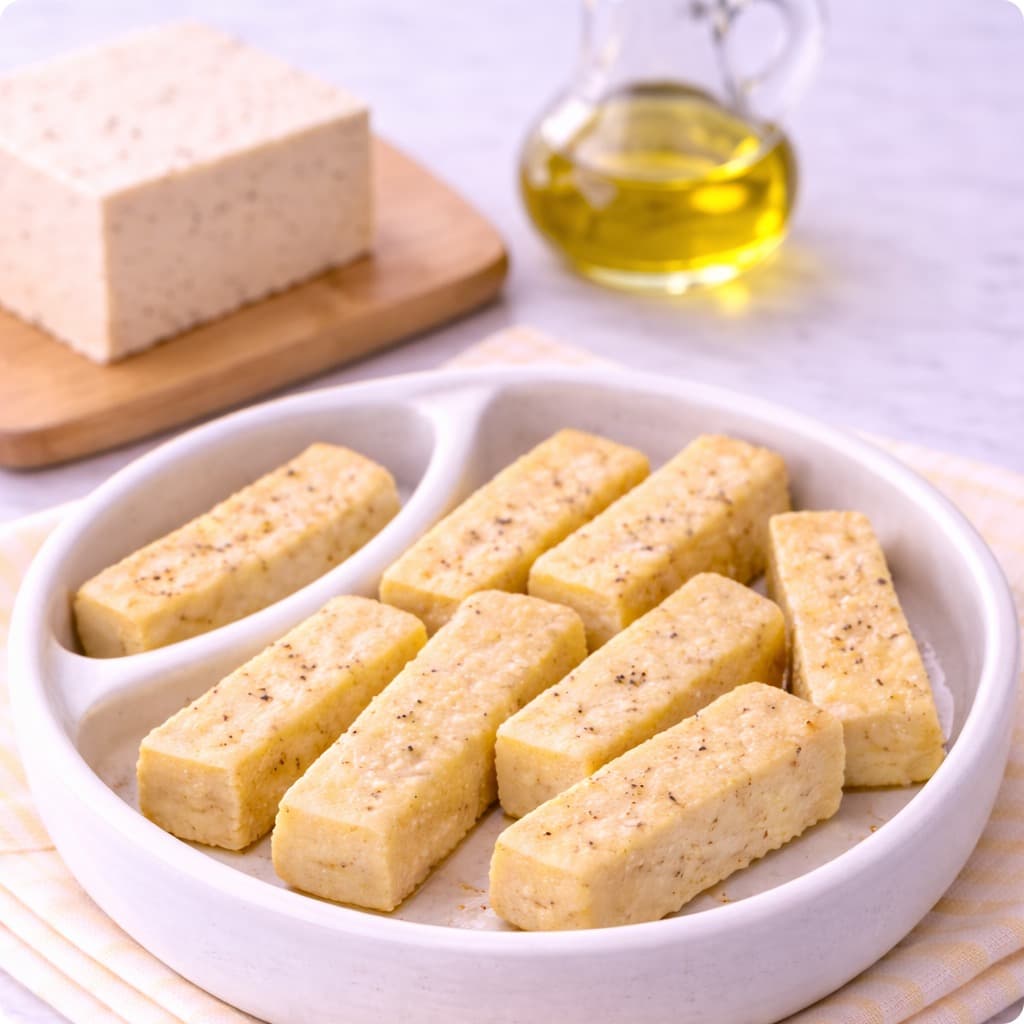
Tofu Finger Sticks
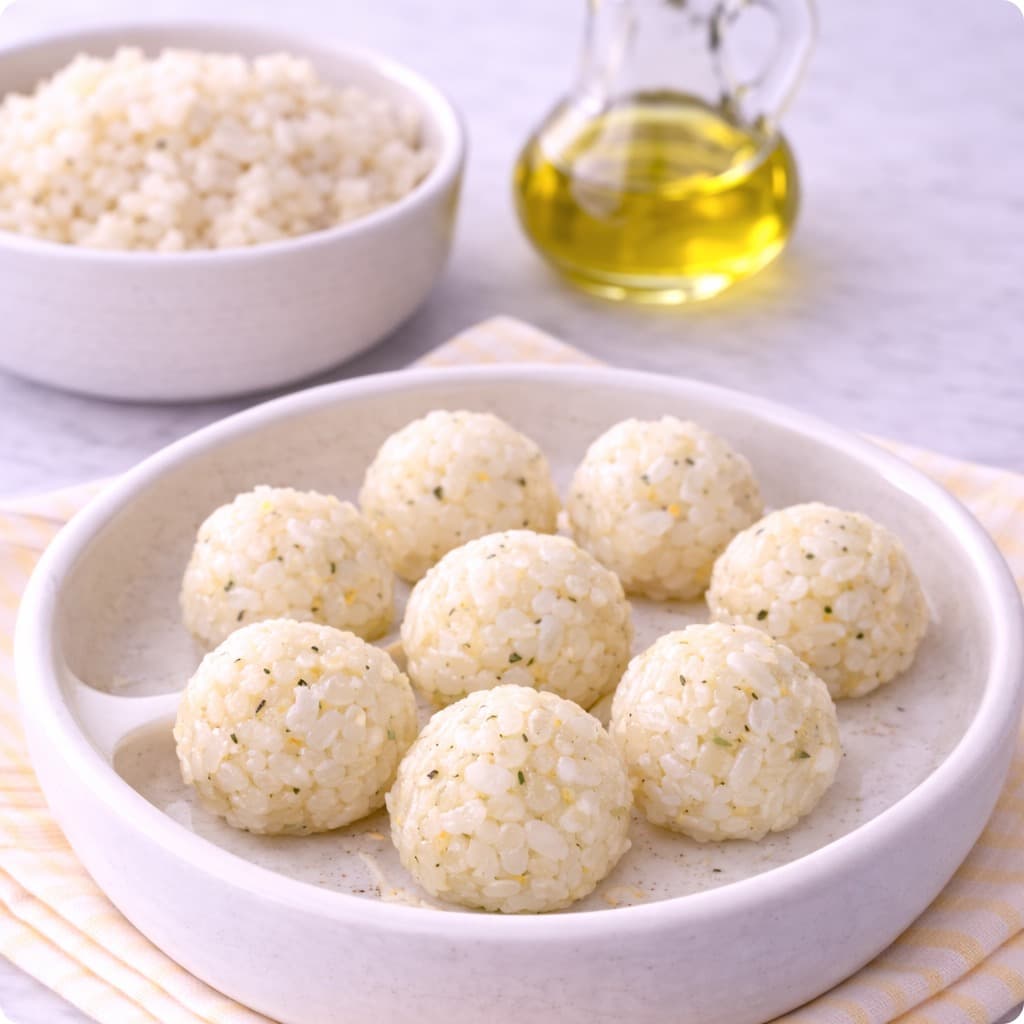
Rice Balls (Baby Rice Balls)
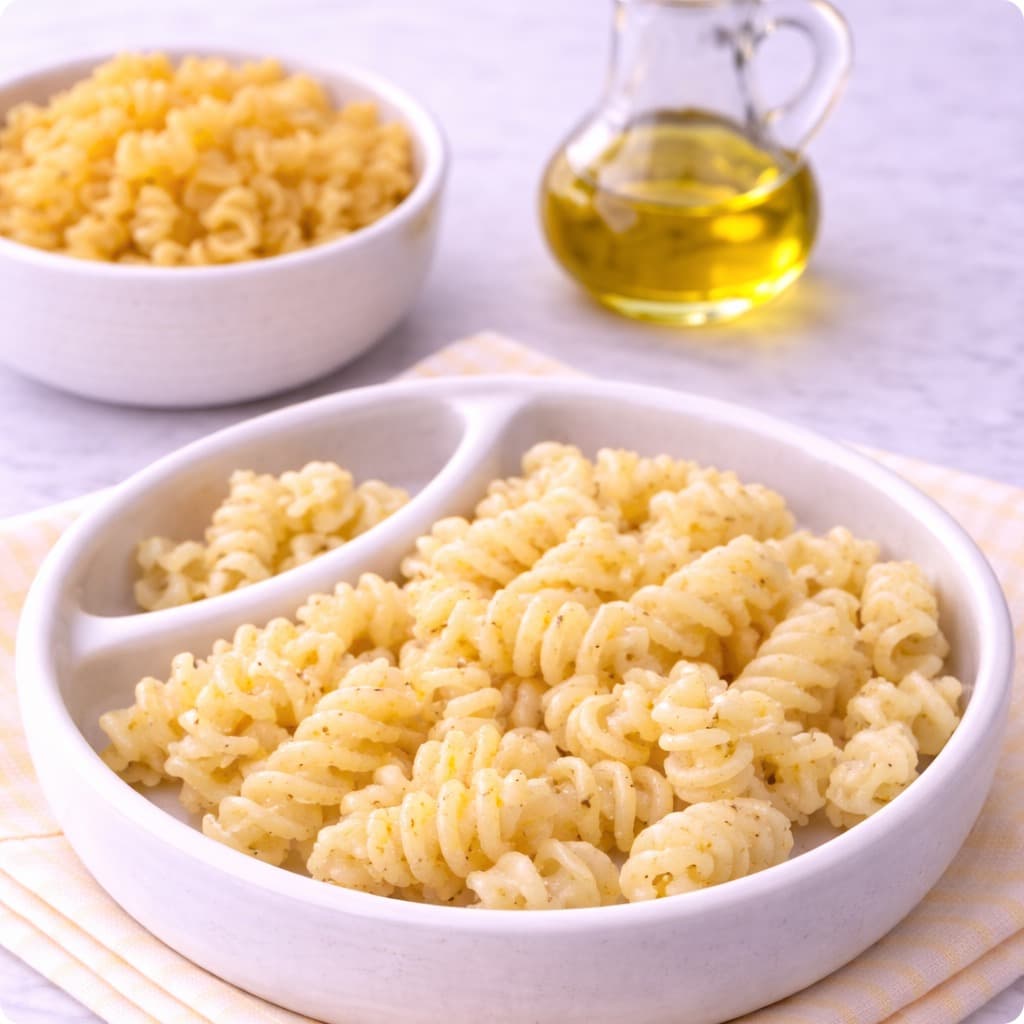
Soft Pasta Spirals
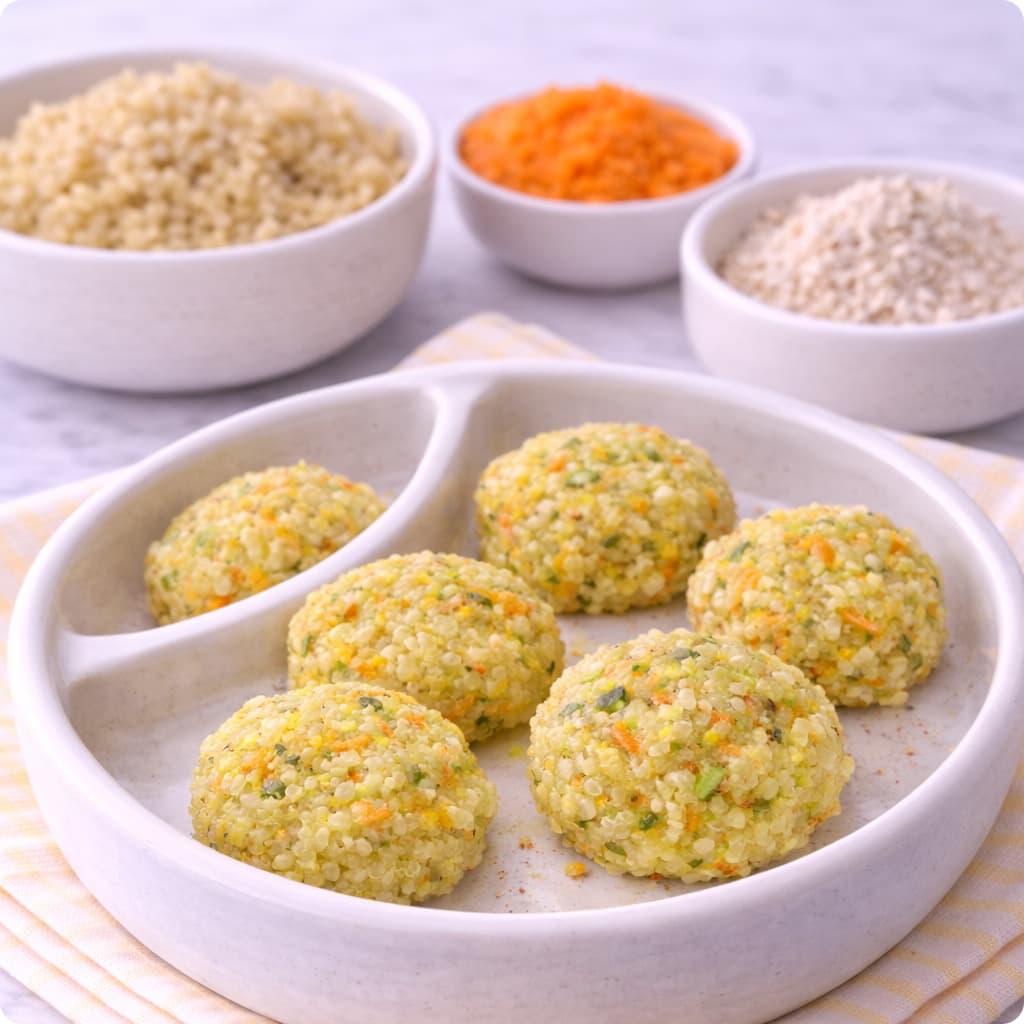
Quinoa Veggie Patties
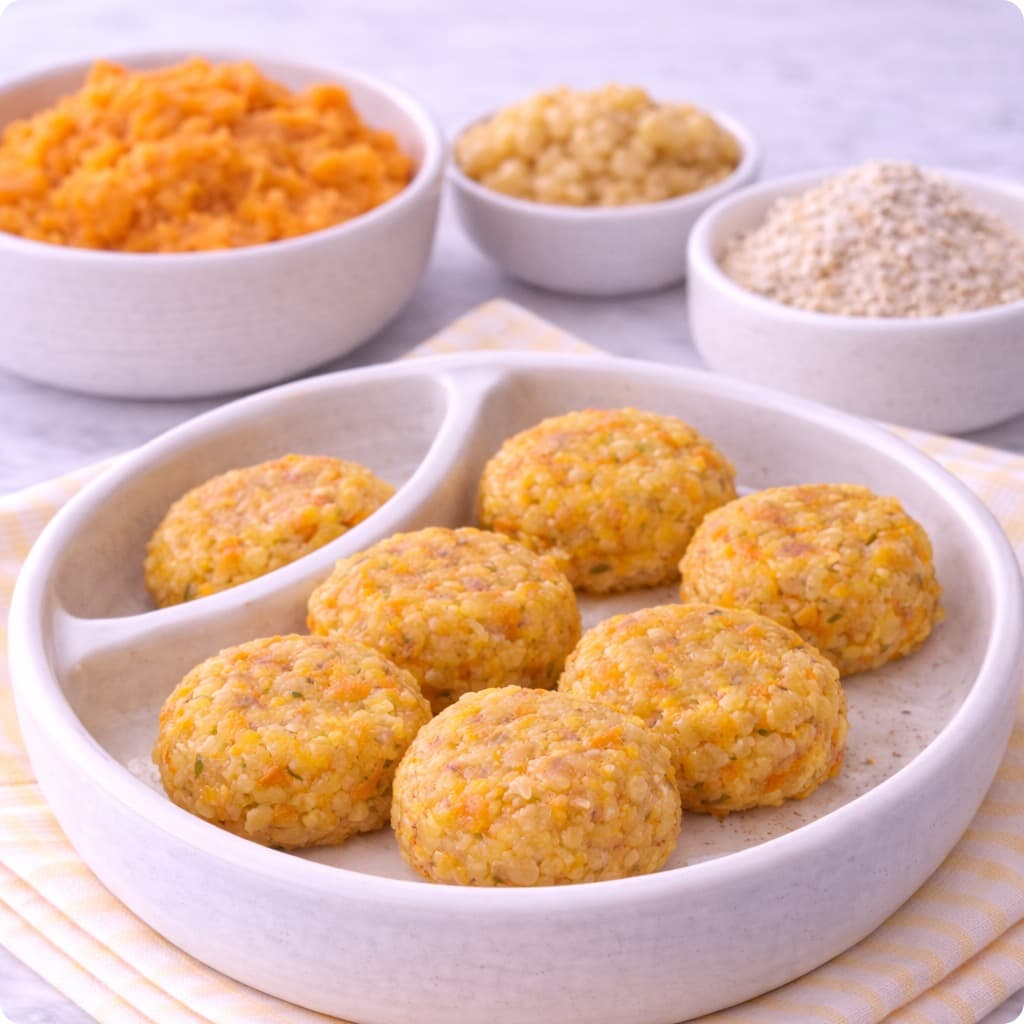
Sweet Potato Chickpea Patties
Frequently asked questions
How much should a 7-month-old eat per day?
Most 7-month-olds take 2-3 small solid meals per day plus 4-5 breast or formula feeds. Solid portions are still small (a few tablespoons) and your baby decides when they're full. Milk remains the main nutrition source through about 9-10 months.
Should I be giving my 7-month-old new textures?
Yes - 7 months is a great window to move from smooth purees to slightly lumpy textures, mashed foods with soft chunks, and continued finger foods. Texture exposure is linked to better acceptance later; staying smooth too long can make transitions harder.
Can my 7-month-old eat what we eat?
Often yes, with adjustments: no added salt, no whole nuts, no honey, soft textures, age-appropriate cuts. Pulling pieces of family meals (plain pasta, steamed vegetables, shredded chicken) keeps mealtimes simple and exposes baby to family flavors.
What if my baby gags on new textures?
Gagging is the body's protective reflex pushing food forward and is loud and noisy - not the same as silent choking. It usually decreases as your baby learns to manage texture. Stay calm, keep portion sizes small, and don't intervene unless your baby is silent and unable to breathe.
Should I still be doing allergen introduction?
Yes, continue offering each common allergen at least once a week to maintain tolerance once introduced. Babies who eat allergens regularly are less likely to develop allergies than those who only had a single early exposure.
Can a 7-month-old have water?
Yes - small sips of water with meals are fine, ideally from an open cup or straw cup. Keep amounts small (a few sips per meal); too much water can crowd out milk and food.
What if my baby still won't eat from a spoon?
Many babies prefer self-feeding - which is fine. Pre-load a spoon and pass it to your baby, or stick to soft, nutritionally dense finger foods. As long as your baby is offered regular meals and growing well, the path matters less than the variety.
Get your baby's personalized feeding plan
A daily feeding schedule, 350+ age-matched recipes, allergen tracking and cutting guides - all tailored to your baby's age in the Nibli app.
verifiedSources & References
This guide is informed by current guidelines from leading health organizations: