What your 9 months old can do
Around 9 months, many babies are sitting steadily, picking up smaller pieces of food with a developing pincer grasp (thumb and forefinger), and bringing food to their mouth on their own. You may notice more chewing and mashing motions, even before all their teeth have come in, since gums do a lot of the work at this stage.
Your baby is ready for more texture now. Instead of thin, smooth purees, you can offer thicker mashes with small soft lumps, minced foods, and soft finger foods they can hold. Letting your baby practice picking things up and feeding themselves helps build hand-eye coordination and encourages a healthy relationship with food.
Every baby moves at their own pace, so some will be grabbing everything in sight while others prefer being spoon-fed a little longer. Follow your baby's cues, keep mealtimes relaxed, and remember that milk feeds still provide most of their calories and nutrients right now.
12 great foods for a 9-month-old
Iron-fortified oatmeal
Iron is a key nutrient at this age, and fortified oatmeal is an easy way to include it. Cook it thicker than you did a few months ago and stir in mashed fruit or a spoonful of full-fat plain yogurt for flavor and calories.
Soft scrambled eggs
Eggs offer protein, iron, and healthy fats, and fully cooked scrambled eggs are soft and easy to pick up. Cut into small, pea-sized pieces or strips your baby can grasp, and serve them well cooked with no runny parts.
Well-cooked, shredded chicken
Chicken provides protein and iron for growth. Cook it until tender and finely shred or mince it so it is easy to gum, or mix it into a mash or sauce so it stays moist and simple to swallow.
Mashed or flaked salmon
Salmon is rich in omega-3 fats that support brain development. Cook it thoroughly, then flake it carefully to remove every bone and mash it with a little avocado or sweet potato so the texture is soft and moist.
Soft-cooked broccoli florets
Broccoli adds vitamin C and fiber, and the little florets make a natural handle for tiny hands. Steam or boil until very soft so it squishes easily between your fingers before you offer it.
Steamed carrot sticks
Carrots bring beta-carotene and natural sweetness that many babies enjoy. Cook them until soft enough to mash with gentle pressure, and cut into finger-length sticks rather than coins, which can be a choking risk.
Ripe avocado
Avocado is packed with healthy fats and has a naturally creamy, soft texture. Serve it mashed on a preloaded spoon or cut into soft strips; rolling the strips in a little baby cereal can make them easier to grip.
Soft ripe banana
Bananas offer potassium and quick energy in a sweet, easy-to-mash package. Break into short pieces or offer half a peeled banana as a whole handle, and lightly mash if the piece feels too slippery to hold.
Full-fat plain yogurt
Yogurt supplies calcium, protein, and fat, and its smooth texture is perfect for spoon practice. Choose unsweetened, full-fat plain yogurt and stir in mashed fruit for flavor instead of adding sugar or honey.
Soft-cooked pasta
Small pasta shapes give your baby carbohydrates for energy and fun self-feeding practice. Cook until very soft, toss with a little olive oil or a smooth veggie sauce, and choose shapes like fusilli or small shells that are easy to grasp.
Mashed beans or lentils
Beans and lentils are a great plant-based source of iron and protein. Cook until very soft and mash well to smooth the skins, then serve on their own or mixed into rice, soft veggies, or a mild stew.
Soft ripe pear
Pears are gentle on tummies and provide fiber and vitamin C. Steam slices until very soft if the pear is firm, or offer soft ripe pear cut into strips or mashed so it is easy to gum and swallow.
Sample meals
- ★Breakfast: Iron-fortified oatmeal stirred with mashed banana and a spoonful of full-fat yogurt
- ★Lunch: Soft scrambled egg pieces with steamed broccoli florets and soft avocado strips
- ★Dinner: Finely shredded chicken mixed with mashed sweet potato and soft-cooked carrot sticks
- ★Meat-free meal: Mashed lentils with soft-cooked pasta and steamed broccoli
- ★Snack: Full-fat plain yogurt with mashed ripe pear
Safety tips
- ✓Always seat your baby upright in a high chair for meals and stay close and supervising the entire time they are eating.
- ✓Cook fruits and vegetables until soft enough to squash easily between your finger and thumb, and cut foods into finger-length strips rather than round coins or slices.
- ✓Skip common choking hazards like whole grapes, cherry tomatoes, nuts, popcorn, raw carrot, and chunks of hard fruit or raw veggies.
- ✓Do not add salt, sugar, or honey to your baby's food; honey should be avoided entirely until after their first birthday.
- ✓Learn the difference between gagging (loud, part of normal learning) and choking (silent), and consider taking an infant first-aid or CPR class for peace of mind.
When to talk to your doctor
Check in with your pediatrician if your baby consistently refuses solids, is not yet able to sit with support, seems to be losing weight, or has signs of a food allergy such as hives, swelling, vomiting, or trouble breathing after eating. Every baby develops differently, so your doctor is the best person to reassure you or address any specific feeding concerns.
Foods and meal ideas for your 9-month-old
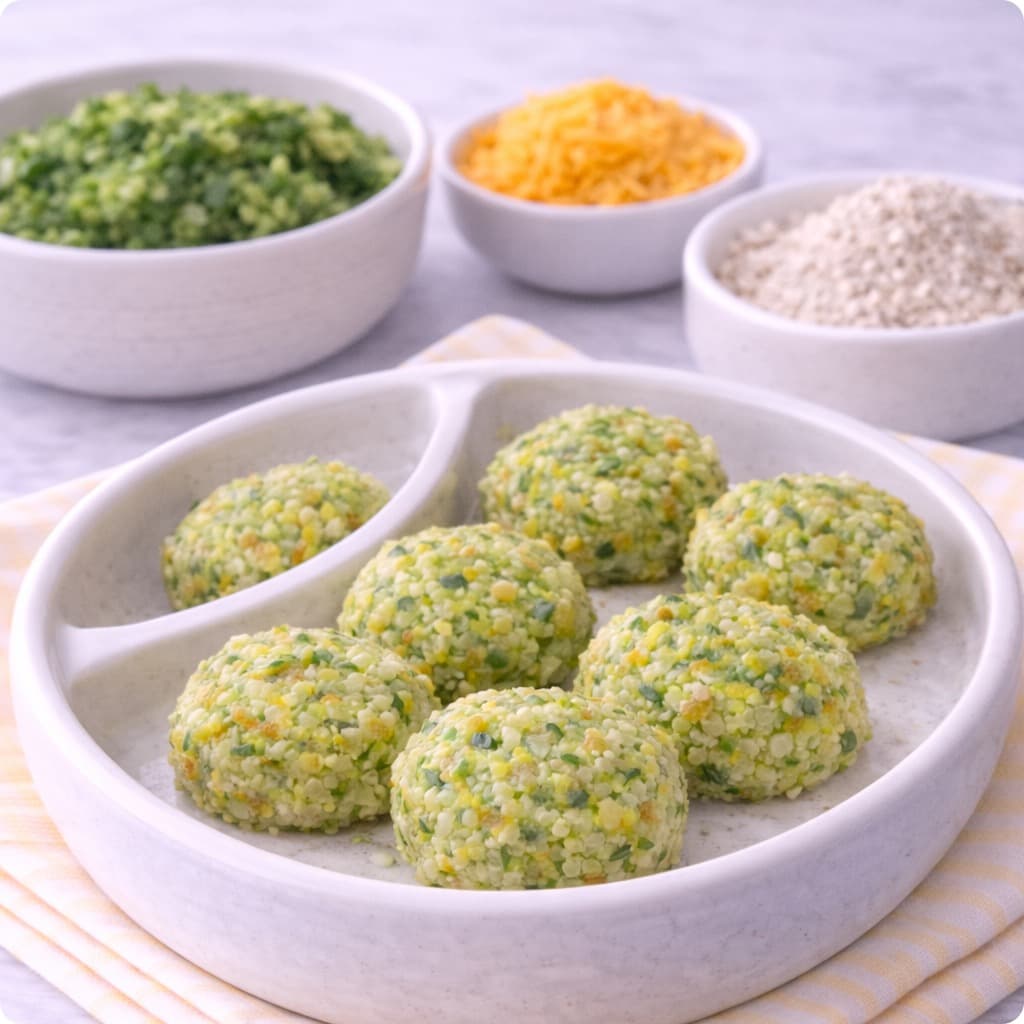
Broccoli Cheese Patties
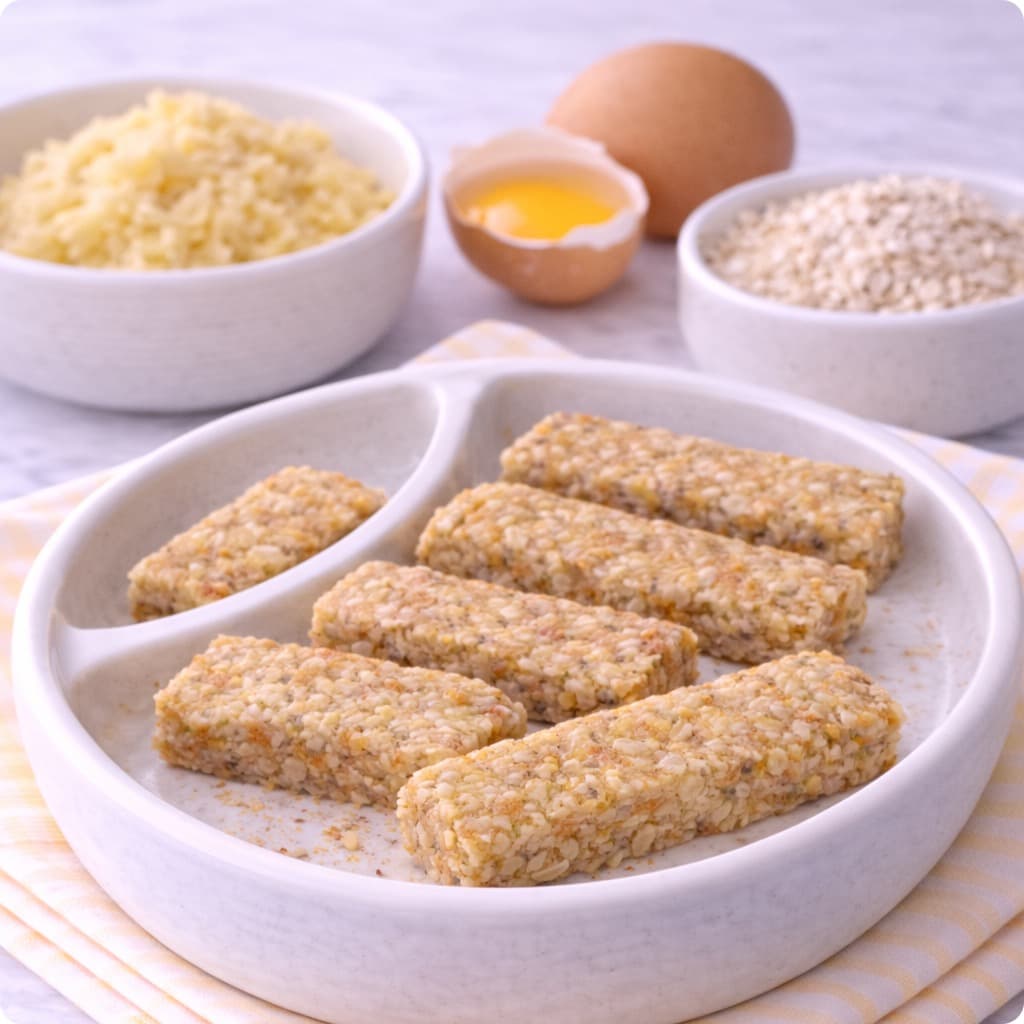
Apple Oat BLW Bars

Lentil Veggie Nuggets
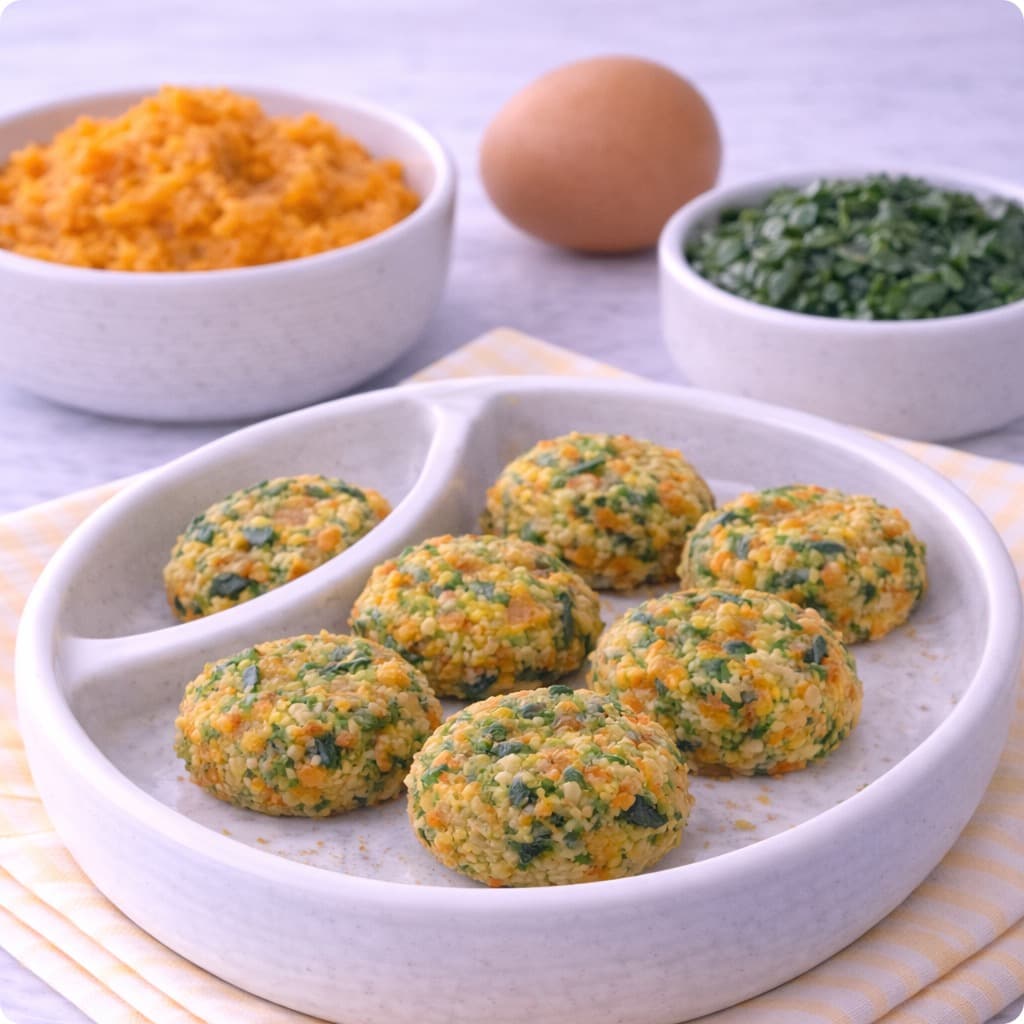
Sweet Potato Spinach Fritters
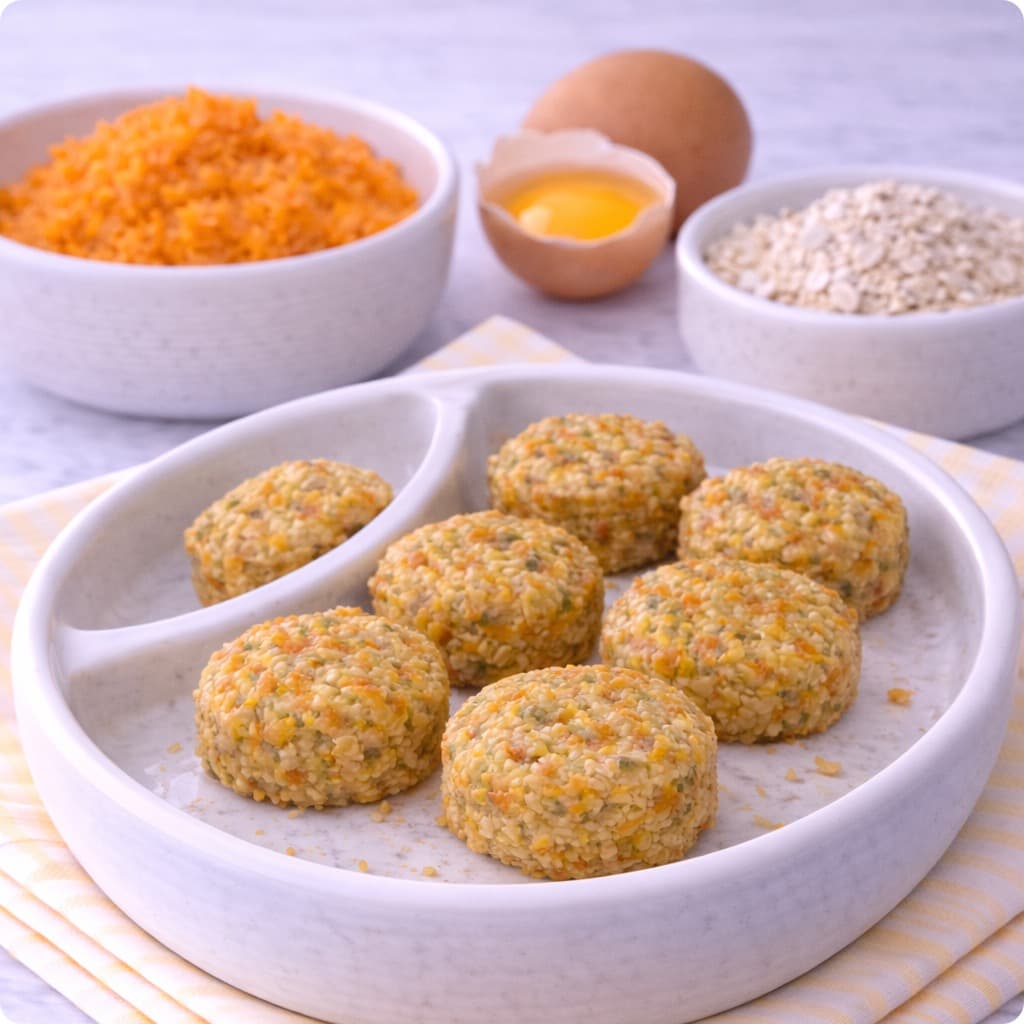
Carrot Oat BLW Muffins
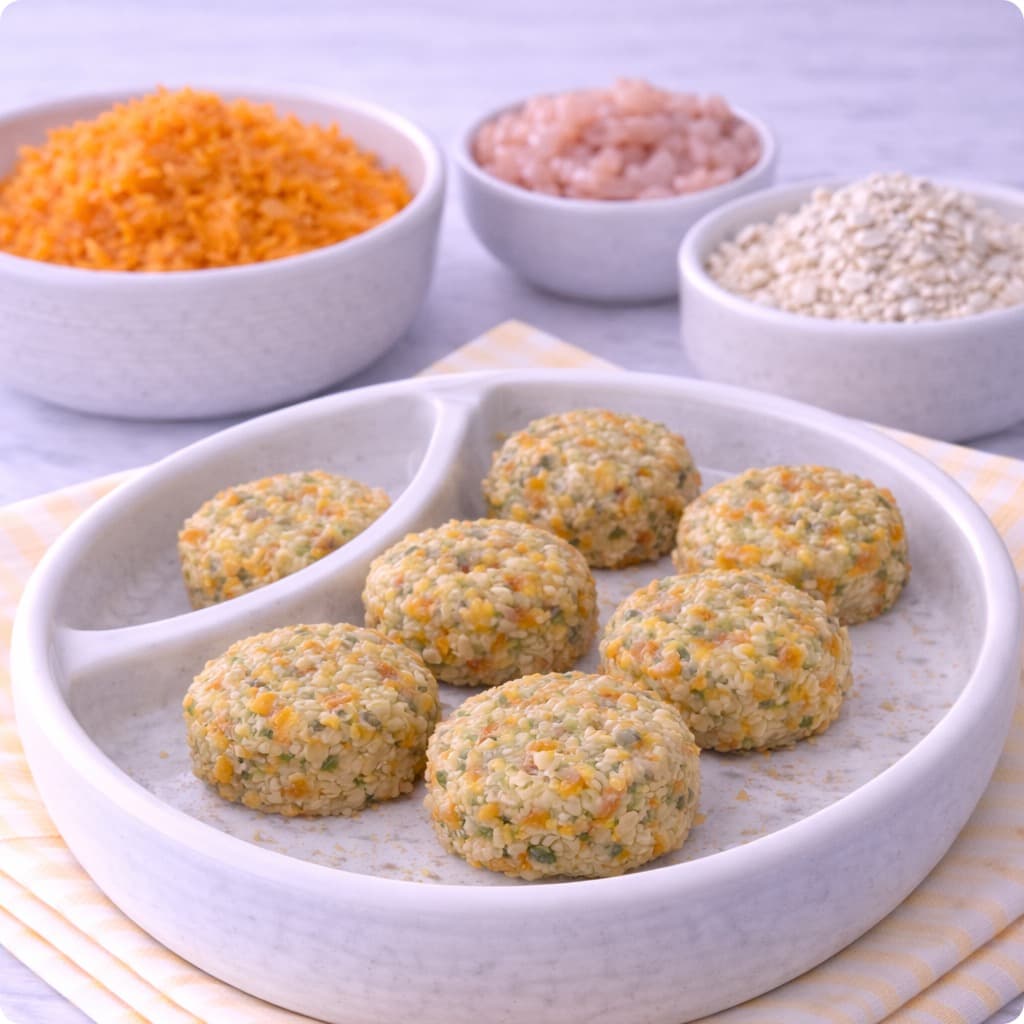
Chicken Veggie Nuggets
Frequently asked questions
How much should a 9-month-old eat?
Most 9-month-olds eat about three meals a day plus one or two small snacks, alongside their usual breast milk or formula feeds. Portion sizes vary a lot from baby to baby, so let your little one's appetite guide you rather than aiming for a set amount. Milk still provides most of their nutrition at this age.
How many milk feeds does a 9-month-old still need?
At 9 months, babies typically still have around three to four breast milk or formula feeds a day, roughly 24 to 30 ounces of formula if bottle-feeding. Breast milk or formula remains their main source of nutrition until 12 months, with solids gradually filling in around it.
What finger foods are best for a 9-month-old?
Great finger foods include soft-cooked broccoli florets, steamed carrot sticks, soft ripe banana, avocado strips, well-cooked pasta, and small pieces of scrambled egg. Aim for foods that are soft enough to squash easily and cut into shapes your baby can grip, like sticks or florets.
Can my 9-month-old eat eggs?
Yes, fully cooked eggs are a nutritious choice at 9 months and can be offered as scrambled pieces, strips of omelet, or mashed into other foods. Serve them well cooked with no runny parts. Egg is a common allergen, so if it is new, offer a small amount and watch for any reaction.
What foods should I avoid giving a 9-month-old?
Avoid honey until after age one, and skip added salt and sugar. Steer clear of choking hazards such as whole grapes, cherry tomatoes, nuts, popcorn, raw carrot, hard chunks of fruit or veg, and large spoonfuls of sticky foods like nut butter. Always cut foods to a safe size and shape.
Is my 9-month-old ready for more textured food?
Most babies are ready for thicker mashes with soft lumps, minced foods, and soft finger foods by 9 months. Moving beyond smooth purees now helps your baby learn to chew and reduces the chance of them refusing lumps later. Offer a variety of textures and follow your baby's cues.
How do I introduce a new food safely at 9 months?
Offer one new food at a time in a small amount, ideally earlier in the day so you can watch for any reaction. Wait a couple of days before adding another new food. If your baby has hives, swelling, vomiting, or trouble breathing, stop and contact your doctor right away.
Get your baby's personalized feeding plan
A daily feeding schedule, 350+ age-matched recipes, allergen tracking and cutting guides - all tailored to your baby's age in the Nibli app.
verifiedSources & References
This guide is informed by current guidelines from leading health organizations: