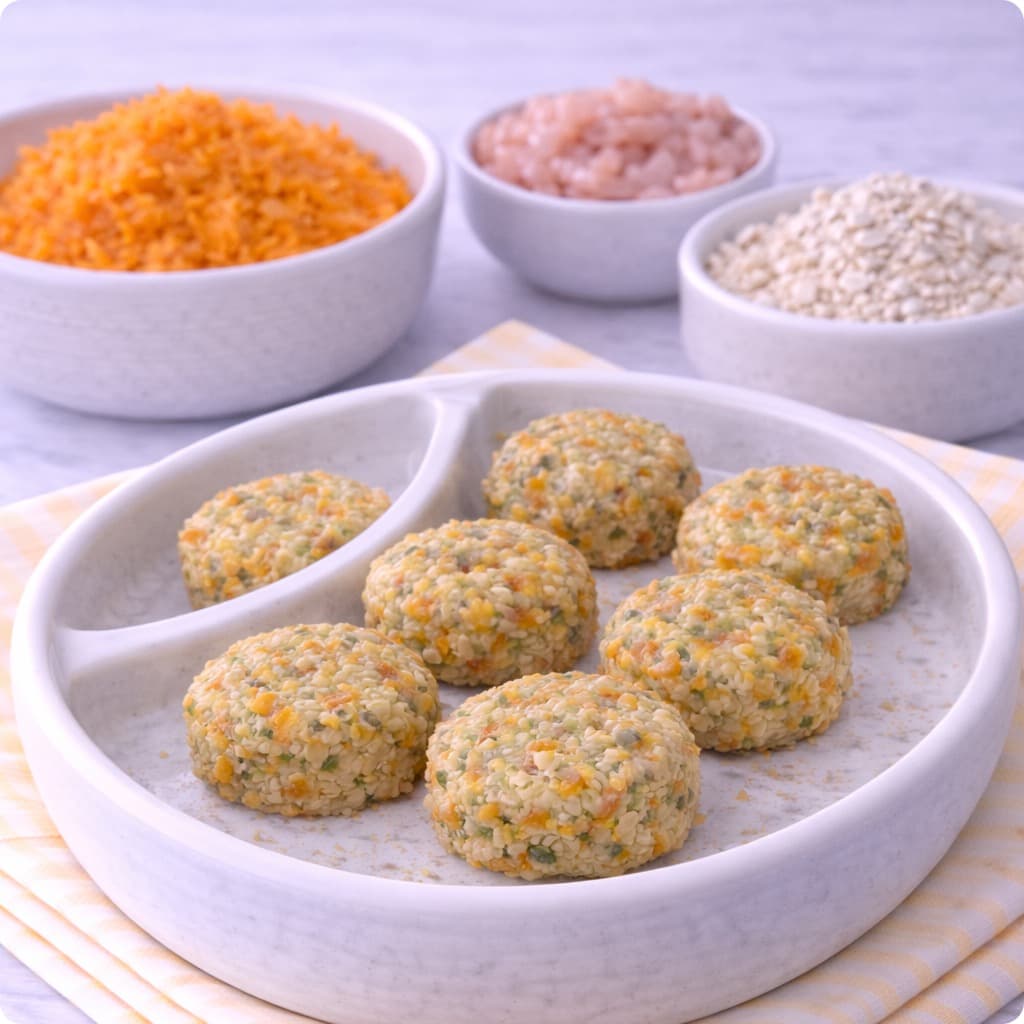
Lunch at 8 months: what to expect
Most 8-month-olds eat 2-3 meals a day alongside 4-5 milk feeds, and lunch often lands in the best-mood window between naps. The pincer grasp is starting to emerge, so babies begin picking up smaller pieces, though palm-raking is still common. Offer a mix of graspable strips and thicker mashes on a preloaded spoon.
Iron matters most right now. The American Academy of Pediatrics notes that iron stores from birth are running low by this age, so anchor lunch with an iron source: lentils, shredded meat, egg, beans, or flaked fish. Pairing iron-rich foods with vitamin C (tomato, broccoli, strawberries) helps absorption from plant sources.
Sample lunches for an 8-month-old
- Avocado toast strips + shredded chicken + steamed broccoli florets
- Lentil mash on a preloaded spoon + sweet potato wedges + pear slices
- Egg strips + soft pasta pieces + halved blueberries
- Flaked salmon + mashed sweet potato + steamed zucchini sticks
- Shredded chicken + rice mashed with tomato sauce + soft peach pieces
- Yogurt with mashed banana + toast strips with thin hummus spread
Easy lunch ideas for 8-month-olds

Avocado toast strips
Lightly toasted bread cut into finger-length strips and spread with mashed avocado. Soft enough to gum, sturdy enough for a palm grasp.

Shredded chicken
Slow-cooked or poached chicken thigh shredded into soft, moist strands. One of the easiest iron-rich lunch anchors at this age.

Lentil mash
Red lentils cooked soft and mashed thick, no salt added. Serve on a preloaded spoon or spread on toast strips for self-feeding.

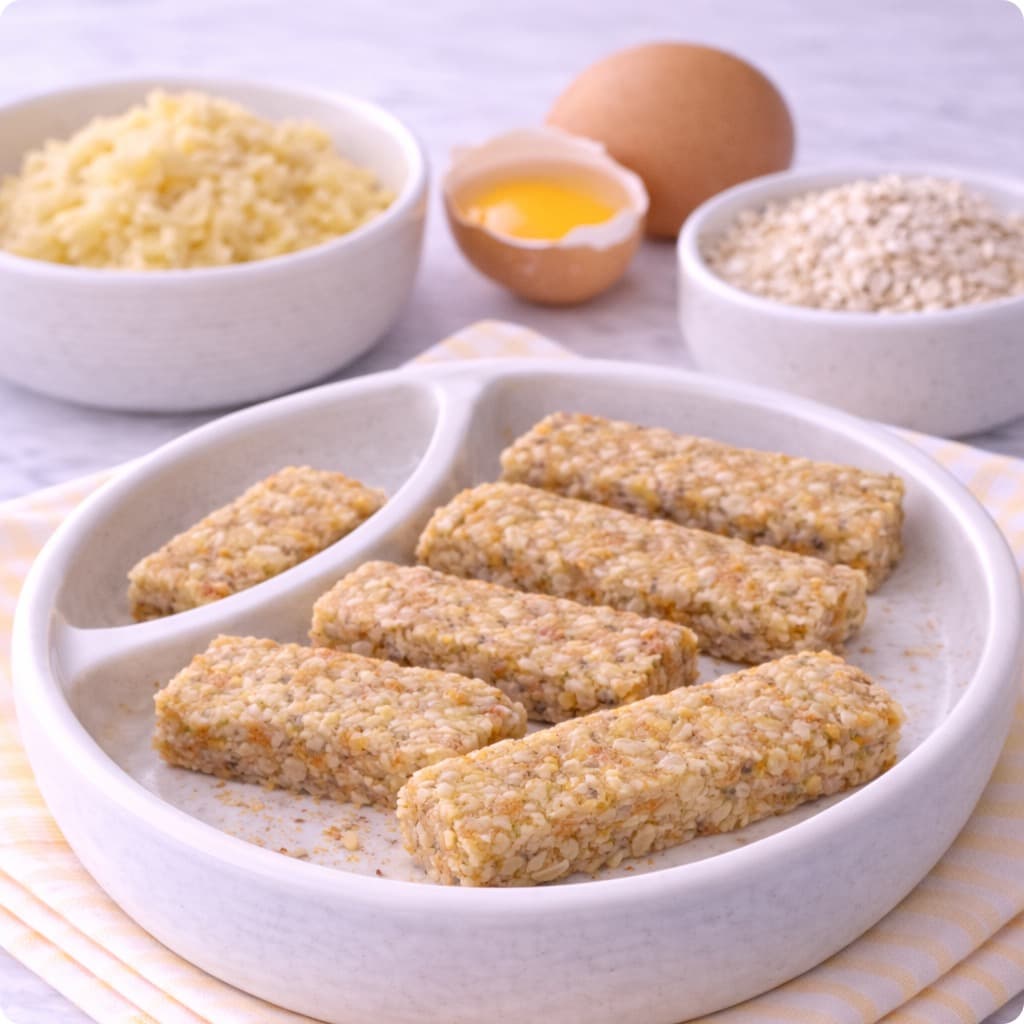
Egg strips
A fully cooked omelet or scrambled egg pressed flat and cut into strips. Iron, protein, and regular allergen exposure in one food.

Sweet potato wedges
Roasted or steamed until very soft, cut into finger-length wedges. Pairs well with shredded meat or lentil mash.

Flaked salmon
Baked salmon flaked into small pieces, all bones removed. Rich in omega-3s and easy to pick up or stir into a mash.

Steamed broccoli florets
Small florets steamed until soft with the stem left as a handle. The vitamin C also boosts iron absorption from plant foods at the same meal.
Soft pasta pieces
Well-cooked pasta shapes like spirals or penne, tossed with olive oil or an unsalted vegetable sauce. Great pincer-grasp practice.
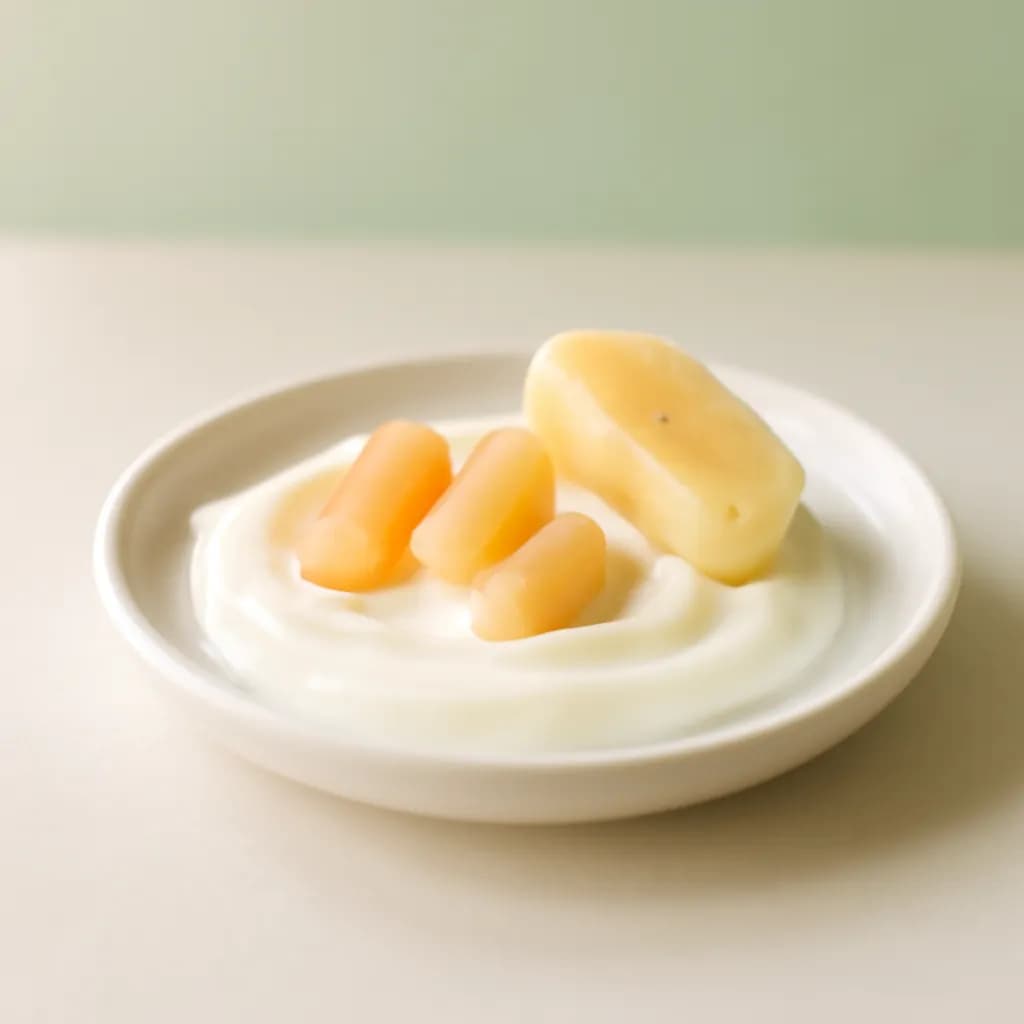
Yogurt with mashed fruit
Plain whole-milk yogurt stirred with mashed banana, pear, or strawberries. A simple thicker-texture course to round out lunch.
Lunch safety tips for 8-month-olds
- Always supervise, with baby seated upright in a highchair, never eating while crawling or reclined.
- Cook vegetables and fruit until soft enough to squish between two fingers, and cut round foods like grapes and blueberries into halves or quarters.
- Skip added salt and sugar, and remember no honey before 12 months because of the risk of infant botulism.
- Remove all bones from fish and cook eggs, meat, and fish fully through.
- Keep offering common allergens like egg and peanut regularly once introduced, as the AAP advises, rather than only once.