What your 8 months old can do
Around 8 months, many babies are sitting steadily with little or no support, which is an important sign they are ready to handle finger foods. They are also learning to bring objects to their mouth on purpose, so soft pieces of food are perfect for practicing this new skill.
Most 8-month-olds use a raking grasp, scooping food toward their palm with their whole hand, and some are beginning to develop the pincer grasp that lets them pick up smaller pieces between thumb and finger. Offering finger foods now gives them plenty of chances to strengthen these movements.
Your baby is also getting better at munching and moving food around the mouth, even before teeth come in. Firm gums do a surprising amount of work, so foods should still be soft enough to squish easily between your finger and thumb. Breast milk or formula remains their main source of nutrition at this age, with solids offered alongside.
Great finger foods to try at 8 months
Steamed broccoli florets
Broccoli florets make a natural handle for little hands to grab. Steam until very soft so they squish easily, and serve florets whole with the stalk as a grip.
Ripe banana spears
Banana is soft, sweet, and easy to gum. Cut a peeled banana into long spears and, if it is too slippery, roll it in a little baby cereal or ground oats for a better grip.
Soft-cooked sweet potato sticks
Sweet potato is packed with vitamin A and has a naturally soft texture when cooked through. Roast or steam finger-length sticks until tender and cool before serving.
Avocado slices
Avocado offers healthy fats and a creamy texture babies love. Slice a ripe avocado into wedges and roll in ground oats or crushed cereal if it feels slippery to hold.
Steamed carrot sticks
Carrots deliver beta-carotene and a fun shape to hold. Steam carrot sticks until soft enough to mash between your fingers, never serve them raw or crunchy.
Well-cooked pasta
Soft pasta shapes like fusilli or penne are easy for babies to grasp. Cook until very tender and serve plain or lightly coated in a smooth, low-sodium sauce.
Scrambled eggs
Fully cooked eggs are a great source of protein and iron. Scramble them soft and break into small, pinchable pieces that are easy to pick up and gum.
Soft cooked apple or pear pieces
Steaming or baking apples and pears makes them soft and gentle on tummies. Peel, remove seeds, and cut into small soft pieces or thick wedges for gripping.
Toast fingers
Lightly toasted bread cut into strips gives babies something firm to hold that softens in the mouth. Use whole-grain bread and, if you like, spread a thin layer of smooth nut butter or mashed avocado.
Soft cooked green beans
Green beans are easy to hold and full of fiber. Steam or boil until very soft and serve whole so your baby can grasp one end and munch the other.
Shredded chicken
Chicken is a good source of iron and protein for growing babies. Cook until tender and shred or finely chop into soft pieces, moistening with a little breast milk, formula, or low-sodium broth if needed.
Soft cheese strips
Pasteurized cheese offers calcium and protein in a form babies enjoy. Cut mild cheese into thin, short strips and offer in small amounts so it is easy to manage.
Sample meals
- ★Breakfast: soft scrambled egg pieces with toast fingers and slices of ripe banana
- ★Lunch: steamed broccoli florets with well-cooked pasta and a few soft cheese strips
- ★Dinner: shredded chicken with soft-cooked sweet potato sticks and steamed green beans
- ★Snack: avocado slices with soft cooked pear pieces
- ★Snack: steamed carrot sticks with a small spoonful of smooth yogurt to dip
Safety tips
- ✓Always seat your baby upright in a high chair and supervise every meal. Never let your baby eat while lying down, crawling, or in a moving car seat.
- ✓Cook all vegetables and fruits until they are soft enough to squish easily between your finger and thumb, and cut foods into shapes your baby can grip.
- ✓Avoid common choking hazards such as whole grapes, whole nuts, popcorn, raw hard vegetables, chunks of raw apple, and round coin-shaped foods like hot dogs.
- ✓Do not add salt, sugar, or honey to your baby's food. Honey should be avoided completely until after the first birthday because of the risk of infant botulism.
- ✓Introduce one new food at a time and watch for signs of an allergic reaction, especially with common allergens like eggs, dairy, and peanut.
When to talk to your pediatrician
Reach out to your pediatrician if your baby consistently refuses solids, gags frequently or seems to struggle with textures, is not gaining weight as expected, or shows any signs of an allergic reaction such as hives, swelling, vomiting, or trouble breathing. Your doctor can also offer reassurance and guidance if you are unsure whether your baby is ready for finger foods.
Finger food ideas for your 8-month-old
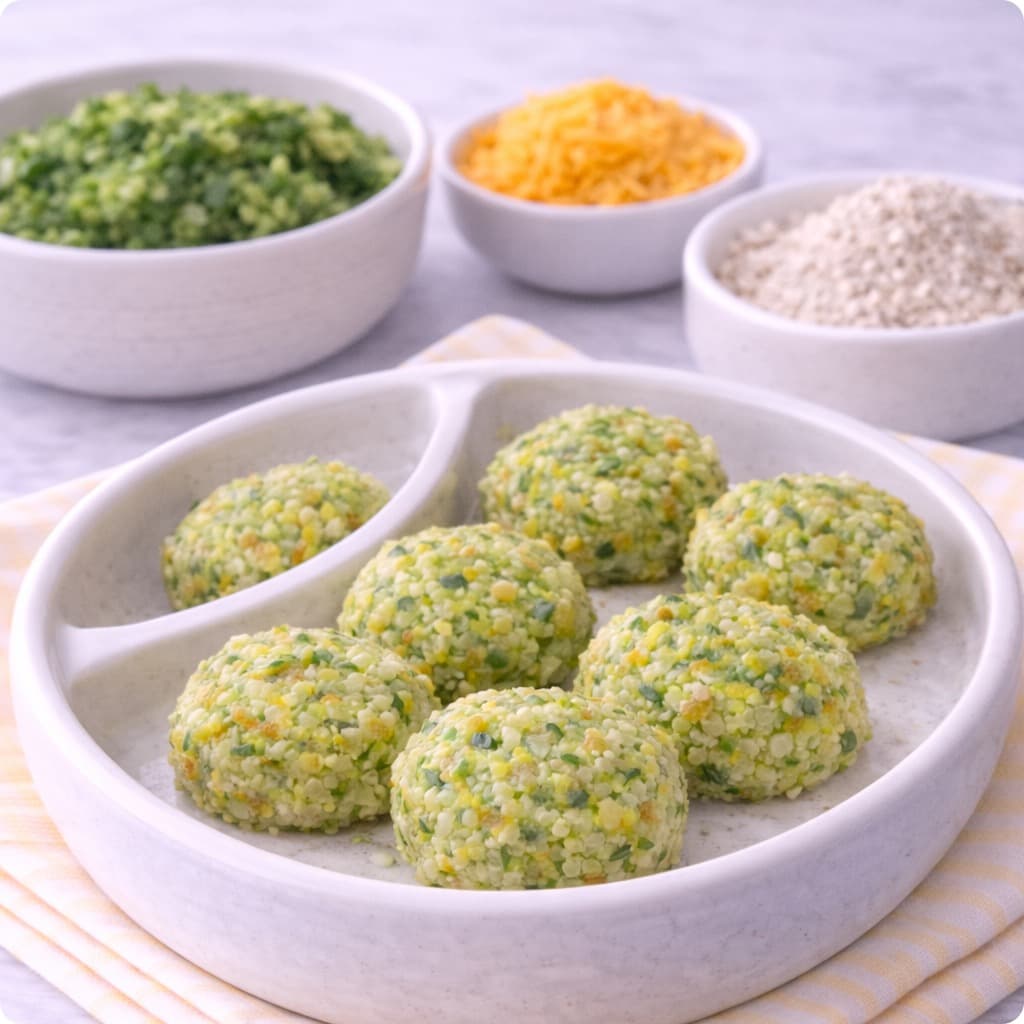
Broccoli Cheese Patties
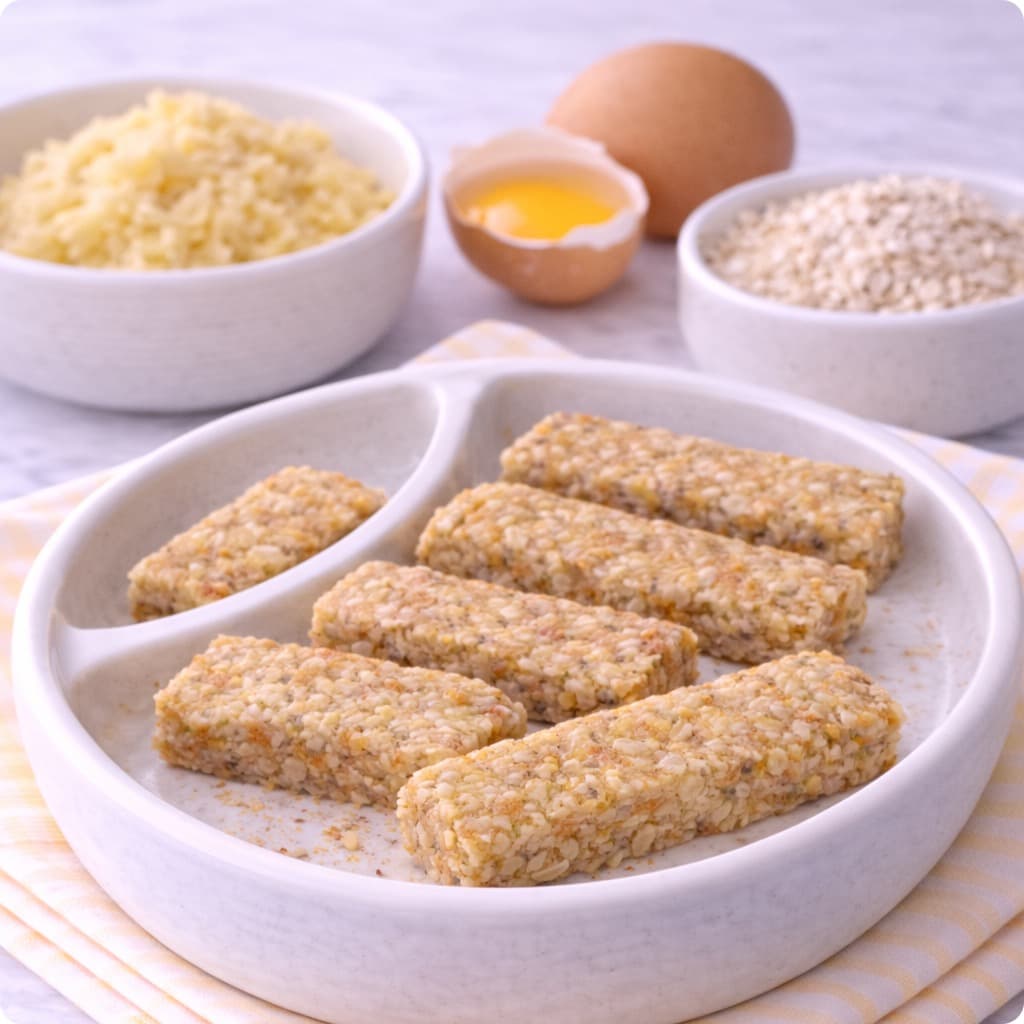
Apple Oat BLW Bars

Lentil Veggie Nuggets
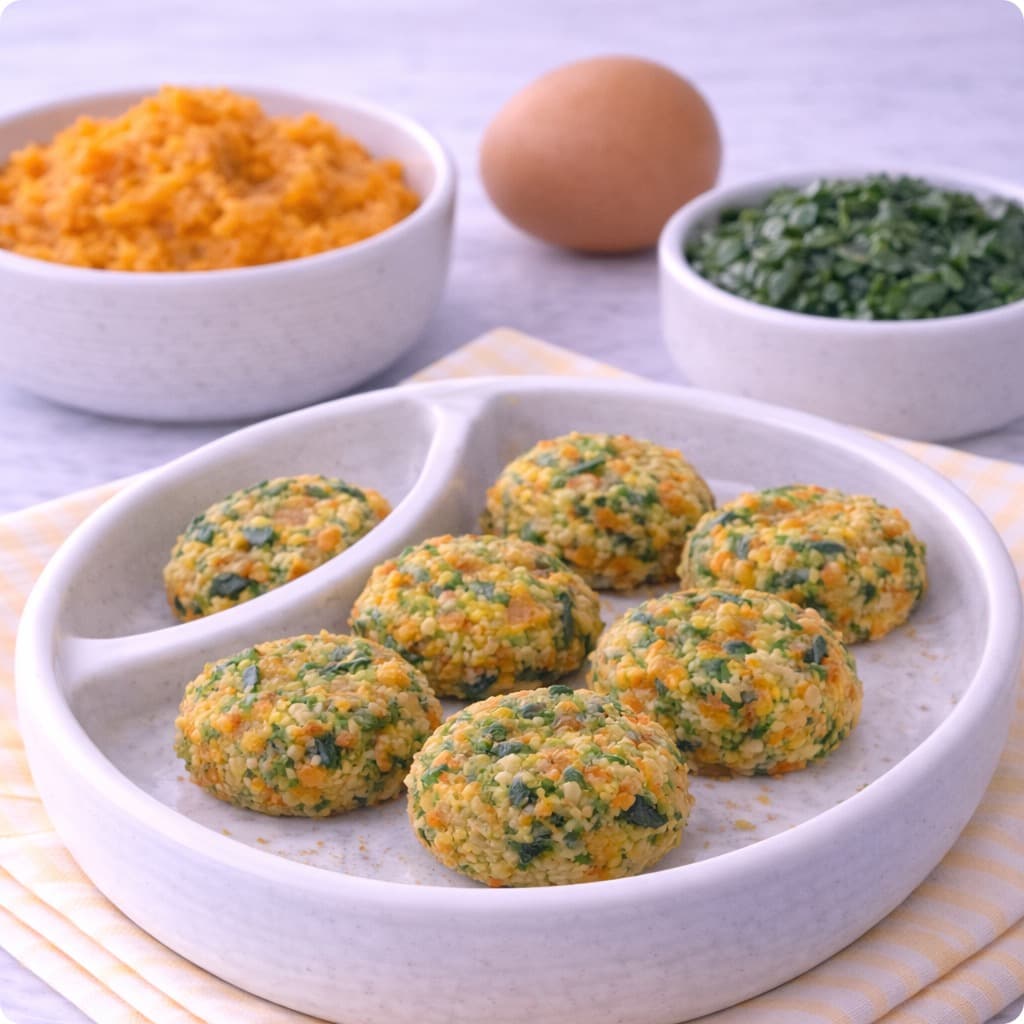
Sweet Potato Spinach Fritters
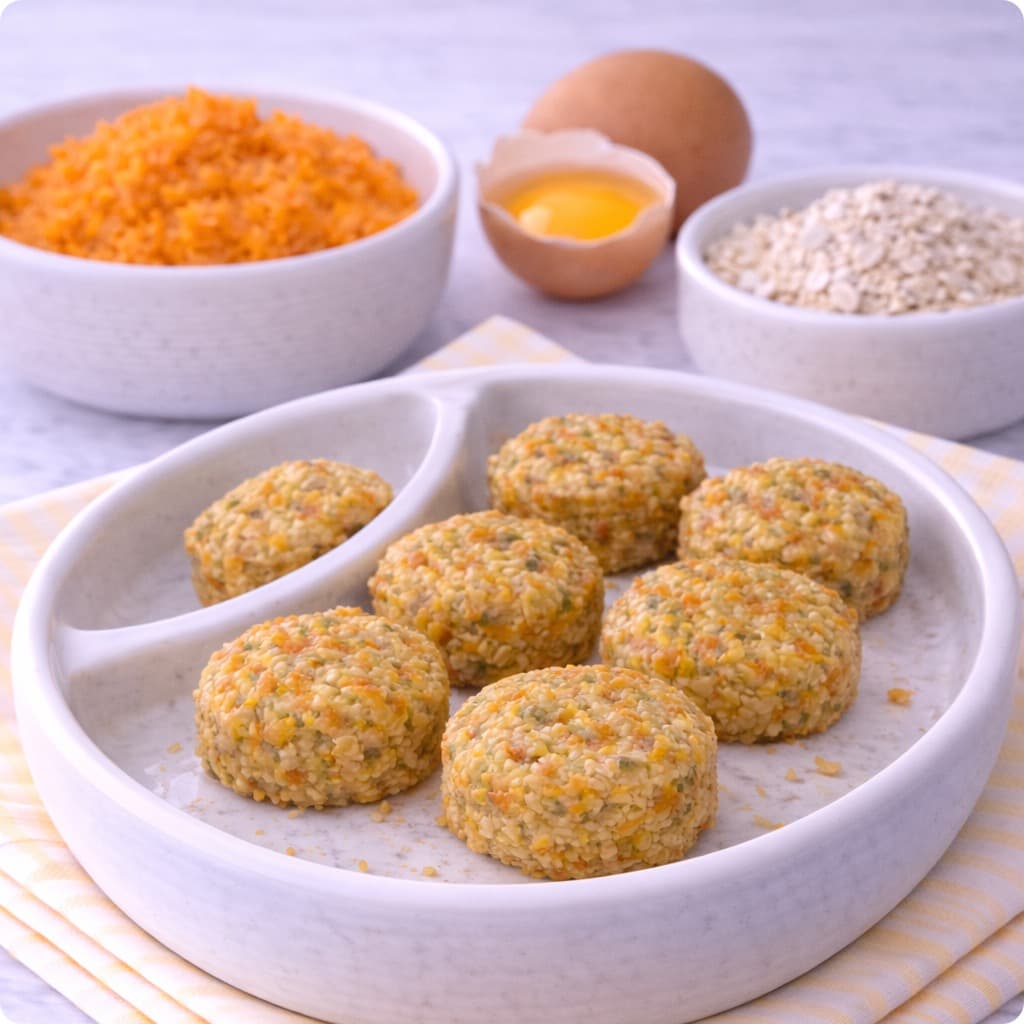
Carrot Oat BLW Muffins
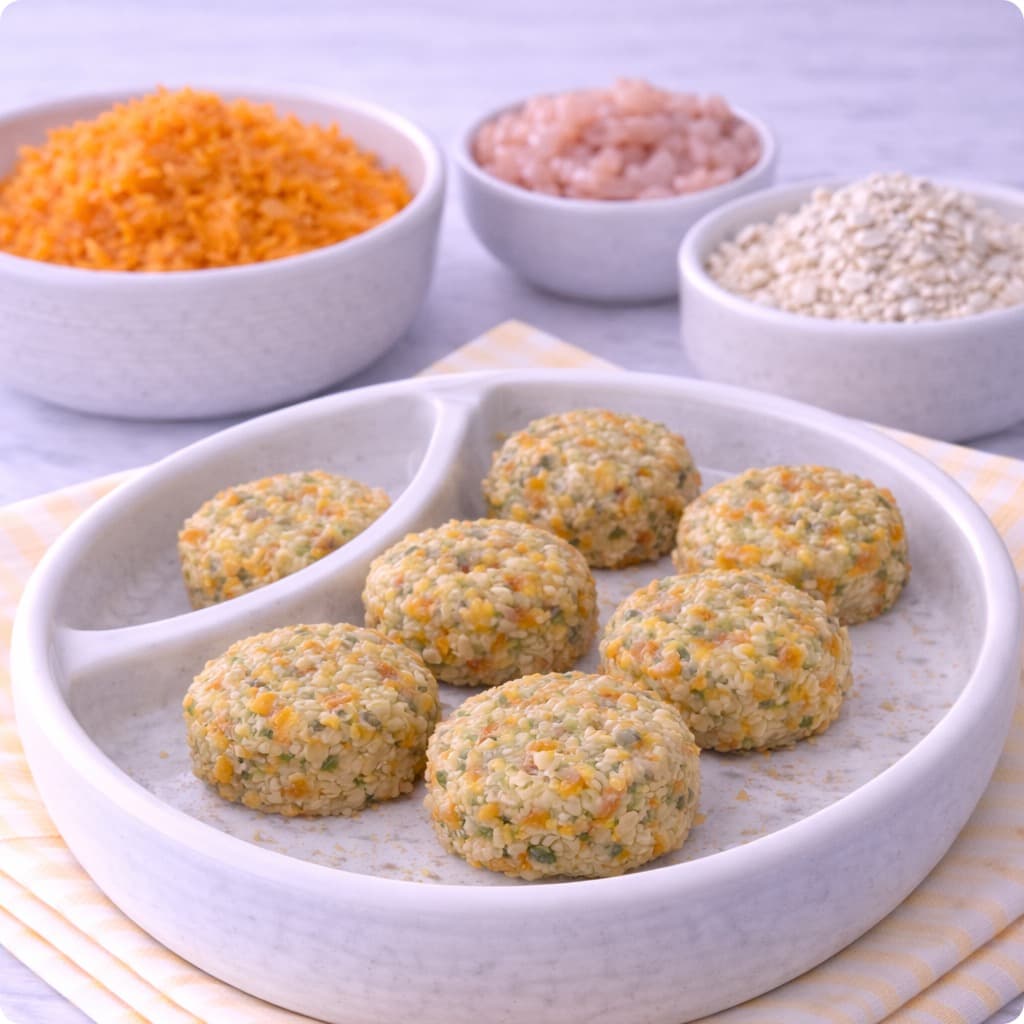
Chicken Veggie Nuggets
Frequently asked questions
What finger foods can I give my 8-month-old?
Great first finger foods at 8 months include steamed broccoli and carrot sticks, ripe banana spears, avocado slices, soft-cooked sweet potato, well-cooked pasta, soft scrambled eggs, toast fingers, and shredded chicken. The key is that every food should be soft enough to squish easily between your fingers and cut into a shape your baby can hold.
How much should my 8-month-old eat?
Appetites vary a lot at this age, and that is completely normal. Most 8-month-olds eat two to three small solid meals a day plus breast milk or formula, which is still their main source of nutrition. Follow your baby's hunger and fullness cues rather than aiming for a set amount.
Can my 8-month-old eat finger foods without teeth?
Yes. Babies use their firm gums to munch and mash soft foods surprisingly well, even without teeth. As long as foods are cooked until soft and cut into safe shapes, your baby can enjoy finger foods before their teeth come in.
What foods should I avoid giving my 8-month-old?
Avoid choking hazards like whole grapes, whole nuts, popcorn, raw hard vegetables, and round coin-shaped foods. Do not add salt or sugar, and never give honey before the first birthday due to the risk of infant botulism. Also skip unpasteurized foods and anything hard or crunchy.
Is gagging normal when starting finger foods?
Occasional gagging is a normal and protective reflex as your baby learns to move food around the mouth. Gagging looks and sounds different from choking, which is silent or high-pitched. Always supervise meals closely, keep your baby seated upright, and learn the difference so you can respond calmly.
How do I introduce allergens safely at 8 months?
Current guidance encourages offering common allergens like eggs, dairy, and smooth peanut butter early and regularly, once your baby is eating solids well. Introduce one new allergen at a time, ideally earlier in the day, and watch for any reaction. Talk to your pediatrician first if your baby has severe eczema or a known food allergy.
Should I still offer purees at 8 months?
You can offer both. Many families combine soft finger foods with spoon-fed purees at this stage, and there is no need to choose one approach over the other. Mixing textures helps your baby practice different eating skills while still getting plenty to eat.
Finger foods + a plan made for your baby
200+ age-matched finger foods with built-in cutting guides, plus a feeding schedule and recipes tailored to your baby's stage.
verifiedSources & References
This guide is informed by current guidelines from leading health organizations: